USS Kittiwake Wreck and Reef Snorkel

snorkeling at Grand Cayman

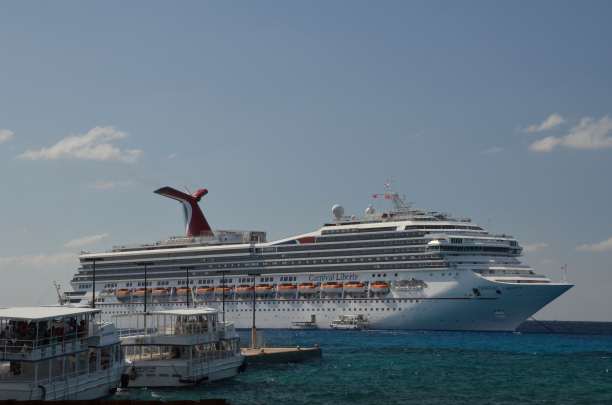
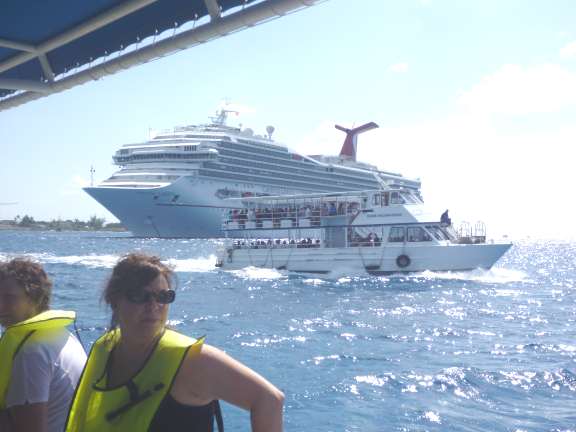
Liberty and tender seen from snorkel boat

Grand Cayman Island has much more to offer besides a place where people hide their money in offshore bank accounts.  It’s a great vacation spot, and a port stop for cruise ships.  We had not made any plans for that port, but the night before our stop there Chris, Liza, and I decided to book a snorkel excursion rather than take our chances with what we might randomly find if we just got off the boat with no plans.
Georgetown, Grand Cayman, tender pier

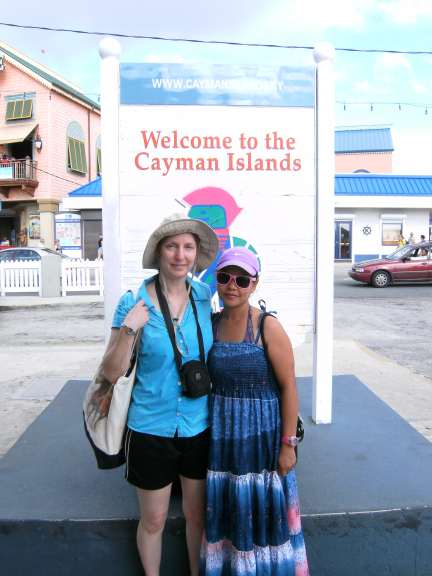
Liza and I at the welcome sign by the tender pier

Liza wanted to book a stingray adventure, but the more affordable one was scheduled right in the middle of the day where there would be no time before or after to look around town.  Grand Cayman is a tender port so you have to allow time for catching tenders rather than just walking off the ship down a dock.  We chose a two stop wreck and reef snorkel with an early start time.  I said we could just book it through the TV, but Chris wanted to go down to the Carnival Liberty’s shore excursion desk so we could ask some questions.

We did ask if there was a place to snorkel from shore that we could walk to from the tender pier, but they did not think so.  They also said the excursion we wanted to book got cancelled because not enough people booked it.  A similar excursion with just a slightly later starting time had space available.  It cost the same, lasted half an hour longer, and also had a wreck and a reef so we booked that one instead.

We gathered in the specified lounge at the appropriate time with all the other folks with shore excursion tickets.  In Belize excursions on boats had picked passengers up right off the ship, but that is the only port where they do because the ship anchors quite a distance from shore there.  At Grand Cayman we took the tender to the nearby shore and found someone holding the sign for our tour to lead us to the boat docked at the next pier.  The tender pier was pretty much just a central restroom with an overhanging roof to make a sheltered gathering area for the tours, and a Welcome to Grand Cayman sign.
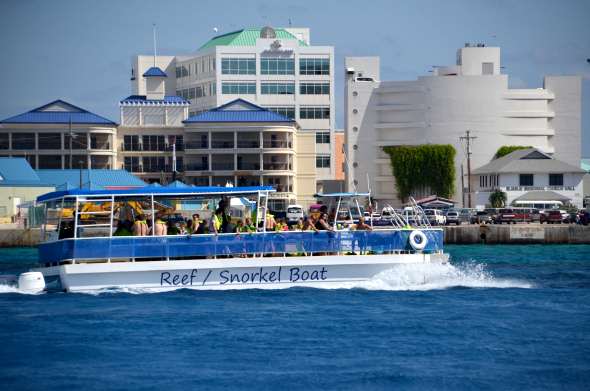
catamaran for reef & snorkel cruise ship shore excursions, Grand Caymam

snorkel boat in Grand Cayman

The boat, aptly named Reef & Snorkel, was a catamaran with a flat deck filled with benches and no bathroom.  They did have a jug of water and one of lemonade available for thirsty passengers though.  On the way to the wreck, they told us how she came to sink there.  The guy at the shore excursion desk also mentioned this having been an intentionally sunk ship rather than an accidental wreck.
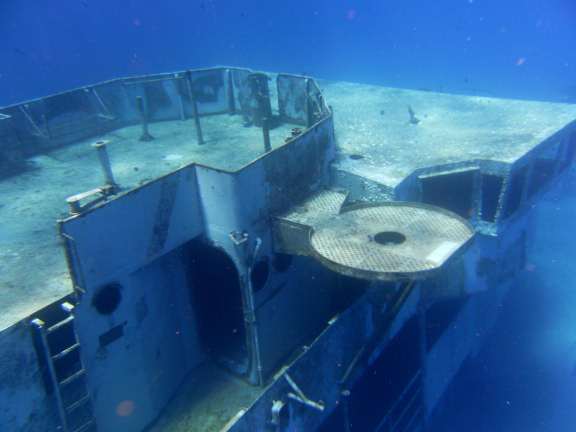
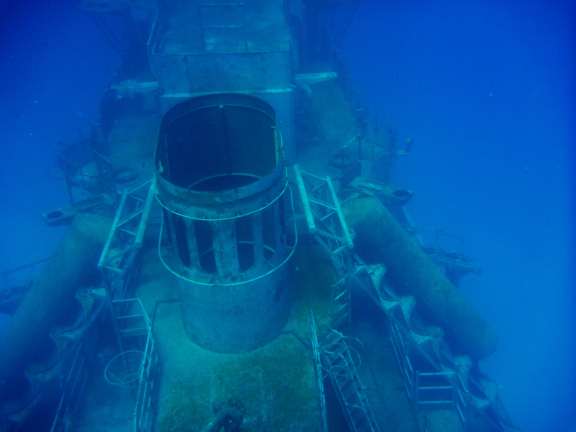
sunken ship Grand Cayman, USS Kittiwake

USS Kittiwake under the sea

The USS Kittiwake served for 50 years as a submarine support and rescue vessel. During her years of service she had some interesting times including the rescue of a stranded battleship.  Divers from the Kittiwake recovered the black box from the space shuttle Challenger following its tragic accident.  After sitting for sometime in the ghost fleet of decommissioned ships, the Cayman government requested to purchase her for the purpose of sinking the ship for reef building and tourism. It took 7 years for the governments to complete the sale, as the US does not normally sell their old military ships to foreign countries.  The Kittiwake is the first, and so far only one.  The name Kittiwake comes from a type of seagull.
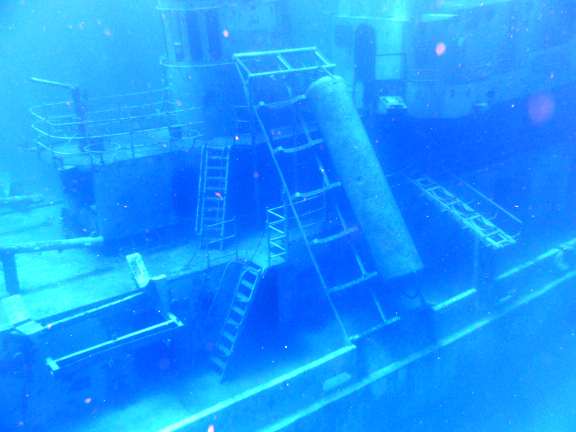
wrecks to reefs ship

USS Kittiwake, sunken ship

Sinking the ship involved anchoring it with 7 anchors and then filling the ship with water until it lost buoyancy and went under.  It landed right side up in the sand.  Hurricane Rina moved it about 30 feet deeper than its original location, but most of the anchors held and it remained right side up, though listing slightly to one side.  Having been sunk less than a year ago, at this time it just had algae growing on it, and lots of fish swimming about.  Sometimes people see stingrays there, but we did not.  Over the years more sea life will grow on it until coral and things cover the ship and it becomes a reef.  At this time we could read the name of the ship on the deck at the bow.
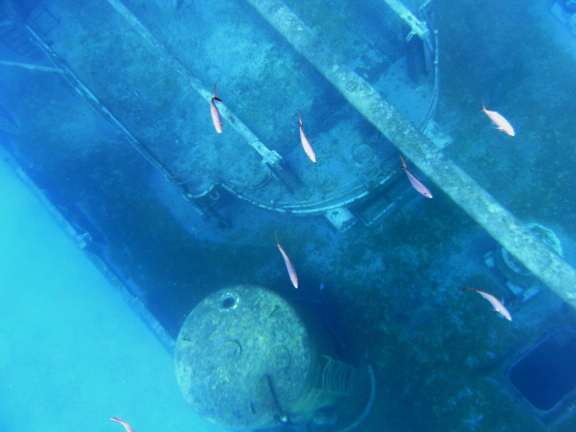
USS Kittiwake, wrecks to reefs Grand Cayman

fish swimming over the Kittiwake

On the way to the wreck site, the boat crew handed out snorkel gear.  We declined, having brought our own.  They also handed out snorkel vests.  Chris and I would have preferred to decline those as well, but they said Carnival required everyone to wear them whether they put air in them or not.  Chris and I had no air in ours.  Liza, not having much experience snorkeling, filled hers way too full.
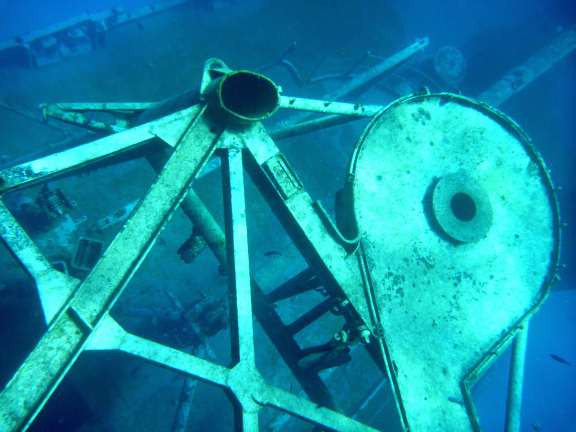
structure on the Kittiwake

USS Kittiwake has lots of structure where marine life will grow

The warm salt water has natural buoyancy, and floating face down in any water also provides buoyancy (which is why face float is often the first thing learned in beginner’s swimming lessons.)  I always find it takes much more effort to dive under the water while snorkeling than it does to stay floating on the top, even without any sort of vest or wet suit providing extra buoyancy.  The bright yellow color of these vests also probably helps the boat crew keep track of passengers in the water.
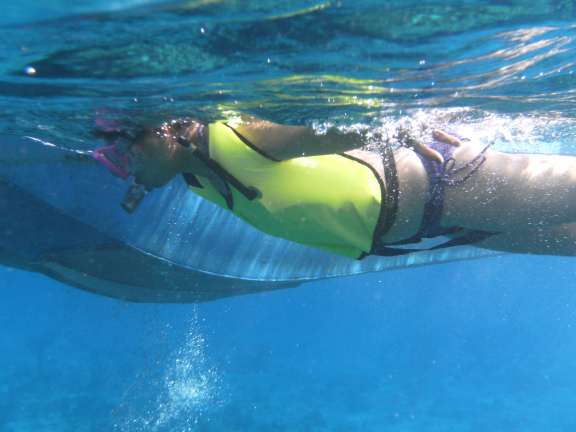
overfilled snorkel vest

Liza snorkeling next to the snorkel boat

Chris and I swam the length of the wreck and back several times, armed with our underwater cameras.  Liza had a rough time with all that air in her vest, and also did not have her mask tight enough so got some water in her nose.  She gave up before the whistle blew to call everyone in, along with some other inexperienced snorkelers.
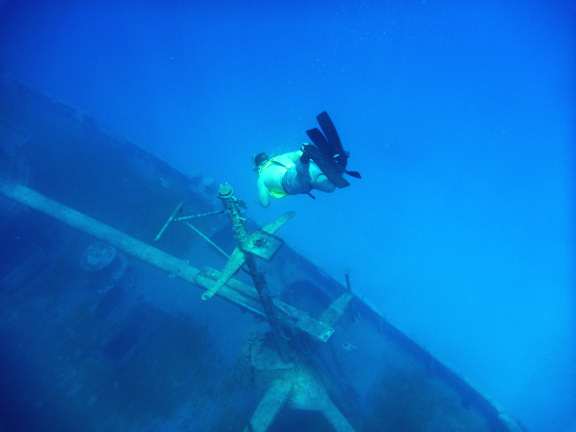
snorkeling at the Kittiwake, Grand Cayman

Chris diving down toward the USS Kittiwake

Meanwhile Chris and I swam off to the side of the wreck a bit and found the trench where it sat before the hurricane blew it to its current location.  We found the anchor chain that broke during the storm.  I had not snorkeled over a wreck before, so this was pretty interesting to see.  Chris said he’d love to come back every 5 years or so to watch the sea life grow and transform the wreck into a reef.
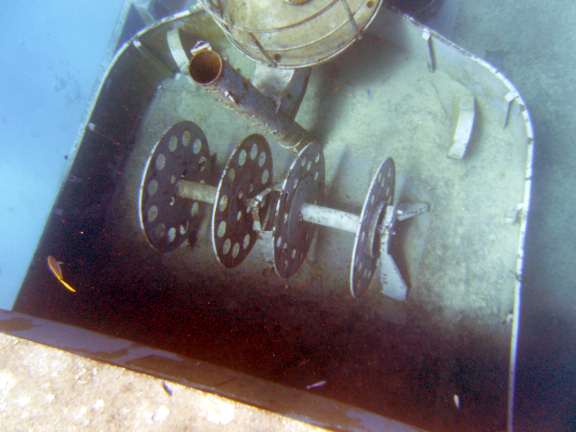
Kittiwake spools

The Kittiwake has lots of interesting structures on it

The ship made itself a sand bank as it slid in the hurricane, so if another storm should come it would be more securely grounded now.  Before Rina it sat in water shallow enough for snorkelers to stand on the deck with their heads out of water, but it lies too deep for that now.

After about 40 minutes snorkeling over the wreck, the crew blew the whistle to signal everyone still in the water to return to the ship.  Once aboard, we headed for the reef.  They said since the water was somewhat choppy, they sheltered behind the Liberty rather than going to their normal reef.
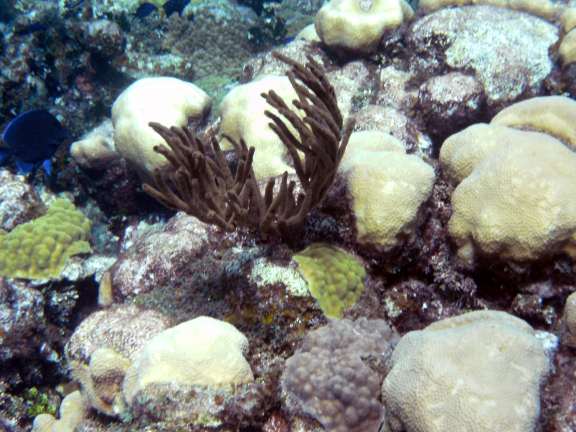
coral reef

coral reef at Grand Cayman

The cruise ships anchor up just beyond where the reef ends and the bottom drops off from rather shallow to very deep.  Our boat stopped about halfway between the ship and shore.   We saw on the shore directly in front of us a dive shop which most likely had shore snorkeling, within walking distance of the tender pier.  Nobody was in the water, just some sort of large inflatable raft thing that appeared anchored there so I don’t know for sure if they had shore snorkeling, but likely.  The water might have been too choppy for it that day though.
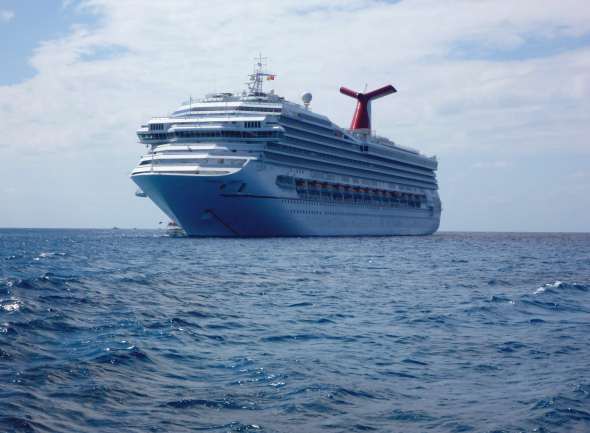
Carnival Liberty at Grand Cayman

photo of Carnival Liberty taken while snorkeling

Even in the shelter of the ship the somewhat choppy water scared off some of the beginners, but once in the water you really don’t notice the waves.  I felt the current more.  The boat stops so that the current comes toward the stern where we got on and off.  That way everyone can always get back.  It took some effort to get very far away, then just relaxing and floating I found myself back to the boat in next to no time.

My snorkel had a wave guard, which helped keep that choppy water from splashing into the tube, but it still filled with water when I did any diving under.  I have since bought a dry snorkel for my next cruise.  I don’t much like blowing the water out of the tube after diving under, and the dry snorkel will solve that problem as none gets in.
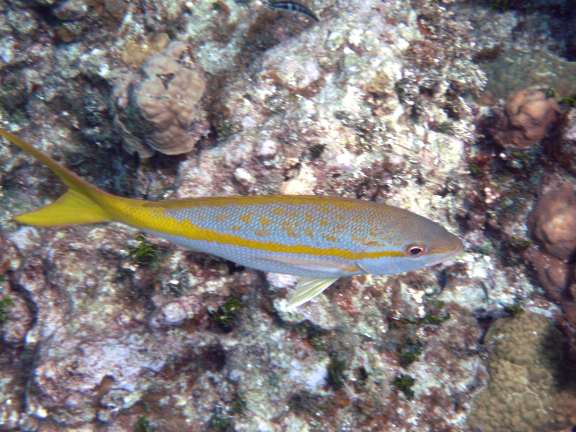
fish at coral reef

brightly colored fish

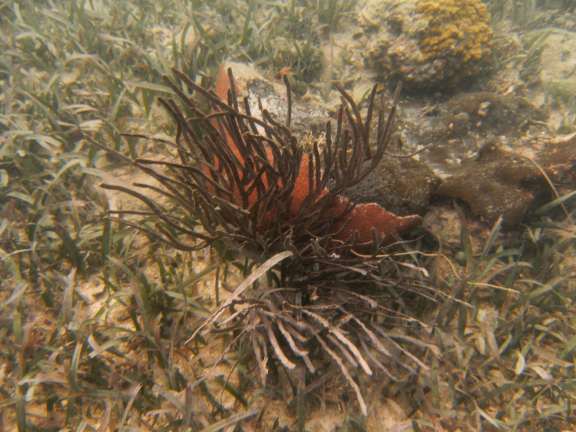
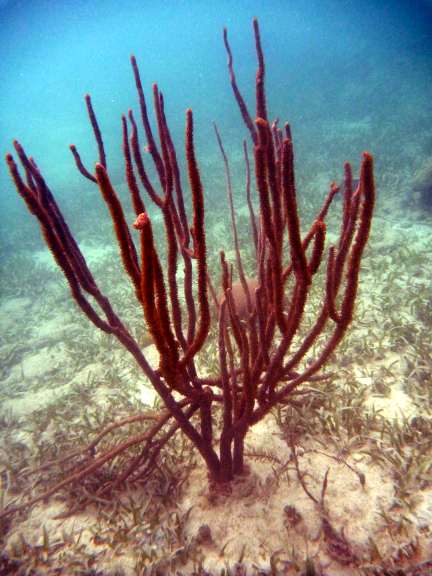
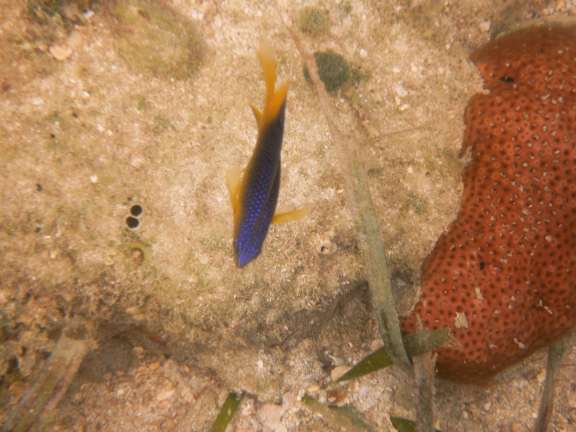
Chris thought that particular reef must have had some damage several years back as it had no large coral, everything looked young.  It had many brightly colored fish.  Lots of small ones and some up to about a foot and a half long.  Down in the depths of a deep dark crevasse in the coral, I saw something that looked about 6 feet long.  A big grouper perhaps.  It was too far down and too dark to take a picture.
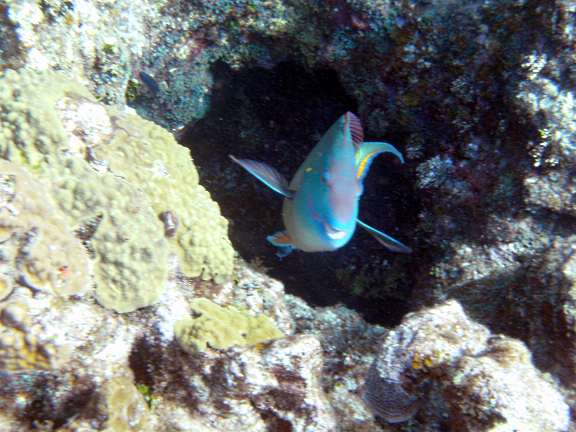
reef fish

fish on the reef

Chris and I always love snorkeling, and even though Liza spent less time in the water she enjoyed it enough to want to go again.   On this excursion we used the towels we had packed in our beach bags both for drying after getting out of the water and for wrapping around ourselves on the journey to the second site.  The cruise ships provide nice big beach towels, so no need to bring them from home.  Sunscreen is also a necessity, whether put on in advance or on the boat on the way to the first snorkel site.  I burn easily, so added a bit more sunblock in between sites as well.  We must have used enough because none of us got sunburned.  Another useful item for this excursion would be several kleen-x packed in a ziplock bag.
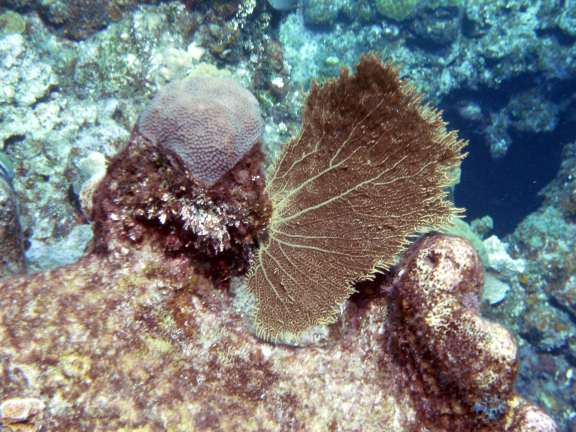
young coral near Georgetown, Grand Cayman

coral at the reef near shore

More Blogs about Grand Cayman

Grand Cayman

Island Tour

Snorkeling with Tarpon

Turtle Farm

Posted in Caribbean, Carnival, Liberty, Shore Excursions | Tagged , , , , , , , , , , | 3 Comments

Grand Cayman

Carnival Liberty in Grand Cayman 2011

Carnival Liberty anchored near George Town, Grand Cayman

Most people associate the Cayman Islands with banking, and a place people keep anonymous offshore accounts.  Legislation passed in 1966 to encourage the banking industry allowed the banks to flourish, giving a boost to their economy.  The Caymans, which includes Cayman Brac and Little Cayman as well as Grand Cayman, have so much more to offer besides 550 major international banks and 325 insurance companies.

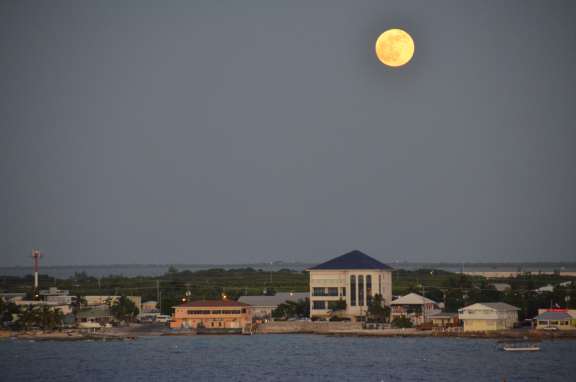
Georgetown Grand Caymen from balcony of Carnival Liberty

moon over George Town

Like just about anywhere else in the Caribbean, the Caymans make a great place for a vacation.  Grand Cayman lies 480 miles due south of Miami.  Average temperatures range from 77-79 degrees.  Water temperatures range from 78 degrees in a colder winter to 86 degrees in a hot summer.  The island has sunny days year round, and the months with the least rain are December through April.  The islanders speak English as their main language.

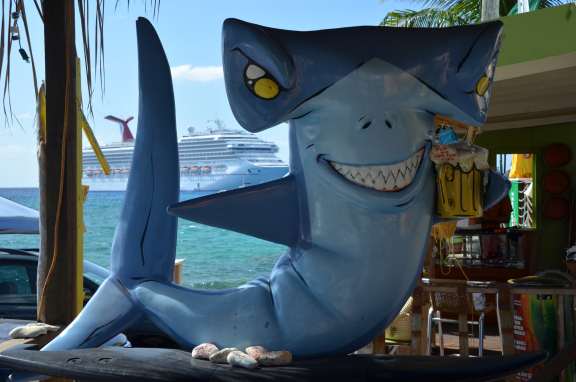
shark on shore

John found some interesting things wandering about George Town

Scuba diving and shopping are the most popular tourist activities, followed by snorkeling, fishing, and glass bottom boat or submarine tours.  Cruise ships stop at Grand Cayman, anchored near George Town within sight of shore and just a short tender ride to the pier.  The first cruise ship, Atlantis, stopped in 1937, bringing the beginnings of tourism to the islands.

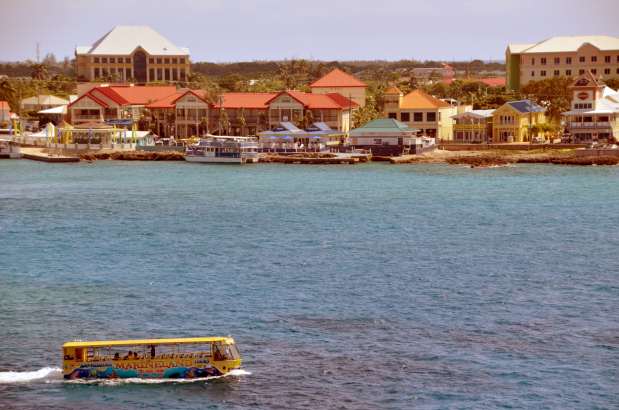
an interesting way to travel

Floating Schoolbus

Once on shore, tourists with no specific goal in mind have a multitude of shops to browse through.  Nearby Seven Mile Beach, or one of the other many beaches on Grand Cayman beckon to others as a place to spend the day in sun, sand, and warm water.  Grand Cayman has other attractions such as historical sites, parks including one with botanical gardens, and of course diving and snorkeling.  Reefs, stingrays, and shipwrecks including the recently sunk Kittiwake offer a variety of different excursions.  Some visitors go to the very small town of Hell, many to send a postcard or just to say they’ve been there.  Others do their own taxi tour of the island, some even stopping to swim with dolphins.

sunken ship, wrecks to reefs

USS Kittiwake

The deepest place in the Caribbean, called Cayman Trough or Cayman Trench surrounds the Cayman Islands and also hosts the worlds deepest undersea volcanoes.  The steep walls are covered in healthy coral near the top of the trench.  Wall dives are an option from all three islands, though probably not all in one day as 75 miles separates Grand Cayman from the other two.

Like many other islands in the Caribbean, Columbus discovered the Caymans by accident.  Blown off-course in 1503, he spotted Cayman Brac and Little Cayman, which he called Las Tortugas or The Turtles.  The name did not stick long, with Camanas or Caymans in use by 1530.  Reports from old sailing ships indicate that the Cayman Islands were once home to crocodiles as well as the similar reptile known as caymans.  Though caymans are edible, when stopping for food the sailors tended to take turtles instead.   This practice depleted the wild turtle population leading to the establishment of turtle farms, which became tourist attractions.

Not all ships sailed safely past.  The Cayman Islands are home to many shipwrecks.  In 1794 ten out of 58 off-course ships wrecked at once off the east end of Grand Cayman, known as the wreck of the 10 sail.  The first ship ran aground on the reef and tried to signal the others away, but nine more ran aground before they realized they were signaling to stay away, not to follow.  Islanders rescued the stranded mariners.

Georgetown, Grand Cayman

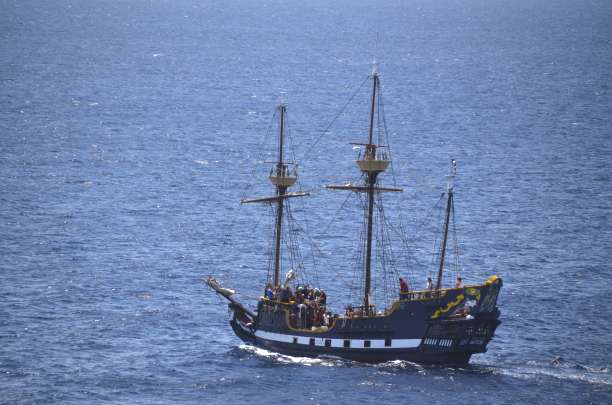
modern day pirate ship takes tourists for a ride

Many ships from the Caymans traded goods with Jamaica, which governed the islands for a time when both countries were under British rule.  Early goods included cotton, turtle, sarsaparilla and wood.  Jamaica has since gained independence, but the Caymans retained their ties with Britain.

While much of the Caribbean had indigenous populations before the arrival of Columbus, the Caymans did not.  The first recorded settlements did not occur until the mid 1600’s.  The Caymans saw their share of pirates, including Blackbeard.  A large percentage of the island’s early population were slaves until 1834 when they became free.  Most earned their living from the sea, whether through harvesting local marine life such as turtles, or hiring out as sailors on foreign ships.  The islands now have a healthy economy mainly through tourism and financial services.

Visitors arriving on cruise ships will find shore excursions offering a variety of snorkel options, scuba diving, or semi-submersible submarine tours if they want to see life underneath the sea.  Other options include dolphin or stingray encounters or a visit to a turtle farm.    Some may choose a getaway to 7-mile beach, kayaking, parasailing, or a pirate boat ride.  Grand Cayman has land tours as well including jeep rides or bus tours to shopping, historical places, a car museum or the tiny town of Hell, most likely named for nearby rock formations.

things John saw walking through Georgetown

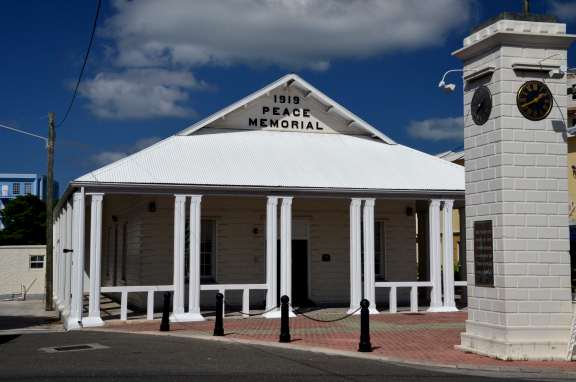
Peace Memorial, Georgetown, Grand Cayman

Those who choose to just get off the boat and explore on their own will find the tender pier located amidst the shopping district.  Plenty of the usual tourist shops filled with jewelry and other trinkets abound.  Interesting architecture and local markets are within walking distance, and cabs take passengers to places that aren’t.  Chris, Liza, and I had a great time on the Kittiwake snorkel, while John walked about town with his camera.  We saw a place offering shore snorkeling nearby where our tender docked.

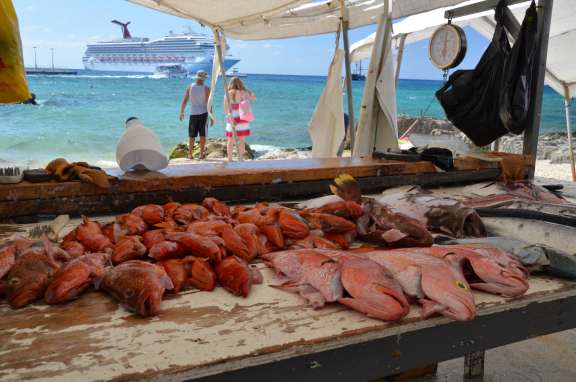
local fish market

Fish at local market, Georgetown Grand Cayman

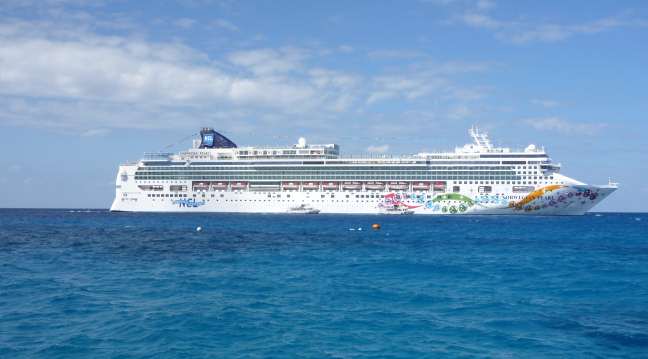
George Town has more than one tender pier.  We came in on the Carnival Liberty, and anchored up next to the Norwegian Pearl.  Different tenders came to each ship, and docked at different tender piers on shore.  So you would not always be close to the same things depending on where your tender docks.

I was happy to see the Norwegian Pearl, and take a few photos.  I’ve never sailed on the Pearl (though I’d like to someday.)  That is the ship in the header of my blog and in the profile picture on MyCruiseStories facebook page.

Norwegian Pearl 2011

Norwegian Pearl in Grand Cayman

I took my original photo of the Pearl on a chance encounter in Ketchikan Alaska.  The Pearl happened to be in port when we sailed in on Safari Quest of American Safari cruises.  We had come from Juneau by way of isolated coves, iceberg encounters, and boardwalk trails through remote forests while testing the itinerary for their sister line, InnerSea Discoveries, which launched the next summer.

More blogs about Grand Cayman: USS Kittiwake Wreck and Reef Snorkel, Snorkeling with Tarpon, Island Tour, Turtle Farm

Posted in Caribbean, Carnival, Liberty, Ports of Call | Tagged , , , , , , , , | 11 Comments

How to Fold a Towel Crab

making a towel crab

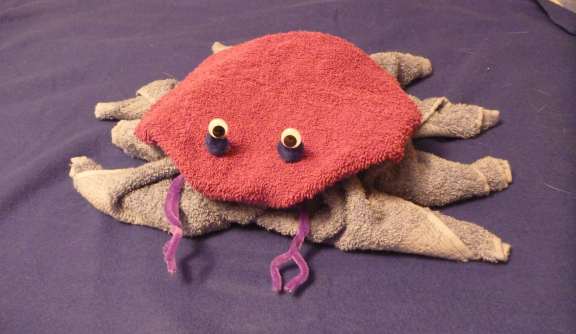
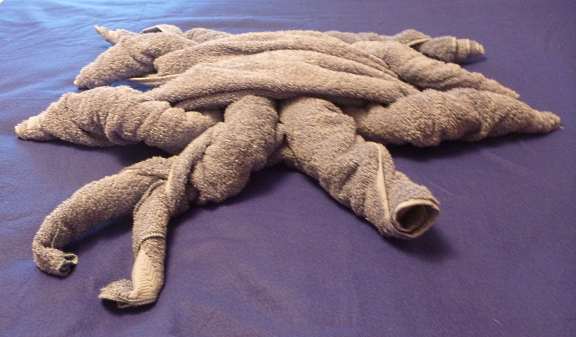
Towel Crab

People normally find crabs on the beach, in a crab pot, or perhaps on their dinner plate or in the local seafood shop.  Just recently crabs have made an appearance in unexpected places – like the linen closet.  Not edible perhaps, but cuter than the real thing.  Just follow these directions and you too can go crabbing in your towel cupboard.

folding washcloth animals

Small Crab

how to make a cruise ship towel frog

partly folded frog reminds me of a crab

While making a towel frog, at the point where the head gets inserted into the body, but before it gets positioned as a frog, it reminded me of a crab.   So I decided to make a crab.  The next day I decided to try making a mini-crab too, and have included instructions for it as well.

Supplies needed for big crab: 2 bath towels, 2 wash cloths, 1 hand towel, 2 pipe cleaners, 2 googly eyes.

For small crab: 2 hand towels, 1 wash cloth, 2 pipe cleaners, 2 pom poms, 2 googly eyes.

standard towel animal body

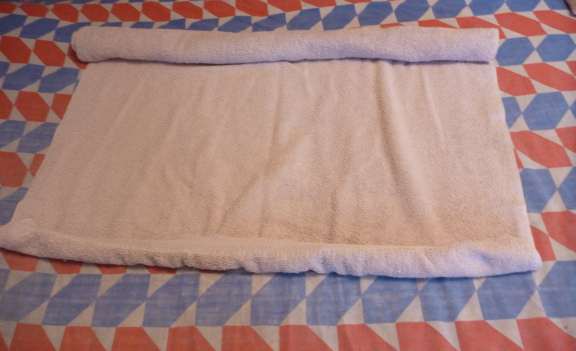
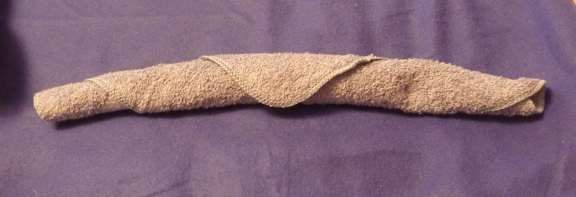
roll each half to the middle

Start with the basic animal body, except instead of the usual one body, make two.

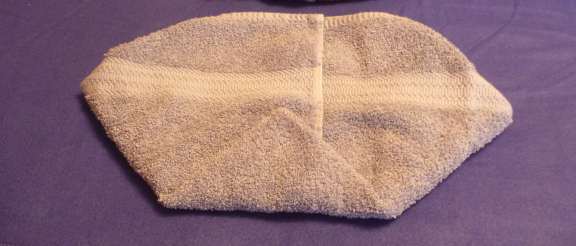
Use two bath towels for the big crab, or two hand towels for the small crab.  For each body, lay the towel out flat and then roll each end in to the middle.

how to make cruise ship towel animals

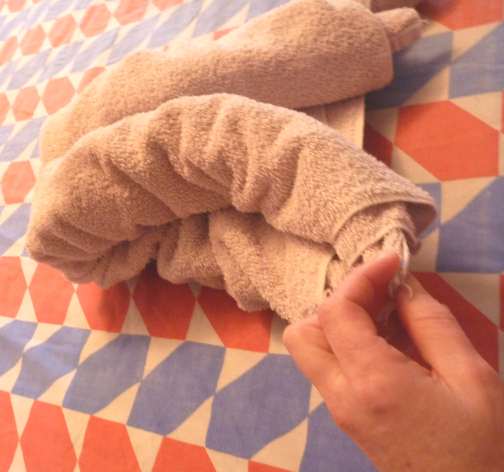
pull the tips out of the end of each towel roll

Start by folding over just a small bit on the edge at the beginning of the roll.  Each roll should be not too tight, yet not too loose either.

folding cruise ship towel animals

take both ends of the same roll in the same hand

Fold the rolled towel in half, with the rolls on the outside.  Pull the tips out of the end of each roll.  Take the tips of both ends of on roll in one hand, and both ends of the other roll in the other hand.  Pull tight.  Repeat for second body.  For video and more detailed instructions on the basic animal body, see the towel rabbit folding blog.

Set one body down with the rolls on top.  Flip the second body over and insert the open space between the rolls on the top body over the rolls on the bottom body so the two bodies cross like the letter t.

how to fold a towel crab

lay one body over the other with the rolls on the bottom body fitting into the space between rolls on the top body

folding towel animals

two animal bodies put together for crab body

On the large crab, pick two of the legs that are together for the pincers and position them to the front of the crab, with the rest of the legs positioned out to the sides.  Push the tips that were previously pulled out of the ends of the legs back inside on the two chosen as pincers so you have an open tube.

folding washcloth into animal

roll washcloth on the diagnol

how to fold washcloth animals

rolled washcloth

Roll one washcloth diagonally.  Fold it in half and insert into one of the prepared towel tubes.  Repeat with other washcloth.  Shape into pincers.

towel animal folding instructions

pincer inserted on one side, towel tube waiting for pincer on the other

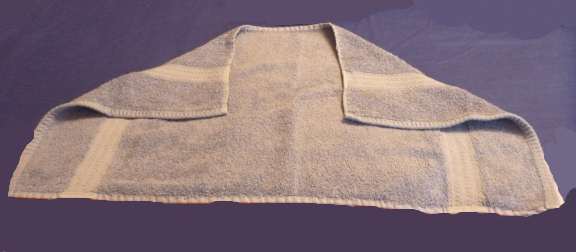
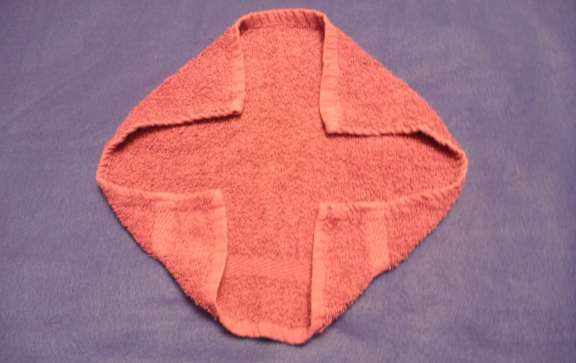
Use a hand towel for the shell on the large crab, and a washcloth for the shell on the small one.  Start the shell for the large crab by folding over two corners of the hand towel along one long side.

directions for folding towel animals

fold over two corners of the hand towel for large crab shell

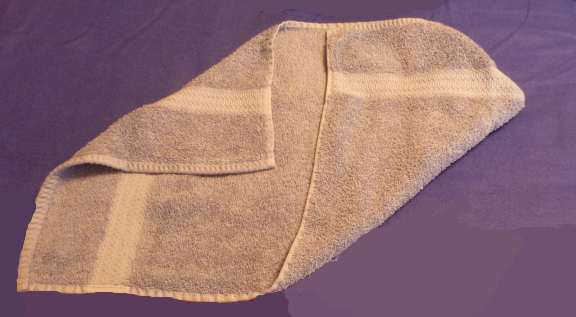
Fold the opposite corners so they cover the previously folded corners.

towel animal folding instructions

one opposite corner folded to cover first folded corner

instructions for making towel animals

both opposite corners folded to cover original folded corners

directions to make towel animals

tuck down pointy corner at the front of the crab shell

Fold down the tip at the pointy end, then flip shell over and set it on crab with the folded down pointy end at the front of the crab.

towel art

shell placed atop crab

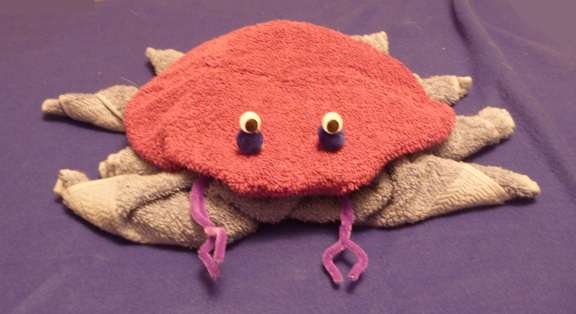
Wrap one end of pipe cleaner around googly eye.  Make a 90 degree bend in pipe cleaner at the point you want the eye stalk to end.  Tuck folded end of pipe cleaner under shell to hold eye stalk in place.  Repeat for other eye.  For more interesting crabs, try using different colored towels for shell and pincers.

how to fold a towel crab

finished crab

To make the small crab shell, start by folding down all four corners of a washcloth.

washcloth animal folding instructions

fold all 4 corners of washcloth to start small crab shell

Fold down two edges to shape the shell.  Flip it over and place on top of small crab.

directions for folding washcloth animals

fold down two edges of washcloth to shape shell

Twist two pipe cleaners together and shape ends into pincers.  Tuck under shell and position as desired on front of small crab.

decorating towel animals

twist two pipe cleaners together and shape ends into pincers

Use pom-poms for the eye stalks, topped with googly eyes.  Hold in place with a touch of scotch tape.

origami towel art

finished small crab

Other towel folding instructions: gorilla, seal, cake, monkey, snake and more.

copyright 2012 My Cruise Stories

Posted in Randoms, Towel Animals | Tagged , , , , , , , | 4 Comments

Towel Origami – How to Fold a Towel Frog

towel animals

Towel Frogs at the Towel Hut on Carnival Liberty

Most of the time, cruise ship passengers find towel animals in their room when they return in the evening.  On the Carnival Liberty, we also found some frogs at the towel hut on the Lido deck.

The frog uses the standard body, same as the rabbit and many other towel animals.

Start with a bath towel.  Roll each side to the middle from the short ends.  Start the roll by folding just a small amount of towel over.

Once both rolled sides reach the middle, fold towel in half with the rolled part on the outside.  The rolls each end up folded in half when this gets done.

how to fold towel animals

fold the rolled towel in half

Pull the tips of the corners out of each roll.  Take the tips of both corners of one roll in one hand and both corners of the other roll in the other hand.  Pull corners tight like you are playing tug-o-war with yourself until the towel resembles a body with four legs.

towel origami

pull the corners of the rolled ends to make legs

For the frog, pull the legs tight enough to leave a good gap between the two rolls.  Set body aside until you make a head.

how to make a towel frog

fold hand towel in half to start frog head

Use a hand towel to make the frog head.  Start by folding it in half crosswise and then folding it in half again.  Set it so the open edges of the towel are on top and toward you.

folding a towel frog

fold towel in half again

Take the top corner on one side and fold it to the center so that side makes a triangle.  Repeat with the other top corner.

towel animal folding

fold corners into triangles

Fold the bottom corner up over the triangle so one side of the towel becomes a double layer of half sized triangles.  Repeat with the other bottom corner.

towel frog folding

fold first triangle into double triangle

Fold both sides down at the center as you fold the towel in half with each double layered triangle as one of the halves.

folding frog head

fold down the middle with one double triangle on each side

Shape the loose ends into frog lips.

folding towel frog

shape loose ends into frog lips

Place the head in the center of the body between the two sets of folded legs.

how to make a cruise ship towel frog

place the head in the center of the body

Fold the legs toward the center while sitting the frog up.

how to fold a towel frog

pulling frog up to sitting position

Position the arms and legs of sitting frog as desired and add colored bits of cloth or paper for eyes.  If desired further adorn your frog with a tongue or other embellishments.

how to fold a cruise ship towel frog / towel art

the key to folding heads is a towel in the right proportions

Ta-da, a finished towel frog.

making towel animals

finished towel frog

I didn’t quite get all the photos I wanted on board, so obviously I had to make a few fill-ins at home.  I discovered why I had issues with the heads in my original towel folding blog, How to Fold Cruise Ship Towel Animals.  My hand towels aren’t the right shape to fold into triangles and have the folds line up with the edge of the towel when folded from the center.  This time I tried a smaller sized bath towel for the frog head and it worked quite well.  There’s an important lesson in that, it only works if you have the right size towels.

The frog is third in a series of individual towel animals which so far includes a seal and a rabbit.  There’s also my own invention, the crab, or how about a towel cake or snake?  Now there’s an elephant, a gorilla a hanging towel monkey and more.  If you want to be sure not to miss any upcoming animals, it is easy to make sure you can find this blog again.  You can like it on facebook, follow it on twitter or networked blogs, or sign up for an email subscription.

how to make cruise ship towel animals

towel gorilla

copyright 2012 My Cruise Stories

Posted in Carnival, Liberty, Towel Animals | Tagged , , , , , , , , , | 8 Comments

Choosing Your Cruise Ship Cabin

Suite on Carnival Liberty

Suite on Carnival Liberty

How do you find the best cabin for your money on a cruise ship?  Cabin selection is one of the most important things to do before embarking on a cruise.  People have different needs in their cabin, so choose the one best suited for you.  Besides the obvious stateroom categories, other factors in cabin choice can greatly affect your cruise.

The categories are assigned to various rooms depending on their size, whether they have windows or balconies, and their location within the ship.   Not all rooms in a given category are the same.  Some hold more people, some have special features to make them more accessible.  Prices go up with each jump in category classification.

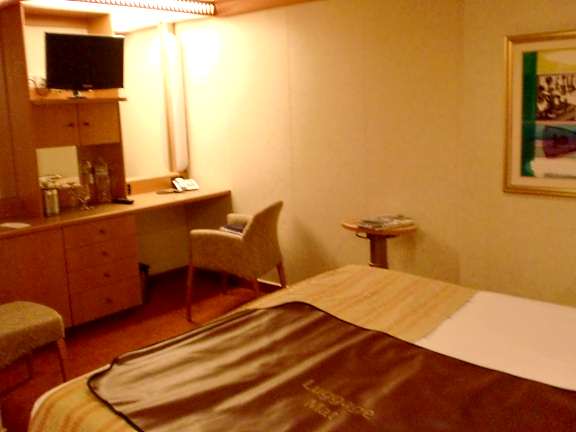
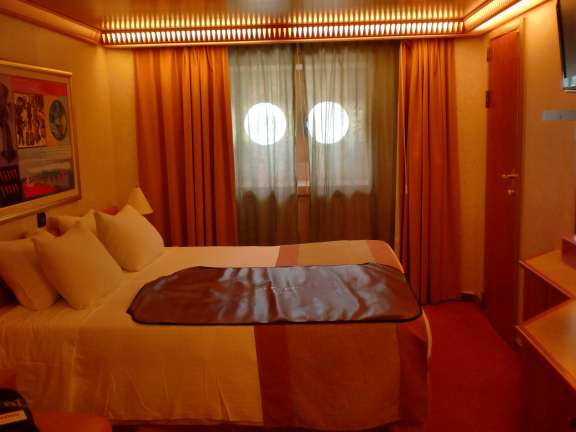
Carnival Liberty inside cabin

Carnival Liberty standard inside cabin

Cabins on higher decks often have higher prices for the same room as one found lower down for a bit less.  Centrally located cabins cost more than those closer to the bow or stern on some ships.  Not all cabins are alike, and even the interior cabins range in size.  For families traveling with more people than one room will hold, some cabins have doors adjoining them to the next room.

On the Carnival Liberty, the inside cabins in rows of just interior cabins at the middle of the ship were larger than the ones across the aisle from outside cabins.  With both the interior and verandah, some cabins (or balconies) out at the very front or back ends of the hallway were just a bit bigger, yet in the same category as the ones next to them.

It always helps to look at the ship’s deck plans before booking so you can find the best cabin in the category you can afford. All the major cruise lines have deck plans to all their ships on their websites.  The cabin categories are color coded so you can tell at a glance which cabins are in your preferred category.  Some cabins are really hard to get though. Even booking nearly a year in advance we’ve never been able to get one of the ones at the end of the row with the extra large balcony as they are always already taken.

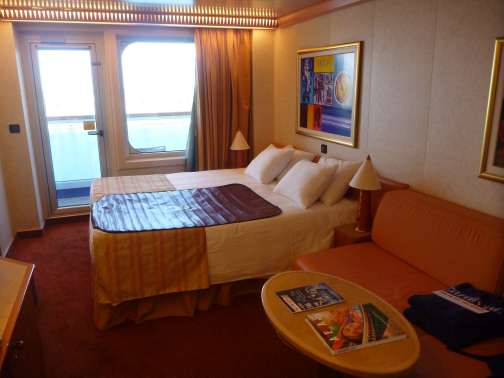
veranda cabin

Veranda stateroom on Carnival Liberty

I normally prefer a cabin on a deck that has nothing but guest rooms, and that both the decks above and below have nothing but guest rooms as well.  Usually the nights are quieter that way.  People with motion sickness problems might want to pick a cabin on a lower level of the ship and as close to the center of the vessel as possible because both those things reduce the amount of motion felt.  The higher up and farther to the bow or stern the room sits, the more exaggerated the motion of the ship becomes.  Except on very small ships where the stern has more stability.

Sometimes noise comes from unexpected places.  On the Liberty, we had a cabin on deck 6, right near the middle.  Deck 5 had public areas, decks 7 and 8 did not.  So we would have expected noise to come from below.  Up on deck 9 though, the Blue Iguana and Red Frog bars are located about the center of the ship as well.  They had a tendency toward having loud parties late into the night, and we could hear the music in our room, where we never heard anything from deck 5, which had shops below us as well as a casino.  Luckily I always bring ear plugs when I travel.

Theaters normally sit near the bow or stern and can get noisy.  On the first cruise I ever took I had a room directly underneath the stage and found zero chance of sleeping during a show.  Most vessels do not have rooms under theaters though.

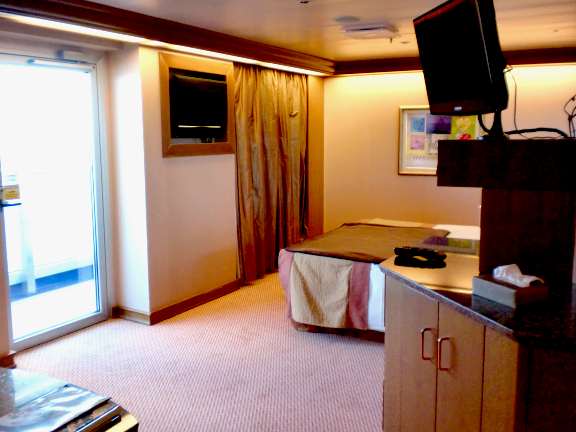
cabins

Megasuite on Carnival Liberty

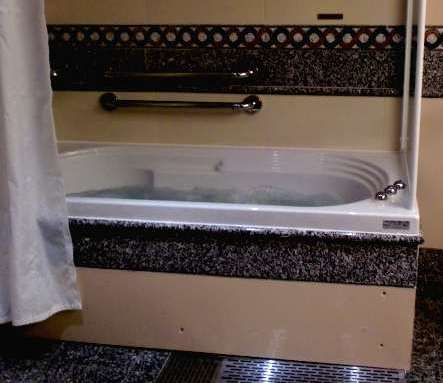
If you can afford it, suites are spacious and some have amenities such as a whirlpool tub.  Suites come in a variety of sizes, with the price escalating as the room grows.  Larger suites on some cruise lines such as Holland America come with added amenities such as concierge, free laundry service, and a private lounge for suite guests only.

Balcony rooms are quite comfortable.  In warm climates the balcony gets a lot more use than when cruising to a colder place.  Window rooms on the Liberty were a bit bigger than the standard balcony room, although the added space from the balcony probably gave those rooms a little more space overall.

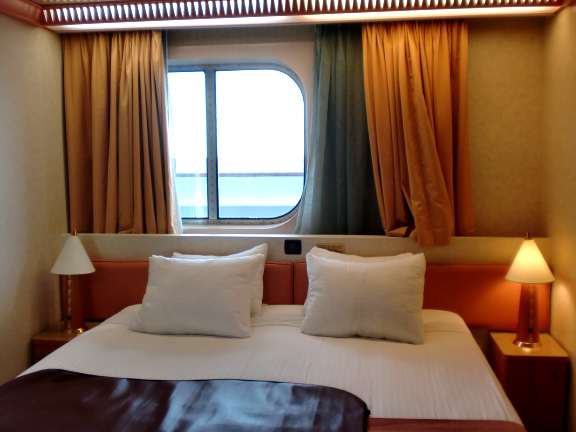
Inside rooms are always the cheapest way to go, but you can’t tell night from day without turning the television to the bow cam channel.  Standard inside rooms are quite small, so look for side halls or corners where larger rooms of the same category might lurk.

Carnival Liberty

bathtub in the megasuite

Window (or porthole) rooms get you out of the dark hole of an interior room without the cost of a balcony, though they do cost more than the interior rooms.  When I stay in an interior room I like to turn the TV on to the bow cam channel with the sound off at night.  As long as it stays dark outside, I don’t even notice the TV is on, but when the sun comes up I know it’s morning.  Sort of like an electronic window.

standard window room, Carnival Liberty

window room

Other considerations for room choice include what parts of the ship you like to visit most.  Going up and down from one level to another usually takes less time than walking from one end of the ship to the other.  If you choose a room above or below the places you go most you can get there more quickly than if you book at the opposite end of the ship.  Then again, maybe it’s a better idea to book at the opposite end of the ship from your preferred hangouts to walk off some of the abundance of delicious cruise food most passengers eat.

Carnival Liberty

porthole cabin

Carnival Liberty

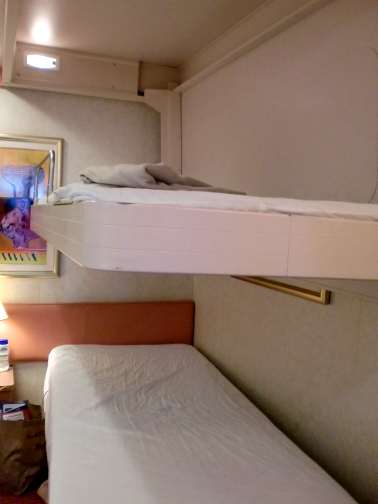
top bunk drops down from ceiling

The amount of people staying in a room also affects room selection.  Within a given category, some staterooms may sleep only two people while others sleep three, four, or even five.  When I took a cruise on the Norwegian Sun with my son and grandson we had to make sure to choose a room that slept three.  That room slept the third person on a couch that folded into a bed, but some cabins have one or two beds that pull down from the ceiling.  Those add sleeping space without taking up floor space, a nice feature when cruising with kids.

If you aren’t particular about your room location or amenities, try booking with a category guarantee rather than a specific room.  You will get at least the category you booked in, and often get upgraded to a higher one at no extra charge.

Accommodations on other ships: Arcadia, Breeze, Breeze odd cabins, Divina, Ecstasy, Infinity, Legend, Pearl, Ruby Princess, Splendor, VeendamWesterdam, Wilderness Adventurer

For a complete list of blogs about cabins see My Cruise Stories Ships and Cabins page.

Copyright My Cruise Stories 2011
Posted in Carnival, Liberty, Shipboard Life | Tagged , , , , , | 11 Comments

Mahogany Bay, Isla Roatan Honduras

Isla Rotan Honduras

Flying Beach Chair passes Carnival Liberty at Mahogany Bay

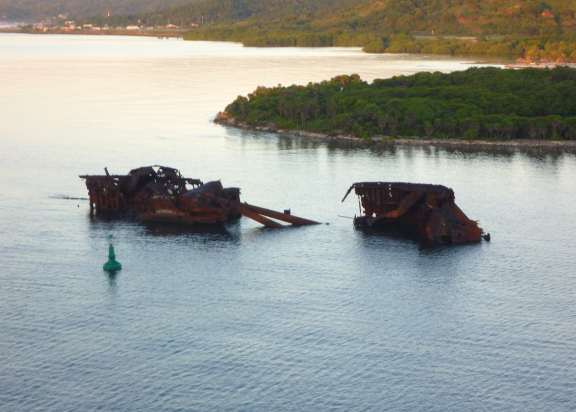
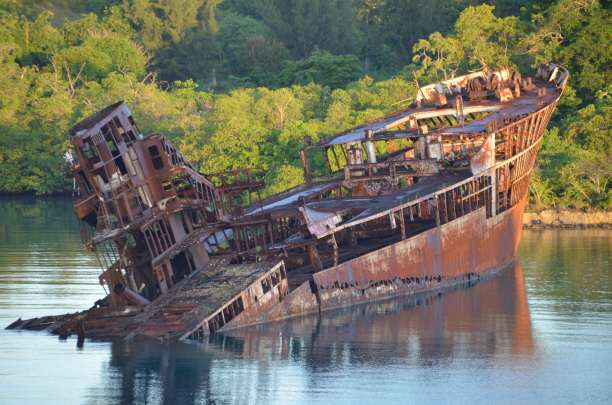
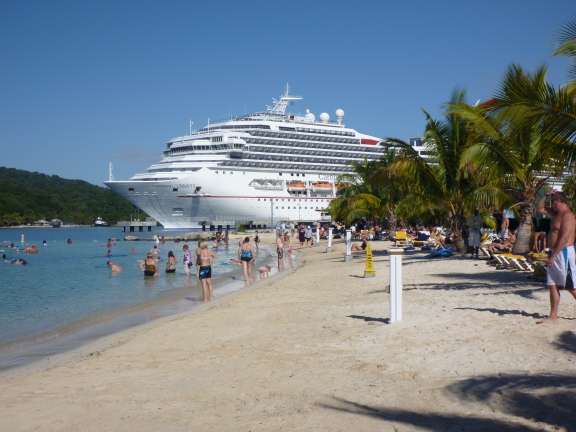
Carnival Liberty glided slowly backwards through the deep channel which appears to have been dredged through a shallow bay.  Through our balcony window we saw the rusty hulk of an old shipwreck poking through the water, so of course immediately the cameras came out.  A definite advantage of having a verandah room.  Soon we spotted a much larger wreck.  The rusty skeleton of half a ship towered over the water.  Odds are anyone present when these ships went aground made it the few yards to shore without drowning.

old shipwreck, Isla Rotan

wreck at the channel into Mahogany Bay at Isla Rotan, Honduras

The ship came to rest with the larger wreck nearly in front of our room, although not knowing we would dock there since the dock was on the other side of the boat, we had taken pictures on the move.

Isla Rotan, Honduras

Large Wreck next to the dock

Carnival Liberty

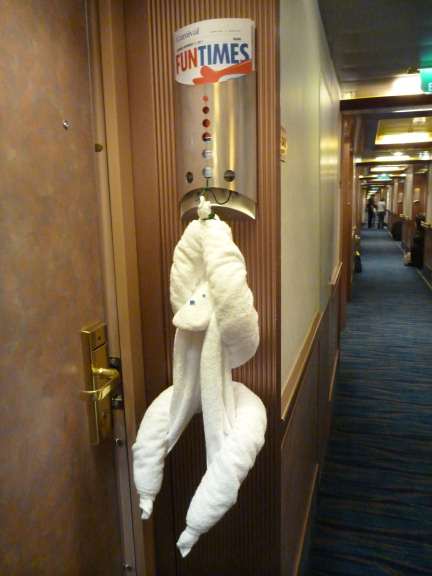
Sea Mail with towel monkey hanging around

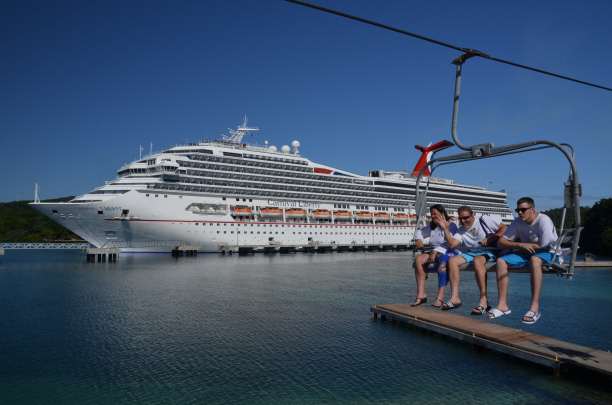
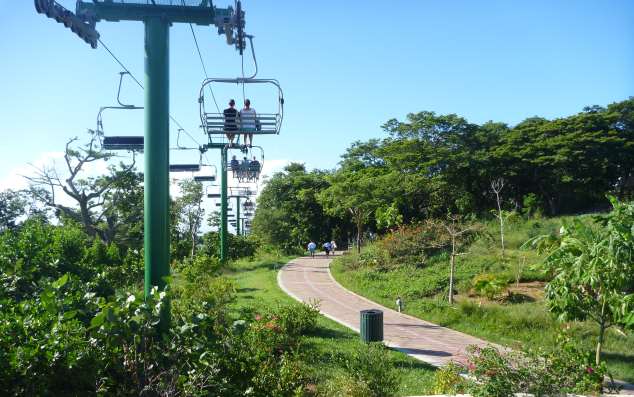
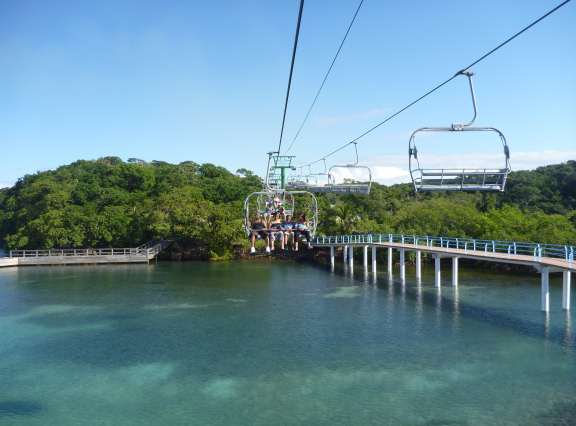
We had no specific plans for this port, figuring just to get off the boat and see what Carnival had to offer us at their beach because a cruise line owns this bay.  They did have an interesting way to get to the beach though, a ski-lift type conveyance called the magical flying beach chair.  Tickets for this chair count as a shore excursion.

Purchasing shore excursion tickets gets easier and easier.  If you haven’t bought them online before boarding, in addition to the shore excursion desk, you can also buy them right on the television in the cabin.   Someone will deliver the tickets to your room, either by slipping them under the door or putting them in the mailbox.  All cabins have a bin for ship mail just outside the door, which we initially dubbed Tree Mail as on the TV show, Survivor.  Later we decided Sea Mail made a better name for the mail bin.

I recommend buying the shore excursion tickets online prior to the cruise if you know what you want to do as the prices sometimes go up a bit if you wait to book on the ship.

I had not bought the tickets for the “Magic Flying Beach Chair” in advance, so I tried the thing where you buy shore excursion tickets through the stateroom TV.  It took less time than it took the people I was waiting for at the moment to change their clothes.  They do have a footpath to the beach, but we wanted to try the chair because it was there.

Naturally they route everyone through a gift shop at the entrance/exit to the island.  A short walk up a hill brings you to…….more gift shops.  And of course the usual jewelry stores.  As we left the ship they handed us cards for a free necklace at one of the shops.  Since that shop was right on the way to the chair lift we stopped in.  “For just $10 you can have these earrings to match the necklace,” the girl at the counter said.  I declined while noticing that the stone was significantly smaller than in the picture on the free necklace card.  Oh well, can’t really complain about free stuff.

Mahogany Bay, Isla Rotan Honduras

Magical Flying Beach Chair next to foot path

As we boarded the chair we noticed someone starting down the footpath pushing a wheelchair.  The footpath wound through the trees a bit so we lost sight of them as we took pictures of the lift, the ship, and interesting things on shore like the rental station full of toys to rent.  We saw kayaks, paddle boats, and some sort of giant three-wheeled water bike in or near the shed at the water’s edge.

Mahogany Bay Isla Rotan Honduras

water toys for rent

The chair sailed slowly over the water and we watched people on the footpath crossing a bridge.  The person pushing the wheelchair who had started out the same time we did emerged from the trees and crossed the bridge, reaching the other shore before the chair lift got to its destination.  For anyone who has plans for a cruise that includes a stop at Mahogany Bay, if you want the fastest way to the beach, walk.

Isla Rotan, Honduras

beach at Mahogany Bay

We scouted around the beach a bit, traded our lift tickets for wrist bands, and asked the lady at the booth where to find the best snorkel area.  She had snorkel gear for rent so we figured they must have one.  She recommended snorkeling off the dock on the side outside of the swimming area.  We brought our own gear, so passed on the rentals.  Well I should say I brought mine, John left his on the boat.  We took some pictures around the beach and then decided to go back to the ship to trade his big camera in for his snorkel gear.  We took the lift back and again the people on the footpath got there first, but we paid for it, might as well use it.  Good photo ops from the lift as well.

Heading down the dock back toward the ship, a sea of humanity walked away from the ship through the Caribbean sunshine, the coconuty smell of sun lotion wafting down the path in their wake.  Nobody but us went in our direction.  After a switch of camera for snorkel gear, we noticed in our brief absence sunshine gave way to a cloudy overcast sky.

Properly equipped for snorkeling now, we set off back toward the beach.  The chair lift seems designed for continuous movement, but if people are not fast enough getting on or off they will stop the chair for them.  Doing so stops the entire system as it is on a continuous cable so it makes frequent brief stops along the way.  We still took the chair again anyway, preferring to save our feet from the rubbing of beach shoes that aren’t good walking shoes, but are the sort that we don’t mind getting wet and sandy.

Isla Rotan, Honduras

beach at Mahogany Bay

We walked down the beach passing people swimming on one side and lounging in lawn chairs on the other.  Then we reached a fenced off area containing private cabanas.  We turned away from the water and found a trail behind them.  The trail led to a lively bar in front of another small section of beach with lawn chairs.  We parked our things on chairs near the dock and got our snorkel gear out of our beach bags.  At the end of the dock, they had a platform on the water with ladders leading down for easy access for snorkelers.  People snorkeled on both sides of the dock, but as the lady in the rental booth advised, the best stuff to see is on the outside, not in the enclosed swimming area.  We went on the outside and found several different types of coral and quite a few small colorful fish.  Chris and Liza came out later and not having talked to the rental booth lady, went on the inside where Chris said they did see a couple large fish and a school of squid.

under the sea Isla Rotan

fish I saw snorkeling on the reef

About the time we settled in on the lawn chairs after snorkeling the weather decided to dump a sudden downpour on us.  Everyone scurried for shelter.  Heading up the beach back toward the lift we giggled a bit at a covered playground full of adults sheltering from the rain and not one child at play.  By the time we reached the lift, the volume of rain had already decreased, but we got on anyway.  Over the water the lift lurched to a stop.  Not its normal brief stop to let someone on or off, but a long oh-no-the-lift-died sort of stop.

Mahogany Bay, Isla Rotan, Honduras

not so magical beach chair stuck over the water

While we dangled above the water, watching people on the footpath getting somewhere and fish swimming beneath us, it eventually stopped raining.  Finally the lift lurched forward and began to move.  We made it across the water, but not much farther.  Then it stopped once more.  This time we sat over land watching a guy with a cane hobbling slowly up the footpath and reaching the end while we dangled in the sky.  Finally the lift moved again.  This time we reached the end.

Because dangling in the air for long periods of time in the rain is not what we paid for, we asked for a refund on our lift tickets at the booth, but they said since we had bought them on the ship to ask there.  I asked there and they said they would email the operator and see what they said.  We never did get a refund.  Good thing it didn’t cost much.   Carnival staff treated us like royalty during our entire cruise, so we can forgive them this minor mishap.

Assuming it works, riding the lift is good for great views and photo ops, or people who can’t walk far.  Also for those like us who want to ride it just to ride it.  For the fastest way to the beach, definitely take the walking trail.  When people with canes and wheelchairs get there first, you know for sure walking is faster.

Funny though, soaked to the skin as we were, we never really felt cold until we got back on the ship where stepping through the door brings about a 30 degree drop in temperature.  OK possibly a slight exaggeration, but for some reason people always seem to keep air conditioners turned up way too high.  I always need sweaters and sweatshirts and things for inside the ship, yet the outdoor spaces feel pleasantly warm.

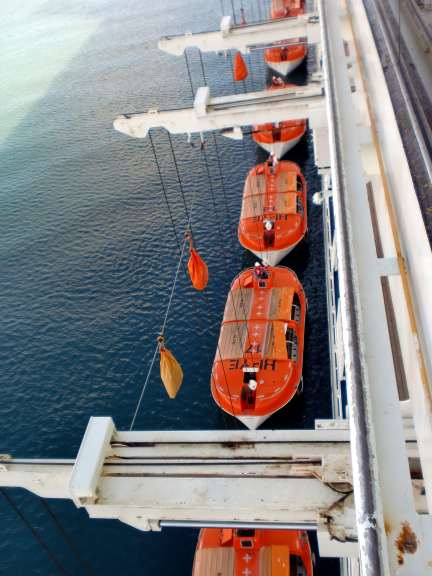
Carnival Liberty crew in lifeboat drill

lifeboat drill

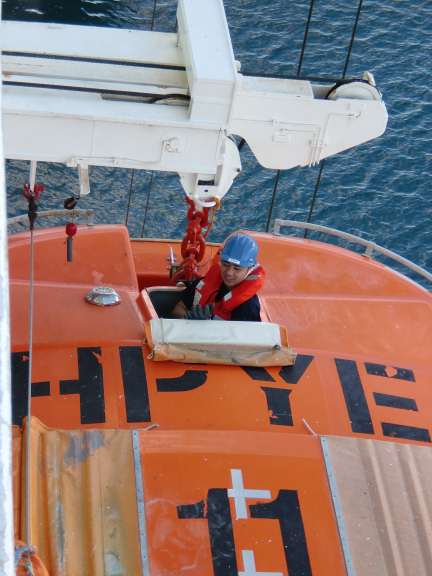
Back in our cabin, I stepped out on the balcony and saw crew members having a lifeboat drill.  A whole row of lifeboats just under our balcony, each with two crew members poking out of hatches at either end like so many jack-in-the boxes.  The lifeboats went down to the water and back up.  Sometimes the levels from one boat to another varied, but at the top and bottom they all were the same.

I got some interesting photos  I never would have taken had we not got rained on and come back early.  You just never know what random things might come in useful later.  Some of these photos got reposted all over the internet in John’s guest blog on cruise ship safety.

Isla Rotan

Chris' underwater picture from snorkeling

Shore excursions on Isla Roatan include an island tour or a variety of adventures at Gumbalina Park including zip lines, birds, or pirates.  Other choices include private island or resort excursions, several snorkel or dive options, snuba or semi-submarine trips, kayaking, dolphin encounters, and beach options.  There’s also golf, but I can’t recommend that no matter how nice the course is because fertilizer from oceanside golf courses increases the growth of coral-killing algae on nearby reefs.

Isla Rotan is the largest of eight islands that make up Islas de Bahia (Bay Islands) about 30 miles off the northern coast of Honduras.  The temperature averages 75 – 85 degrees farenheit year-round.  Although the island’s official currency is Lempira, at the cruise ship port in Mahogany Bay all the shops accept American dollars.  Some stores on other parts of the island happily accept American dollars as well.  Tourism is currently the island’s main industry.

Occupants of the island speak a wide variety of languages in addition to English and Spanish.  Their ancestries vary widely, as the island’s history included native populations as well as Spanish and English settlers, pirates, and African slaves.

After many years of Spanish, British, and pirates fighting over the island, with various settlements and populations coming and going, the island finally ended up as the property of Honduras in the mid 1800’s.

Locals tell tales of legends of ghosts, known locally as duppees.  They say pirates burying gold would kill a man and leave his body with the gold so his ghost would guard it.  After centuries of vigilance, the ghosts tire of watching the gold and will give specific directions to willing listeners, who then can find the gold by following those directions exactly.

Isla Rotan Honduras

really tall coral I almost ran into while taking pictures of smaller coral when snorkeling at Mahogany Bay

Isla Roatan and the other Bay Islands boast the world’s second largest coral reef, called the Mesoamerican Barrier Reef.  It is outsized only by Australia’s Great Barrier Reef.  Many locals depend on the sea to make their living, whether from cruise ship passengers, or fishing for delicacies such as lobster and shrimp sold world wide.  Many fly-in vacationers staying in land based hotels also boost the island’s economy, often visiting for water-based activities.

The Mesoamerican Barrier Reef extends more than 450 miles from Cozumel and Mexico’s Yucatan Peninsula past Belize and on to the Bay islands.  It hosts inner, middle and outer reefs, separated by sand bars and each with their own populations of coral, fish, and other sea life.

Isla Rotan, Honduras

fish Chris saw snorkeling at Mahogany Bay

Coral reefs worldwide currently face difficulties due to increased acidity of the oceans, caused by the increase in carbon dioxide in the atmosphere.  They have a harder time finding the components they need to build their shells, and when erosion exceeds growth the reefs die off.  Other factors such as pollution, bacteria, and increased ocean temperatures also have led to a decline in the number of living corals.  Coral reefs create habitat for many other species, so their loss brings about a loss in a great amount of sea life.  In some places in the Caribbean, up to 80% of life on the reefs has already died.  Since the 1960’s, many square miles of coral reefs in the Pacific have died, with the rate of die-off doubling in the 1990’s.  Overfishing also contributes to coral loss because fish eat the algae that can otherwise suffocate the reef.

Coral loss is yet another reason we should all do our part to recycle, use sustainable resources, and help decrease pollution.  While this may not directly affect the coral, recycling plastic bottles to ensure they stay out of the great garbage patch in the north pacific gyre is one small thing we can all do to help stop the decline in the overall health of our oceans.  The north pacific gyre is nowhere near Roatan, but plastic from all over the world makes its way into the ocean and ends up in the north pacific gyre or in other smaller garbage patches elsewhere.

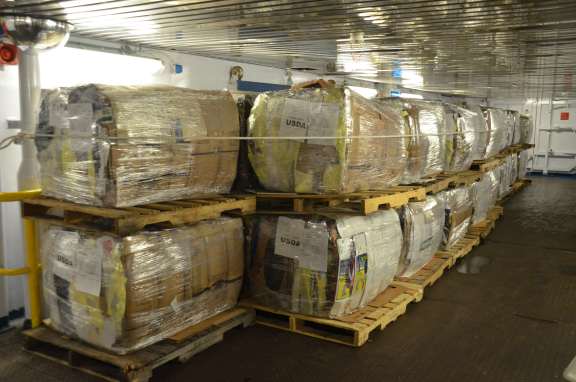
On a behind-the-scenes tour of the Liberty, we found out that Carnival recycles everything to take back to port so nothing harmful goes into the landfill or the sea.

Carnival cruise line recycling

Bales of recycling on the Liberty waiting to go to port

Posted in Carnival, Liberty, Ports of Call, Shore Excursions | Tagged , , , , , , , , , , , , , | 15 Comments

Carnival’s Bitter and Blanc Brioche Bread Pudding

Bitter n Blanc Brioche Bread Pudding

Bitter and Blanc on Carnival Breeze

Decadent and delicious, Carnival’s rich warm Bitter & Blanc pudding served with vanilla sauce makes a fine end to a meal, whether served on board the cruise ship or at home.  It has a lot of steps to making it, but the results make it worthwhile.  For a quick and easy yet tasty dessert, try the chocolate melting cake.

bitter & Blanc brioche bread pudding

fresh baked bitter & Blanc, before adding the vanilla sauce

Finding Brioche bread may not be as easy as a trip to the local supermarket.  I could not find any at the ordinary grocery stores near my house.  I’m guessing upscale grocery stores or bakeries, which I don’t live near, might be more likely to carry it.  Since I couldn’t find any, I looked online for recipes and made my own.  I used a recipe from a site called Group Recipes, but other sites offered recipes as well.

Brioche Bread

brioche bread loaf

fresh baked brioche bread

  • 1/2 cup whole milk
  • 2 large eggs
  • 2 tbsp sugar
  • 1 tsp salt
  • 1/2 cup (1 stick) unsalted butter, softened
  • 2 1/2 cups all-purpose flour
  • 1 package active dry yeast (= 2 1/2 teaspoons)

Directions

Bread machine recipe:

  • Add all ingredients in order to your bread machine. Set on the dough cycle. When cycle is done (usually 1 1/2 hours for most bread machines) proceed to cooling rack instructions.

By Hand Recipe:

  • Heat the milk in a small saucepan over low heat until it’s just warm (110-115F) Remove pan from heat and pour milk into a small bowl. Stir in the yeast and 1 cup of the flour. Cover the bowl with plastic wrap and let rest for 10 min.
  • Combine the butter, sugar, salt and eggs in a mixer bowl with a paddle attachment (or food processor). Add the remaining 1 1/2 cups flour and process until smooth. Add the yeast mixture and process again until smooth. Turn the dough onto a lightly floured surface and knead 5 minutes, until smooth and elastic.
  • Shape the dough into a loaf and place into 8 1/2 or 9 inch non-stick loaf pan. Cover the pan with a clean dish towel and allow rising for about an hour.
  • Preheat the oven to 375F. Using a sharp knife, score the loaf length wise with a sharp knife. The score the loaf 3 times at equal intervals across. This makes a professional looking loaf and helps it bake evenly.
  • Bake for 30-40 minutes, or until golden. Remove from pan and place the loaf on its side on a cooling rack. Alternate side after 5 minutes (this prevents the loaf from compressing)

Once you have some Brioche bread, whether baked or bought, you can make the Bitter & Blanc pudding.  This recipe makes 4- 5 servings of the Bitter & Blanc.  It doesn’t take the whole loaf, but the leftover bread makes great French toast.

GANACHE

3 oz Dark Chocolate

1/4 cup Heavy Cream

PUDDING

3 cups Brioche Bread, crusts removed and cut into cubes

3 egg yolks

2 Tablespoons sugar

1/3 cup heavy cream

4 oz white chocolate

3 Tablespoons butter

MERINGUE

1 egg white

1 1/2 Tablespoons sugar

VANILLA SAUCE

bitter & blanc brioche bread pudding

top the bitter & blanc with vanilla sauce

2/3 cup whole milk

2 Tablespoons sugar

1/2 tablespoon cornstarch

2 egg yolks

1 teaspoon vanilla

DIRECTIONS

Heat oven to 325 degrees farenheit. Grease  5 individual souffle cups or 2/3 cup pyrex bowls with butter and sprinkle lightly with sugar.

Ganache: break dark chocolate into squares in small bowl.  Heat heavy cream to simmer in small saucepan.  Pour simmering cream over chocolate.  Stir until chocolate melts. Let cool slightly, then spoon into prepared cups.

Pudding: Put bread cubes in mixing bowl.  Pour cream over bread and let soak.  Melt white chocolate and butter in small saucepan over low heat, stirring frequently. Let cool slightly.  In mixing bowl, cream sugar with egg yolks.  Add white chocolate mixture slowly to egg mixture, beating constantly on slow speed to prevent egg from cooking on contact with warm white chocolate mixture.  Stir in the cream-soaked bread by hand.

Meringue: Beat egg white with sugar until white and fluffy and stiff enough to form peaks.  Fold into bread mixture.  Spoon into bowls over ganache.

Bake at 325 degrees farenheit for 30-45 minutes until pudding sets and tops brown.  When pudding looks nearly done, start cooking vanilla sauce.

Vanilla Sauce: Boil milk and sugar in small saucepan.  In small bowl, cream egg yolks with cornstarch.  Whisk the hot milk into the bowl a little at a time, whisking while pouring to prevent scrambling the eggs.  Add vanilla and pour back into saucepan.  Cook on low heat stirring constantly with whisk until desired thickness is reached.  Remove from heat.

Carnival's Bitter & Blanc brioche bread pudding

Bitter & Blanc on Carnival Liberty.  Sorry about the blurry photo.  I didn’t get any good ones.

Poke holes in center of pudding and pour vanilla sauce into and over top of warm pudding before serving.

Croutons

Carnival serves theirs topped with some croutons that look like they are probably made of toasted, sugared brioche bread.  It didn’t look as fancy without them, but tasted quite good.  Their recipe didn’t include their croutons, but I made some one day by cutting the bread into cubes, rolling the cubes in sugar, and then baking them at 250 degrees for about 25 minutes and flipping once to dry out the bread.  Then broil them just until lightly toasted, again flipping once.  This may not be how they make their croutons, but it works fine if you want some.

Easier Recipe

 If this recipe seems too difficult, try my Chocolate Chip Bread Pudding recipe, which tastes similar to the Bitter & Blanc and is a whole lot easier to make.

Copyright My Cruise Stories 2012
Posted in Carnival, Cruise Food, recipes | Tagged , , , , , , , | 8 Comments

Are Cruise Ships Safe?

Yes, Cruise Ships Are Safe!

Guest Blog By Capt. John L. Beath

Costa Cruise Line’s recent disaster has many wondering if cruise ships are safe. Blame for the terrible and avoidable accident has been squarely blamed on Captain Francesco Schettino – a captain with the cruise line since 2006. This tragedy could have and should have been avoided by simply following company protocols. Schettino’s decision, for whatever reason, to deviate from pre-programmed routing put the 951-foot Concordia far too close to Italy’s Giglio Island. After hitting a submerged reef the captain steered the ship toward shore but failed again to follow proper safety procedure and protocol. Schettino’s complete lack of procedure, common sense and poor leadership led to his cowardly act of abandoning ship long before his guests.

While this disaster points squarely at this captain, aka “Captain Coward” it should not reflect on the hundreds of excellent captains who regularly pilot their cruise ships safely throughout the world. Carnival Corporation owns Costa Cruise Lines and will no doubt have a say in future safety protocols and back up plans in the event of an emergency.

Safety First

crew of the Carnival Liberty conducting lifeboat drill

On a recent back-to-back cruise aboard the Carnival Liberty, my wife and I went through a safety drill before leaving the dock on each seven day cruise. Some passengers hate these drills but they are mandatory and familiarize passengers with their muster station. The muster station is where you should report in the event an abandon ship order is given. Reports from passengers of the Concordia say they did not have a muster drill before leaving port. Once again, this indicates poor leadership and bad safety procedures by one man, Captain Schettino.

cruise ship safety drill

Carnival Liberty crew conducting lifeboat drill

While in port during our recent Carnival Cruise, the captain of the Liberty conducted several safety drills for his crew which included lowering the lifeboats. This drill took place when guests were ashore enjoying their “port time.” The efficiency of the drill impressed me, as crew members methodically went through the safety drill.  These drills keep crew members practiced on safety procedures and help to ensure each lifeboat works properly.

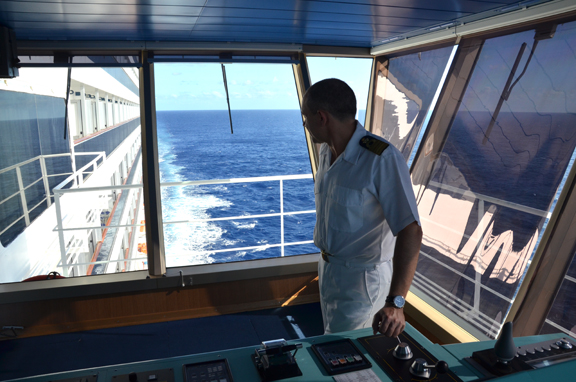
Captain on the bridge of Carnival Liberty

The bridge offers a view of where you've been as well as where you're going


More than 100 passengers have joined a lawsuit to be filed in the U.S. and Italy against Costa Cruises. These passengers are reportedly asking for more than one million each, which seems unreasonable to me unless they were injured. Yes, this was a horrific accident, but should passengers who made it safely to shore receive one million dollars each? I don’t think so. Costa Cruises says they will give a full refund to passengers aboard the Concordia and will offer 30 percent off future cruises if they stay loyal to the brand. This too seems a bit unreasonable to me. In the end the lawyers and the courts will decide these claims and lawsuits. Costa Cruises will also pay for all valuables and personal items lost during the disaster.
The question remains, “Are cruise ships safe?”

Without question I believe cruise ships are safe and will be safer as a result of this avoidable accident.Carnival Corporation is the largest cruise company in the world and has the ability to effect change in safety policies and procedures throughout the industry. My wife and I will continue cruising and have already planned a Trans Atlantic cruise with Carnival Cruises.

Cruise Ships are safe and one of the most fun and affordable vacations in the world. We should not condemn Costa Cruises or an entire industry because of the mistakes of one captain.

About the author: John L. Beath holds a United States Coast Guard Master’s License, has gone through numerous boating safety courses and is a freelance writer focusing on the outdoors, travel and cruising. His website is www.MyTravelTastes.com

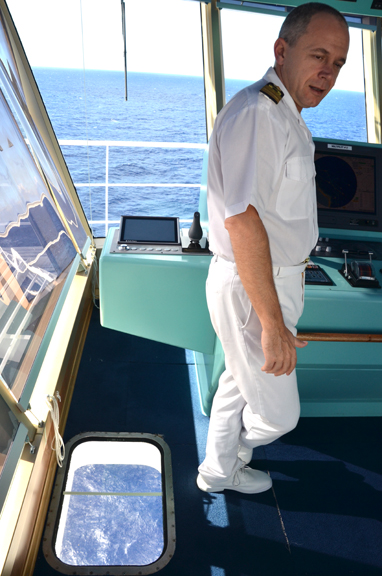
Bridge, Carnival Liberty

Captain by the control panel, which extends the full length of the bridge


 Captains with Carnival Corporation have modern, sophisticated bridges with high-tech electronics. There’s always more than one officer on the bridge and the captain is ALWAYS close by in case of emergency.

Captain on the bridge, Carnival Liberty

The bridge has a window in the floor


The captain of the Carnival Liberty shows the port wing station where the captain can dock the ship and look straight down through the Plexiglas floor.

Posted in Guest Blogs, Shipboard Life | Tagged , , , , , | 5 Comments

How to make a towel rabbit

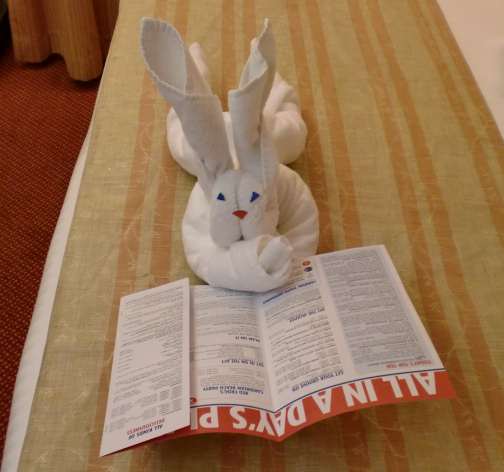
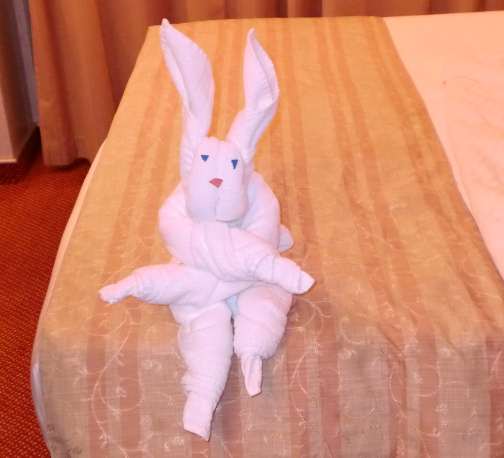
towel rabbit

Carnival Towel Rabbit

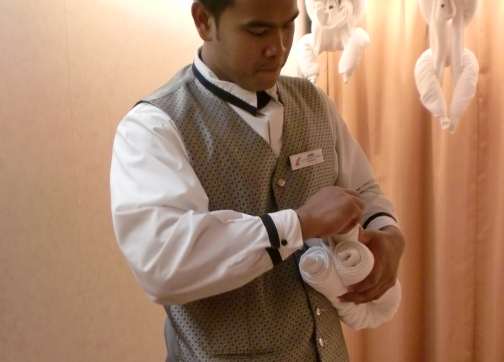
Every night cruise ship passengers around the world return to their cabins to find a towel animal sitting on their bed.  Stateroom Stewards fold these animals with ease, while passengers puzzle over how it’s done.

towel folding book

new Carnival towel animal folding book

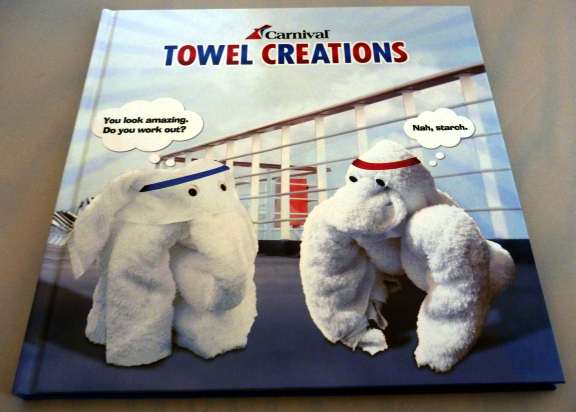
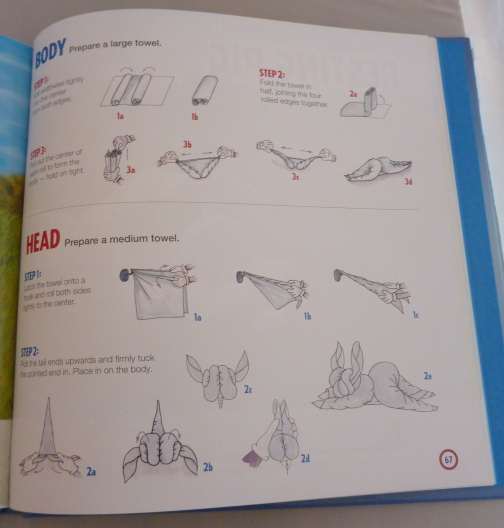
Carnival has a new edition of their towel animal folding book, available for sale to passengers on their ships.  The book includes photos of numerous animals with line drawing pictures of the how to steps of folding each one.

towel animal folding directions

Carnival Towel Book Rabbit Instructions

Many animals, including my own invention – the crab, use the same basic body, placed in ever changing positions for different animals or even variations of the same animal.  Our rabbit for instance started out lying down, but on the second folding for the video became a sitting rabbit instead.

For the main body this rabbit and many other animals use, start with a bath towel.  Roll each end into the center.  Astika said the secret is to start the roll with just a very small bit folded over.

roll ends of towel to middle

roll both ends of towel to center

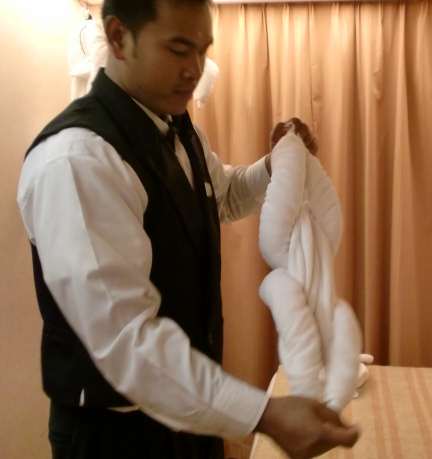
Fold the rolled towel in half crosswise with the rolls to the outside of the fold.

fold rolled towel in half

fold towel in half, rolls to outside

Pull the corners of the towel out of the center of each roll.

pull towel corners out of each roll

pull the tips out of each roll

Grab the pulled corners of both ends of one roll in one hand, and the pulled corners of both ends of the other roll in the other hand.  Pull them tight and stretch into animal body with four legs.

pull rolls into legs

pull ends of rolls tightly into body with 4 legs

Position the body the way you want it for the animal, whether sitting or lying down.

Make the head.  For the rabbit head, use a hand towel.  Either hook the center of one long edge over a wall hook, or hold it to your chest with your chin, leaving both hands free.

making towel rabbit head

rolling towel corners toward end held under chin

Roll both sides from edge to center at the same time until they touch in the center and it resembles a long triangle.

With the rolled part to the outside, fold in half and push the tip end between the two rolled sides.

folding towel rabbit

fold in half, bringing tip between the two rolls

While holding tightly to the two rolled ends with one hand, curl the tip end around itself and tuck it in between the rolls.

how to fold towel rabbit

roll tip end around itself

Pull head tight, position on body and decorate as desired using colored paper to make eyes and nose.

Carnival towel rabbit

finished towel rabbit

This is the second in a series of individual towel animal folding blogs, which started with the easy towel seal.  Other easy animals include the penguin and the crocodile. You can also check How to Fold Cruise Ship Towel Animals for more towel animal folding instructions. Up now: Towel Frog,  towel gorilla, hanging towel monkey, pigsnakes, elephant, my very own towel crab, the really easy to make towel cake and many more including my favorite, the fire-breathing dragon.

The easiest way to find other towel animal folding instructions is go to the towel animal page and click the picture of the animal you want to make.

If you want to make sure you don’t miss any future animals you can easily find this blog again by liking My Cruise Stories facebook page or following this blog.

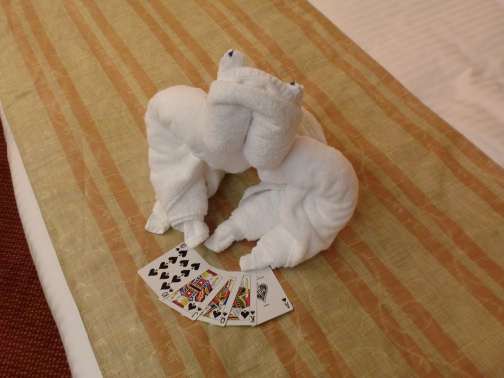
Carnival towel frog

towel frog winning at poker

copyright 2012 My Cruise Stories

Posted in Carnival, Liberty, Towel Animals | Tagged , , , , , , , , | 4 Comments

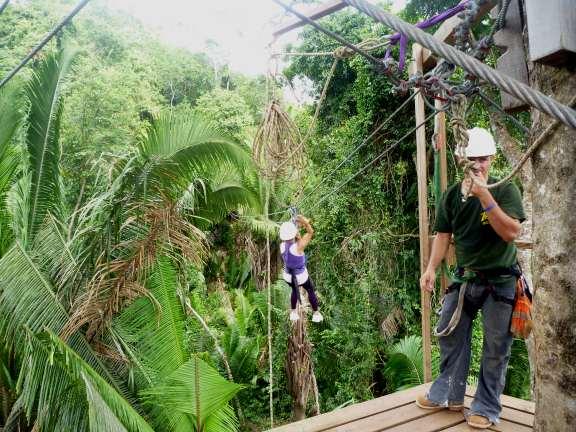
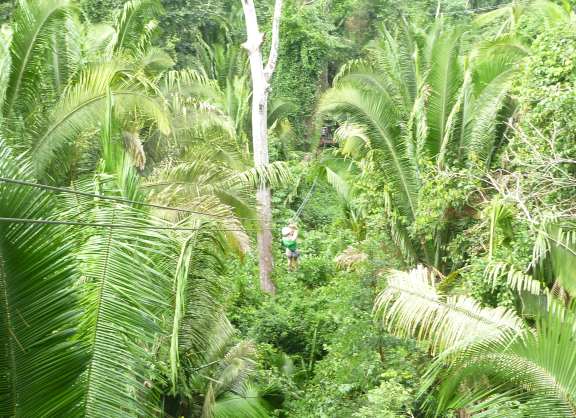
Zip Line in Belize

Belize shore excursion on Carnival Cruise

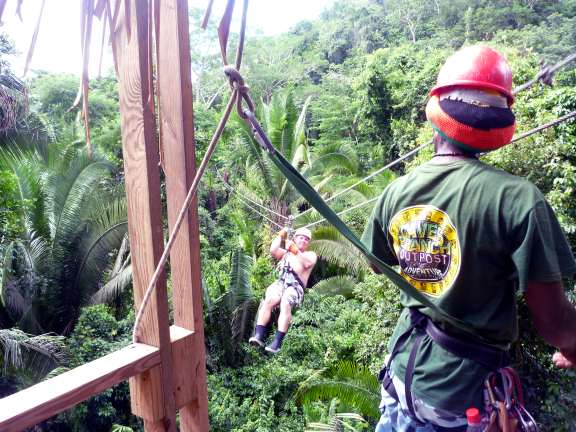
Chris on the zipline in Belize

After getting out of the water and dropping off the tubes from our excellent cave tubing adventure with cavetubing.com, we headed straight for the zipline.  At the fork in the trail where one way went to the ziplines and the other back to the bus, the guide said if we really needed anything off the bus we could get it quickly before heading down to the zipline.  They said NCL built the zipline, but apparently they let other people use it.

I had worn fast-drying shorts over my swimsuit and hiking shoes for the cave tubing so I just wanted my tank top, which I could have lived without.  Liza though had no proper shoes as she’d hiked to the tubes in flip-flops and then rode through the caves in snorkel socks (with the flip-flops tied to her tube in a plastic bag.)  Neither would work for the zip line and she didn’t travel very fast so I more or less ran to the bus and back and grabbed the bag we’d left on the driver’s seat for easy access.  I got my tank top, she got her shoes and a tank top.  The zip line ended and started at the same point so leaving the bag there would not have been a problem, but our cave-tubing guides offered to bring it back to the bus, an even better option.  They claimed Belizians are afraid of heights, and said we’d have Mexican guides on the zipline.

Belize shore excursion, Caribbean cruise

Liza on the zipline

Zipline guides outfitted everyone with helmets, thick leather gloves, and harnesses.  All the zip lines have double cables with a separate pulley on each plus an extra clip.  It would be pretty hard for all of that to fail at the same time.  They also keep everyone clipped to a cable wrapping around a tree at each landing area.   Of all the clips each person has on, they are never all undone at once.  If anyone somehow managed to find a way to fall off the platform, there would still be a clip holding them to at least one cable.

zipline in Belize

Liza on the platform waiting for her turn

We hiked the first set of stairs to the first zipline.  A short easy zip, great practice for inexperienced zip liners.  We went with the same people as our cave-tubing group, mostly adults and one little girl.  She had no fear and a great time.  Some of the adults seemed a bit more nervous, but they quickly got over it and had a great time too.

This course had 7 ziplines.  The landing platform on some also served as the take-off platform for the next run.  Others had a bit of a hike in between them.  A much needed water cooler awaited at the top of one long steep hike.

Belize

me on the zipline

This course offered a variety of ziplines, some longer, some steeper.  The guides had only two commands for people to watch for while on the line, brake and stop braking.  Still there’s always that one person who doesn’t pay attention and then can’t stop in time and hits the well-padded tree.  That’s why it’s a well-padded tree.  Said person had a bit of a sore shoulder after hitting the tree, but still finished the course just fine.   She just asked for a bit of ice to put on it afterword.

When we arrived back at the starting point, the guides helped us out of the harnesses and we hurried back to the bus.  The group that had done just the cave tubing had already boarded, so once we all got on it quickly left.  Just down the road the bus stopped at a thatched hut where the ATV tours originate.  Inside they provided a free lunch, a homemade tamale for everyone.  Drinks, chips and sodas cost extra.

Belize shore excursions

Lunch Stop

On the bus, Speedo said we’d know the tamale had real chicken because of the bones.  At the time I thought he was joking, but the chicken inside the tamales did indeed have bones.  They offered a variety of hot sauce choices, but it tasted fine without any of them.

Following our tasty lunch, we all boarded the bus for the trip back to the terminal in plenty of time to catch the tender to the Carnival Liberty.  On the way they collected payment for the tour and tips.  We had a great time on our tour with cavetubing.com.  I’m quite comfortable recommending them.

Normally if the schedule says a cruise ship leaves at 5:00 and you arrive at the dock at 5:05 you will just get there in time to watch the stern of the ship as it sails away.  In fact this ship left 3 people behind at Cozumel, who then had to find transportation to the next port at their own expense.  However they do make one exception.  If you take a shore excursion purchased through the cruise line, the ship will wait.

In Belize departure time came and went.  About an hour past the scheduled time for the last tender, one finally arrived with around 200 people on board.  I’d imagine they felt quite lucky to have booked their tour through the ship.

Posted in Caribbean, Carnival, Liberty, Shore Excursions | Tagged , , , , , , , | 1 Comment