Double Glacier Visit to Glacier Bay

cruise ship in Glacier Bay

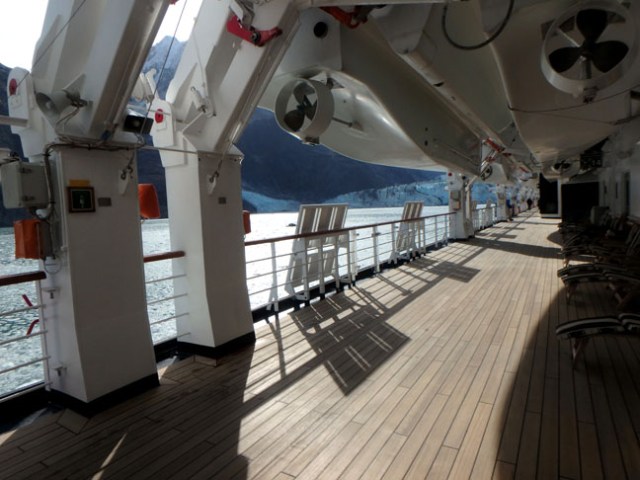
Westerdam at Johns Hopkins Glacier

In a span of just a few hundred years Glacier Bay went from a fertile valley where native Tlingit people lived in the 1600’s with the Grand Pacific Glacier on high mountain ridges above the valley to completely buried in ice to filled with water. During the Little Ice Age this glacier surged across the landscape covering everything in its path in ice up to 4000 feet thick. In the early 1700’s the glacier reached its peak with a terminal moraine jutting out into icy strait. By the time the first European explorers came with Great Britian’s Captain George Vancouver in 1791 the glacier had retreated 5 miles back into its own newly dug bay. The face of the glacier was an impressive 20 miles across at that time. Just 85 years later when John Muir came by in 1879 the glacier had already retreated another 26 feet back into the bay that hadn’t existed before its mighty surge.
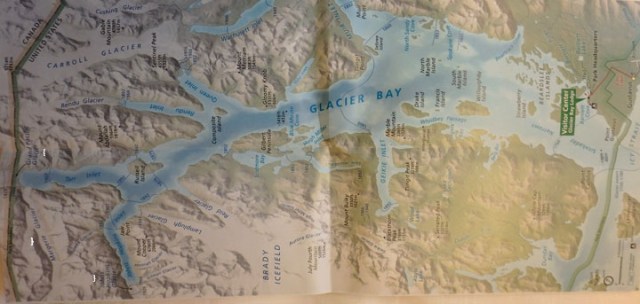
Glacier Bay map

arm of Glacier Bay visited by our ship

Glacier Bay of today is vast national park covering over 5000 miles with a network of fjords and glaciers. The many fjords create over 700 miles of shoreline with inlets leading to a variety of mostly tidewater glaciers. Some of the park’s glaciers are no longer tidewater glaciers, having retreated to the point that they no longer reach the sea. Cruise ships head over 65 miles from the mouth of the bay and up Tarr Inlet before reaching Margerie Glacier, one of the most active glaciers in the park. The ship passes by inlets terminating in other glaciers along the way. The remains of the unglorious and now not so Grand Pacific Glacier that dug the bay in its mighty surge sits in a mostly unnoticed grey flow down the hill next to the blue and white of Margerie Glacier.
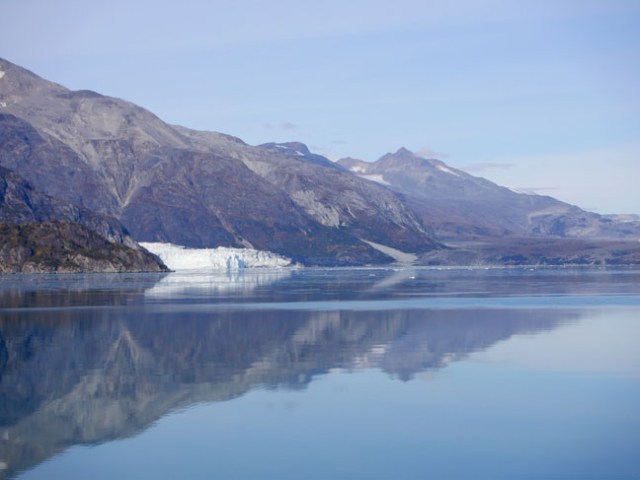
Glacier Bay

The little gray bit that looks something like a road coming down the mountain to the right of Margerie Glacier is what remains of Grand Pacific Glacier whose surge and retreat created Glacier Bay

Previously on a cruise to Glacier Bay on this very ship (the Westerdam) we went just to Margerie Glacier, but this cruise we went to Johns Hopkins Glacier as well, which someone said the ships could only get to very late in the season. This time we came in October, past the normal Alaska cruise ship season which usually ends in September.
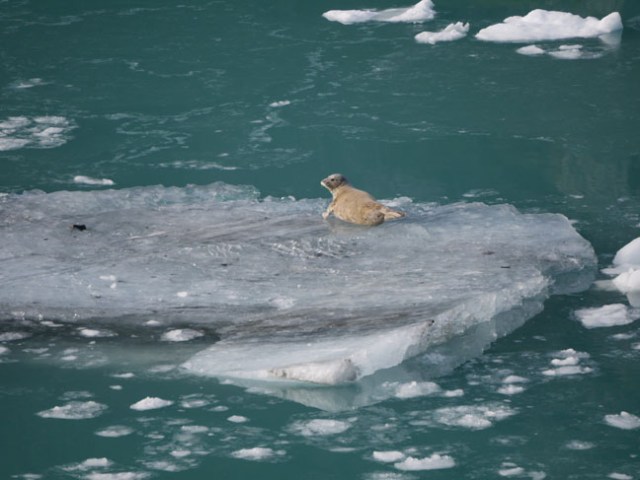
seal in Glacier Bay

seal on ice near Margerie Glacier

On the way into Glacier Bay the ship picks up rangers much the same way they pick up or drop off pilots coming and going from port – that is from another boat without stopping or going to shore. The rangers spot wildlife and provide narration and education throughout the journey through Glacier Bay, which can be heard in the Crows Nest Lounge observation room or on the outside portion of the Promenade Deck. I went up to the Crows nest to see the Rangers on the off chance one of them might be a former 4-H kid from back when I used to be leader of a 4-H horse club, who is now a forest ranger stationed in Alaska. He wasn’t there, but the ones who were there knew him and said they’d deliver a note.
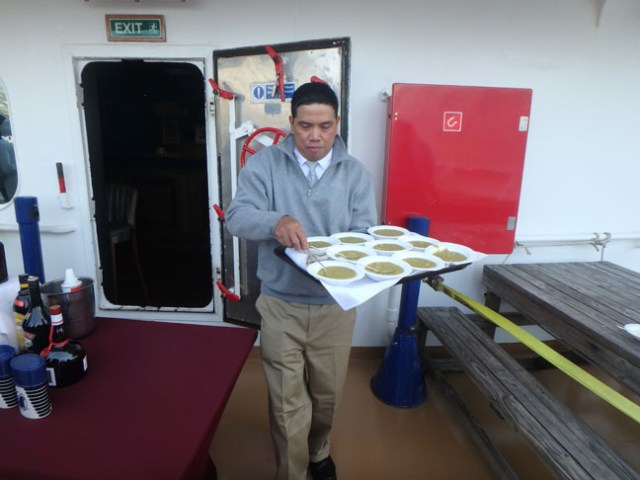
Holland America's pea soup

Crew member serving pea soup on the Westerdam

Our ship first went to Margerie Glacier. Here they served their traditional pea soup, which Holland America ships always have on glacier day on Alaskan cruises, but which I had not tried before this cruise. They open up the big deck 4 bow for scenic cruise times such as glacier watching, which is where they serve the soup.
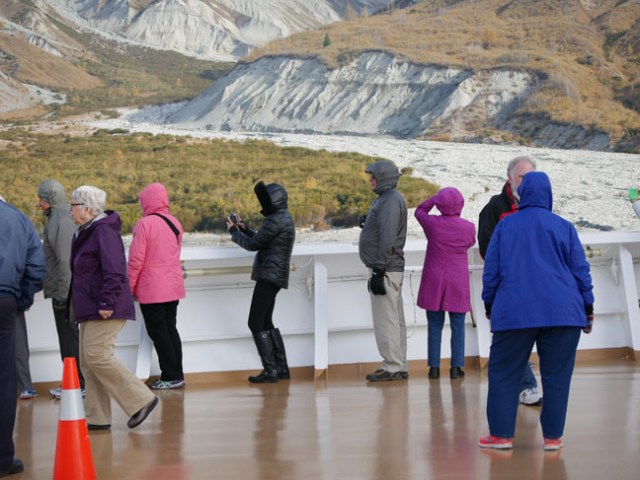
Westerdam in Glacier Bay

passengers on the bow near Grand Pacific Glacier

They also open up small bows on decks 5, 6, and 7 on ships of the Westerdam’s class, which is where I usually go for glacier watching. Far less people know those decks are open since they rarely announce it so there isn’t such a crowd. This time we went to the deck 4 bow for Margerie Glacier so I had a chance to try the pea soup, which tasted delicious, and helped to warm me up a bit for the short time it took to eat it.
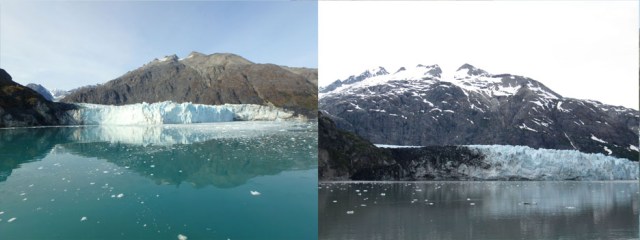
Margerie Glacier 2018 and 2013

Margerie Glacier 2018 on the left and 2013 on the right

I packed long johns this time because on past cruises I’ve always wished I had them for glacier watching. This time I was definitely glad I wore them, but it was so cold a ski mask might have been nice too. Margerie Glacier seemed smaller than I remember it from several years ago. Most glaciers are in recession these days. Possibly it also looked smaller to me because the last glacier we saw prior to this cruise was the far more impressive Hubbard. Comparing pictures from this trip to the previous one though, it does look like a bite has been taken out of either side of the face of the glacier now where it was straight across on the last visit and most of the black area was gone.
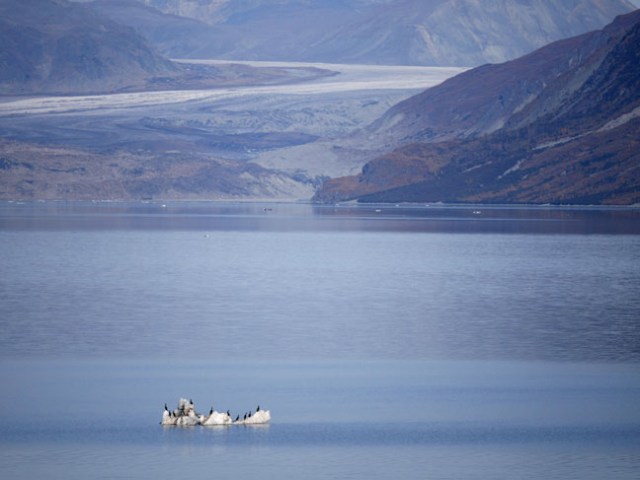
cormorants

cormorants on a bergy bit

On the way into Margerie Glacier we saw a seal sitting on a bit of  ice. Also lots of seagulls, an eagle, and one bergy bit full of cormorants. A bergy bit is a very small iceberg – perhaps a bit of what was once a larger iceberg.
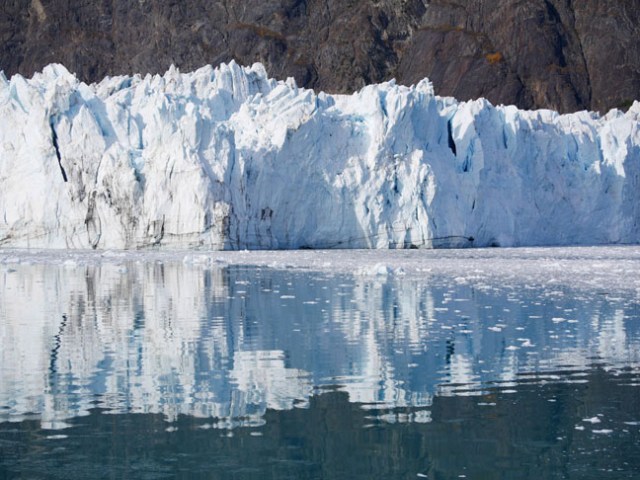
Margerie Glacier

reflections of Margerie Glacier

After doing a slow full spin at Margerie so everyone on board regardless of where they chose to glacier watch had a chance for a view the ship moved on to Johns Hopkins Glacier. The day warmed up by then and it was actually quite pleasant outside with long johns and a jacket, though the position of the sun in regards to the glacier made it hard to get good pictures there.
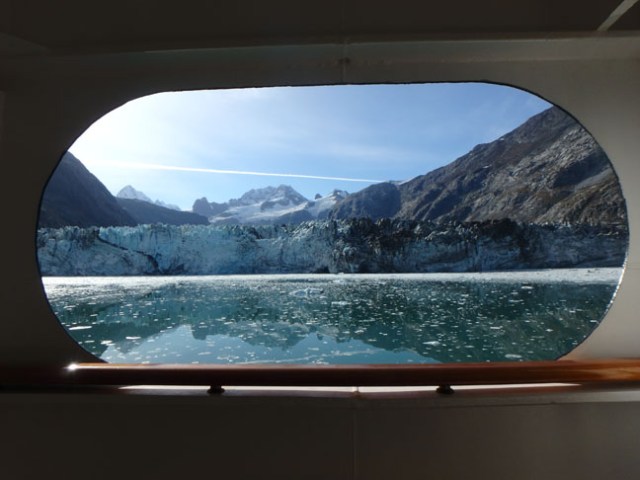
Johns Hopkins Glacier

Johns Hopkins Glacier through an opening near the bow of the promenade deck

It probably also helped that I didn’t go out in time to get a good position on any bow so I went to the promenade deck instead, which had plenty of room to stand by the rail and watch the glacier calve a few ice bergs with a loud crackle. The promenade deck is a bit more protected than the open bow, especially from wind caused by ship movement. Hardly anyone went there so I had great views and lots of options of where to stand and see the glacier.
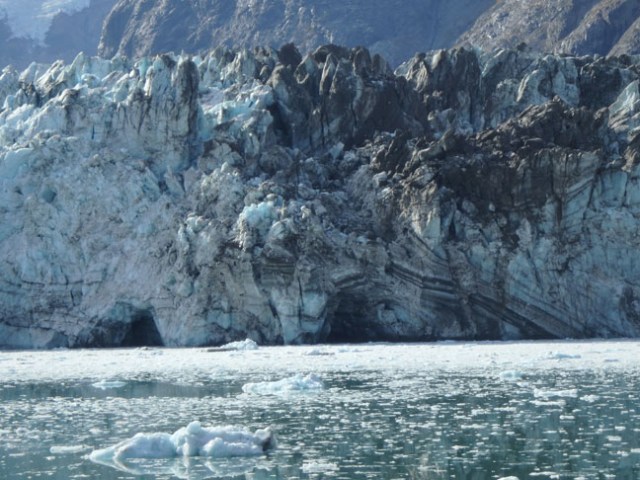
Johns Hopkins Glacier

ice caves in Johns Hopkins Glacier

Johns Hopkins Glacier was bigger than Margerie. It had an ice berg sitting out in front of it that was big enough to be grounded in the area between ship and glacier rather than floating like the many smaller bergy bits. The glacier had a whiter half and a dirtier half, the dirty part of which had a couple ice caves at the waterline.
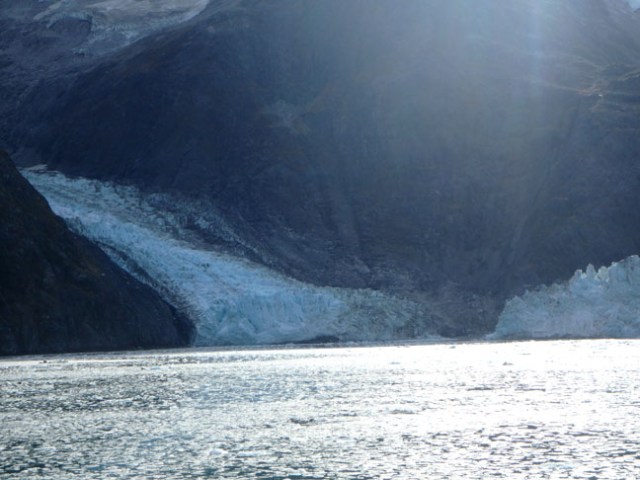
Gilman Glacier

Gilman Glacier

The face of the far smaller Gilman Glacier sits right next to Johns Hopkins and calved far more actively than its larger neighbor while we were there.
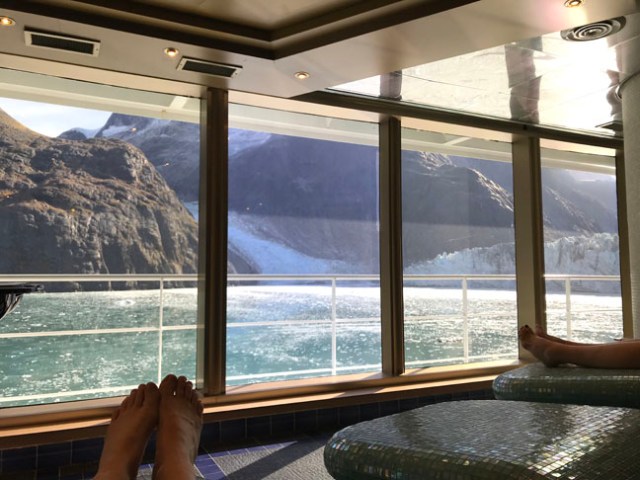
glacier watching in comfort

all the view and none of the cold – glacier watching from the spa (Gilman and Johns Hopkins Glaciers)

One advantage of having purchased the thermal suite this cruise is the view from the heated ceramic chairs. We went up there for a bit while still in glacier bay and saw the tail end of our time at Johns Hopkins as well as seeing a few more glaciers along the way as the ship traveled back toward the mouth of the bay.
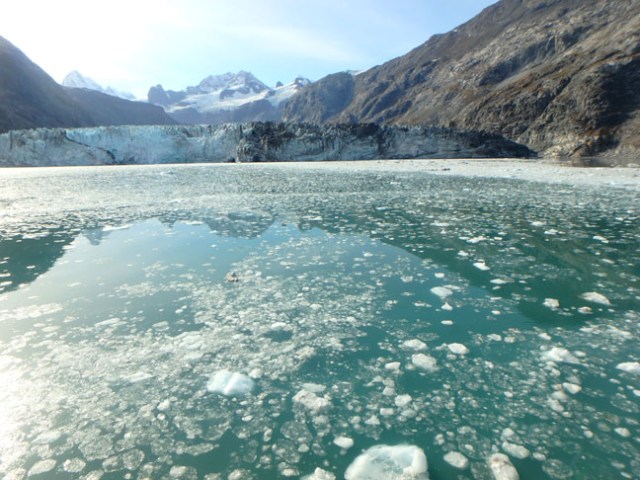
Johns Hopkins Glacier

Johns Hopkins Glacier

More Glacier Blogs

Baird Glacier
Endicott Arm
Glacier Bay
Hubbard Glacier
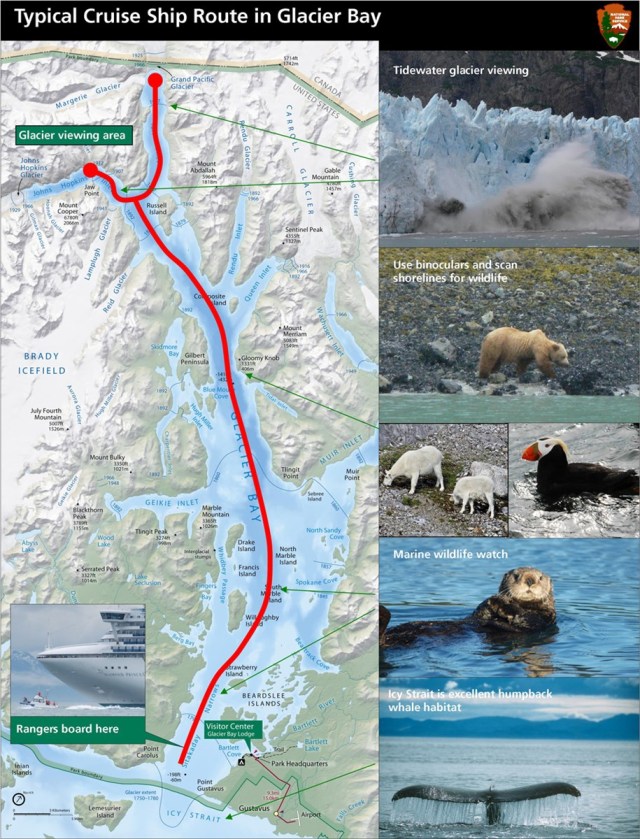
typical glacier bay cruise route

we went farther down the inlet to Johns Hopkins Glacier than what this map shows.
Copyright My Cruise Stories 2019
Posted in Alaska, Holland America, USA, Westerdam | Tagged , , , , , , , | 5 Comments

Dinner At The Captain’s Table

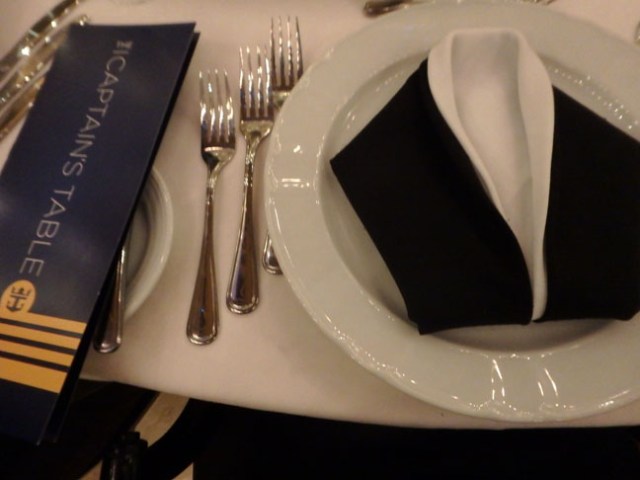
captain's table

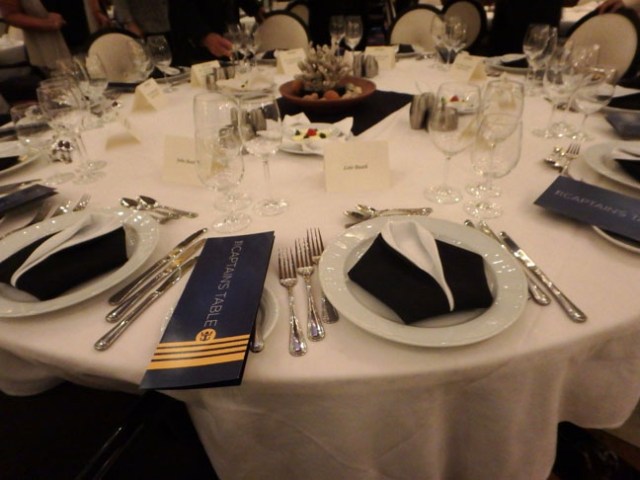
the captain’s table set up for dinner

In the afternoon of the first formal night on Royal Caribbean‘s Explorer of the Seas we found an invitation in our cabin to eat at the Captain’s Table that night. Of course we responded yes. We’d never been invited to a captain’s table before, nor actually even realized it was a thing. Maybe it’s not on the other lines we’ve sailed on, or maybe we’ve just never had the honor of receiving an invitation before. Even the staff captain that we had dinner with had no idea who they would choose or why, though I assume special invites are most likely extended to suite guests, high rollers at the casino, and people high in their loyalty program, of which we are none. Sometimes being a cruise ship blogger has its perks.
captain's table

even the napkins are special at the captain’s table – and resemble a shirt and jacket

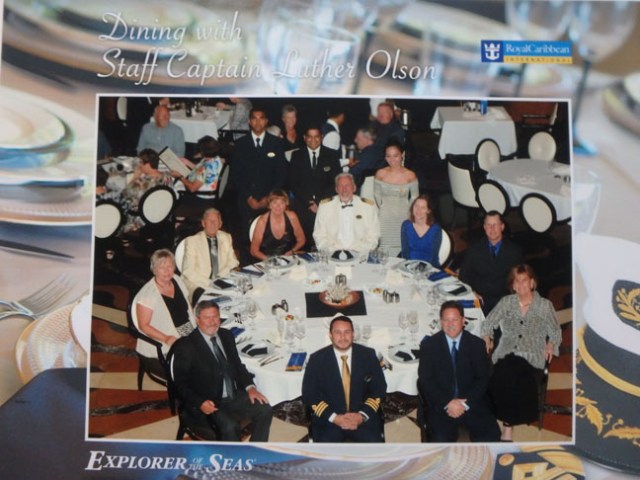
Our dinner at a large circular table at the center of the main floor of a 3-tiered dining room consisted of 4 invited couples, Staff Captain Luther Bradley Olson, and Chief Safety Officer Ivan Ramirez Villaneuva. Seating was assigned by little name cards set at each chair. We sat next to the captain, who was a very nice guy. The chief safety officer was at the far end of a very large table so we never got a chance to talk to him. The staff captain is the second in command of the entire vessel. Besides being in charge of all the ship’s employees, he is also responsible for docking the ship. Hierarchy must not be the same on all cruise lines because some ships we have sailed on said the ship’s captain docked the ship. When underway it is usually the officer of the watch driving – though more likely than not it’s actually the autopilot.

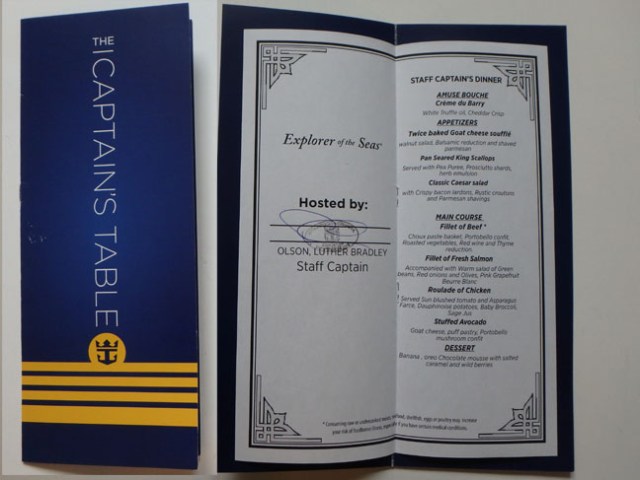
Captain's table menu

menu from the Captain’s table

Although some of the crew like stateroom stewards often work 9 months straight before having any time off, the staff captain said his hitches ran 10 weeks on and 10 weeks off. He could have his wife on board if he wanted, but said she had a life of her own on shore and didn’t stay on the ship with him all the time. The cruise director was traveling with his wife and young daughter though so family privileges extended farther than just the bridge staff. Originally from Canada, the staff captain now lives in the USA, in the same general region where we do. My husband found lots to talk to him about since they both enjoy fishing.

captain;s table

people at the Captain’s table

The meal had a special menu separate from what everyone else in the dining room ate that night. We got to keep the menus as a souvenir. They also took a photo of everyone at the table from the deck above and gave one to each of the attendees. The food was superb, the best food we ate in the entire cruise.

appetizer

goat cheese soufflé and salad

captains table appetizer

pan seared scallops

After an extra little starter the appetizer course had three choices, a goat cheese soufflé, scallops, or a Caesar salad. I chose the soufflé and John went with the scallops.

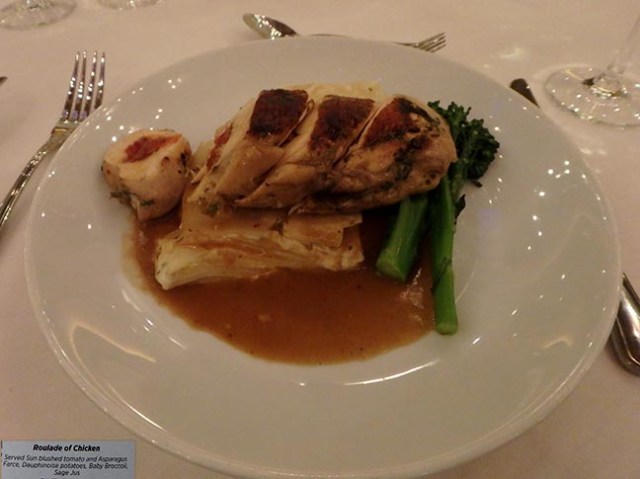
dinner at the captain's table

roulade of chicken

The main course offered 4 choices, a fillet of beef, fillet of salmon, roulade of chicken, or stuffed avocado. We both went with the chicken.

captain's table dessert

dessert at the captain’s table

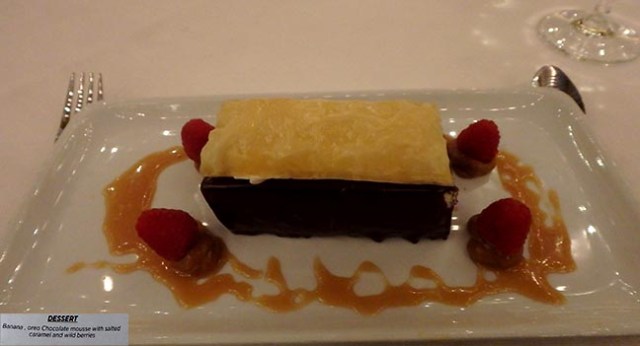
Dessert was a generous portion of banana, oreo chocolate mousse with salted caramel and wild berries. It’s an honor to get invited to the captain’s table and we quite enjoyed the dinner as well as the company.

Copyright My Cruise Stories 2019


Posted in Cruise Food, Explorer of the Seas, Royal Caribbean, Shipboard Life | Tagged , , , , , , , , , , | 2 Comments

Décor on Carnival Magic

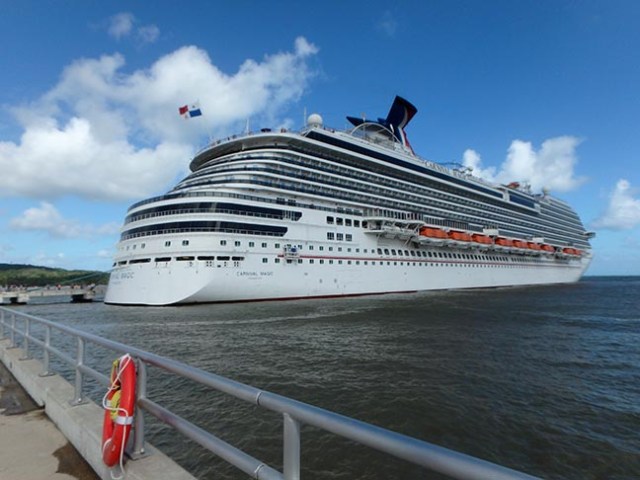
Carnival Magic cruise ship

Carnival Magic

Each cruise ship has its own unique décor. On Carnival décor ranges from the way out there over the top décor of the Splendor to the does it really have any décor of the Vista. The Magic has décor to suit it’s name. Things seen throughout the ship are fun, vibrant, sparkly, bright, or in some instances magical.

magical decor

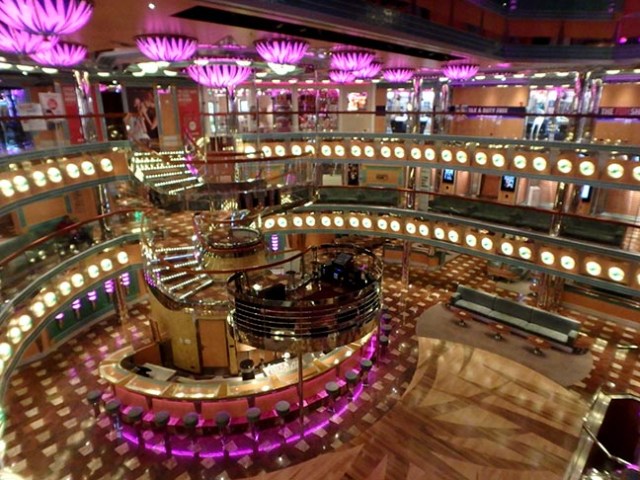
lights throughout the Magic’s atrium constantly change colors

When entering a ship for the first time, often the atrium is the first thing passengers see since the gangway at initial boarding often leads there. The atrium on the Magic is mostly decorated with color changing lights, which give it somewhat of a magical feel. Actually a lot of the décor throughout the ship is done with lights.

magical hallway

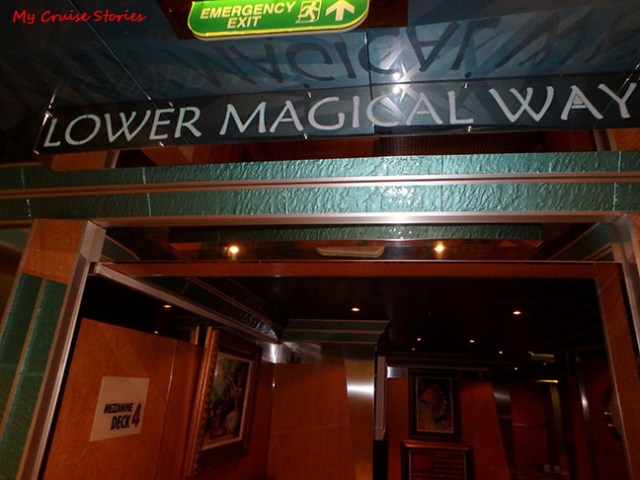
it’s only fitting that a hallway on the Magic is named Lower Magical Way

Some of the artwork on the ship depicts magical type scenes, and there’s even a place called Lower Magical Way.

magical casino

Hat Trick Casino…where they make passengers’ money disappear

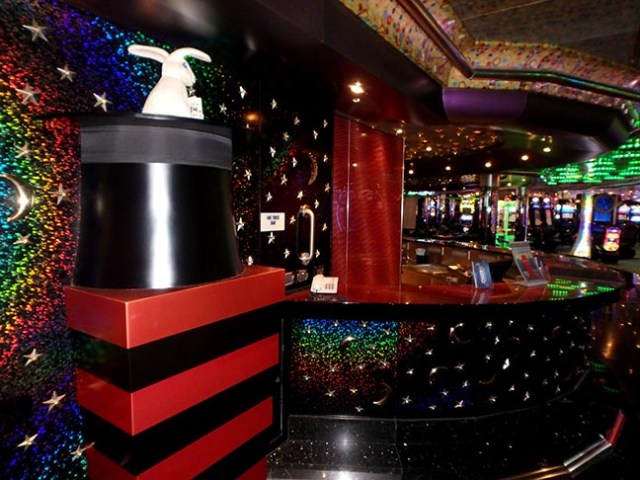
The casino too fits the magic theme with the name Hat Trick Casino and sparkly décor that includes a rabbit in a hat.

stairway art on the Magic

stairway art (with reflections of nearby lights)

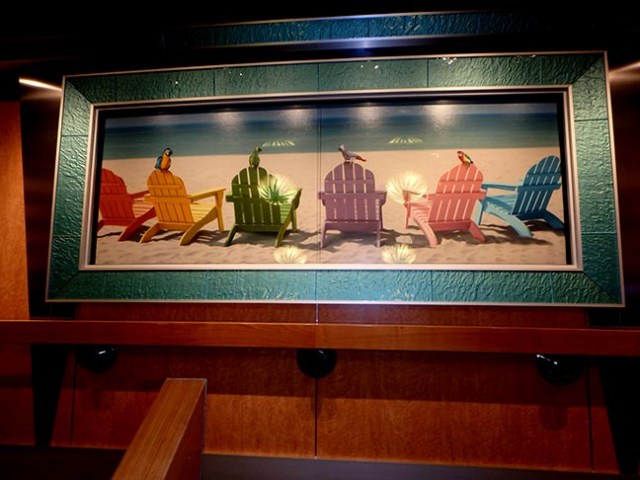
Wall accents around the ship are green and sparkly, and match the green of the lights in areas where they don’t change color. Stairways have fun and bright artwork, some of which includes birds or beachy scenes.

colorful hallway walls

hallway art in a cabin area

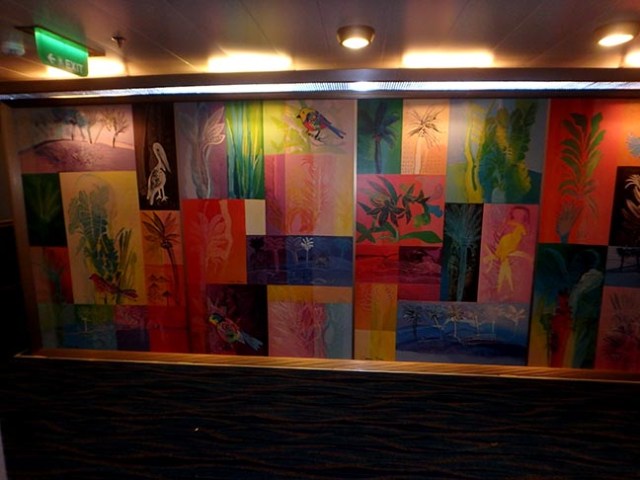
Hallways between passenger cabins also have brightly colored artwork in sort of a patchwork quilt style with the patterns repeating down the hallway and toucans and other birds in some of the patches.

weird cruise ship art

there are some rather odd paintings

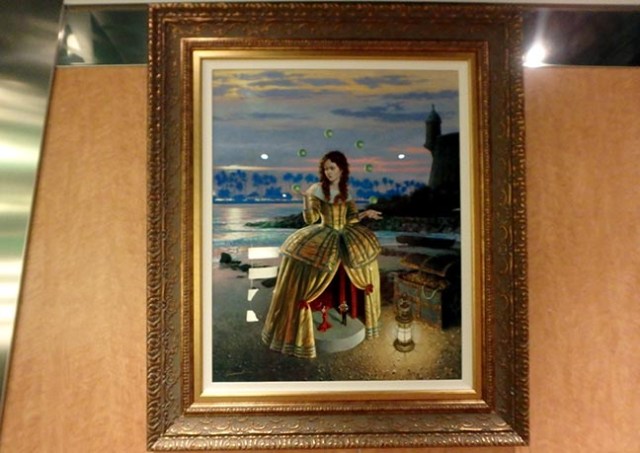
Some of the ship’s artwork is a bit strange.

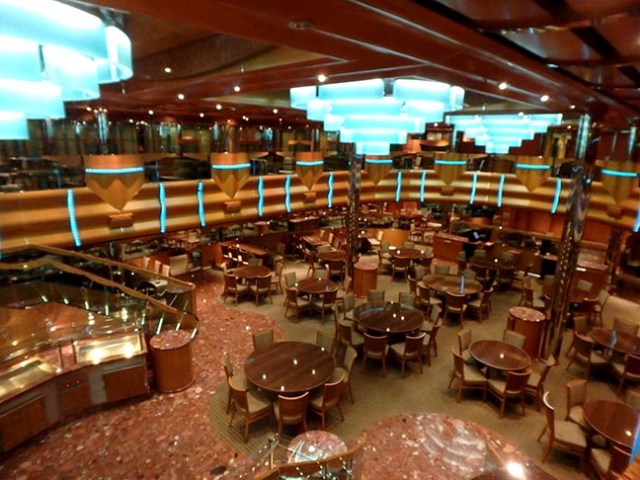
cruise ship dining room

some of the dining room décor is done with lights

Many bars, restaurants, and other public places each have their own décor unique to that space on this ship. Following with the theme of the ship, some of those areas also use lights within the décor of the space.

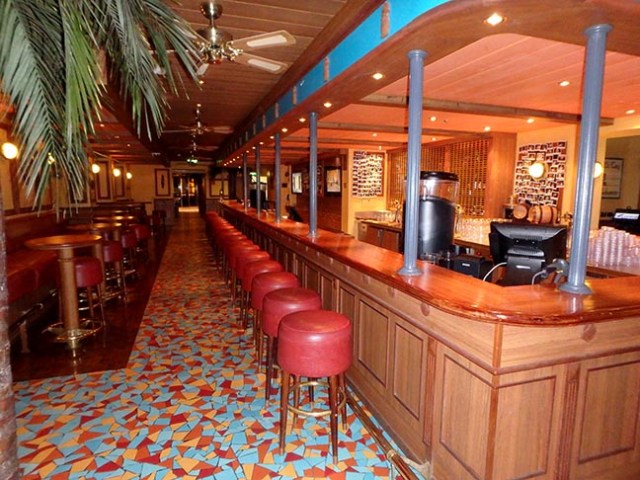
Red Frog Pub

Red Frog Pub on Carnival Magic looks the same as on other Carnival ships

Places such as the Red Frog Pub or Guy’s Burger Joint that are found on multiple ships have similar décor on each ship on which you find them rather than fitting in with the theme of individual ships.

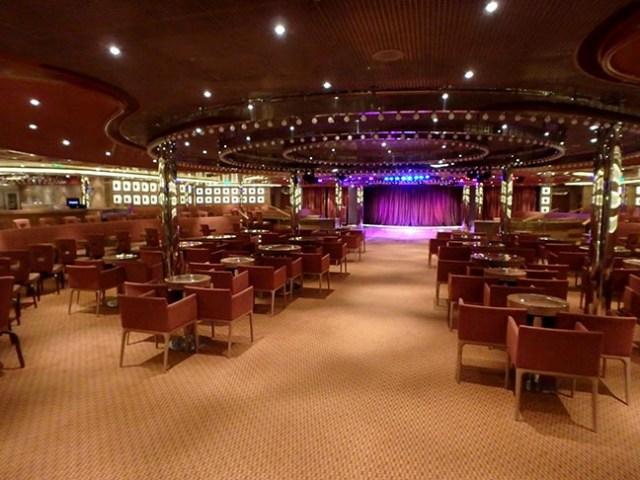
cruise ship theater

lights are part of the décor here in the Spotlight Lounge as well as in the main theater

Overall the Magic has a happy and fun vibe both in the décor and the ship itself.

Copyright My Cruise Stories 2019
Posted in Carnival, Magic | Tagged , , , , , , | Leave a comment

Victoria Cruise Ship Port

Victoria, British Columbia

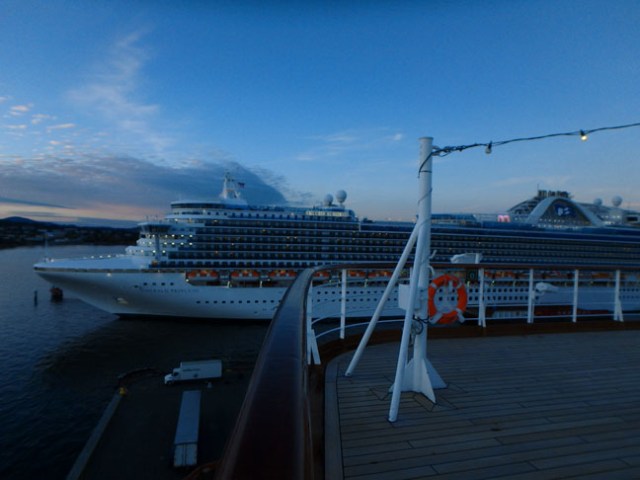
Victoria cruise ship port

Emerald Princess in Victoria taken from the deck of the Oosterdam

Canada’s southernmost city and British Columbia’s capital, Victoria, sits at the south end of Vancouver Island on the Strait of Juan de Fuca. Cruise ships sailing out of Seattle pass through the straight on their way in and out of port. Since Alaska is part of the USA and ships without USA registry and crew – which is nearly all cruise ships – can’t do a completely domestic cruise, Victoria is pretty much a mandatory port stop for Seattle to Alaska cruises. Most ships make late evening stops there, arriving around dinner time and leaving near midnight.

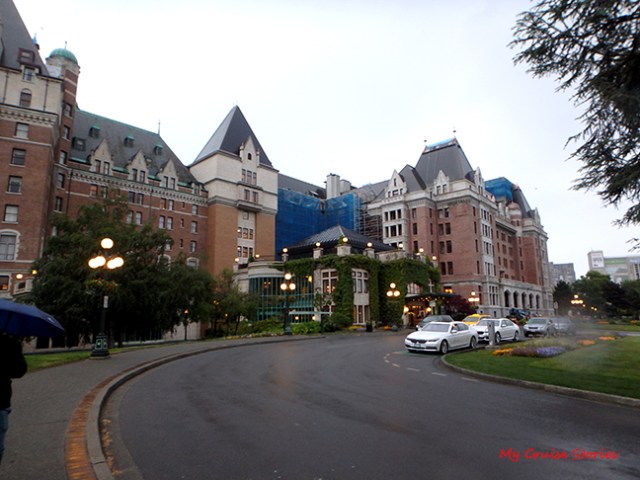
Empress Hotel

Empress Hotel

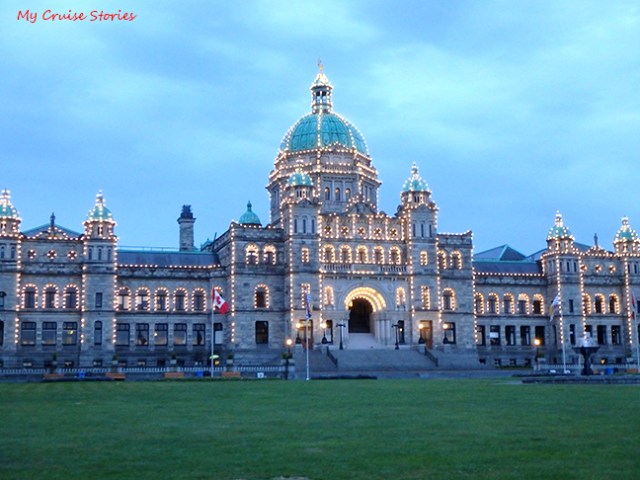
As one of the oldest cities in the pacific northwest, Victoria has lots of historic buildings and the second oldest Chinatown in north America. Both of Victoria’s most famous buildings, the Empress Hotel and the parliament buildings, sit near the inner harbor. If you arrive by seaplane, Victoria Clipper, or the Coho Ferry from Port Angeles you disembark in the inner harbor, but the cruise ship docks are out at Ogden Point, not in town. It is within walking distance if you don’t mind a bit of a hike, or passengers can take shuttle busses or taxies from the port. Fisherman’s Wharf is a closer walk than the inner harbor, or it can be a stop along the way when taking the seaside path. It’s also a stop for the Harbour Ferries which can take people to town when the ferries are running.

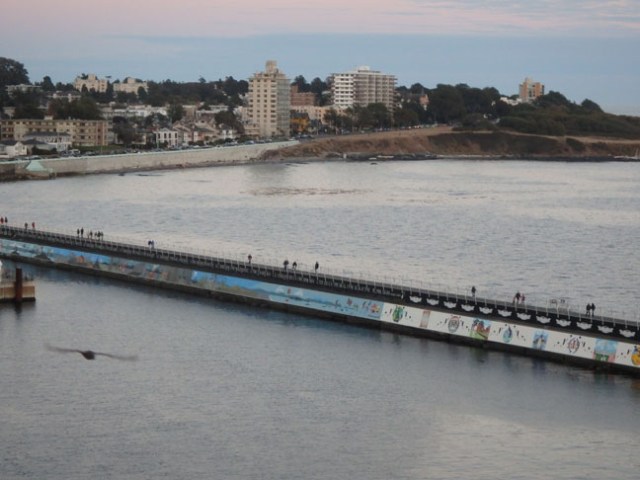
Victoria from the outer harbour

view from the Oosterdam of Victoria and the seawall walk along the breakwater at Victoria Harbour

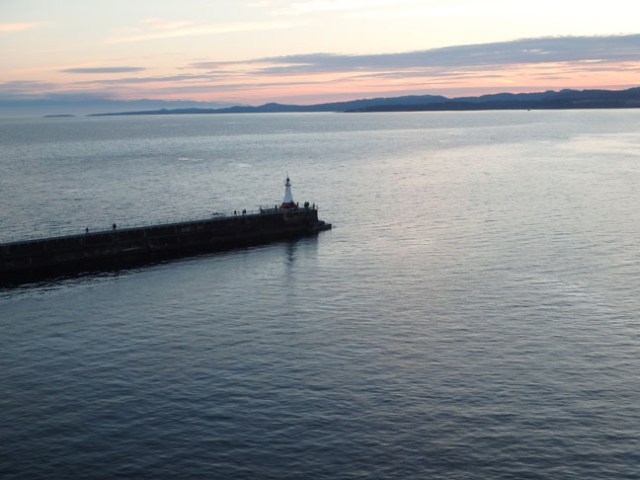
There’s not a lot right at the cruise ship dock, but there is a seawall walk with a lighthouse at the end.

Lighthouse in Victoria

lighthouse at the end of the seawall

Victoria has a mild climate with average winter lows in the high 30’s and average summer highs in the high 60’s (Fahrenheit). It has the least rain of anywhere on British Columbia’s coast due to the rain shadow effect of Washington State’s Olympic Mountains.

map of Victoria BC

map of Victoria with walking routes from the cruise terminal

Victoria has a lot more to do than can be done in the average cruise ship visit. Since the ships usually come in fairly late some things are closed or too far to get to by public transportation in the available time. Booking an excursion through the ship is often the way to go if there is something specific you want to see or do there, particularly if it is far from town like Butchart Gardens or only open at that time for booked excursions as is often the case for tea at the Empress Hotel. You do not need to book an excursion to see the Empress from the outside, or to walk around inside and visit the shops. Some other shops around town stay open at least through the earlier evening hours and it’s easy enough to get to town for people who just want to look around on their own with the shuttles and taxis at the port for anyone who doesn’t want to walk into town.

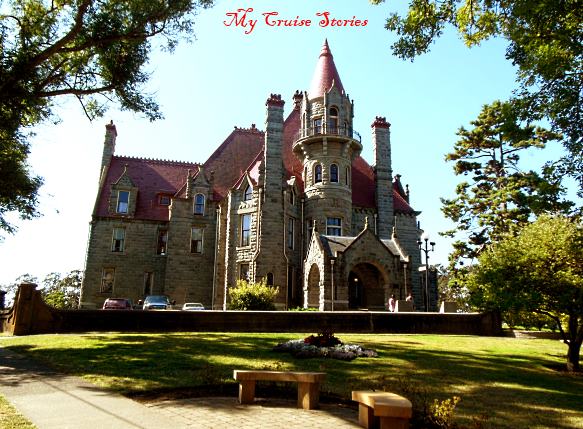
castle on Vancouver Island

Craigdarroch Castle, Victoria BC, Canada

Cruise Ship Excursions in Victoria

Excursions offered by cruise ships visiting Victoria include a walking tour, Butchart & Butterfly gardens, city highlights, museums, lighthouse, whale watching, parliament buildings, high tea, horse-drawn carriage tour, Craigdarroch Castle & brewery tours.

Victoria Parliament Building

Parliament Building in Victoria

More Blogs About Victoria

Craigdarroch CastleVictoria Harbour FerriesPort Stop in VictoriaPrincess in Victoria

Copyright My Cruise Stories 2019


Posted in Canada, Holland America, Oosterdam, Port Cities, Ports of Call | Tagged , , , , , | 1 Comment

Juneau

Juneau, Alaska

Juneau cruise ship dock

Westerdam in Juneau

Alaska’s capital, Juneau, located along the Gastineau Channel of Alaska’s panhandle, is accessible only by boat or plane. Although there are no roads connecting Juneau to the rest of the state, cars can come and go by ferry on Alaska’s Marine Highway system which has ferry service all the way from Bellingham, Washington, along Alaska’s mainland coast, and on to Alaska’s Aleutian Islands.

Juneau tour booths

last minute tour booths on the dock in Juneau

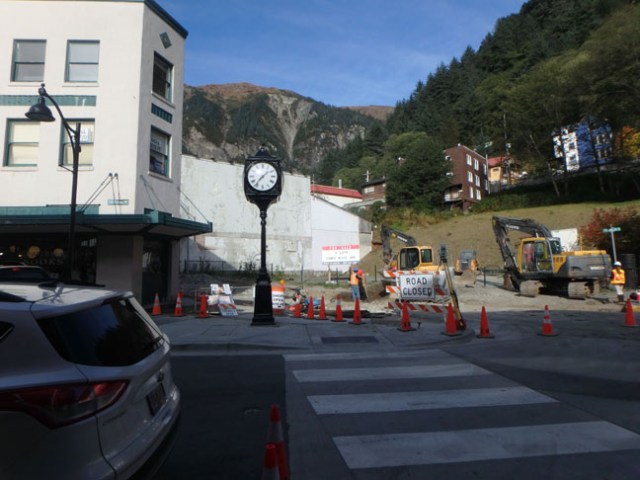
Juneau is a very popular cruise ship port with dock space for 4 ships and sometimes more anchored offshore and tendering passengers in. Holland America ships dock right in the heart of the tourist area of town at the base of Mount Roberts near the lower tram station. Princess has a dock a short walk away on a waterfront boardwalk, and the other dock just outside of town provides shuttle service bringing passengers who don’t wish to walk into town straight to the area near the tram station where they can find transportation to Mendenhall Glacier as well as a number of other things to do at all the little booths set up there when cruise ships come to town. Options often include things like whale watching and kayaking.

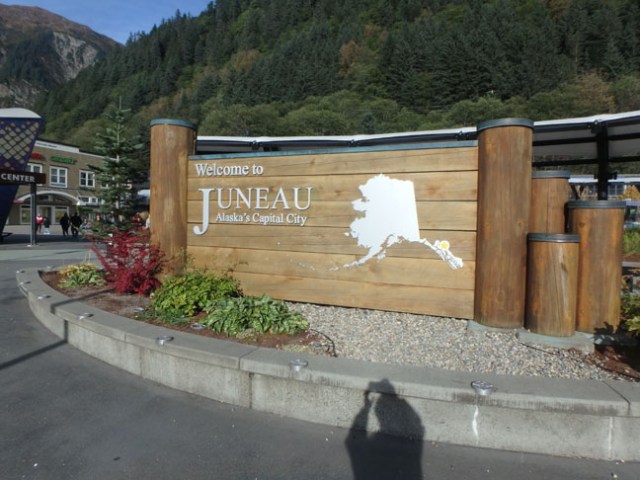
Juneau sign

welcome to Juneau sign

Juneau gets its name from early settler Joe Juneau, a gold prospector from Quebec who was the first prospector to find gold there along with his partner Richard Harris under the guidance of Chief Kowee in 1880. The settlement was first called Rockwell, then Harrisburg before finally settling on the name Juneau.

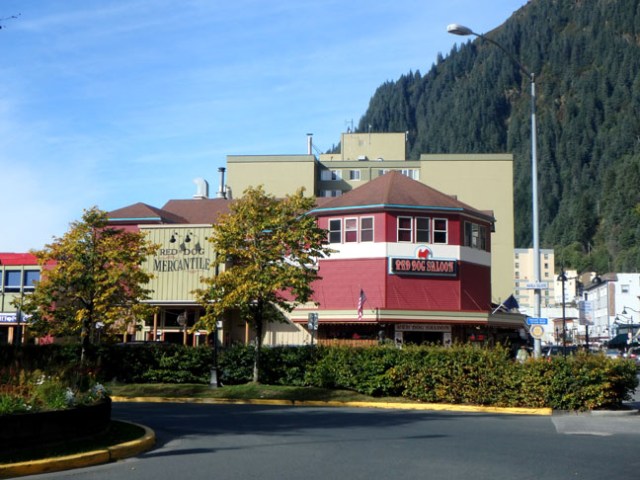
Red Dog Saloon

Juneau’s famous Red Dog Saloon

The first known European recorded in the area is Joseph Whidbey during George Vancouver’s explorations in 1794. After viewing the Gastineau Channel from the west and the south in August he proclaimed it too full of ice for ships. The channel looks quite different now without the ice and has plenty of traffic from cruise ships that would dwarf their sailboats.

Juneau

street in Juneau

Original occupants of the area came from the Auke and Taku tribes, ancestors of the modern-day Tlingit found there today. Although Russia had settlements in Alaska from 1784 to 1867, they never settled in the Juneau area. People of European descent came after the discovery of gold. Their mining village becoming the first American settlement after the USA purchased Alaska from Russia. Though the Russians hadn’t settled there and Russia no longer owned Alaska, the Russian Orthodox Church came at the request of the Tlingits who had converted to that religion in other regions of Alaska during the time of Russian occupation.

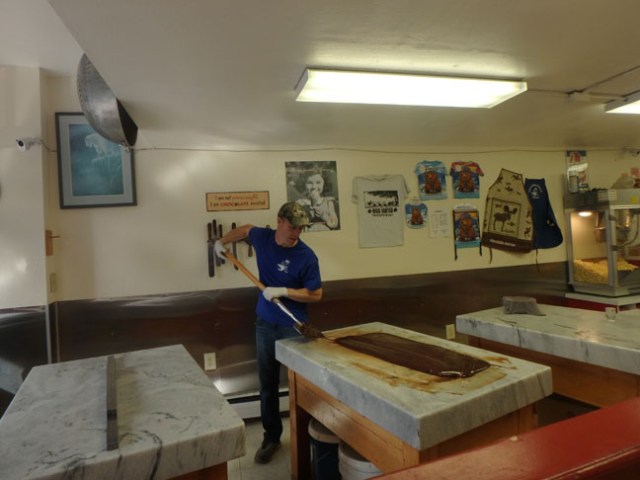
Alaska Fudge

making fudge in the Alaska Fudge store in Juneau

Juneau became the capital in 1906 when the decline of the fur trade made the former capital of Sitka less important. Juneau was the largest city in Alaska for a time, but Anchorage is the biggest now.

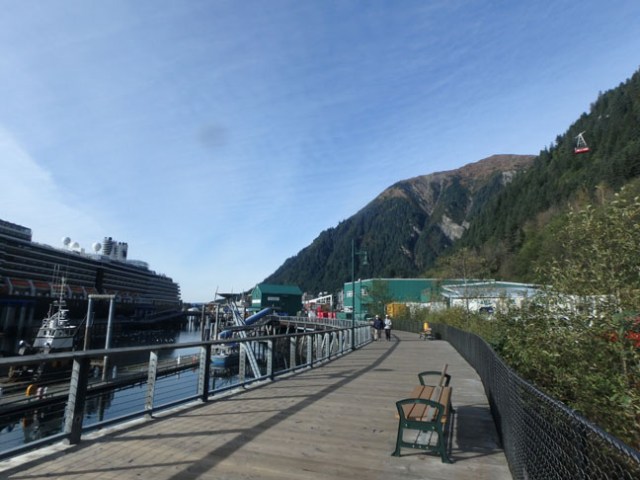
Juneau boardwalk

decoration in the boardwalk

Juneau’s climate is mild by Alaskan standards with average lows of 23 °F (−5 °C) in January and highs of 65 °F (18.3 °C) in July. It’s quite wet with the precipitation averaging rain or snow on 230 days a year. Snowfall comes mainly from September to March. Spring is the driest time of year and September and October the wettest. The government is Juneau’s biggest employer, but tourism and fishing also contribute a large portion of the economy.

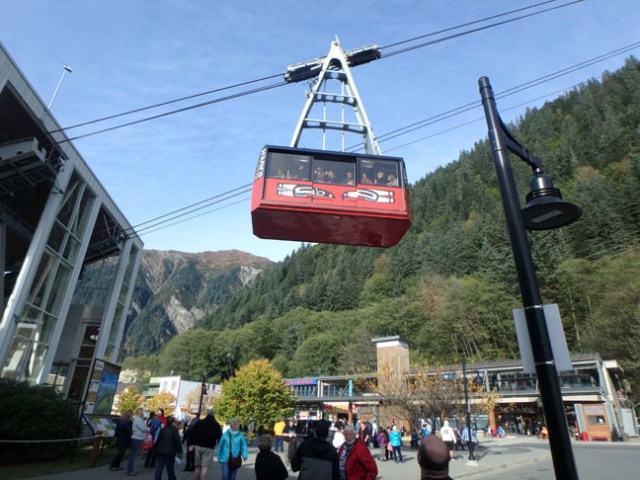
Mount Roberts Tram

Mount Roberts Tram in Juneau

The most popular things to do on port stops in Juneau are visit Mendenhall Glacier and take the tram to the top of Mount Roberts, but there are numerous other options whether booking excursions through the ship or finding a last minute tour in one of the booths at the port.

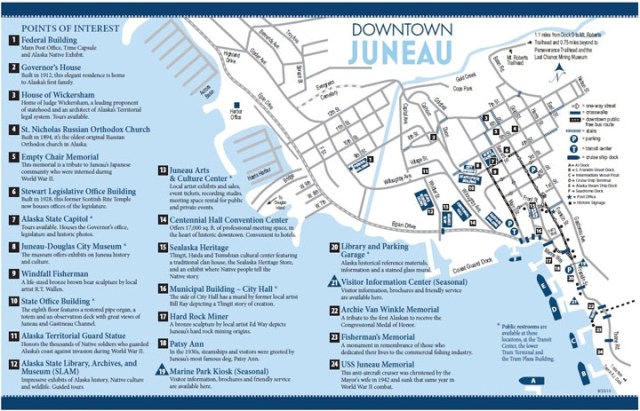
juneau map

Juneau walking map

Passengers who just want to walk about town can get maps at the visitor’s center or print one out in advance so they know where to find the main attractions in town. There’s a boardwalk along the shore that runs from the Princess dock to well beyond the Holland America dock. Shops near the docks cater to cruise ship passengers selling mainly souvenirs, jewelry, and t-shirts. There’s plenty of pubs and eateries as well. It’s not too far of a stroll to find a drugstore for anyone in need of a few sundries at a better price than what they can find on the ship.

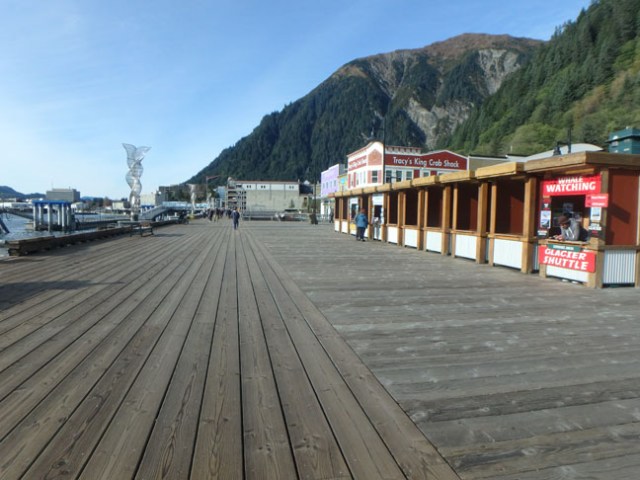
Juneau boardwalk

boardwalk in Juneau

The last ships of the season won’t find as many options for things to do at the booths. Only 3 were open when we came in early October. Where the late season ships get the advantage is in the shops that close once the cruise season is over. They all have some heavily discounted merchandise with some of it available at less than half the original price.

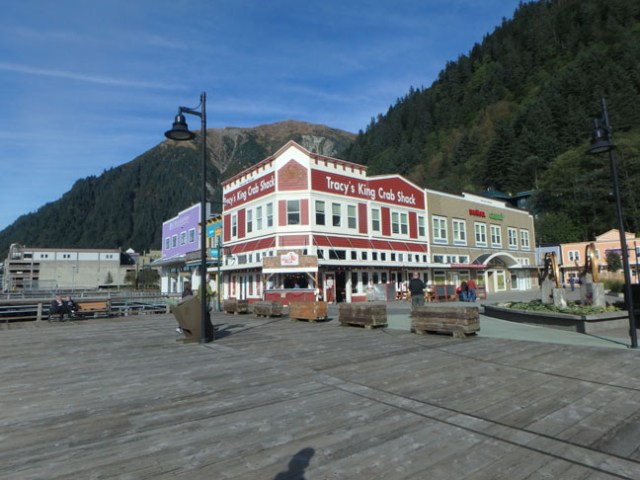
Juneau crab shack

crab shack in Juneau

There’s a crab shack on the dock right near the ship and it’s only a block or so to walk to the ever popular Red Dog Saloon where their house drink is called a duck fart. The saloon has old-time seaside décor and a sawdust floor. It also has a gift shop.

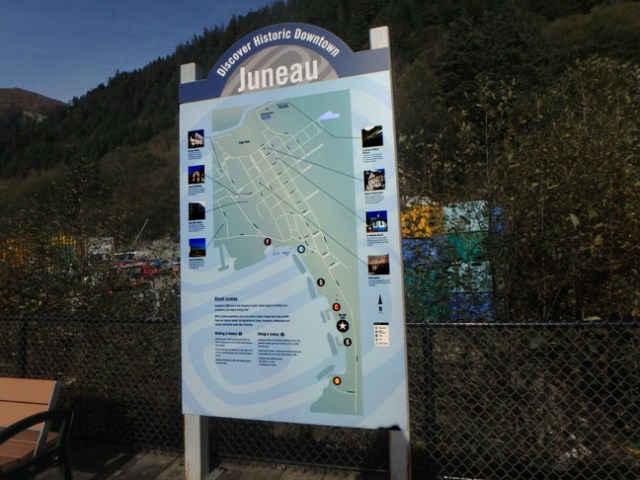
Juneau sign

Juneau map sign on the dock

Whether strolling through town or visiting nature there’s enough to see in Juneau that repeat visitors could do something different each time or go back to their favorite places.

Copyright My Cruise Stories 2019

More Blogs About Juneau

Juneau Cruise Ship Port
Glacier Gardens
Mendenhall Glacier 2013
Mendenhall Glacier 2016
Mount Roberts Tramway
Mount Roberts Tram on a Stormy Day
At the Top of Mount Roberts Tram
River Raft
Zipline

Posted in Alaska, Holland America, Port Cities, Ports of Call, USA, Westerdam | Tagged , , , , | Leave a comment

How to Fold a Giant Towel Alligator

Towel Alligator

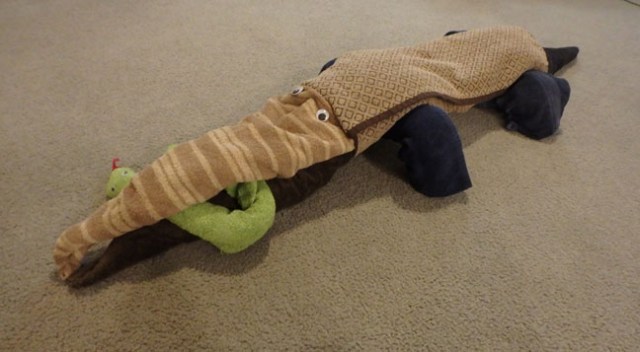
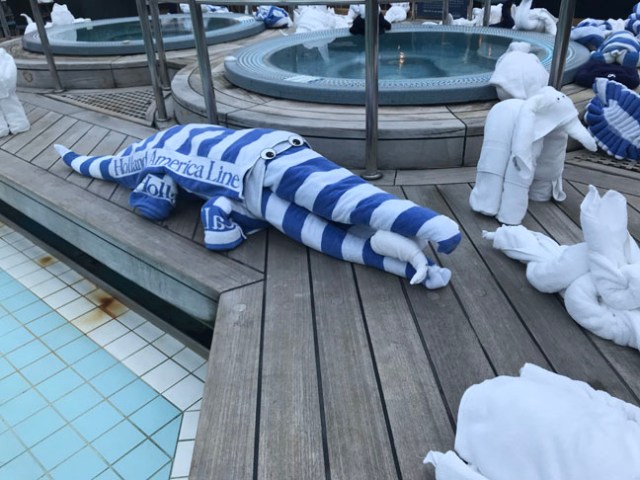
On our last cruise on Holland America Westerdam life sized giant alligators joined the towel animal invasion on the Lido deck one morning. It takes a lot of towels to make one of these alligators, but of course on a cruise ship finding lots of matching towels is not really a problem. Not so much for me, but I made one anyway out of mismatched bath towels.

towel alligator

giant alligator made from beach towels on the Westerdam

Supplies Needed to Make a Life-Sized Towel Alligator

6 Beach or Bath Towels

Googly Eyes or Paper Eyes

Small Towel Animal

Giant Towel Alligator Folding Instructions

making towel alligator legs

lay towel out flat, fold over edges of long sides an roll from one short end to the other

Lay one bath towel out flat. Fold both long sides over an inch or two on top of the towel. Start rolling from one short end and keep rolling until the entire towel is rolled. Repeat with a second towel.

towel alligator legs

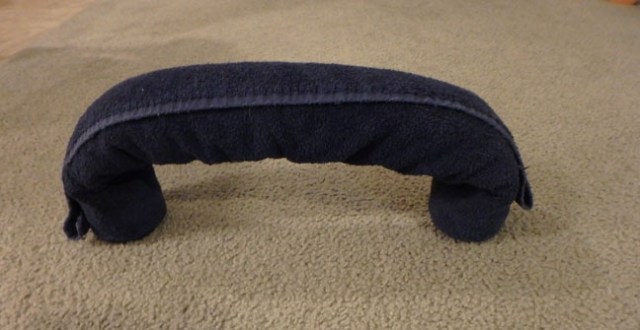
the rolled towel stands in an arch to make one pair of alligator legs

When you are ready to assemble the alligator these two towels will stand up like arches to form the legs.

how to make towel animals

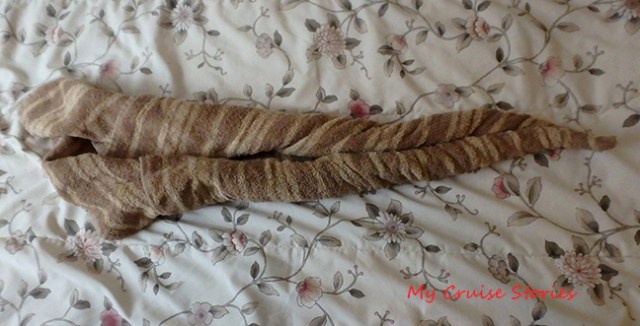
Tightly roll the far side of the towel on both ends.

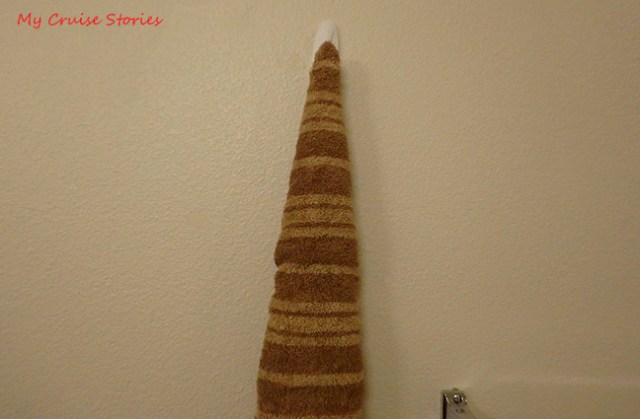
Take one bath towel and find the center of one long side. Tuck the center bit under your chin, hang it on a peg, or have someone hold it for you. Roll in both sides at the same time making sure to work your hands up and down the rolls to get them as tight as you can.

free towel animal instructions

Underside of the rolled towel

Keep rolling and until the entire towel is rolled down both sides. To watch a video where you can see a cabin steward fold a towel this way click here for a video where a steward makes a small crocodile. Repeat with two more towels. One will form the tail and the other two the head.

making a towel alligator

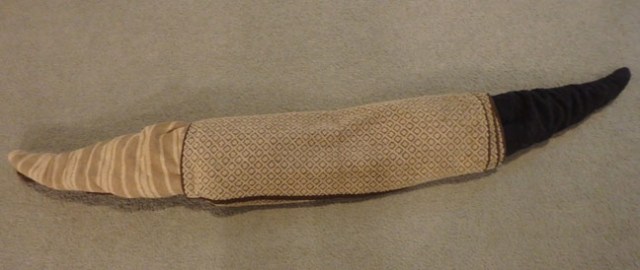
assembling 4 towels into the alligator’s head, body, and tail

Lay the last towel out flat. Place the two head towels on one end with the pointed ends away from the flat towel. Place the tail towel on the other side of the flat towel with the pointed end hanging out the opposite way. Wrap the flat towel around the wide ends of the other three towels to make the alligator’s body.

making a towel alligator

roll the last towel around the head and tail towels

Place one leg towel under the front of the alligator’s body standing on both ends like an arch to support the head and front half of the body. Place the other leg towel at the back end of the body to support the tail and back half of the alligator’s body.

towel alligator

finished towel alligator made with bath towels eating a small snake made from a hand towel

Tuck in any loose ends and shape body, head, and tail as desired. Add eyes to the head. Make any small towel animal desired and place between the two head towels so it is in the alligator’s mouth. Holland America’s alligator at the top of the page has a bird. Ducks are a good choice if you want a bird because they take just one towel. My alligator is eating a little snake. Snakes also take just one towel and are very easy to make.

Copyright My Cruise Stories 2019

For instructions on how to fold other towel animals see My Cruise Stories Towel Animal Page.

Posted in Holland America, Towel Animals, Westerdam | Tagged , , , , , , | 3 Comments

Bermuda

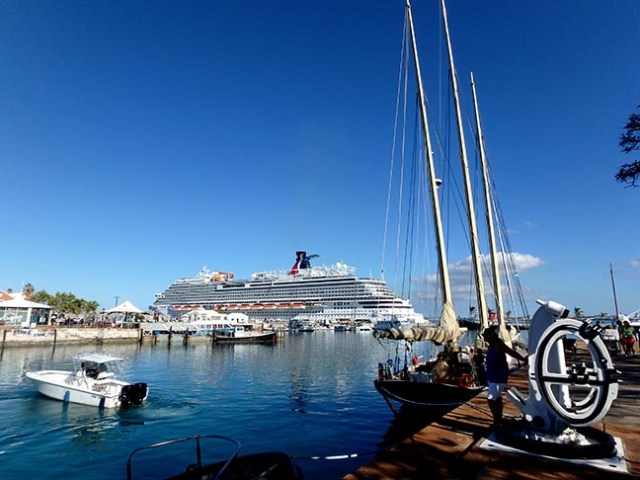
Bermuda cruise port

Vista in Bermuda

A Bit About Bermuda

Bermuda sits by itself in the Atlantic Ocean, the closest land mass being Hatteras Island North Carolina, 653 miles away. The first known sighting of Bermuda by Europeans was Captain Juan de Bermudez whom the island is named after in 1505. Spanish sailors sipwrecked there in 1603 for several weeks while repairing their ship mapped the area and claimed it for Spain, who showed no more interest in the island at that time than they had at its initial discovery.

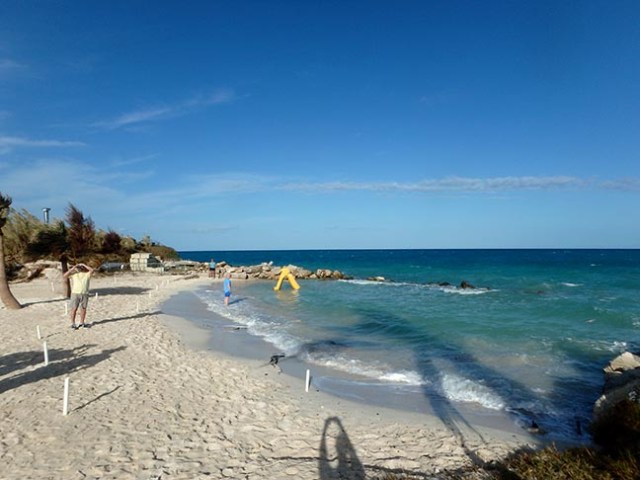
beach in Bermuda

snorkel beach a short walk from the cruise ship dock

Settlers heading for Jamestown on the Sea Venture captained by Admiral Somers shipwrecked there in 1609 and thrived for a year living partly on feral pigs left behind by former visitors to the island. They eventually built 2 ships out of salvage from their original ship and native wood, arriving in Jamestown only to find that colony struggling and badly in need of the supplies they brought. Admiral Somers returned to Bermuda for more supplies, but died there only to rest in pieces because his nephew left his heart on the island but brought his body back to England. Bermuda became a British colony in 1684 and remains one still. They have their own money and are more similar to Americans than British due to the influence of American TV which is what they get there.

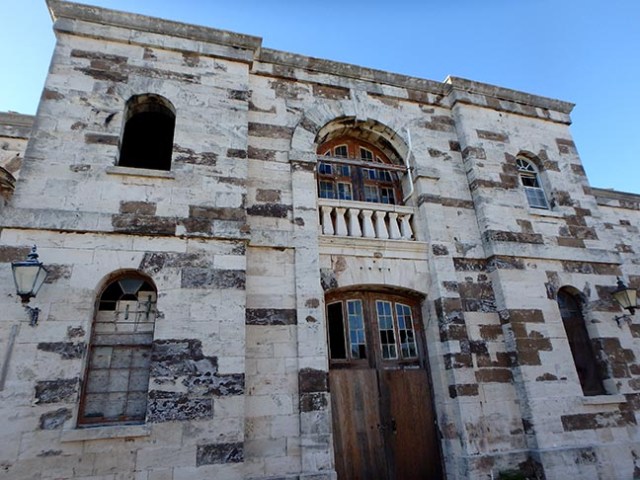
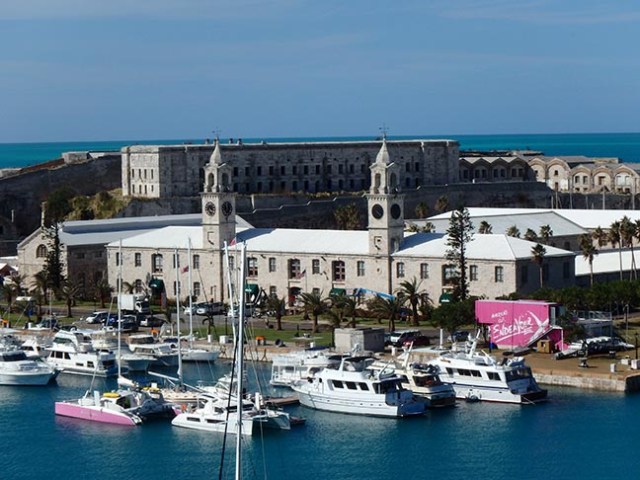
dockyard ruins

ruins in the dockyards area

Bermuda is not just one island, but rather a group of 181 islands with some connecting bridges. It has a humid subtropical climate and no fresh water. Homes are constructed with rooftops designed to collect rainwater and tanks to store it. Their homes are also very sturdy and hurricane proof because there is no high ground and people have nowhere else to go to ride out the storms. Tourism is a major part of the economy. Bermuda’s signature pink sand comes from the shells of a single-celled organism living on the undersides of its coral reefs, upon which many ships have met their demise. At an 11% decline, Bermuda’s highly protected coral fares better than coral in other areas like the Caribbean where it is at an 80% decline.

Bermuda cruise port

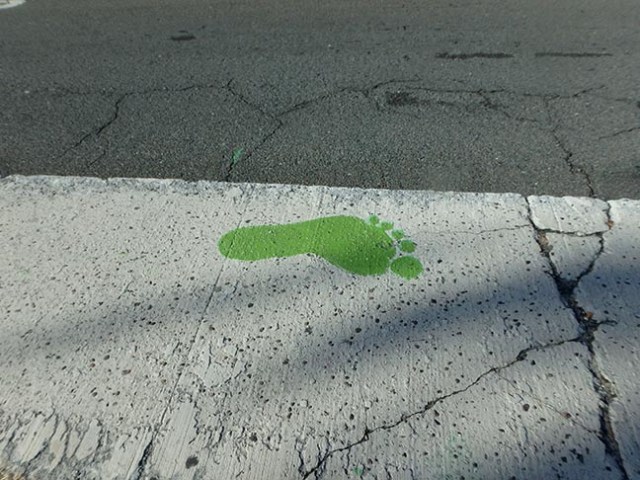
follow the green footprints from the cruise ship dock to fun

Electricity is diesel generated because nobody will insure hydroelectric, wind, or solar equipment due to the probability of hurricanes damaging it. Cost of living is high in Bermuda since nearly everything is imported.

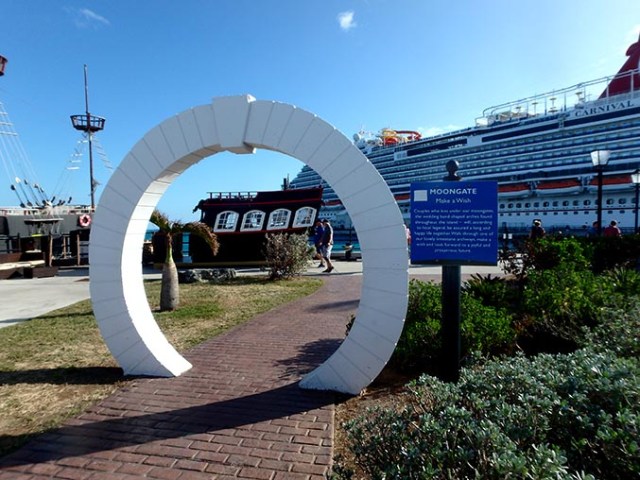
moon gate

the sign by this moon gate into the port area says walking through it brings good luck

Bermuda Cruise Port at King’s Wharf

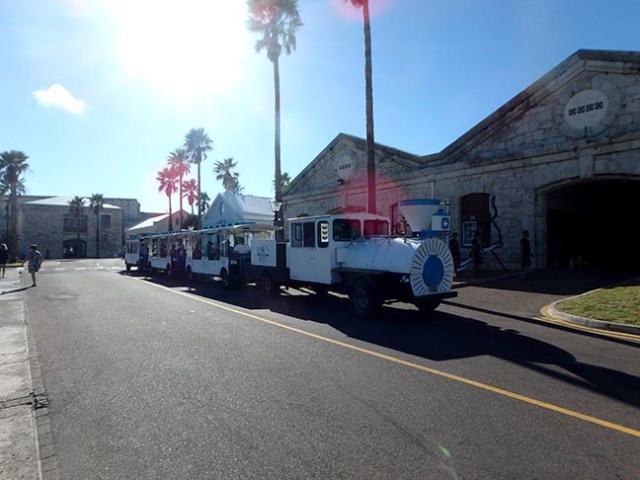
dockyards train, Bermuda

Bermuda tourist train shuttle

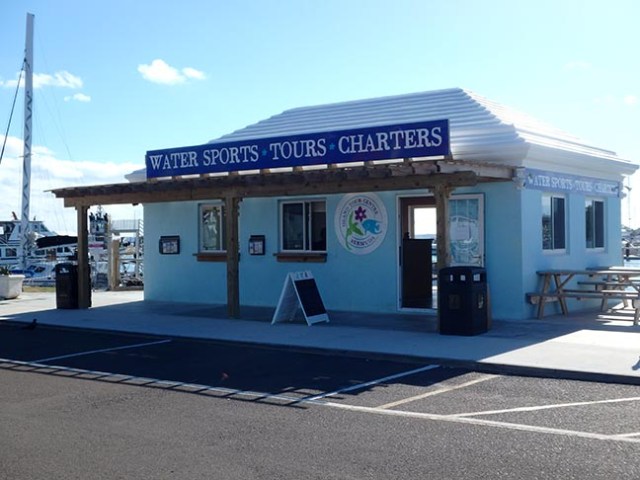
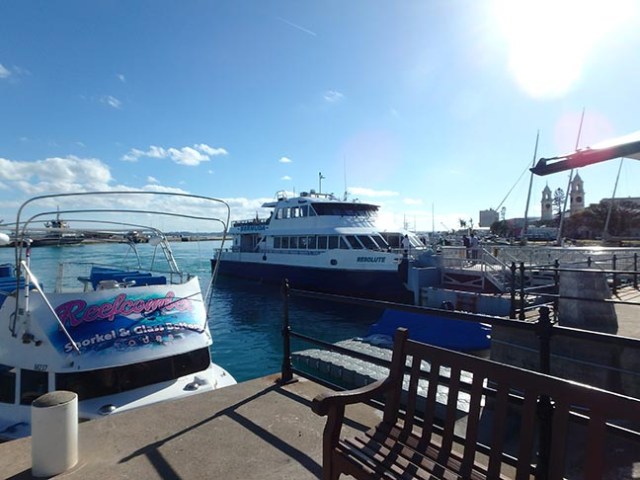
Just off the ship at King’s Wharf in the dockyards there is shopping, restaurants, and a free train shuttle around the local area. There is a little building with watersports and tours. The cost of their tours is similar to what the cruise ships charge for excursions. Scooters and jet skis are available for rent.

things to do in Bermuda

fun for sale

You can take glass bottom boat tours, ride segways, or go snorkeling, but nothing is cheap. The taxi tours are particularly expensive running about $150-$200 for a 3-hour island tour. Following the green footprints on the street off to the right as you exit the cruise ship dock into the dockyards area brings passengers on a short walk to the museum/dolphin swim area and beyond to an archway leading to snorkel beach and fun golf.

Bermuda ferry

ferry to Hamilton

Exploring the island on your own is cheap and easy with the 24-hour pass for busses and ferries at $19. Just be sure to check the schedule for the last bus or ferry back to the dock each night. Just because the ship stays overnight doesn’t mean public transportation runs 24 hours a day because it doesn’t. You can take a bus or ferry just to Hamilton without buying the 24-hour pass if that is as far as you want to go.

King's Wharf, Bermuda

view from the ship while docked at King’s Wharf

Copyright My Cruise Stories 2018
Posted in Atlantic Ocean & Islands, Carnival, Ports of Call, Vista | Tagged , , , , | 5 Comments

Leavenworth at Christmastime

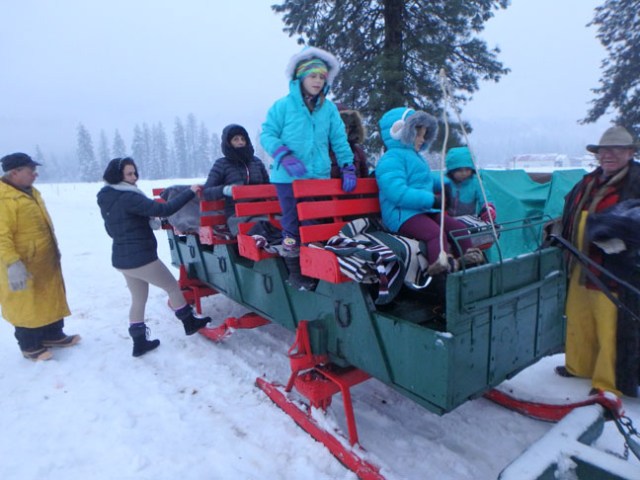
sleigh ride in Leavenworth

climbing into a sleigh the hard way – it had a step on the other side

Nestled in Washington State’s Cascade Mountains near Stevens Pass sits a Bavarian-themed town called Leavenworth. It’s a great tourist destination year-round, but near Christmas the town really comes alive with a festival of lights. Strung with Christmas lights Bavarian style hotels light up the town for the holiday. A small park is the hub of activity with lights, carolers, free sledding with sleds provided, and a Christmas market.
On the outskirts there is more fun to be found in the form of sleigh rides or dogsledding, with sleigh rides the far more affordable option of the two.

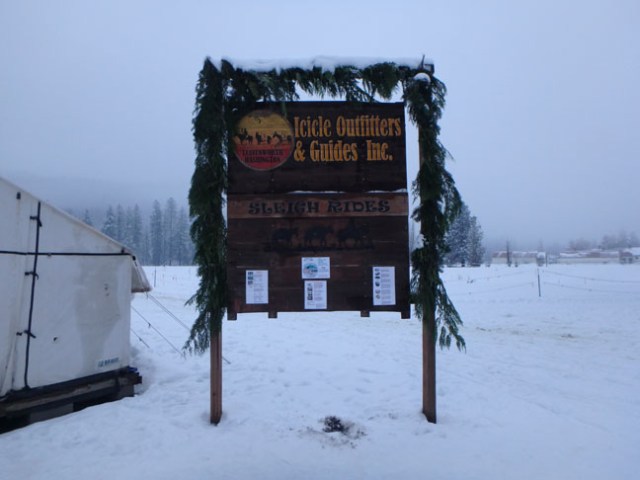
sleigh ride sign

Icicle Outfitters sleigh ride sign

If you’re there without a car, Icicle Outfitters will pick you up in town and bring you to their sleigh ride venue near a fish hatchery outside of town. There’s also room to park for those who come by car. In the summertime Icicle Outfitters has trail rides and pack trips.

sleigh waiting for riders

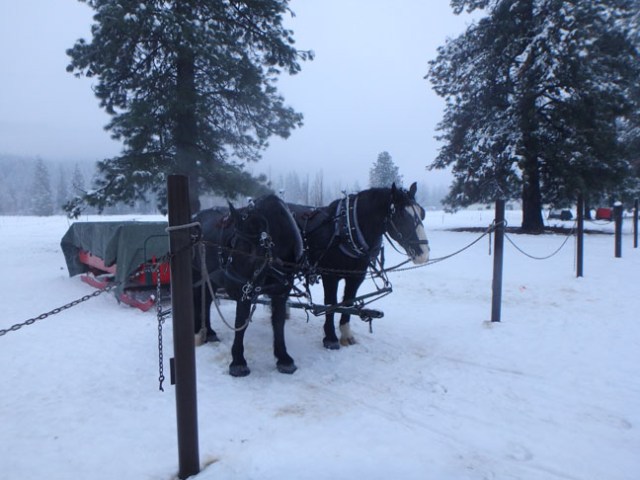
mule team with tarped sleigh

We pulled up to see a team of mules on one large sleigh, horses on another, and a smaller one-horse open sleigh. Actually they were all open sleighs, the ones with teams of 2 were just bigger. Since we came with a group of 10 we had a big sleigh just for our party. The price for the ride is quite reasonable. Most of our group came from Australia, so for them snow is a rarity.

sleigh ride in Leavenworth

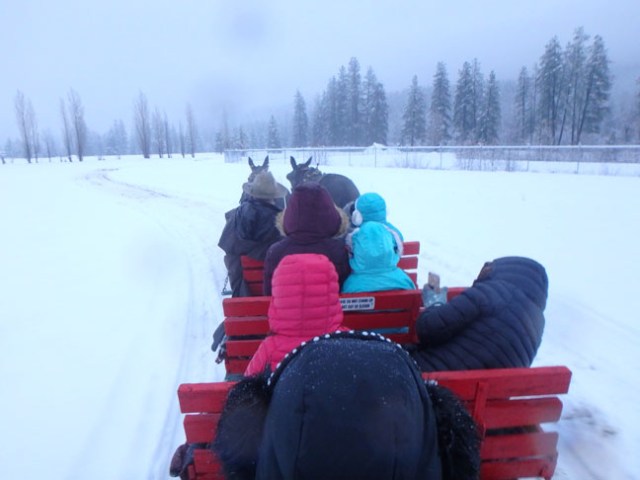
riding in the 2-mule open sleigh

There’s often news about warming temperatures and diminishing ice in the Arctic and Antarctic, but global warming affects other places as well. The ski area at Stevens Pass opened very late due to lack of snow this year, and the day we went to Leavenworth it was actually raining – in December. They did have snow on the ground from previous snows, getting slushy from the rain, but still enough for a sleigh ride. Unfortunately rain on an open sleigh means you get wet.

group of travelers

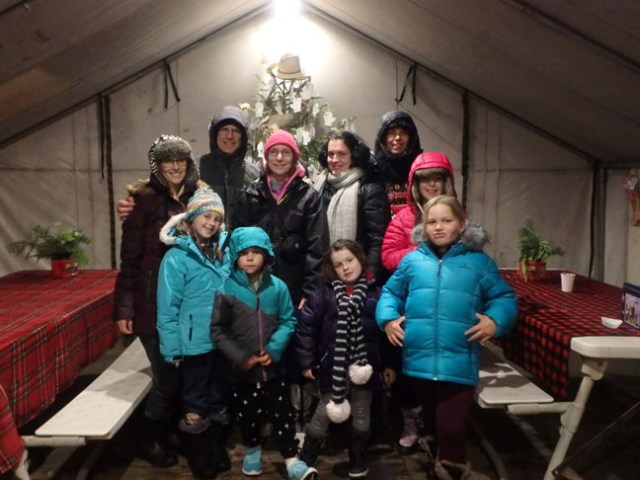
8 Aussies and 2 Americans warming up after a sleigh ride

There was a tarp over the sleigh before we got in, but being the last ride of the day the blankets both on the seats and for over our laps were already wet. This would definitely be a better activity for a day without rain, but we were just there for one day and we can’t control the weather so we went for a sleigh ride anyway.

kids at Christmas

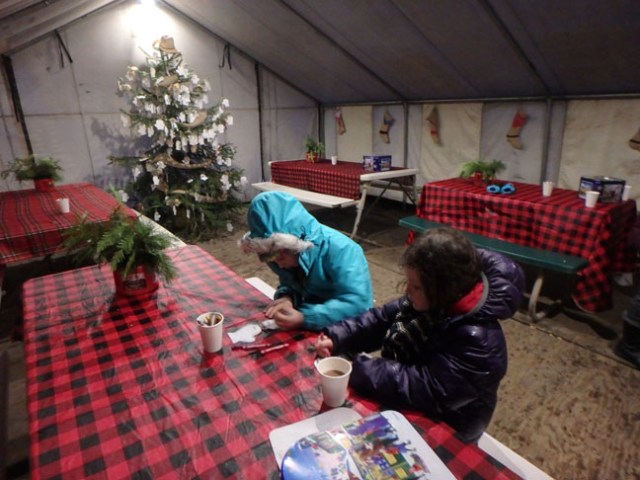
kids making Christmas ornaments for the tree in the tent building after the sleigh ride

It’s a pretty long ride mostly winding around through an open field, but a bit of it went on a trail between some trees. If the trees were too dense there wouldn’t be enough snow for a sleigh since they can only go where they have snow. We had the mule team pulling our sleigh. Mules have a horse mother, a donkey father, and much bigger ears than horses. At the start of our ride the driver sang some carols, and a few people sang along. During the course we saw a couple other sleighs out and about and once the mules even trotted a bit. Mostly they walked.

keeping warm on a rainy day in the snow

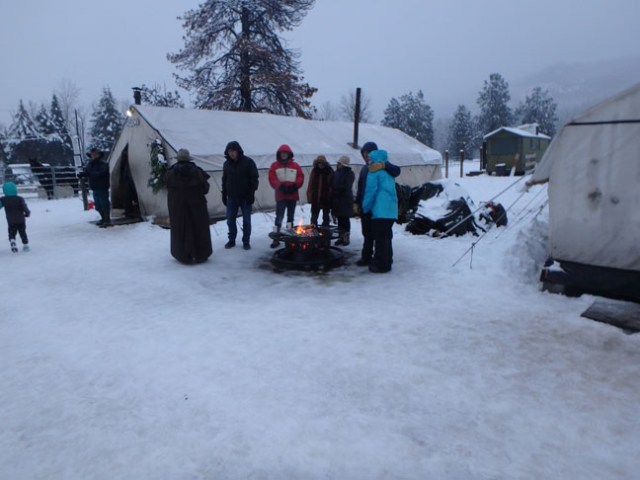
campfire between the tents

The starting and finishing area for the rides had two tent buildings with a campfire in between. One was for organizing and making payment at the start of the ride. The other we went into at the end of the ride. There everyone could warm up by the wood stove and have cookies with hot chocolate or cider. Some of the kids made ornaments to add to the tree at the far end of the tent.

kids love snow

Australian kids having their first snowball fight

Some of the Australian kids never had a chance to play in snow before so they braved the wet and cold for a snowball fight in the dark.

Bavarian building in Leavenworth

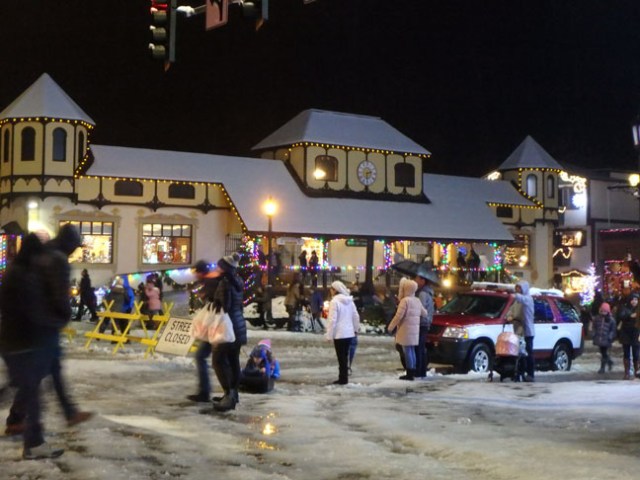
all the buildings in Leavenworth look Bavarian

While most people come to Leavenworth by car, anyone who doesn’t want to drive up a possibly snowy pass or over roads that may be icy to get there in winter can arrive by bus or train. The train station is not in town, but there is a shuttle that stops at some of the hotels to bring people to and from the station. It’s a very popular destination so it’s a good idea to book early.

Leavenworth Christmas lights

Christmas lights in Leavenworth

Leavenworth started out as an ordinary settlement with an economy depending on gold, furs, and logging. The town nearly died out when the railroad re-routed out of town until they had the idea to go Bavarian, throw in some festivals, and attract tourists to feed their lagging economy.

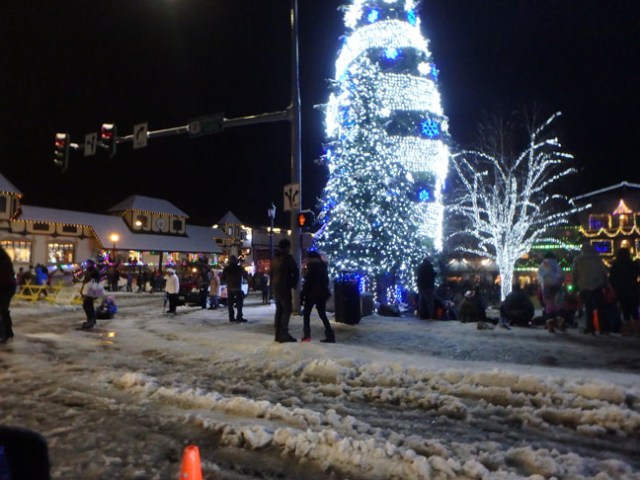
lights on a tree

Leavenworth Christmas Lights

Leavenworth has lots of shops selling all sorts of unique things that make great gifts. There’s even a couple stores dedicated to Christmas all year long. Another store sells all manner of hot sauces and other items like honey and mustard. Clothes, shoes, hats, and knick knacks are plentiful, as is food in both the ready to eat and take home varieties.

Merry Christmas!

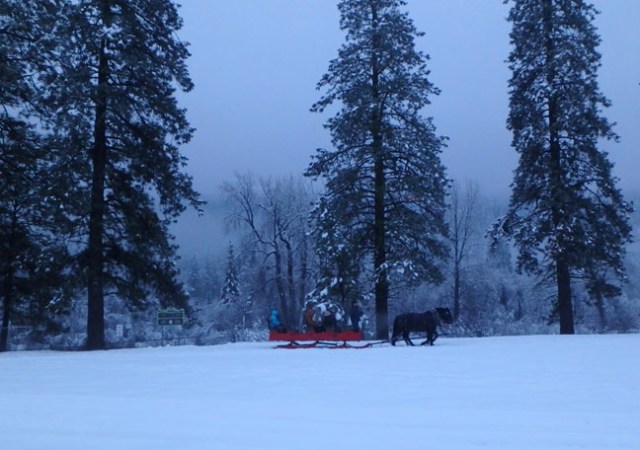
Leavenworth sleigh ride

another sleigh we saw in passing

copyright My Cruise Stories 2018
Posted in USA, Washington | Tagged , , , , , | 2 Comments

Chacchoben Mayan Ruins

ruins map

map of the ruins on the trail

Due to unexplained technological difficulties, Holland America Veendam arrived in Costa Maya 2 hours late. Norwegian Pearl and Royal Caribbean Rhapsody of the Seas were already at the dock. The Pearl appeared significantly plainer than when we cruised on it some years back. It still has the hull art at the bow, but the stern art was gone and as far as I could see from the dock and from the deck of the Veendam, all the artwork around the promenade deck was gone as well. I wondered if they had redecorated the inside too and got rid of all the random beds that were scattered about the ship back then.

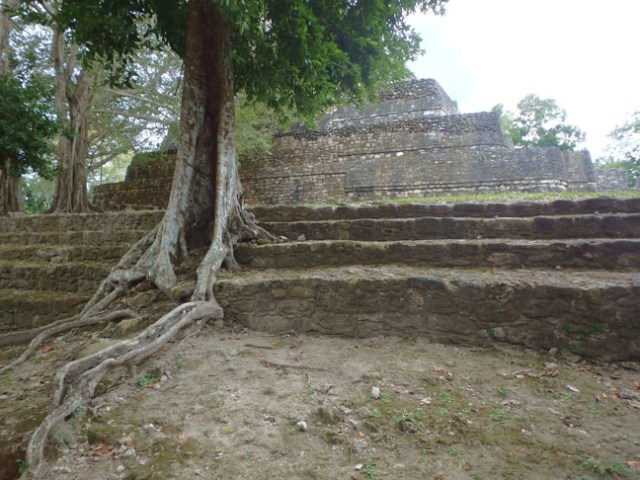
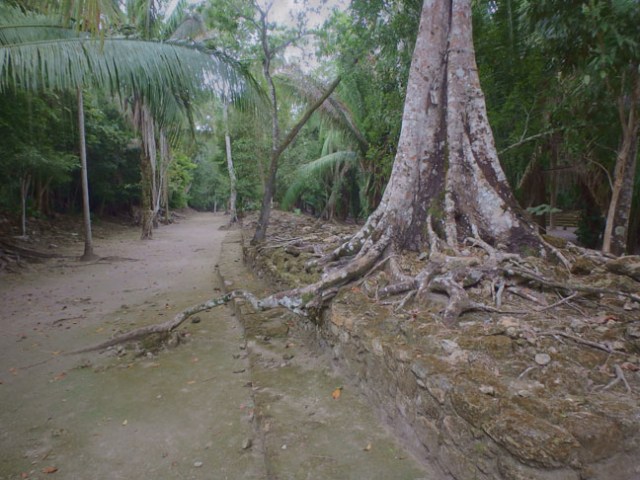
tree in the ruins

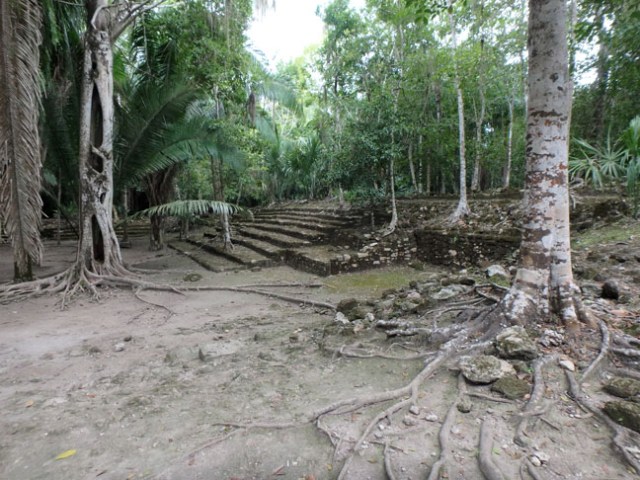
all the ruins at Chacchoban were once buried in the jungle, and trees still grow on some of them

In the port at Costa Maya there are all sorts of booths offering last minute tours. The tour booths might take your ship card for payment, but hardly anybody at the port takes cash. The shops, bars, and restaurants mostly all want credit or debit cards. There is quite a lot at the port. When you finally make it through to the far end and out of the fenced in port area you can walk right out, but there’s a gate guard checking people on the way back in. The security guard just outside the port said it takes an hour to walk to Mahahual, the closest town.

pyramid

the backside the pyramid nearest the entrance looks shorter than the other 3 sides

Outside the port the road you first walk down goes by a mostly abandoned shopping center, heading toward what looks like an ancient pyramid from a distance. When you get there you can see it is actually a fountain. Cabs waited alongside the road, some drivers crossing the street looking for customers among the people walking up the other side. They said $2 a person to go to town, or $50 each for 2 people to go to the Mayan ruins about 45 minutes away. We kept on walking, wanting to at least make it as far as the pyramid.

small Mayan ruin

we found some small ruins with no other people around

Just beyond the pyramid fountain we saw a little stand set up offering tours to Chacchoben ruins with a sign advertising the cheapest price around. They were dismantling their stand when we got there. Since ours is a small ship and got to port late, plus we waited a bit to get off to give the line at the gangway time to clear, I suppose they didn’t expect many more people to go by looking for a tour. We asked about the price anyway and they said $55 each including the entry fee at the ruins, which the cabs we passed had not mentioned in their $50 price. She also said the walk to town was just 25 minutes, and that it’s a nice and safe walk. She did not say if the tour cost any less if they had enough people to fill a van.

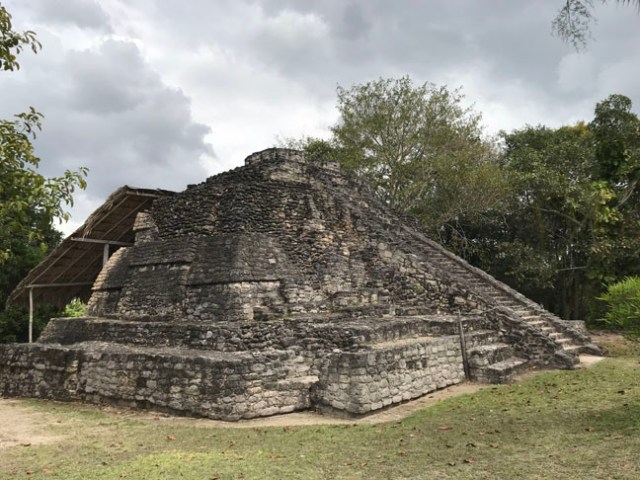
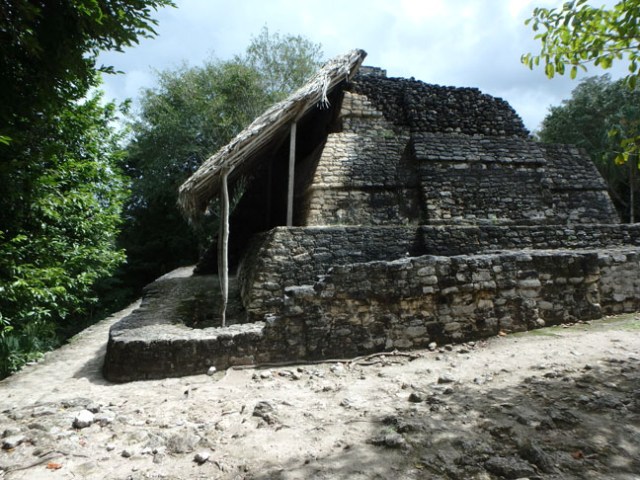
roofed pyramid

this pyramid atop a plateau had a roof hanging off the back

Turning onto the street heading toward town we saw another row of cabs. I’d have liked the walk, but John’s knee was bothering him so he wanted to just pay the $2 and take the cab. Once we got in the driver said he could take us both to the ruins for $80 total if we wanted to go there instead of town. He also must have figured he was running out of opportunities, and probably would make more money at that rate then ferrying people back and forth from town for $2. People outside the port are perfectly happy to take cash. Places in Mexico frequented by tourists normally do accept American money. So many places within the port not doing so was rather odd.

jungle trail to Mayan ruins

one of the trails between ruins at Chacchoban

We decided to go ahead and take him up on the offer to take us to the ruins since his price was $20 less for the two of us than anyone else’s. If you go by cab they take you there and then wait for an hour to give you time to walk around the ruins and the same cab takes you back. You pay when you get back to the port, or town if you choose to get dropped off there, where you can catch a different cab back for the $2. At the lot they collect $4 for the cab to park and wait. Then at the entry you pay $4 each to get in and walk around on your own. Guides are available for an additional fee, which is more than the entry fee. The entry area has banos (bathrooms), some souvenir shops, and a place selling stuff to drink. Once you go out to the ruins it is all jungle and trails leading to several different areas with ruins. We saw some butterflies and ants, but no mosquitoes. It’s actually quite rare to see a mosquito on a cruise and we’ve never seen one anywhere in the Caribbean.

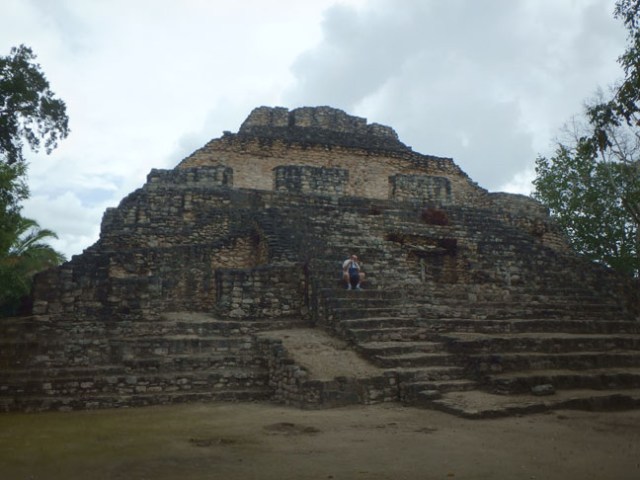
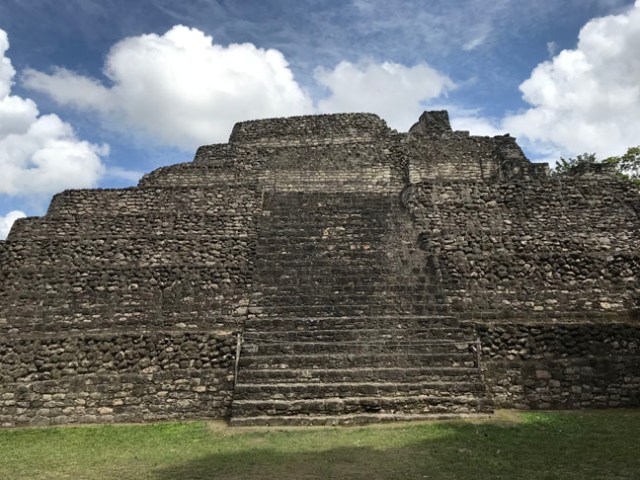
big pyramid

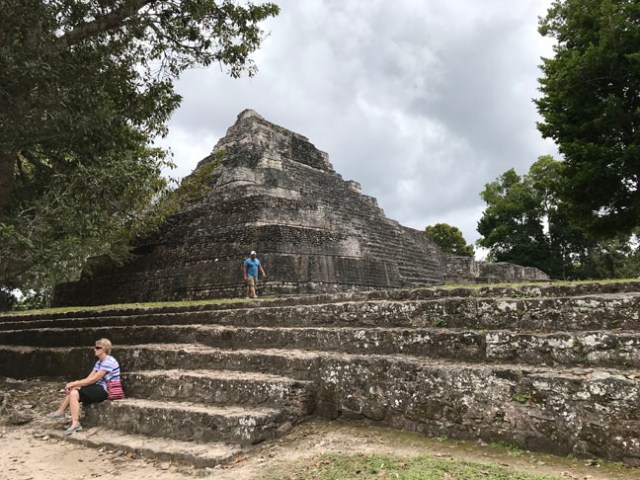
this big pyramid is the closest to the entrance

The first pyramid in is a pretty large and impressive one. From what you see from the ground up it looks like the biggest one there, but that’s deceptive because there are others on a plateau that is actually a pyramid itself so what looks like the bottom is really closer to halfway up.


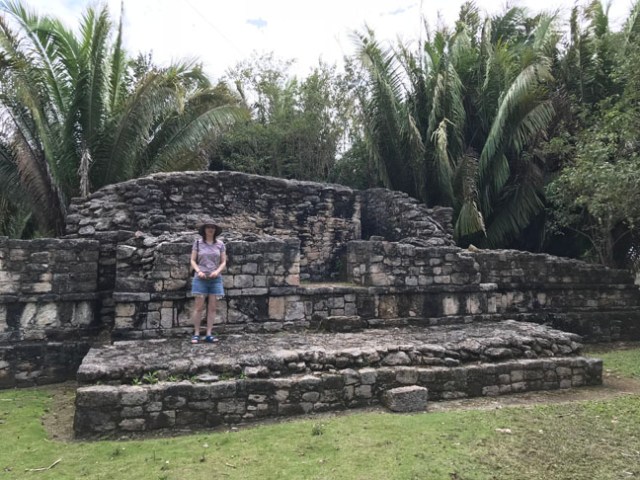
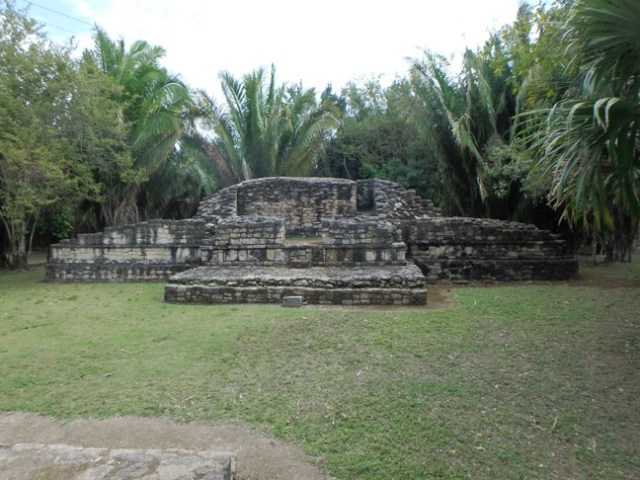
small ruin at Chacchoban

the taller of the two small ruins

We took the trail out from the back side which eventually took us to some small ruins. The tours must not go there because we saw nobody else until we were nearly back again. The dirt trails have a washed over look about them that appears as if they are sometimes under water, or at least have water rushing over them. Or perhaps they have just been worn smooth by many, many feet.

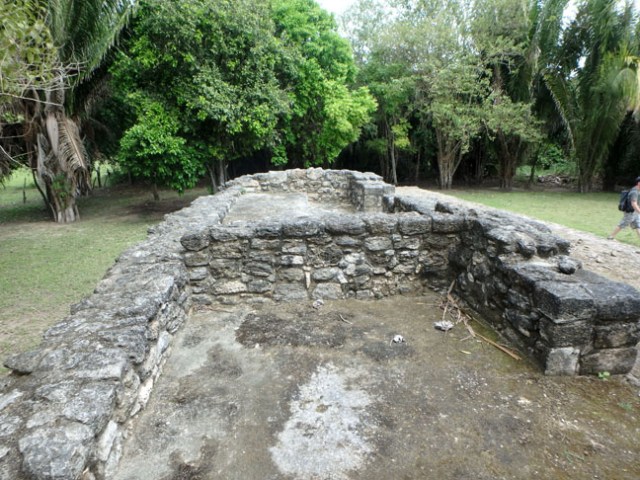
Mayan ruin

the top of a small ruin looks like it might have once been rooms

There were 2 small pyramids or perhaps portions of former residences at the end of that trail. Small and unimpressive enough to explain why the tours didn’t venture there, but it was nice to be able to explore a couple ruins without any other people around.

Chacchoban ruins

at first glance these ruins don’t look impressive, but then you walk up them…

ruins

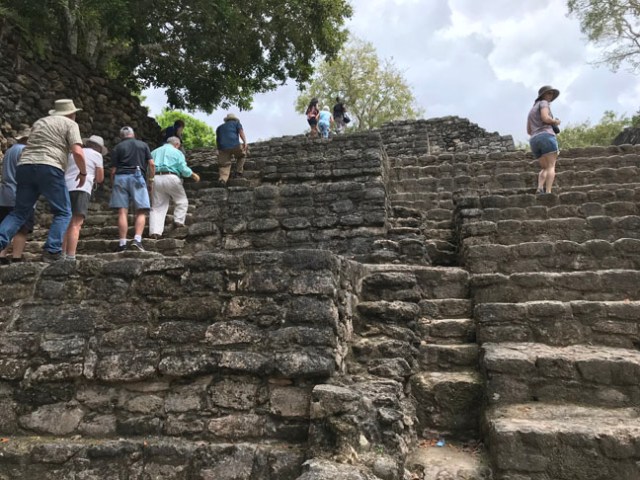
walking up the ruins, which are taller than they look at first glance and have a surprise at the top

The trail out the other side of the big pyramid leads to a crossroad where you can go straight and see different ruins or turn right and see the same pyramid from the back. We went straight. There were a couple tour groups with cameras in the air and backs to the ruins at the end of that trail. It turned out there were monkeys in the trees above. The ruin there didn’t look all that impressive until you walk up to the top of it and find the plateau. There are 2 more pyramids on the plateau.

roofed pyramid

you can walk along the edge of the roofed side of this pyramid – on a narrow ledge above more pyramid steps. The ground is a long way down on that side.

The smaller one has a little roof hanging off the back side. If you go over there you can walk around the back of it where the roof is. At that point you find yourself on a ledge that is one layer of the pyramid. These are all step pyramids, and what looked like the bottom of it from the other sides is nowhere near the bottom as you can see from the back where the stepped levels go quite long way down.

Chacchoban

big pyramid on the plateau

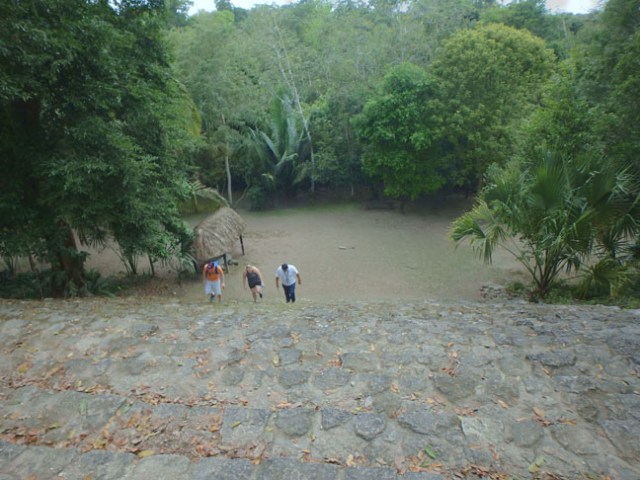
A large pyramid towers up from the other side of the plateau. We overheard a guide to one of the groups there saying that the top of that one was where the Mayans performed human sacrifices. Large as that one looks from the plateau, if you walk to the edge of the ground nearest to it and look down you again see the steps leading up to where you are because you are already partway up a much larger than it appears pyramid.

pyramid steps

steps at the edge of the plateau

The trail at the bottom of those steps going to the right went back to the trail leading past the first pyramid and back to the entry, and to the left went to a trail that winds around past a group of smaller ruins and then to the trail that went by the backside of the first pyramid, leading to that original intersection and then back to the entry. The hour that the cab gives is enough time to walk around all the ruins without hurrying. We stop a lot for photos and made it all the way through in the time given, though we did not spend any time at the shops.

ruins in the jungle

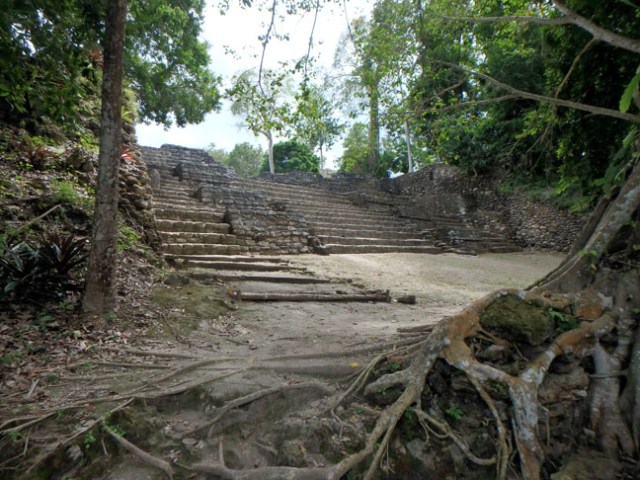
more ruins in the woods alongside the trail

Our ship did not have an excursion to these ruins. Their ruin excursion took people somewhere 2 ½ hours from the port. Cruise ship passengers can book excursions to Chacchoben in advance. These tours provide transportation and their basic tour costs about the same as going there by taxi. They stay at the ruins longer, but you would be with a guide and a group rather than exploring on your own.

pyramid at Chacchoban

side view of the bigger pyramid on the plateau

Copyright My Cruise Stories 2018
Posted in Caribbean, Holland America, Mexico, Ports of Call, Veendam | Tagged , , , , , | 1 Comment

Suva, Fiji Island Tour

cruise ship in Fiji

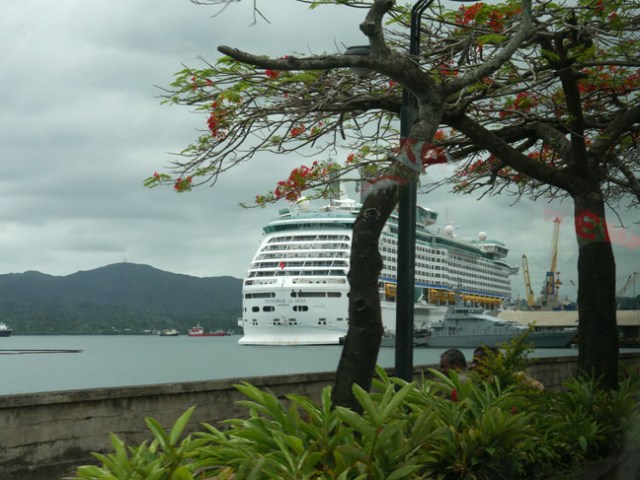
Explorer of the Seas in Suva

Although Suva sits on the other side of the same Fijian island as Lautoka, Royal Caribbean Explorer of the Seas left port in the early evening to spend time out on the open sea between port stops so they could open the casino. The port also might have needed the berth for another ship since it was docked in a container port. Reaching Suva in the morning we found our spot on the dock occupied by a container ship apparently loading on island time, which is akin to when you feel like it. Once they finished the loading process and accompanying paperwork the ship finally left and we were able to dock. Fiji doesn’t see enough cruise ships to build terminals just for them so the ships dock in container ports. This was especially obvious upon walking through a warehouse between the gangway and the exit from the port. Not that the road didn’t go directly to the exit, they just had it blocked off and funneled everyone out through the warehouse. When we came back the barriers were gone and we were allowed to go directly to the ship without the warehouse detour.

nature park in Fiji

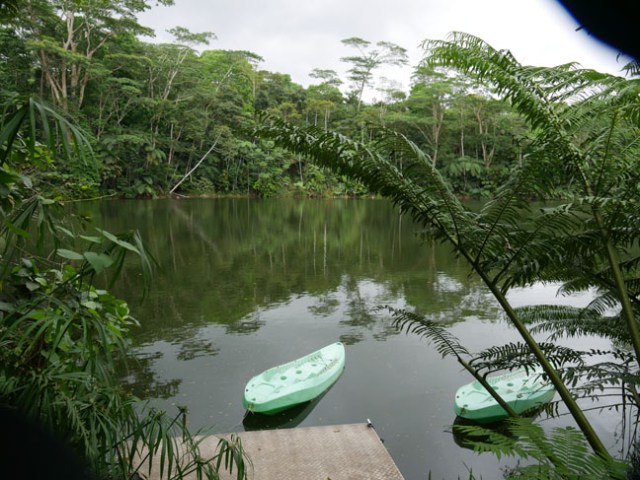
some of the trees at Colo-I-Suva park had crazy roots

Several local tour companies had booths next to the dock offering last minute sightseeing tours or transportation to beaches. Usually the sightseeing tours include a local village, but being Sunday the villagers all go to church rather than entertaining tourists with things like firewalking, Kava ceremonies, or possibly even lunch depending on the tour. One of the ship’s tours still included firewalking at a tourist village in spite of it being Sunday, but none of the impromptu tours that go to actual local villages did. We were able to negotiate a better price due to the missed stop.

eco lodge in Fiji

boats at the eco lodge

The main place I wanted to see was Colo-I-Suva Park so we found a tour that went there as the major attraction. They said there was a 15-person bus with 10 people on it about ready to depart, but as one of the people from the booth walked toward the bus with us and another couple he got a call saying the bus had already departed and we’d have to wait for the next bus. Nobody was happy about that. We’d all spent time sitting on busses waiting for them to fill after the promised departure time in Laukota the day before and didn’t want to be first on a bus waiting who knows how long for them to find more people. He said we’d go in his taxi instead and catch up to the bus. On the way up a big hill we passed an area full of shanties. The driver said someone had given that land to the poor years ago so they all built shacks there. Better than being homeless. We caught up to the bus at an eco-resort somewhere in the vicinity of the park.

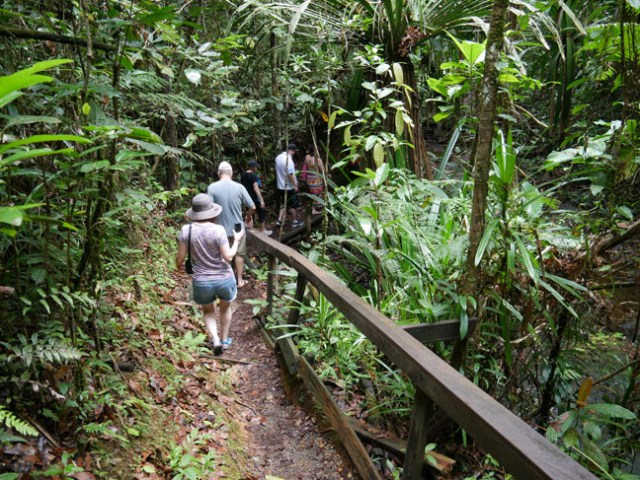
trail in Fiji

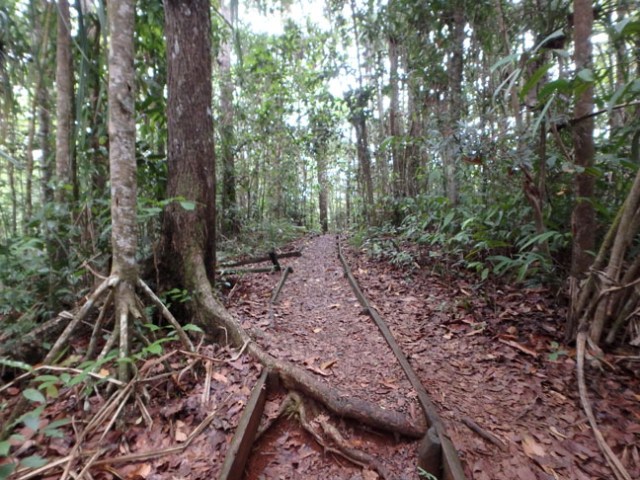
the trails at Colo-I-Suva pass over all sorts of terrain

They had apparently taken a smaller bus than originally planned. This one looked like it wouldn’t hold more than 12 people. Seeing what a tight squeeze adding 4 more people would be one couple bailed on the tour and left in the taxi, which made plenty of room for everyone else. Whether they just returned to port or took a private tour in the taxi I can’t say.

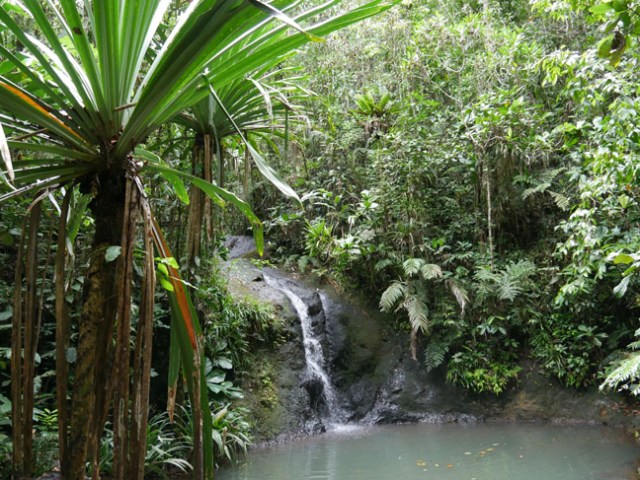
small waterfall

we saw lots of small waterfalls while hiking through the park

Once at the park the guide offered everyone the option of hiking through the park or staying in the van and driving to a waterfall. Since hiking through the park was what I actually wanted to do in Suva we went for the hike. The park is way to far to walk to from the port and taxis charge by the hour so without knowing what if any options they have for things like local busses the tour was the best way to get there.

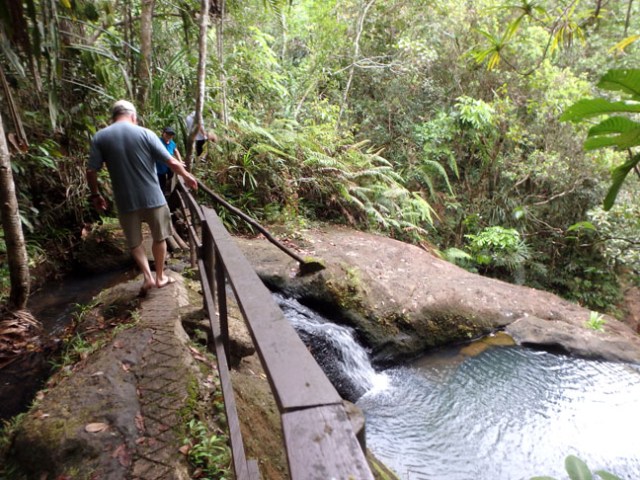
big rock trail

sometimes the trail passed over rocks

Hiking shoes with good traction would have been the best footwear for these sometimes muddy, often slippery, and usually uneven woodsy trails, but everyone wore either flip-flops or sandals. The trail wound through the woods with lots of steep stairways and questionable bridges. This hike is best for people who are in reasonably good shape that are not afraid of heights as there were some spots along narrow ledges. Most had handrails of some sort, but not all, and some of the handrails were less than stable. It would not be a good hike for anyone with walking disabilities or balance issues.

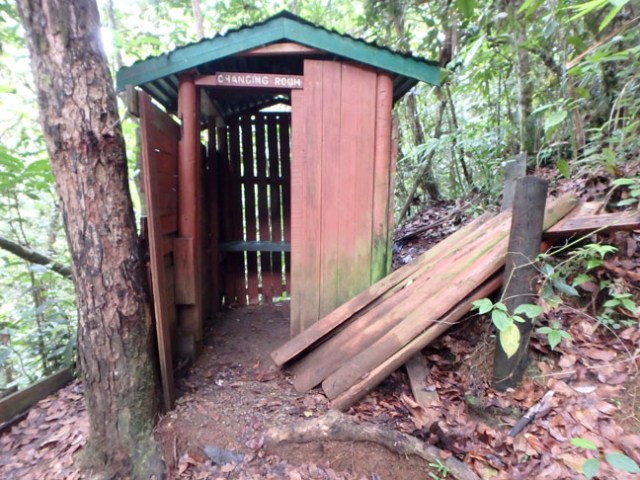
rustic changing room

changing room just off the trail near the upper pools

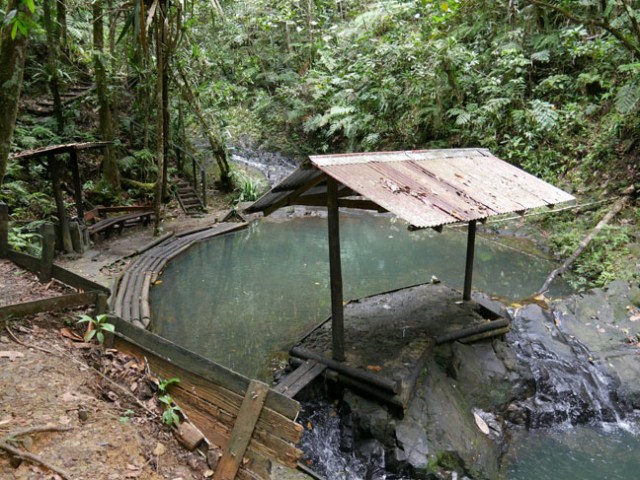
We saw quite a number of natural pools along the way, some with small waterfalls and some without. In the upper pool area we passed things like picnic tables, changing rooms, and even a couple outhouses set back into the woods down a side trail. A few people went by going in the opposite direction, but not many.

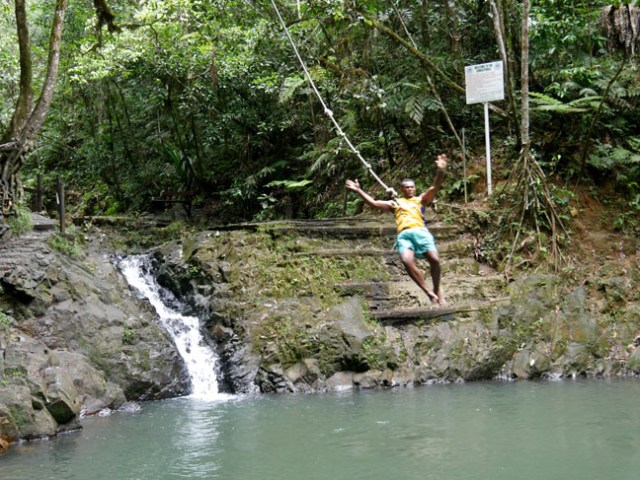
nature's swimming pool

swinging and dropping into a pool

Near the end of the hike down by the lower pools we came to a pretty big pool with a rope swing and people swimming. It had upper and lower pools and apparently the small waterfall between them was the one they brought people to see who came by van. They had already been down there and gone back up the trail to the parking area above. We watched some people climb up a rock and swing off on the rope. After swinging out over the water they let go of the rope and dropped in.

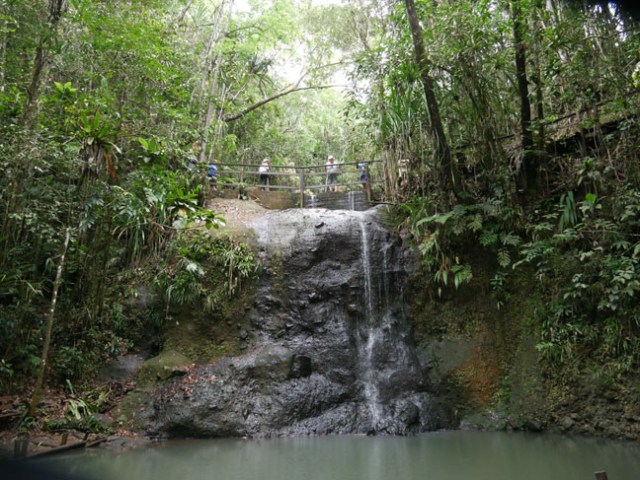
waterfall

not a lot of water, but one of the longer drops of the waterfalls in the park

We left the park after hiking up the hill without finding any large or impressive waterfalls. Since we came there wanting to hike through the park we were happy with our time there, but had we come specifically to see a waterfall we’d have been less than impressed. If someone came in a swimsuit and wanted time to swim on this tour they’d need to stay with the van so they could go straight to the pool while others hiked. Changing clothes there might be an issue though as we didn’t see any dressing rooms in that area.

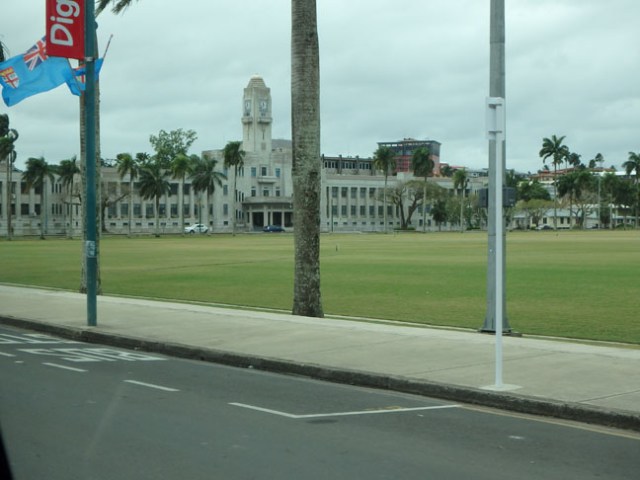
Fiji parliament buildings

parliament buildings in Suva, Fiji

The rest of the tour was mostly just driving past different sights or buildings with the guide saying what we were looking at while we drove past.

Colo-I-Suva

no idea what the little roofed area in the park is for

After we got back down the hill and more into town the bus stopped near the sea and the taxi came back by to pick up a couple from the van who had a ship tour they needed to get back for. The tour people had promised them they would get back on time for their excursion and the bus wasn’t going to make it. This was just a small family-run company who seemed pretty willing to alter things for various people.

forest park in Fiji

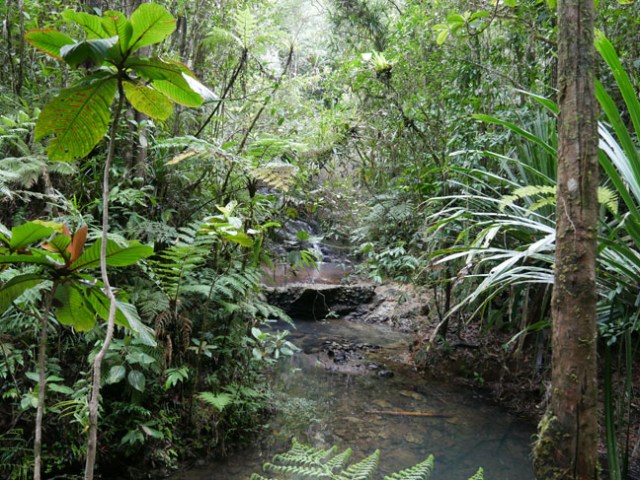
creek running through Colo-I-Suva park

Most of the vanload got out in town near one of the few shops that stayed open on Sundays, but we had no interest in shopping and opted to go back to the port at that time. Another couple wanted to be dropped at a museum and they were happy to comply. There was a free shuttle back to the ship from town, but the place where they dropped people off to shop would also have been an easy walk back to the port.

nature trail

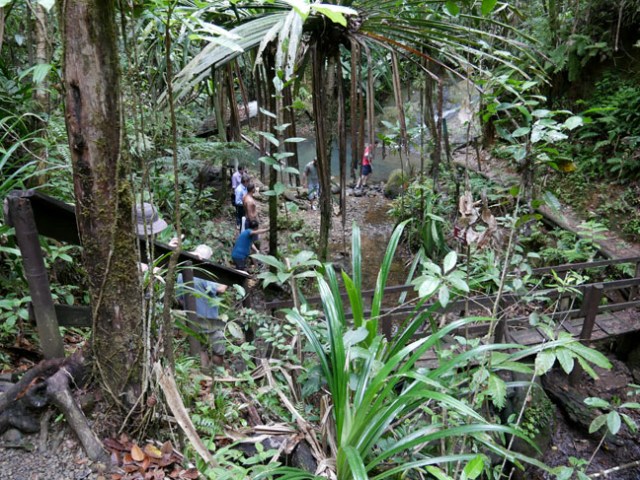
hiking through the park

This tour was half the price of the ship’s cheapest excursion in Suva, which went to a farmer’s market and drove by a variety of different sights including some of the same things we saw like the parliament buildings. Besides tours the people in the little booths near the ship offered cheap massages.

Colo I Suva in Fiji

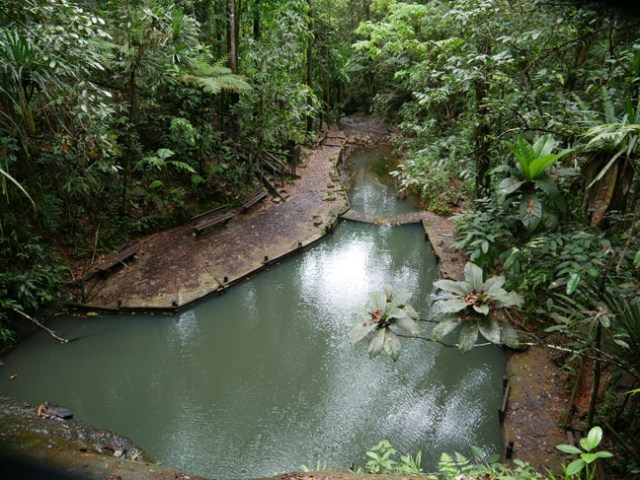
upper pools at Colo-I-Suva nature park

Other ship’s excursions in Suva included beach resorts, a spice farm and nature garden, a countryside drive with firewalking demonstration, a riverboat ride with waterfall pool swim, and an eco trek in a rainforest.

Copyright My Cruise Stories 2018

More Blogs About Fiji

Fiji Cruise Ship Ports

Lautoka Fiji Tour

Posted in Explorer of the Seas, Pacific Ocean & Islands, Ports of Call, Royal Caribbean | Tagged , , , , , , , | Leave a comment