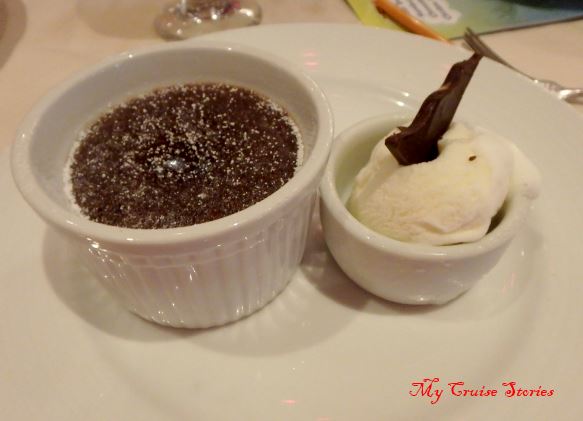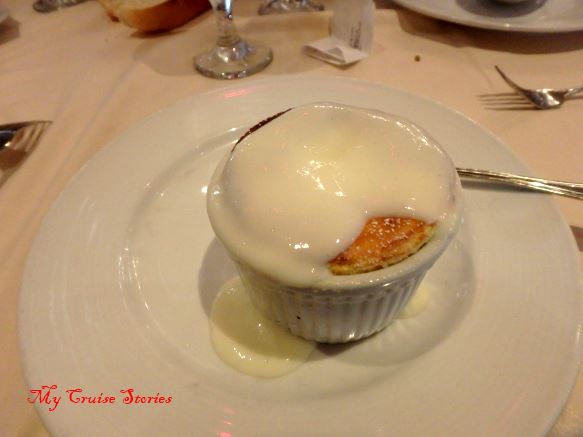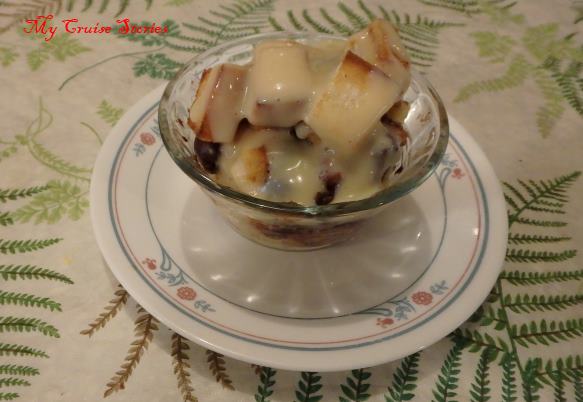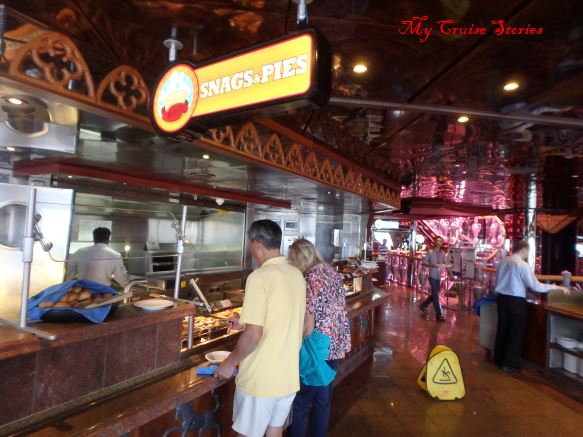
Since I’ve started cruising frequently I’ve rather developed a fondness for bread pudding. It’s the sort of old-fashioned homestyle dessert I’d never really given a thought to until I started noticing it regularly on the ships. While fancy versions like Bitter & Blanc sometimes make an appearance in single serve bowls in the dining room, buffets often have more homey versions in serve yourself vats with warm pots of sauce on the side.
With two gluten (and dairy) free sisters and a gluten free sister-in-law as well, I end up doing quite a bit of gluten free cooking, often experimenting with turning regular recipes into a gluten free variety. Some experiments definitely work better than others. Ingredient proportions often need adjustments from regular recipes to get sauces to thicken or batters to set.
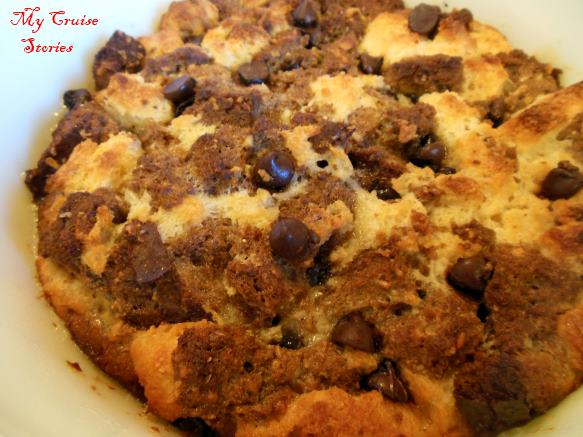
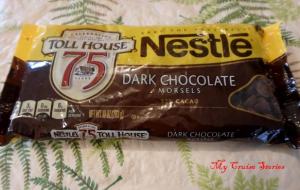
This recipe tastes just like regular bread pudding. Except that most recipes for bread pudding with vanilla sauce call for raisins. I don’t like cooked raisins so I tried other options instead. Chocolate chips work great if you can find some safe for the diets of whoever you are cooking for. Craisins are another option and of course there’s the traditional raisins. Use what you like that works with your diet. Or don’t add anything, that works too. Bread pudding tastes just fine on its own with no add-ins.
If either gluten or dairy is not a problem for you feel free to use regular bread or milk and butter or try this recipe. You can use any bread you like to make bread pudding. I’ve even used cupcakes from a failed gluten free pumpkin cupcake experiment for the bread – and they made way better bread pudding than they did cupcakes. (If using something sweet for the bread use a lot less sugar in the pudding.)
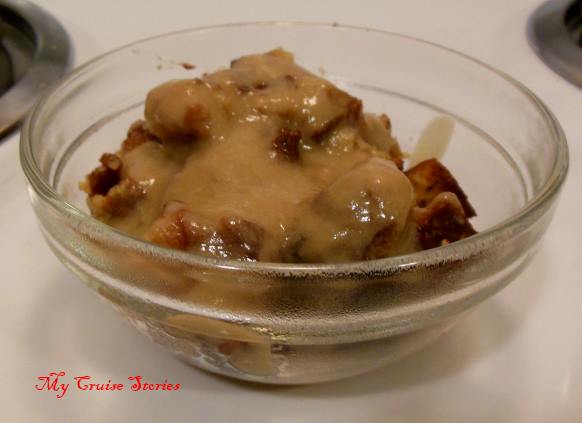
Gluten Free Dairy Free Bread Pudding with Vanilla Sauce
Gluten Free Bread Pudding with Vanilla Sauce
Gluten Free Dairy Free Bread Pudding Ingredients
5 eggs
1/4 cup granulated white sugar
3/4 cup brown sugar
1/2 teaspoon cinnamon (optional regardless of add-in or lack thereof, recommended to omit if using chocolate chips)
2 cups almond or other non-dairy milk (regular milk is fine if dairy is not an issue)
3 tablespoons non-dairy butter substitute, melted (butter is fine if dairy is not an issue)
10 slices gluten-free bread, cut into cubes (If using regular bread use 8 or 9 depending on the size because regular bread loaves are almost always bigger than gluten free.) White or sourdough bread lets the pudding flavor come through more than the bread flavor.
1 cup chocolate chips or craisins or raisins or blueberries or whatever you like if you want an add-in
Gluten Free Dairy Free Bread Pudding Directions
Preheat oven to 375 degrees (190 degrees C). Grease a large casserole dish or 2-quart baking pan.
Beat eggs in a large mixing bowl with whisk. Stir in sugars, cinnamon and almond milk. Slowly pour in melted butter substitute while briskly whisking. Stir in bread cubes until coated and then stir in add-in of choice until distributed throughout bread cubes.
Pour bread mixture into prepared pan. Bake 1 hour at 375 degrees. Check at half an hour and if the bread looks like it is getting too brown (or for moister pudding) cover for remainder of baking time. Serve warm with warm Vanilla Sauce.
Gluten Free Dairy Free Vanilla Sauce Ingredients
1/2 cup light brown sugar
1 1/2 tablespoons cornstarch (more or less is fine depending on how thick or thin you like your sauce.)
1 egg (If making a smaller portion of the pudding you can cut the sauce recipe down to half and still add the egg, any less just leave the egg out and the sauce still comes out fine.)
1 1/4 cups almond milk (regular milk if dairy is not an issue)
2 tablespoons non-dairy butter substitute (or butter)
1 1/2 tablespoons vanilla extract
Gluten Free Dairy Free Vanilla Sauce Directions
Whisk brown sugar, egg, almond milk, and cornstarch together in heavy saucepan. Add butter substitute. Cook over medium heat whisking constantly until butter substitute melts and blends with other ingredients and sauce thickens. Remove from heat and stir in vanilla until well blended. Serve warm over warm bread pudding.