Würzburg, Germany
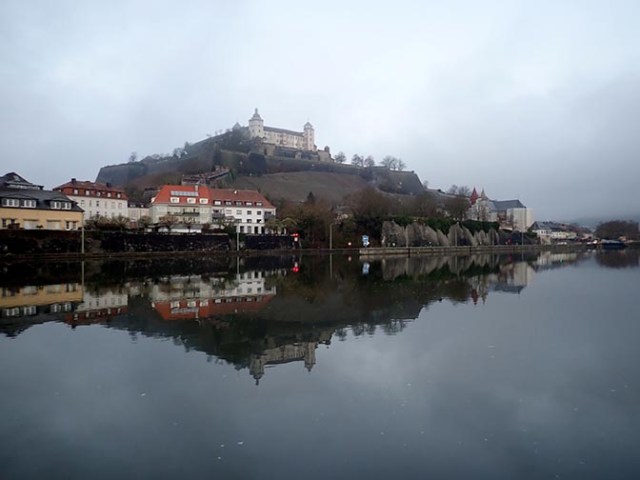
view from the ship while docked in Würzburg
Würzburg sits along the Main River in the Franconian region of northern Bavaria in Germany surrounded by vineyards including Germany’s oldest and largest one. The city is best known for its historical architecture, especially the 18th-century Residenz palace. It’s also famous for its dry white wines and has a well-known local pilsner beer and the oldest pizzeria in Germany. The city boasts numerous wine bars, cellars and wineries. The population consists of more than 125,000 people. Würzburg has a temperate climate with modest rainfall year-round. Average temperatures range from winter lows in the high 20’s F to summer highs in the mid 70’s, though it can dip down into the teens and rise above 85 degrees. Snow generally falls between December and February. Average annual precipitation is just under 30 inches. There are museums, parks and gardens, a famous bridge called Old Main Bridge, churches, palaces, and markets. Much of Würzburg was heavily damaged during World War 2, but has since been restored. The core of the Residenz palace survived relatively intact, but much of the rest of the building was severely damaged and restored over a 20-year period.
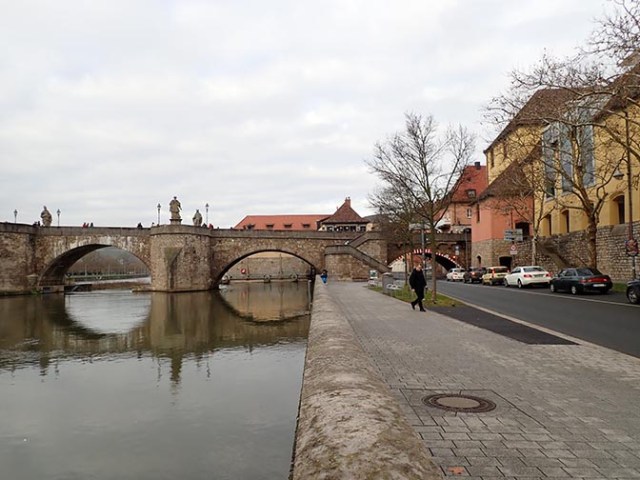
walkway along the river from the stone bridge to the ship
Würzburg River Cruise Port
Würzburg was one of the better ports of our Grand European Tour on Viking Skirner because it was both walking distance from the ship to town and the boat stayed in one place all day so people could come and go as they please. It was also quite scenic with castles and churches on the hill above the far side of the river and colorful houses along the water’s edge. The historical old stone bridge was also within sight of our docking space. The view was even nice from the little above water window in our below-water-level cabin until another ship came along and docked beside us, at which time the view through all of the windows on that side of the ship was of the other ship.
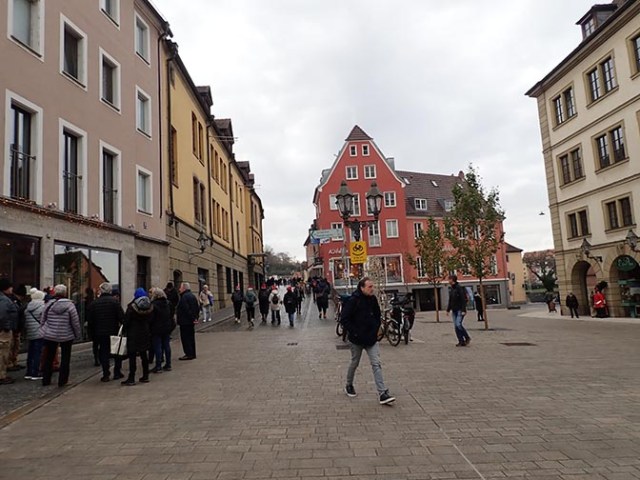
Würzburg, Germany
Würzburg Residenz & Walking Tour
The included tour in Würzburg was called Würzburg Residenz and Walking Tour. It started with a short bus ride to the Residenz. It’s a former prince bishop’s palace, though it doesn’t look like a castle. Prince bishops were the rulers of German towns back in medieval times and beyond. They ruled Würzburg from 1168 – 1803, but the rule of prince bishops started elsewhere in Europe in the previous century. The prince bishops were the ruler of their town as well as the bishop of its church.
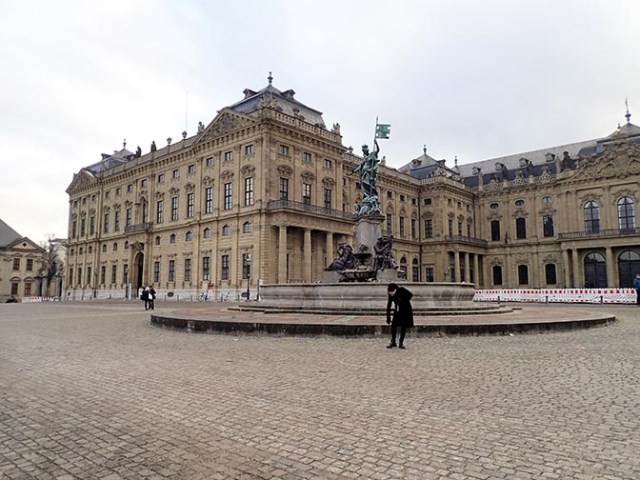
Würzburg Residenz
The tour there started with a guided part, followed by free time. The guide said no photos during the guided tour, wait until free time when you can take all you want. Large bags, backpacks, and liquids are not allowed inside so they were all put into a big locked box where the ship’s cruise director would stand guard over them during the tour. There are individual lockers in another area for people who don’t come on an organized tour.
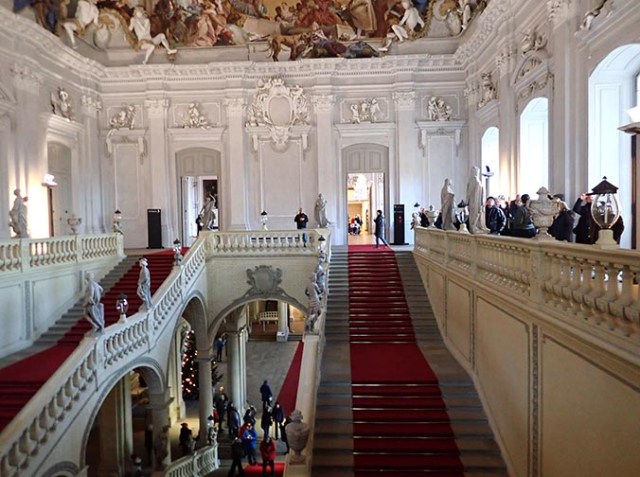
grand stairway
Entry into the building is through a tiny door within a giant door which isn’t really visible as a separate door until it is opened. There are 3 large doors there, which the guide said were originally openings without doors so carriages could pull right inside and let visiting kings, queens, or other important people right out at the grand stairway instead of outside. When Napolean came conquering his carriage had 8 horses instead of 6 and didn’t fit inside so he had to get out and walk in, which greatly displeased him, though the people getting conquered were probably not unhappy about that. Once inside a grand stairway leads from the entry area up to many rooms inside the palace.
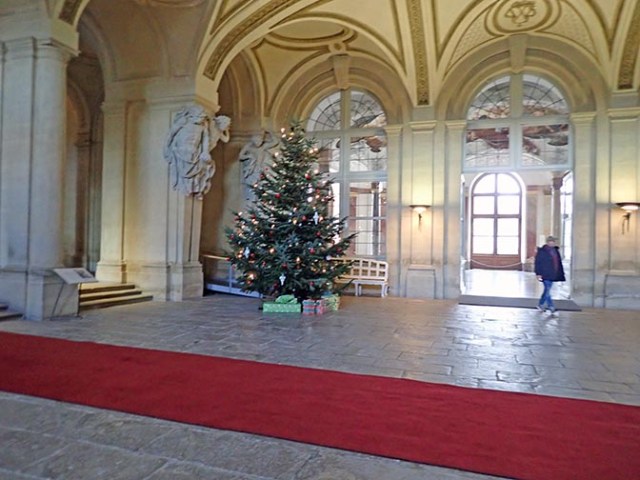
Christmas tree in the entryway
Not thinking the tour had officially started yet since they had said we were picking up a guide from the building when people dropped off their stuff, I took a photo of a Christmas tree in the lobby and got yelled at by our guide. There was no additional guide after people dropped off their things like they had implied there would be, just the one we came from the ship with.
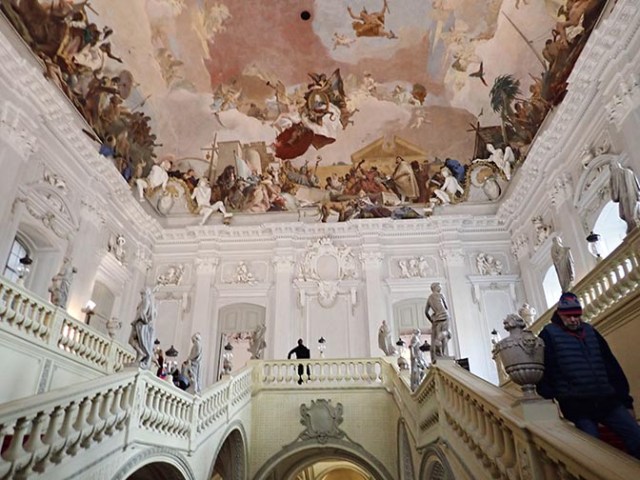
ceiling above the grand stairway
Most of the guided part of the tour was spent in just a few rooms while the guide went into great detail about all the artwork there, both painted walls and molded relief sculptures integrated into the paintings. Most of that time was just getting around the walkway surrounding the top of the stairway while the guide spoke about pretty much every painting and sculpture there. We’d move along maybe 10 feet before stopping for another long explanation of whatever bit of the paintings were directly above us.
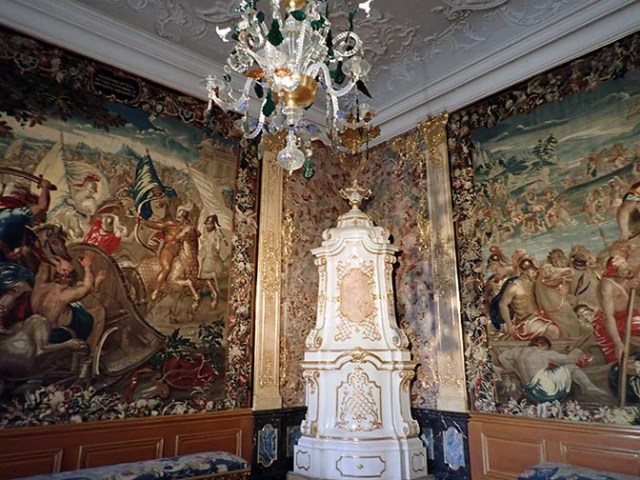
even the heaters were ornate
Nearly all of the other people on the tour constantly snapped photos without reprimand. All throughout the entire tour everyone else took many photos and the guide never said one word about it to any of them. Didn’t even give so much as a dirty look to all the people holding phones up right in front of her face snapping away taking photos while she was talking about stuff. In fact she did not say a thing about taking photos to anyone else at all. Just yelled at me for taking one photo before the actual tour had even started. She did not get a tip from me.
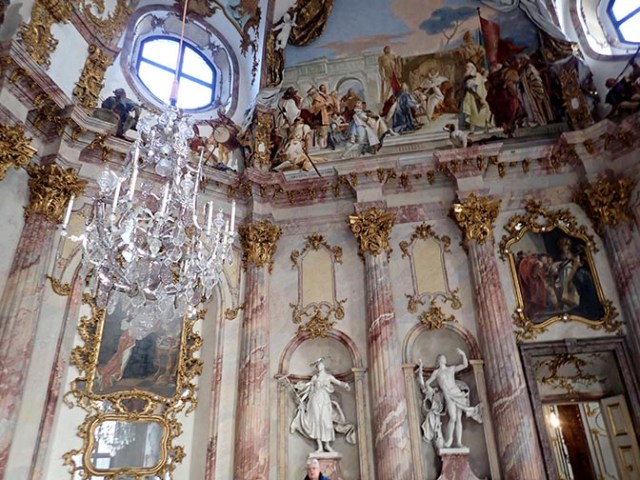
marble room
One room had real marble floor tiles and columns with real marble bases, but imitation marble columns. The imitation marble took longer to make than cutting actual marble from stone. At the time it was cheaper to make it that way, but in current times because of the intensity of the labor and the modern technology that makes cutting stone much easier than it was back then the false marble would actually cost more to install than the real stone.
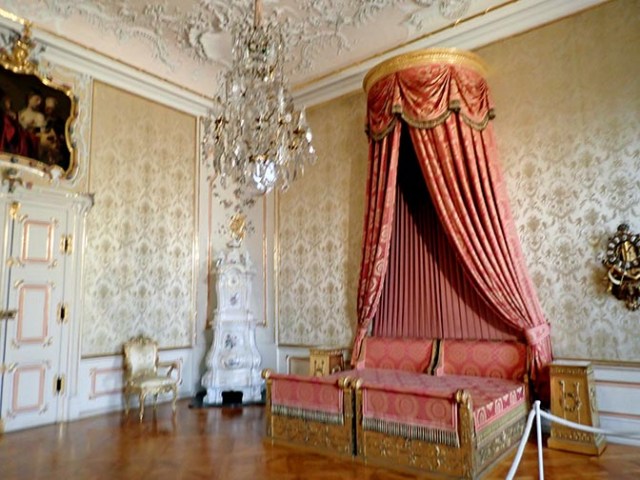
bed in the Residenz
During the free time part of the tour there were lots more rooms to see than what was included in the guided part, but as is with all of these places none of them were fully furnished as they would have been when in use. They all had some furnishings, but set as a display rather than how anyone would have used them. One room did have a bed, the first of those we had seen. Beds were quite short in those days. People were afraid of sleeping lying down because they associated it with death and they feared demons would press down on their chests. Instead they slept nearly sitting leaning against several pillows.
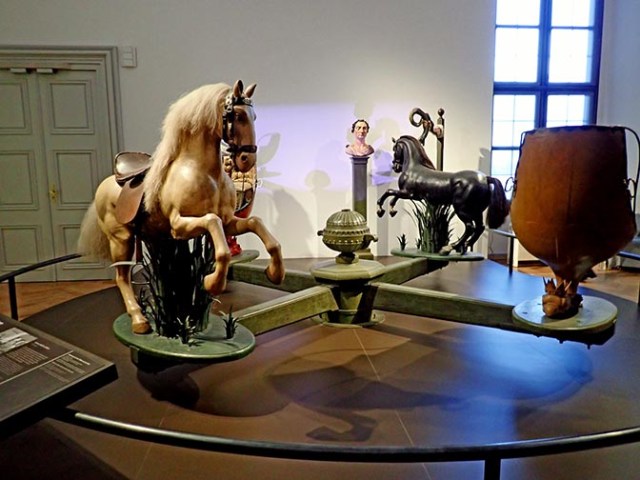
old time carousel in the Residenz
There was plenty of time during the free period to go back and take photos of the things we had seen during the guided part. Which was good for me since I was probably the only one in the whole group who didn’t take pictures during the guided part of the tour after getting yelled at for the one from before it really even started. It doesn’t take that long to get through the entire part of the building that is open to the public on your own, whereas it took the better part of an hour just to get around that one room with the guide.
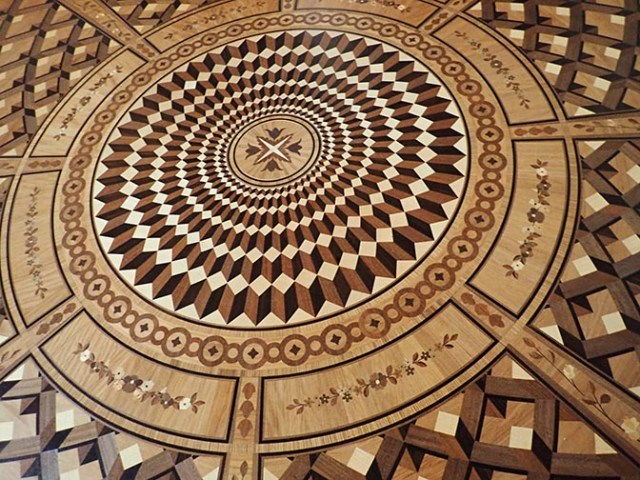
fancy floor
All of the rooms had lots of artwork, some of it built in with sculpture and paint and other hanging in paintings and tapestries. Even some of the floors were intricately ornate.
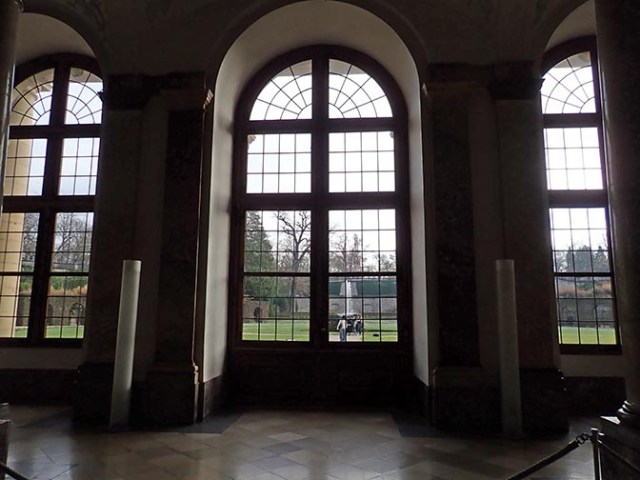
Residenz church
Besides the main building there was also a church, which was a private one for the residents of the Residenz. It was smaller than the cathedrals we went to on other tours, but still quite ornate. This church had plain glass in the windows rather than stained glass which a sign in the church said was so those windows would look the same from the outside as the rest of the building. Apparently symmetry was an important tenant of baroque architecture. Besides all the ornate décor it also had a pipe organ up on a balcony at the back of the church, which seems to be standard for churches of that era. Like the church itself, the pipe organ was also smaller than the ones at previous cathedrals we saw in other places.
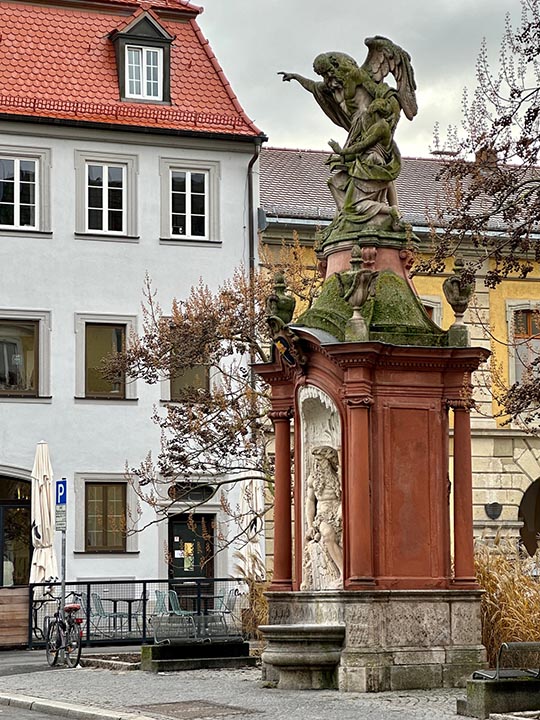
statue
After the free time ended the walking groups met up with their guides outside of the building and walked back into town with the guide stopping to give the history of various things we passed. One statue she said tended to get what she called sticker tattoos from the local college kids advertising all sorts of things likely not appropriate to the statue’s original purpose.
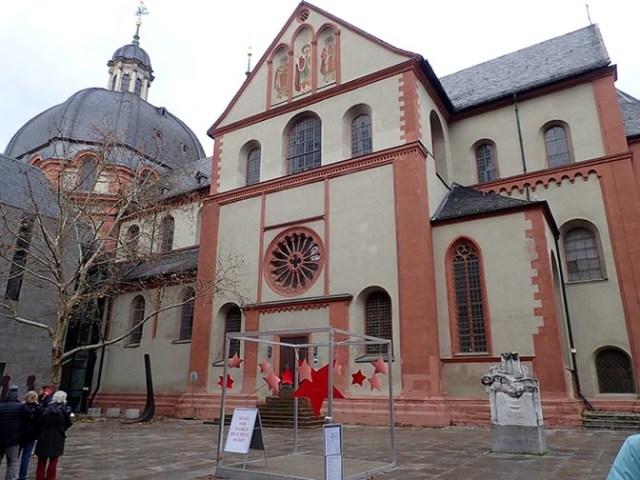
the 3 missionaries on the cathedral
Killian’s Cathedral depicts 3 Irish missionaries who came to town in 686 and attempted to convert the duke who ruled the town at that time to Christianity. For some reason I can’t recall from the tale the guide told this involved him either leaving his wife or disposing of her, something she of course did not agree to. Before making his decision on whether or not to convert he made a trip out of town. While he was gone she secretly disposed of the 3 missionaries, whose bodies were not discovered until many years later. Upon the duke’s return she said they had left so life went back to normal for them as if the missionaries had never come.
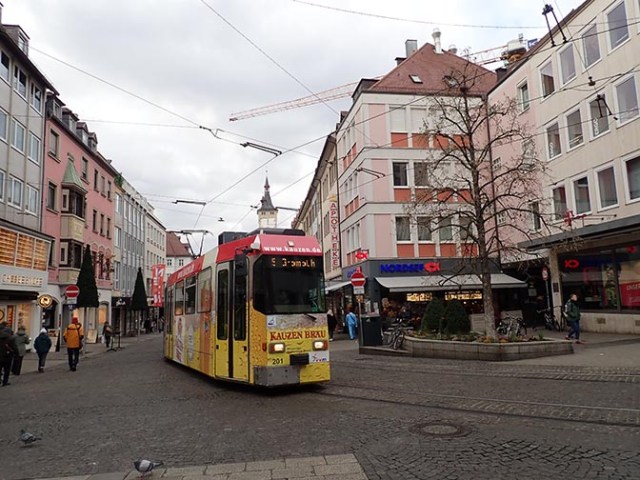
tram
Rail-based trams frequently passed by on the main streets of town. A lot of the European cities we visited had them as part of their public transportation systems.
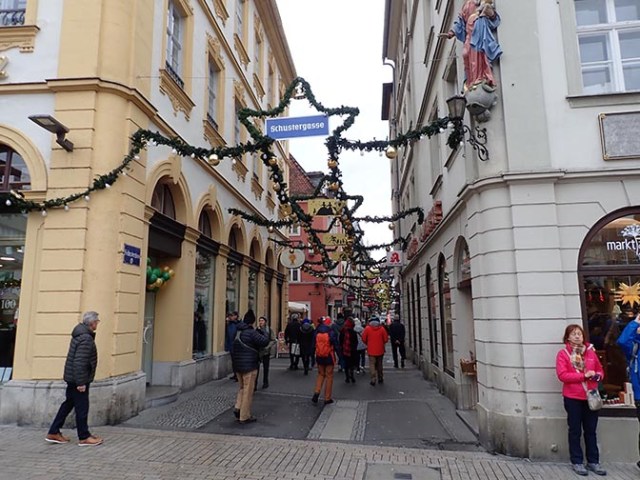
decorated street
The tour went into the main shopping area of town and through part of a Christmas Market. Across from the market a festively decorated narrow street led through what used to be where all the shoemakers had their shops. It was also part of the historical Jewish area of town.
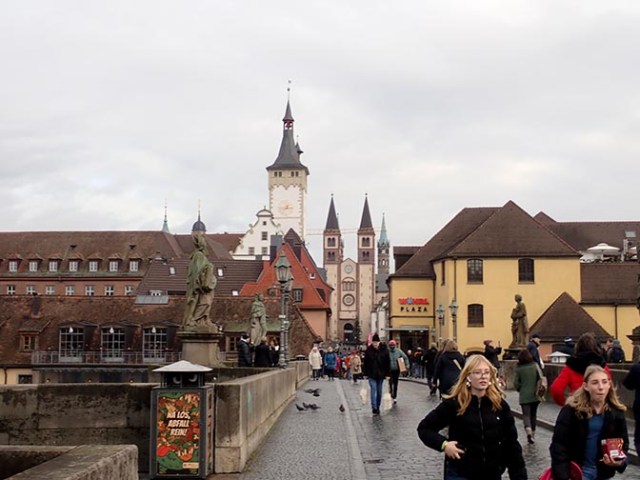
walking across the old stone bridge
That led to the street with the old stone bridge at the river end of it. The part of that street close to the river is supposed to be for pedestrians only other than taxis, but a random car drove down there looking lost.
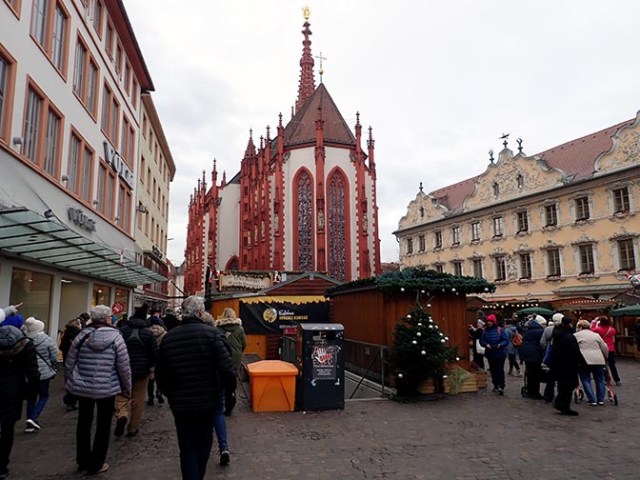
chapel and Christmas market
The ship stayed at that port for quite a few hours after the end of the tour so we went from the bridge back to the Christmas Market and wandered around there for awhile. Pretty much all of the Christmas markets in all of the various towns are next to a church, but then again the towns are all full of churches so it may be hard not to be. The one at this market was just as big as many of the others, but called a chapel rather than a church because back in the middle ages commoners built it without the prince bishop’s permission so they weren’t allowed to call it a church. It’s a restored building, but the golden Mary on top is original having survived the bombing that destroyed the rest of the building.
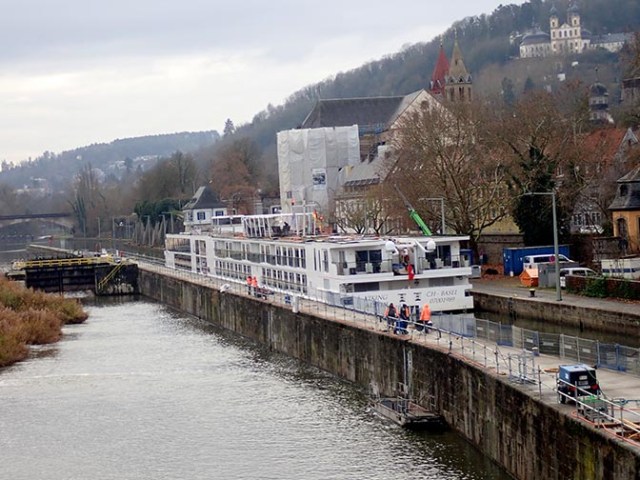
Viking ship in the locks
The river runs freely under parts of the old stone bridge, but at one end of it there are locks, in which another Viking ship was going through while we were there. After getting out of the lock channel it tied up to our boat. River boats often dock 2 or more deep tied to one another, especially if they are from the same company.
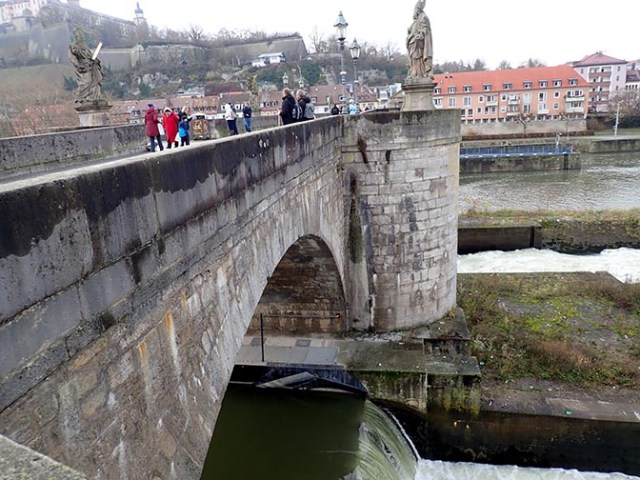
looking down from the stone bridge
The old stone bridge is scenic from both above and below. The walk alongside the river back to the ship was pretty scenic too. It’s called the Old Main Bridge. Built between 1473 and 1543 it’s one of Germany’s oldest bridges and one of the city’s most iconic landmarks.
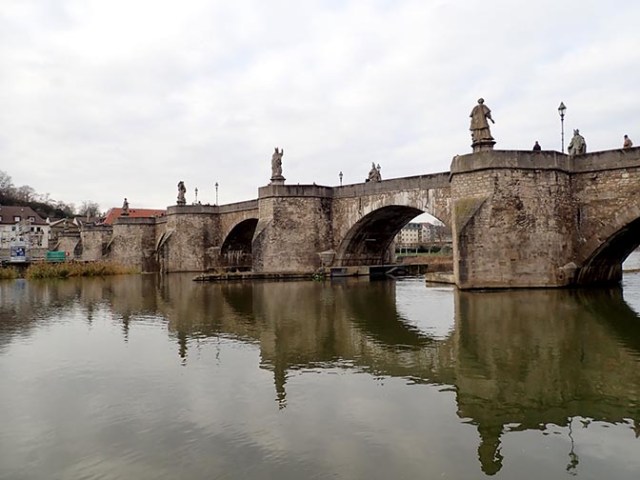
stone bridge
It replaced an earlier Romanesque bridge from 1133. The German army tried to blow it up while retreating during World War 2, but were largely unsuccessful due to faulty explosives. The damaged portion was restored after the war. The bridge has 12 arches and spans 185 meters (just over 202 yards) across the Main River.


Thanks for the tour– I was there over 50 years ago, but really don’t remember much– this was a lovely visit!
Thanks. It was quite a nice palace.