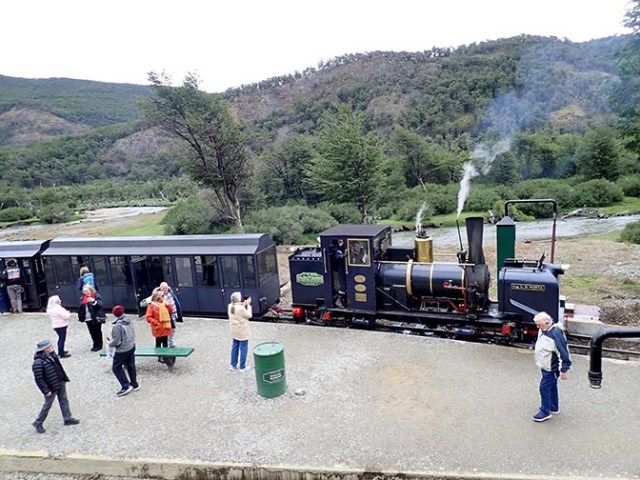
train to the end of the world
The Train to the End of the World in Ushuaia, Argentina is a ride in a vintage railcar on the world’s southernmost railway. The ride includes views of Tierra del Fuego National Park and from Ensenada Bay views of the Beagle Channel.
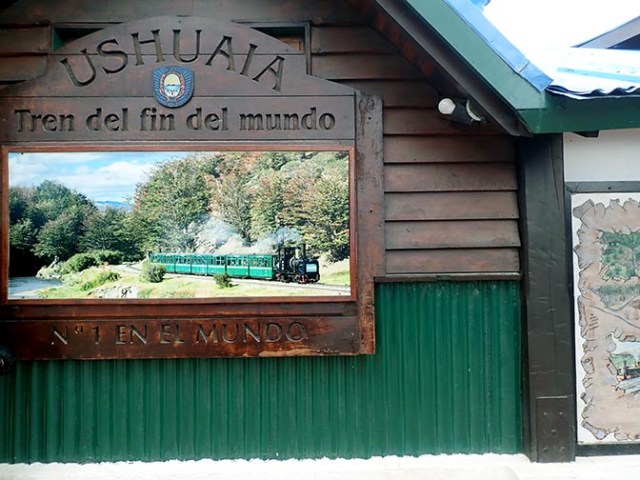
sign at the train station
According to Holland America’s excursion info the railway station is a short bus ride from the pier and the train ride includes scenic splendor on a railway built to haul lumber from the surrounding forests to Ushuaia. The train runs for 45 minutes going over a river and into the Sylvan Valley and into the national park. It passes mountains, forests, rivers, and waterfalls with stops for photos along the way. There is a gift shop for souvenirs at the train station. A bus ride goes to Ensenada Bay for the views of Beagle Channel, named after Charles Darwin’s ship. The excursion info notes say that the railcar has limited space and legroom. It advises wearing warm layered clothing with a waterproof outer layer. Also gloves and a warm hat and scarf.
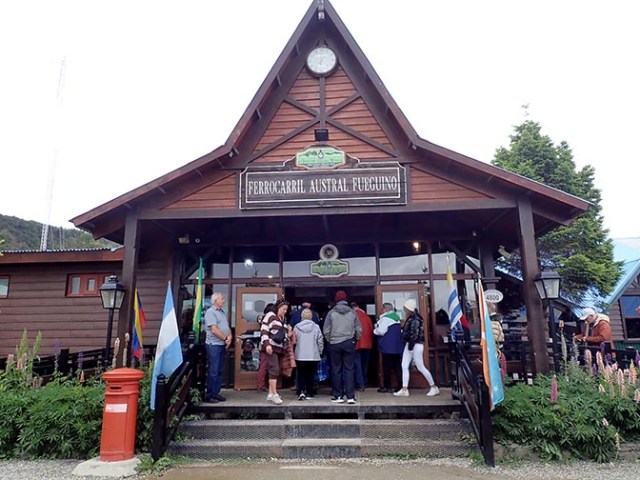
train depot near Ushuaia
The bus for the Train to the End of the World excursion picked us up right at the dock next to our ship, the Oosterdam. The railway station where the tour starts is outside of town. People can book this tour on their own, but would have to find their own transportation for the 8 kilometers from the dock to the railway station. Last minute tickets at the station are only available if the trains are not fully booked in advance so it is best to pre-book tickets even if you go on your own rather than on the ship’s excursion. Considering the crowd at the station loading onto multiple trains there wasn’t likely any space left for last minute tickets the day our ship was there.
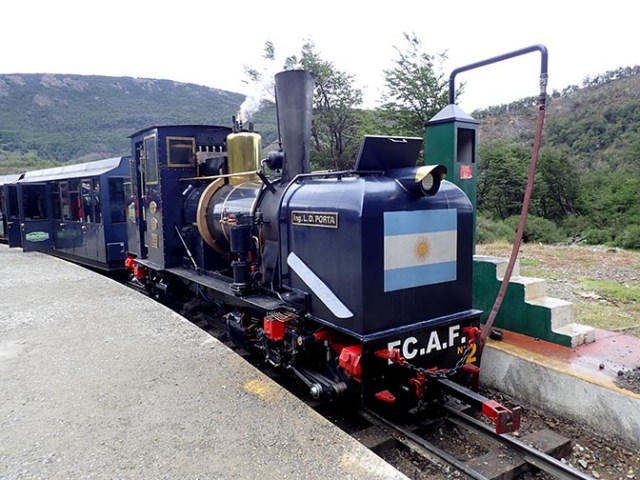
the front of our train
The train station has restrooms and a gift shop as mentioned in the excursion description. The waiting area where people line up to board was quite crowded. It took more than one train to hold all of the excursion guests from our ship, who arrived on 3 busses. On the excursion people were given tickets for a particular train as they disembarked the bus. When the train number matching your ticket is called you line up to board your train – though likely the line will already start forming as soon as the prior train leaves and stretch clear across the building to the far end by the time it’s actually called. Waiting at the end of the line for the prior train won’t put you at the front for your train if there’s already a bunch of people in a separate line for that train.
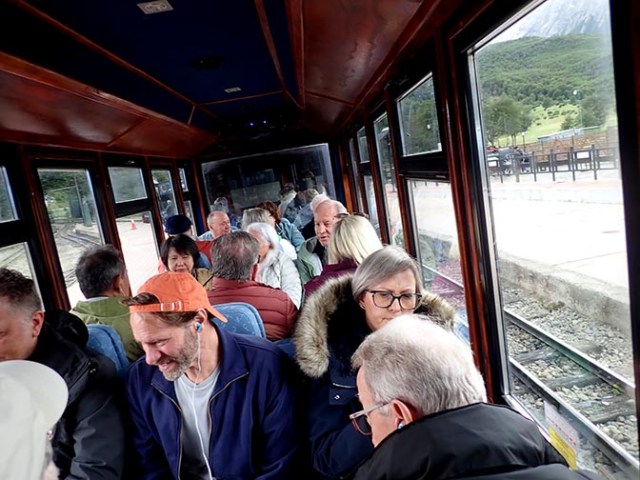
crowded train car
The trains are pulled by vintage steam engines. Each passenger car has numerous compartments each with its own doorway and 3 seats facing forward and 3 seats facing backward across a narrow aisle from one another. There is not a lot of leg space so anyone with long legs might feel crowded. The seats are not all that wide each either. The 4 people who get the window seats will have a nicer view of the side they are on than the 2 in the middle, though you can see out both sides from either side and from the middle.
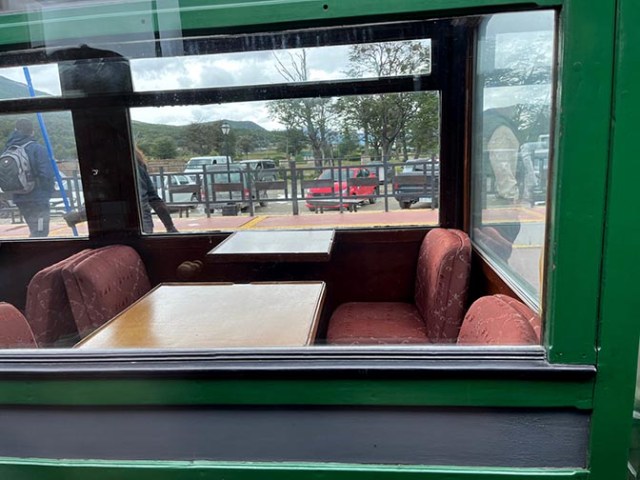
wish we had this one
While our train was boarding one pulled up next to it that had way more room for each person. Instead of little compartments for 6 like our train had, that one had a row of little tables on each side of the train with one seat on each side of the table facing each other so everyone in that car would get a window and a whole lot more space per person.
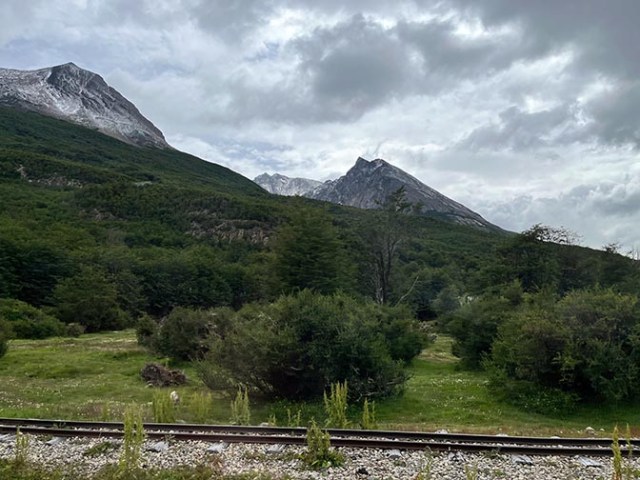
narrow gage train track
The trains run on a narrow gage track. The railway line originally extended from the prison that is now a museum out to what is now Tierra del Fuego National Park. It was used as a work train taking convicts from the prison out to the forest to chop down trees. Wood from those trees was initially used to build the town and then to provide fuel for heating and generating power. Before building the town the convicts had to build their own prison. Since they were in a harsh climate far from anywhere escape would most likely lead to death.
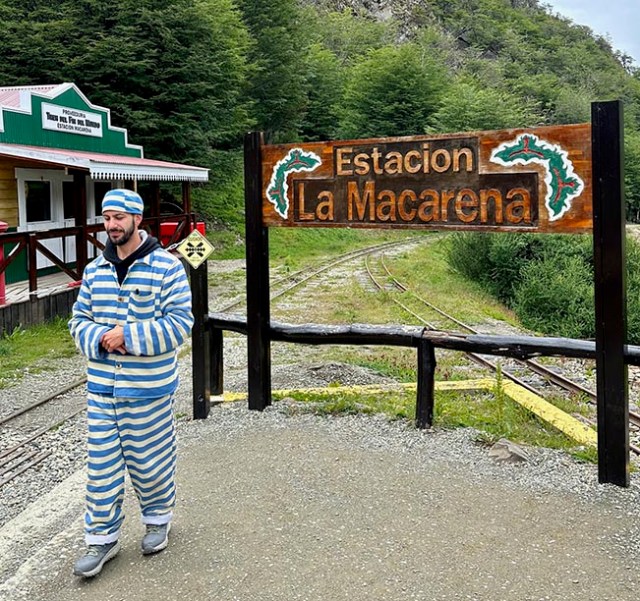
employee in convict uniform at the second train station
Before boarding the train everyone is stopped to pose for a photo with a couple people dressed as convicts, in keeping with the prison train theme which they followed through with at the next stop. People are given headphones which plug into the train for narration along the journey. There are 7 languages to choose from. Narration is mostly on the history of the prison and the train.
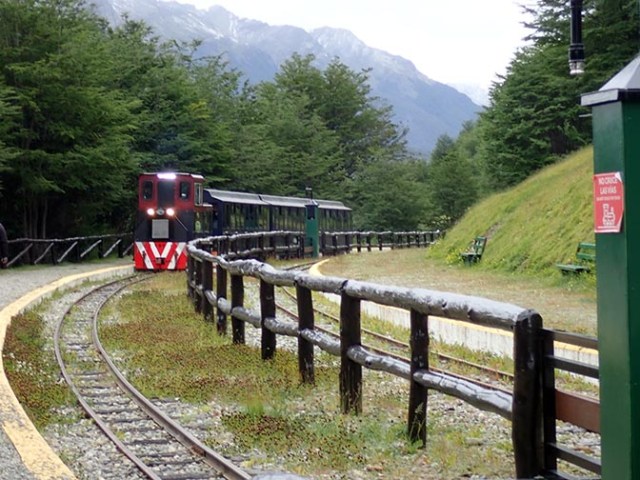
another train went by going the other way at the brief stop along the way
Life was harsh for those prisoners. Cells in the prison were small and damp and lacking in sunlight. One of the punishments was not being allowed to go out and work in the forest because the men would rather go out and work where they had a chance to get some sunlight and fresh air than stay in a cold damp tiny cell all day. They were given food at their lunch break, but had nowhere to sit except the ground and no shelter in a climate where it rains or snows about 200 days of the year.
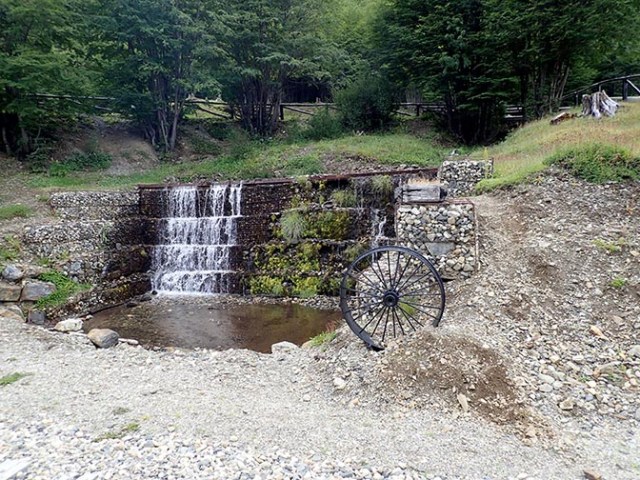
little waterfall near the tracks at the little station stop
Though the rail cars look vintage on the outside it is highly unlikely that the prisoners had the plush seats that are in them now. Also likely they faced even more crowded conditions. They would of course have needed rail cars to haul all of the wood they chopped back to town as well.
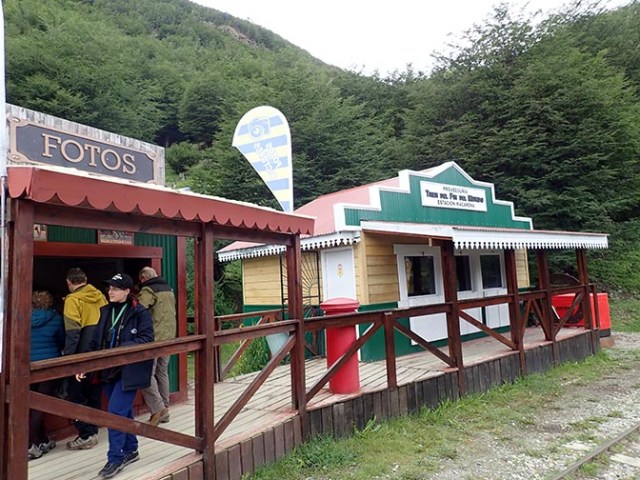
train station where the train stops briefly during the ride
The train made a short stop at a station partway through the journey. Though the people working there were dressed as convicts they had a much easier job than the actual convicts of the past. If people want to buy the photos that were taken at boarding that is where to get them.
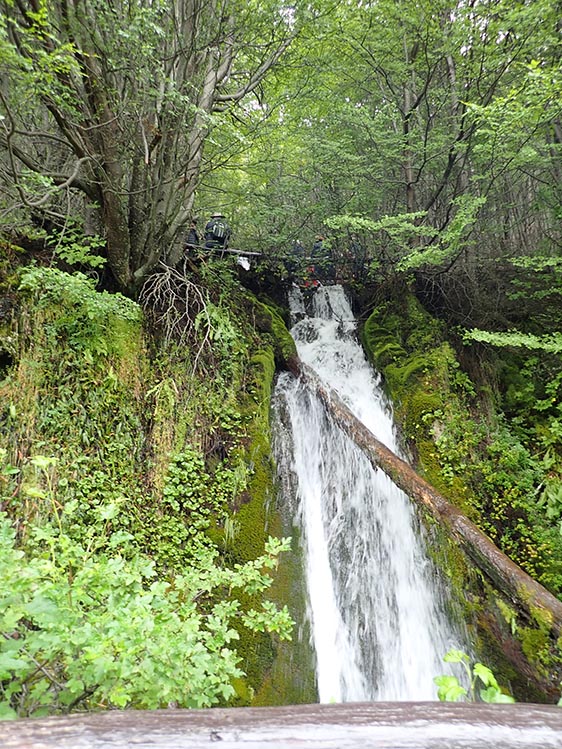
Macarena waterfall
There is also a trail to a waterfall and viewpoints that overlook the train for taking photos of it as well. The waterfall is named Cascada de la Macarena.
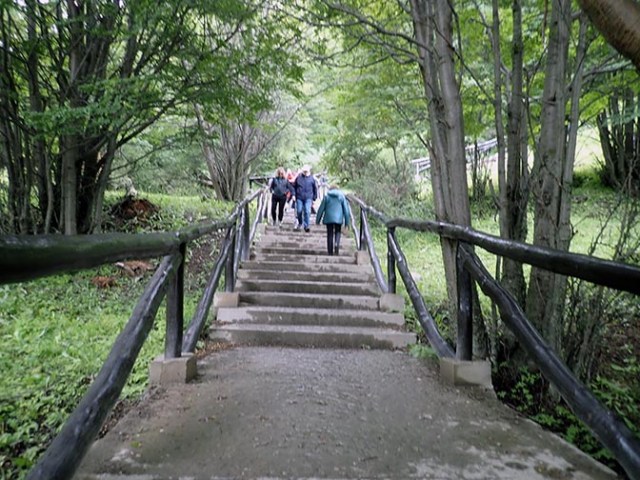
stairway to the waterfall trails
At one point the trail to the waterfall comes to a split where you can choose a path that goes to the top of the falls or one that has a viewpoint partway up. We did not have time enough for both. Even if you can climb all the stairs fast enough to do both it doesn’t mean the people ahead of you will.
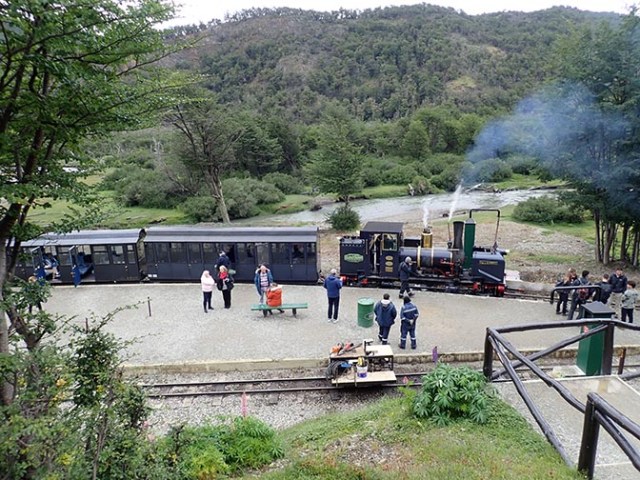
train at the short stop along the way
The trail and station at that stop are above the tracks where the train stopped. It’s a good place to get a view of the train, though pretty much impossible to get any photos without other people in them.
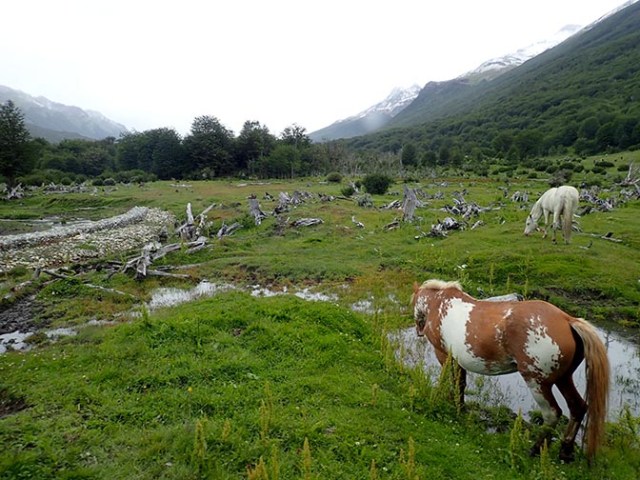
stumps and horses
The train passes through forest and grasslands. There are many old stumps of chopped down trees along the way. There were lots of horses, but they aren’t wild. They belong to people living in the area. If any of them wander into the park they are microchipped and any future ventures into the park will bring the owner a fine. Within the national park the forest is protected and by eating the natural vegetation the horses cause damage as they are not native to the area.
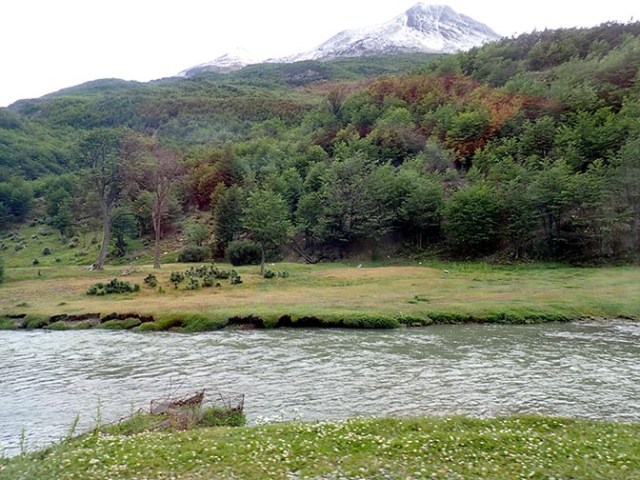
scenery on the train ride
The ride is quite scenic. Besides lots of forest there’s mountain and river views.
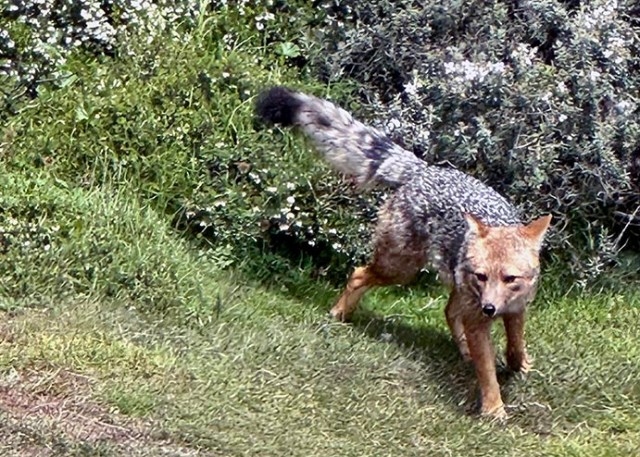
red fox
Native animals to the area are foxes, otters, and a relative of llamas called guanacos. Beavers are a non-native invasive species. In ecosystems where beavers belong their dam building makes wetland habitats that control flooding and create fire breaks that help fight wildfires, but in this ecosystem where they don’t belong and have no predators to keep them in check their dam building causes flooding in the forest and kills the native trees that aren’t equipped for that sort of environment.
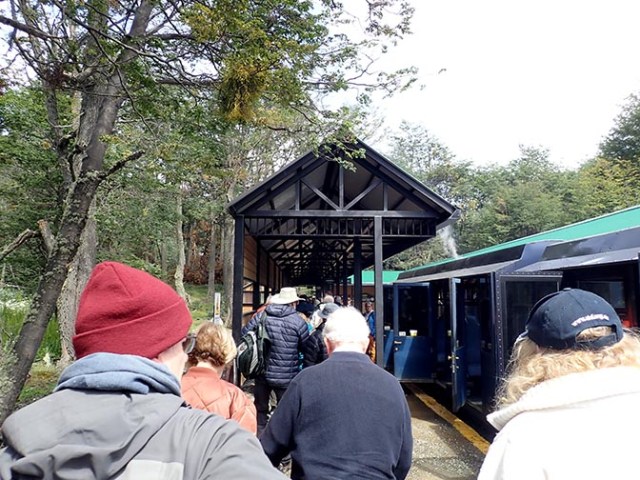
train station at Tierra del Fuego national park
After disembarking the train at the station in the park we walked up a hill to the waiting busses. A little red fox came out of the woods and strolled around the area for a bit showing no fear of the humans.
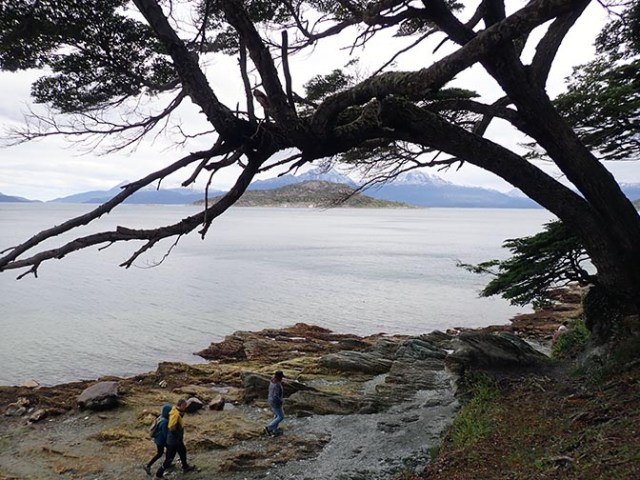
view at Tierra del Fuego national park
The bus took us down to a beach with a view of Beagle Channel and the Andes Mountains.
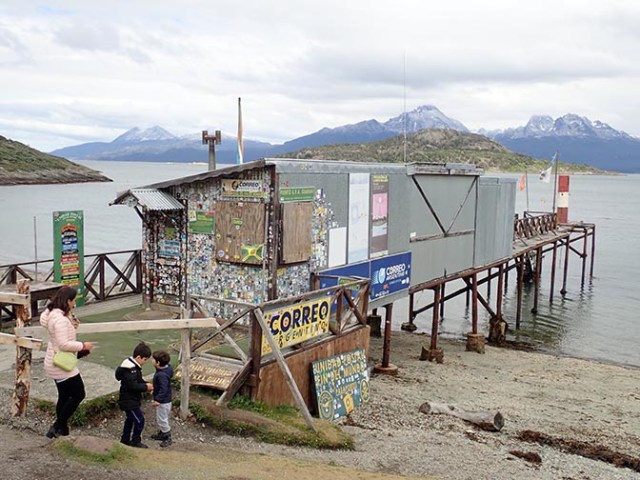
southernmost post office
The southernmost post office in the world sits on a pier there, but the pier was old and unsafe so the post office was closed. People could walk along the beach or on a trail paralleling the beach.
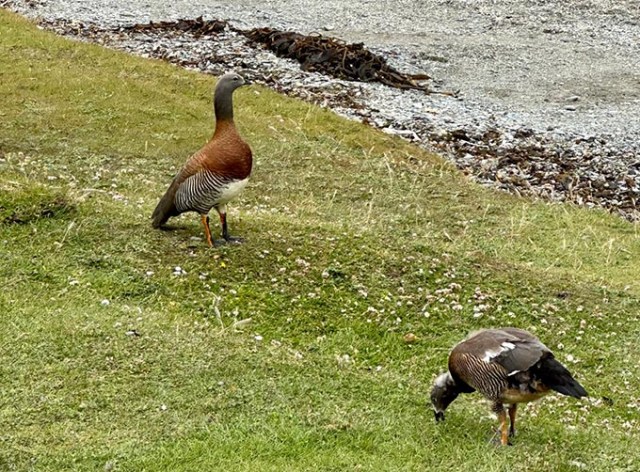
wild geese
There were some small geese by the beach.
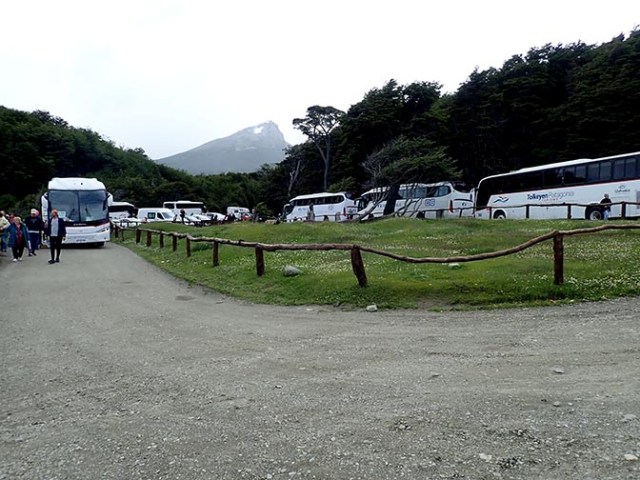
too many busses
There were more busses than the parking area really had room for along with some cars and vans. Some of them had a hard time getting out of the cluster of vehicles.
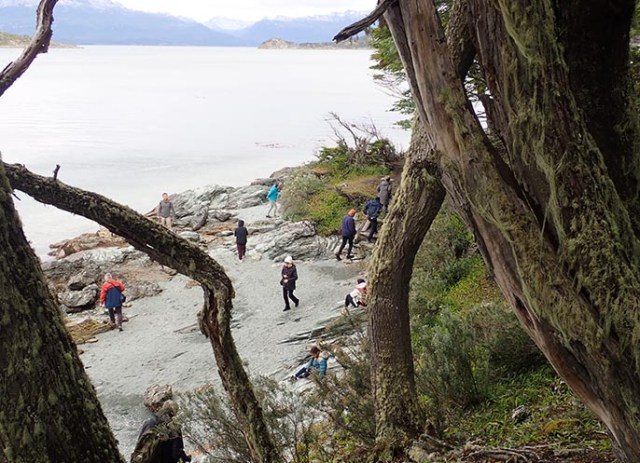
beach at the park
This was a good tour for seeing the sights and learning about the area and its history. The train ride was fun, though it would be nicer if there were just 4 people in each compartment so nobody had to sit in the middle seats and if there was a bit more leg room between the seats. Or if they had used one of the cars that had seats in pairs with tables instead of the crowded one we had. Those must have been some sort of premium cars. They were not an option on our tour.


