Magic in Saint Thomas
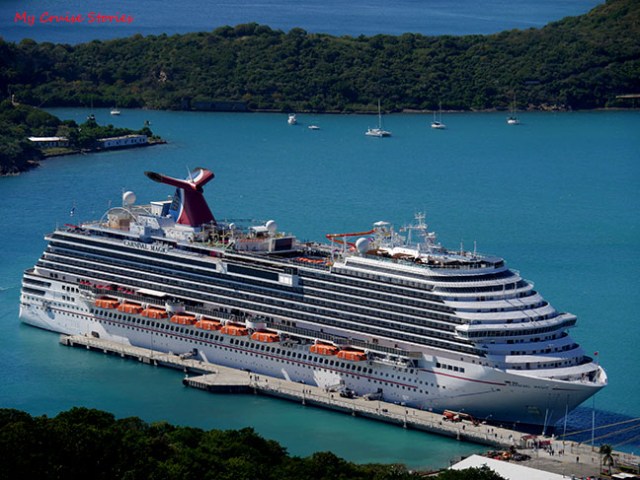
Carnival Magic is aptly named, at least it seems so to me as this ship wormed its way into my favorites. Maybe it’s the happy vibe the brightly colored fun decor gives off, or perhaps the group of 9 we sailed with made the cruise extra fun. Whatever the reason the Magic cast her spell on us and we really liked the ship. Cruises are usually the main point of our vacations and time spent before or after in port areas is the side trip, but this cruise was different as the focus was in the reverse.
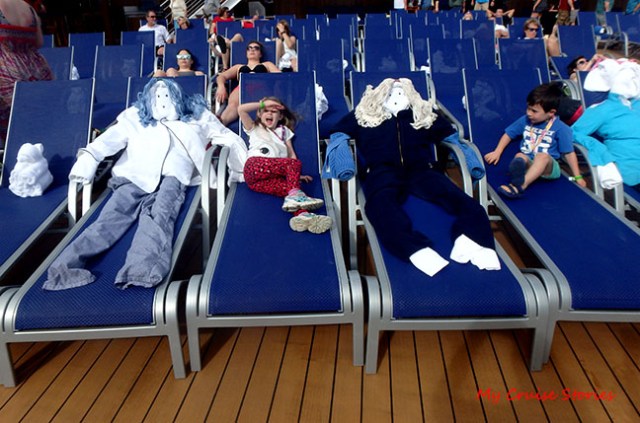
towels take over the Lido
The Magic currently cruises out of Port Canaveral, the closest port to Orlando, which is of course home to Disney World and other major theme parks. Our daughter and her family came to visit from Australia, the main purpose of their visit to participate in the Run Disney marathons at Disney World – so of course we were invited along to watch the kids while she and her husband ran. He went back to Australia shortly after the last run, but her and the kids stuck around long enough to take a cruise. Meanwhile one of my sisters, my American grandson, his mother, and his other grandmother joined us on the cruise.
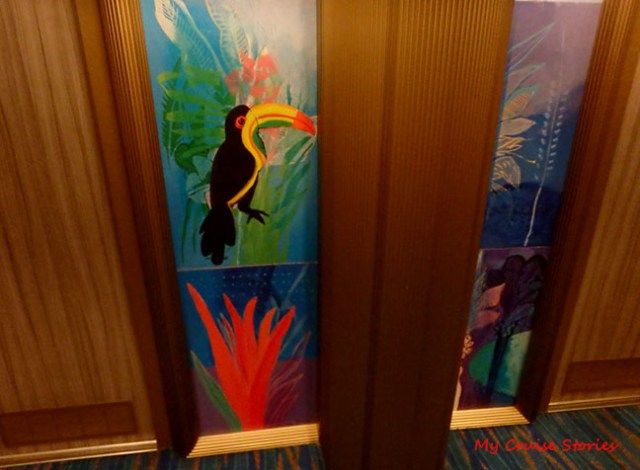
hallway art in passenger cabin areas
Port Canaveral is a fair distance from the airport in Orlando at just over 45 miles. The best mode of transportation between the two depends on group size as well as whether or not people are going straight from airport to ship and back. For one or maybe even two people going directly between airport and ship the cruise ship shuttle may be the cheapest as well as the easiest means of transport. Shuttles charge by the person so they get a bit pricey if you have too many in your group. Taxis charge by time or distance and Ubers by distance and vehicle type. Uber usually costs less than taxis, but while taxi rates remain constant, Uber rates go up when demand is high so it never hurts to compare.
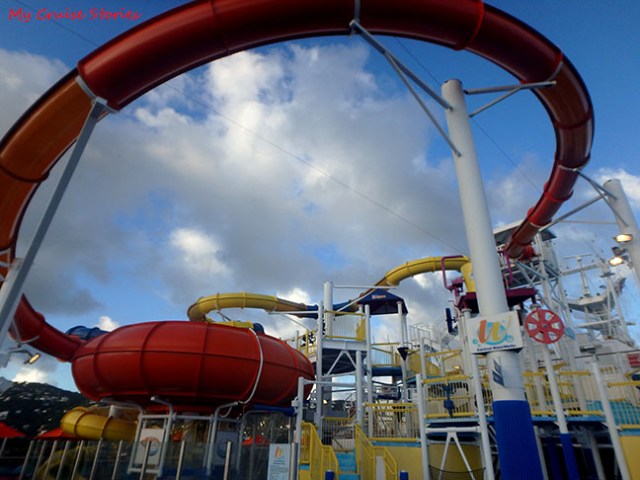
water slides and splash park
For larger groups or people with plans to spend time in the Orlando or Cocoa Beach areas pre or post cruise, a rental car may be the way to go. Even when just going straight from the airport to the cruise ship a rental car may be the cheapest option. Rental cars can be returned to the appropriate company fairly close to the port. The rental car companies provide free shuttles to and from the port, though when disembarking there may be more people wanting on than the shuttle has room for.
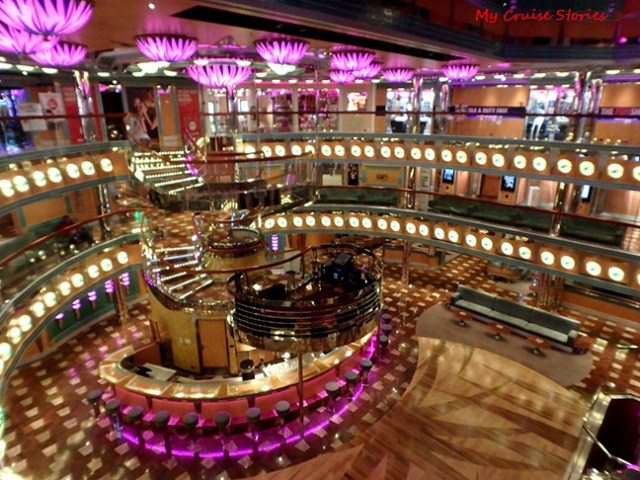
Lights in Magic’s atrium change colors every few minutes
When the rental car shuttle is too full for everyone and their luggage, some groups send just one person ahead to get the paperwork done. The rest can either follow on a later shuttle or move to an area where private cars can go and wait for the person with the car to come and get them. It’s also a good idea to drop the luggage and most of your party at the port for embarkation and just have one or two people return the car and take the shuttle back. Space on that end may be limited as well since a lot of other people are embarking at the same time and there are often multiple ships in port.
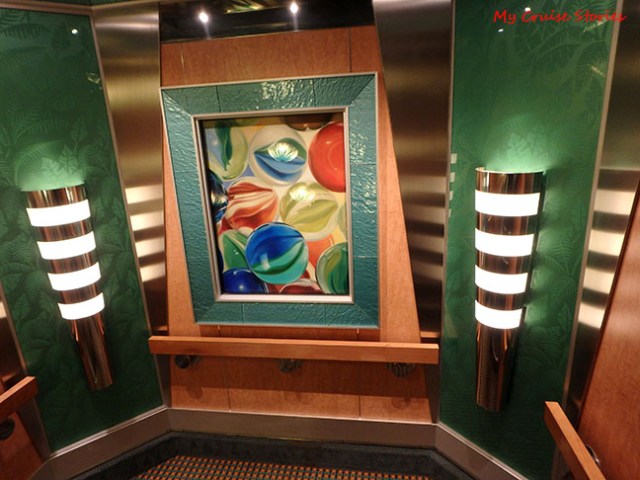
stairway art included this painting of marbles on one stairway
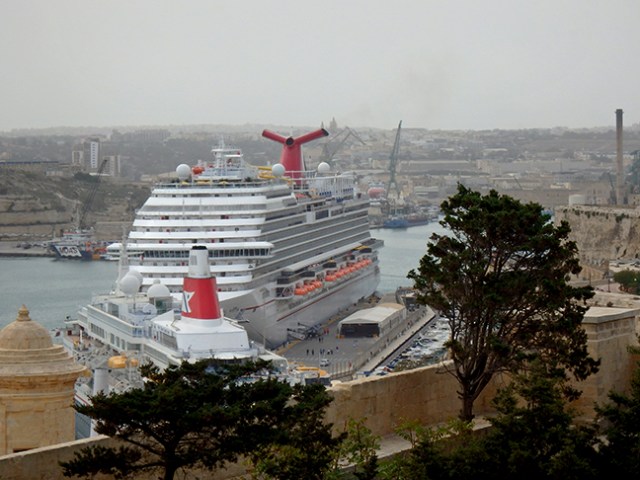
Magic is of Carnival’s dream class, the second of that series with the Dream the first and the Breeze the third. It’s similar to the Breeze in size and amenities, but has completely different decor. The kids thought the lights in the atrium that constantly changed colors were awesome, and little Daniel loved a painting of marbles on one of the stairways. Some of the stairway art had beachy scenes, and a lot of the paintings had birds. Corridors between guest rooms had brightly colored artwork, of which my favorite was the toucan which appeared every so often. Even the casino had sparkly decor. While I don’t normally set foot in Carnival’s casinos due to smoking allowed there, this one at least seemed to keep the smoke from spreading too far beyond its boundaries.
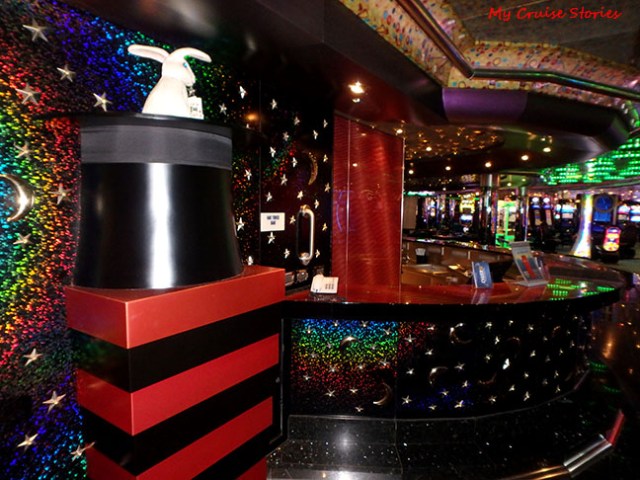
Hat Trick Casino – where money magically disappears
Things around the ship had magical sounding names like Hat Trick Casino or Lower Magical Way. Some of the ship’s artwork also had magical type scenes. Best of all the dining room had a real live magician who performed tricks tableside for individual tables. The kids liked him so much the first night he came back to our table every night with different tricks. He also put on a show for Hannah’s age group at Camp Ocean, which she made sure to go to, and a very good one for everyone at the comedy theater later in the cruise. We gave him a tip the last night, which he really appreciated.
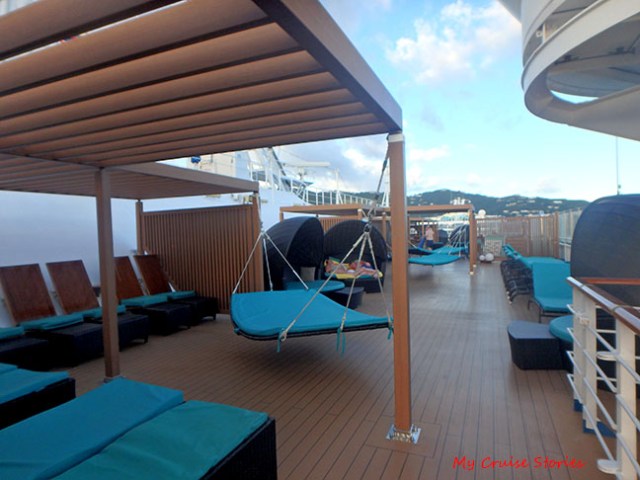
the Serenity Deck has hammocks
Magic has a dive in theater for outdoor movies. The adults only Serenity deck has hammocks of the big comfortable cushioned sort. The ship also has two big waterslides, a splash park with small waterslide, and a ropes course. The big waterslides and ropes course do have minimum height requirements, which is 42 inches for the slides and 48 for the ropes course. That info is well buried in the FAQ’s (frequently asked questions) on Carnival’s website where my daughter never found it so little granddaughter Hannah was very disappointed when she couldn’t go on the ropes course she had looked forward to for months.
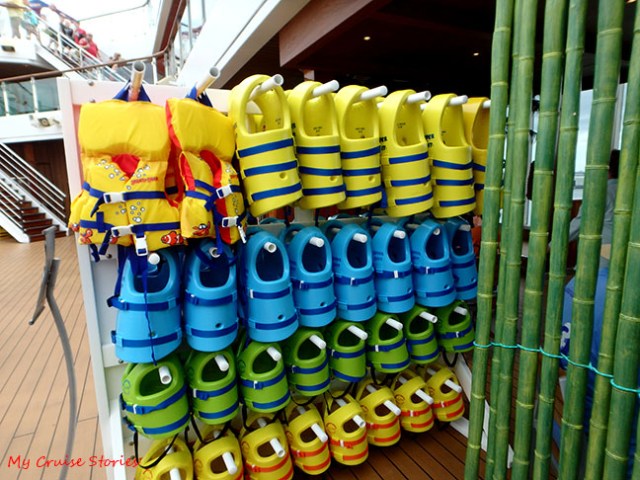
life jackets on the Lido
Magic had something I haven’t seen on a cruise ship before – an array of life jackets near the Lido pool available for youngsters who would like to use one when they swim there.
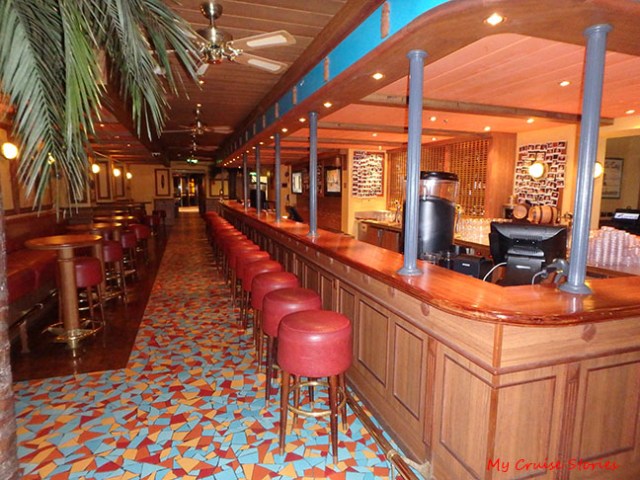
Red Frog Pub
Magic is a 2.0 ship, which means it has amenities like Guy’s Burgers, Blue Iguana Cantina, Guy’s Pig & Anchor BBQ (open for sea day lunch only), Red Frog Pub, Alchemy Bar, Red Frog Rum Bar, and Blue Iguana Tequila Bar.
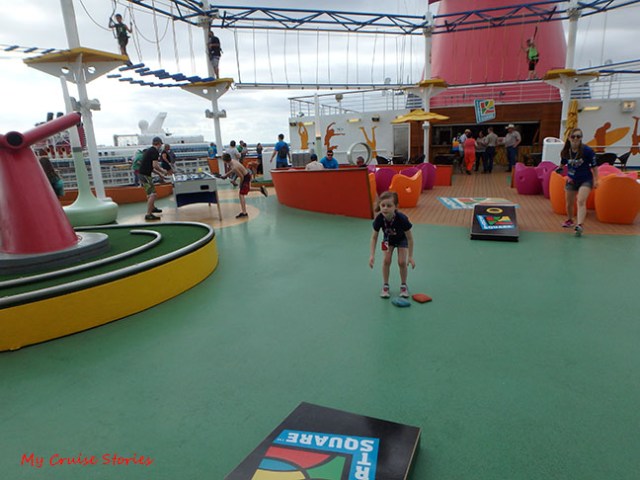
Sports Square
There’s plenty to do on board. Sports Square has mini golf and other games under the ropes course. Daytime entertainment from the crew includes games like scavenger hunts, trivia, Carnival tower (which looks like giant Jenga), and bean bag toss. Besides the nightly movies there’s also shows in the main theater and often comedy in the smaller theater. Kids can go to the kids club for their age group, which is Camp Ocean for 2 – 11 year olds, Circle C for 12 – 14, and Club O2 for teens age 15 – 17. We made sure to attend Hasbro the Game Show and the Dr. Seuss breakfast, which are both fun for the whole family.
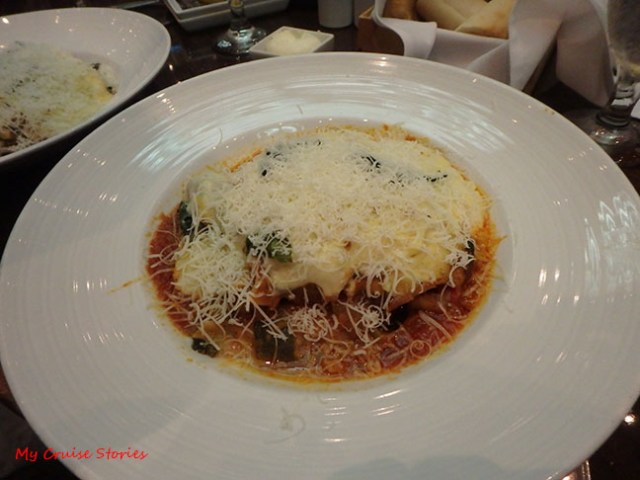
Carnival’s vegetable lasagna
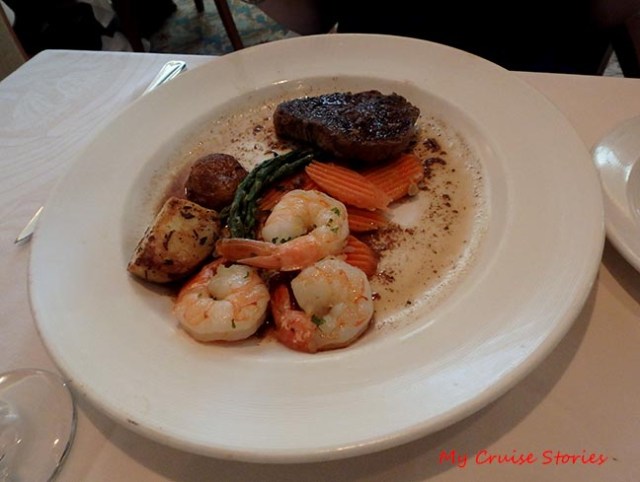
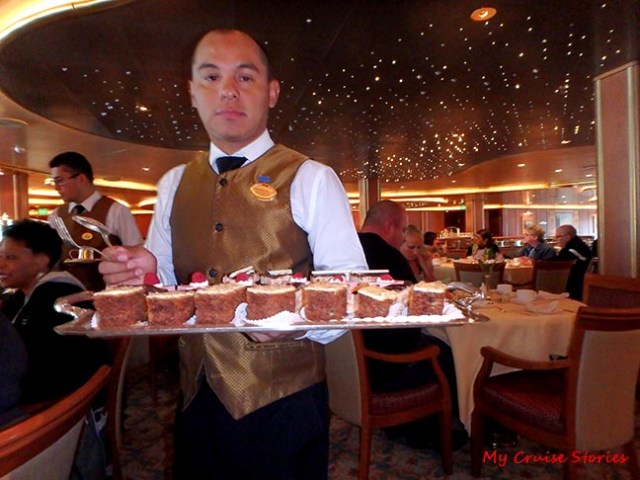
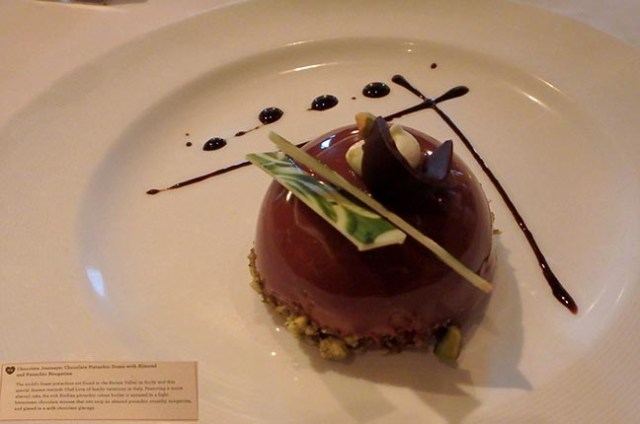
Magic is 1004 feet long with a guest capacity of 3690. It entered service in 2011 and is registered in Panama. Magic has 14 passenger decks and 17 decks total. Food on the Magic is from Carnival’s American Table menu, of which our absolute favorite meal is the vegetable lasagna. Guests with restricted diets, like my gluten and dairy free sister, order their meal for the next day ahead of time so it can be altered to their needs. On the first night our waiter told her to order from the daily menu that doesn’t change, saying those items were already gluten free. Passengers on the your time dining pre-order by their cabin number so the dining room staff can still find them the next day if they were to sit in a different section. They do have a gluten free version of their signature dessert, the chocolate melting cake.
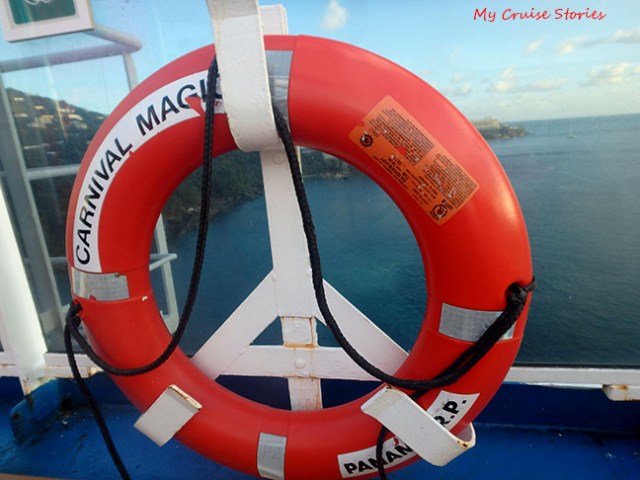
life ring