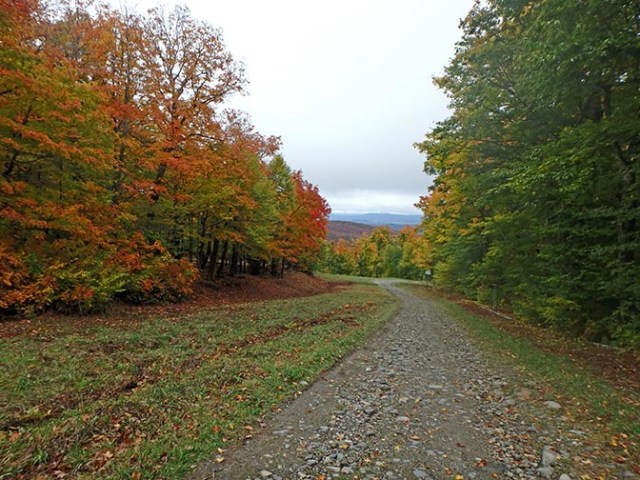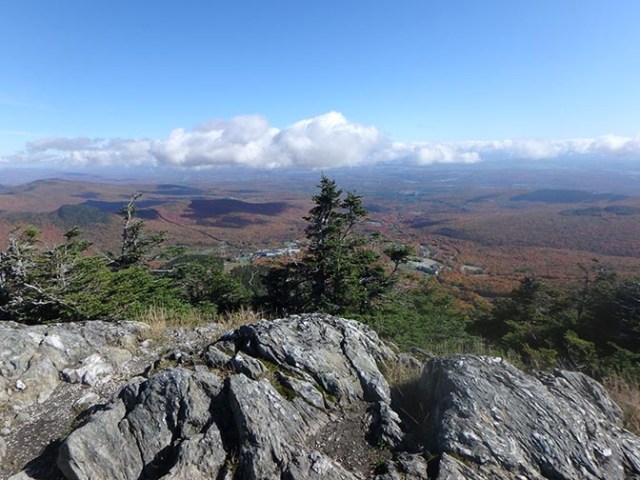
Fall Colors of the Northeast

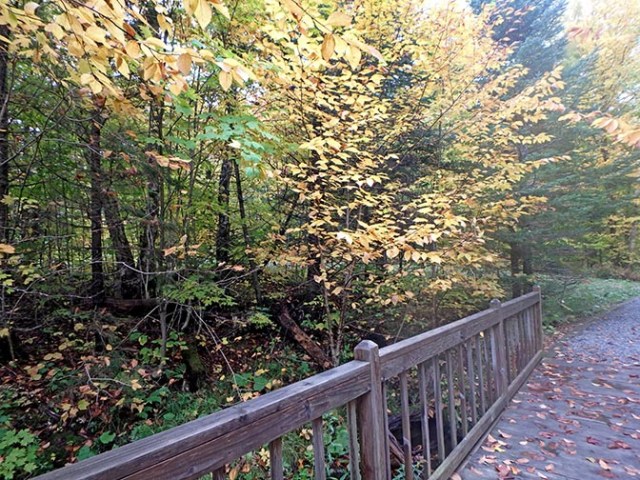
several colors all on one tree

I’d always heard about the fall colors of the northeastern USA and thought there isn’t really anything so special about that. After all, there are deciduous trees in the northwest too. They turn colors in the fall. Then there’s the rest of the world. The USA isn’t the only country on the planet with trees that lose their leaves in the wintertime.

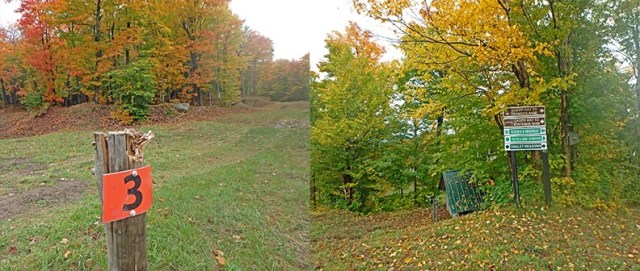
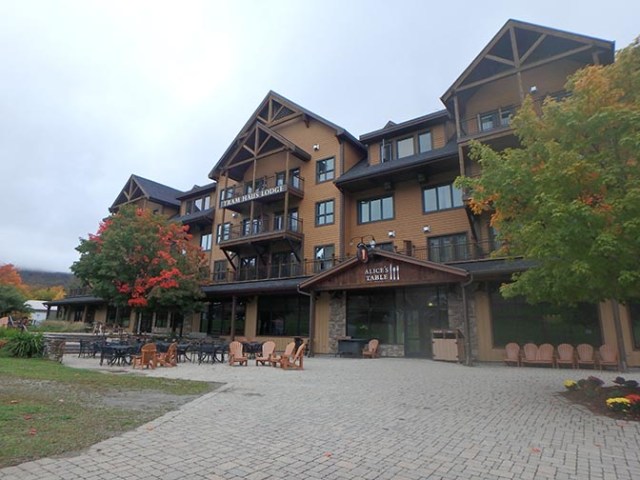
fall colors

I can’t say anything about the rest of the world, not having been everywhere in the fall, but after having been to the northeast during the fall I have finally seen just why the leaves there leave such an impression on people.

the trees are as orange as the tractors

It’s not just that there are trees that turn yellow, orange, or red. We have those in the northwest too.

red trees

What we don’t have are native trees that turn such bright shades of red or such a vibrant orange.

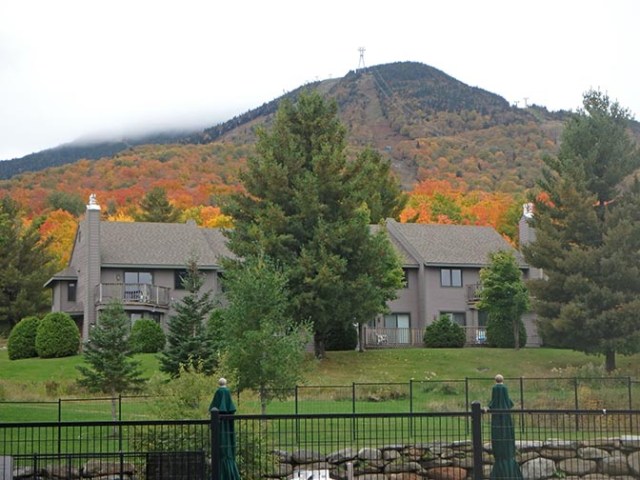
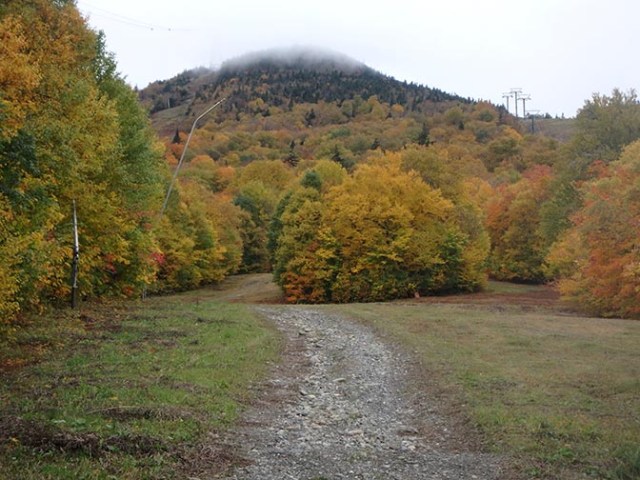
hills full of colorful trees

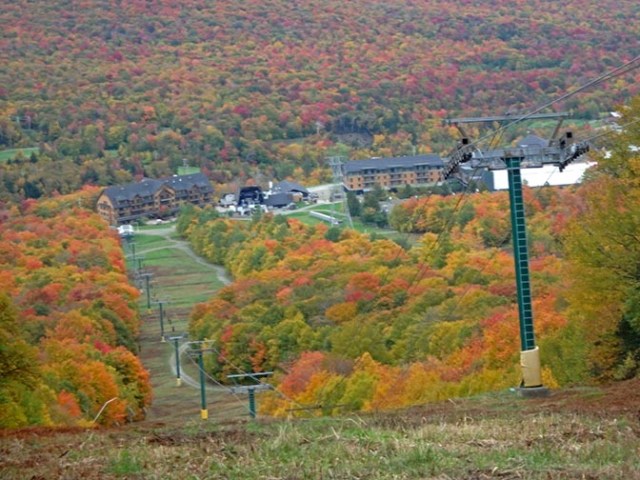
That’s not the only thing though. While there are evergreen trees in the northeast, there are also entire hillsides with nothing but deciduous trees showing off their brilliant colors uninterrupted by patches of green, where our hillsides are often dots of color between the greenery.

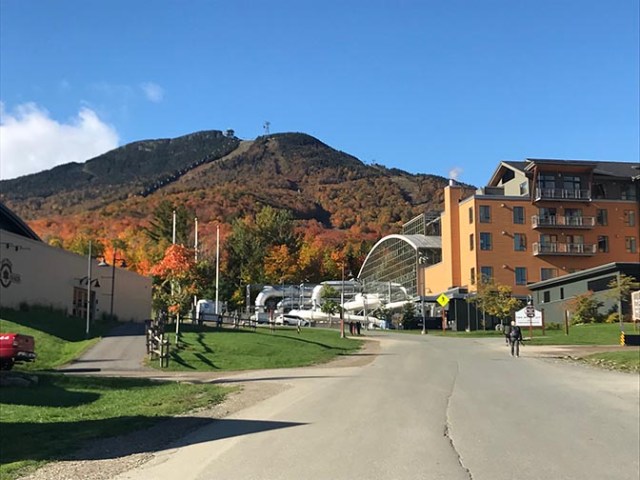
colorful trees by a ski lift in Vermont

It was also surprising just how rural Vermont and New Hampshire are. For tiny little states near to highly populated areas, these two states have a lot of countryside. Narrow winding roads, sometimes even dirt or gravel rather than paved run for miles through forest or farmland, passing through towns so small they may not even have a gas station or grocery store.

church ahead near the road

The towns do all seem to have what look like old churches, but in New Hampshire many of them were labeled as the town hall. Once we got to Vermont most of the churches were still churches. The towns we passed through in Vermont were also more likely to have a gas station than the ones in New Hampshire. In some New Hampshire towns the old church was just about the only thing in the whole town.

Cornish-Windsor Bridge

We did take a bit of a detour route from Boston, Mass on the way to Jay Peak, Vermont via a 2-night stay in Stoddard, New Hampshire and a route that took us over the Cornish – Windsor covered bridge between New Hampshire and Vermont.

Hutchins Bridge

On the way back we took a side trip to Montgomery, Vermont to go covered bridge hunting in a town that has 7 of them. The route google maps gave us from there to Boston included about 15 miles on a gravel road between Montgomery and the highway. Portions of that gravel road had bright yellow-leaved trees forming an archway over the road for quite long stretches.

view of Jay Peak Resort from one of its ski runs

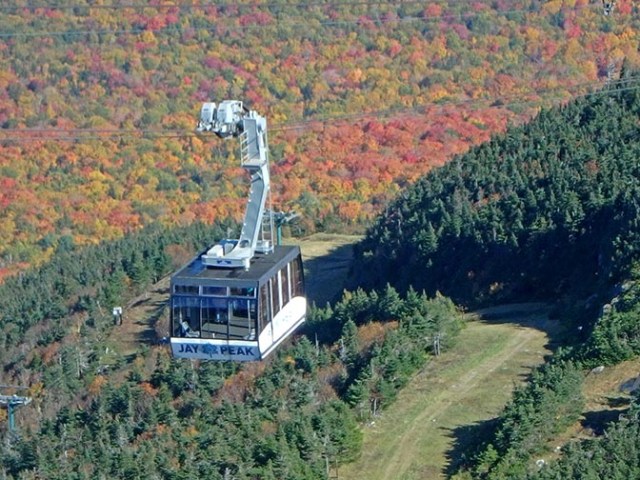
Hiking up the hillside through the colorful trees at Jay Peak resort offered lovely views both in close-ups of all the different colors of leaves and views of brightly colored hillsides rambling off in the distance as far as the eye could see. From up on the top of the peak (which is accessible by a cable-car tram as well as on foot) the views were even more impressive.

looking down on colorful trees from the tram at Jay Peak

Copyright My Cruise Stories 2022


Posted in USA | Tagged , , , , | 6 Comments

Snorkeling in Saint Thomas

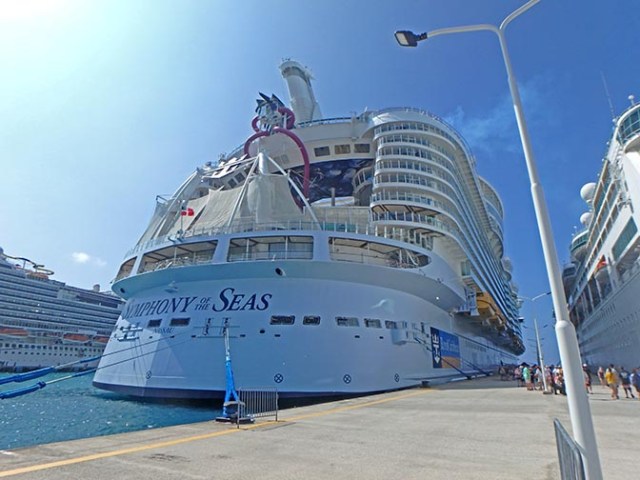
Symphony of the Seas in Saint Thomas

Browsing the shore excursions pre-cruise, I found a snorkel excursion from St. Thomas that went to nearby Saint John. Having been to Saint Thomas previously, but never to Saint John this one sounded promising, especially since I have heard good things about Saint John and the snorkeling there. It’s supposed to have some of the best snorkeling in the Caribbean. I did book that excursion, but unfortunately it was not to be.

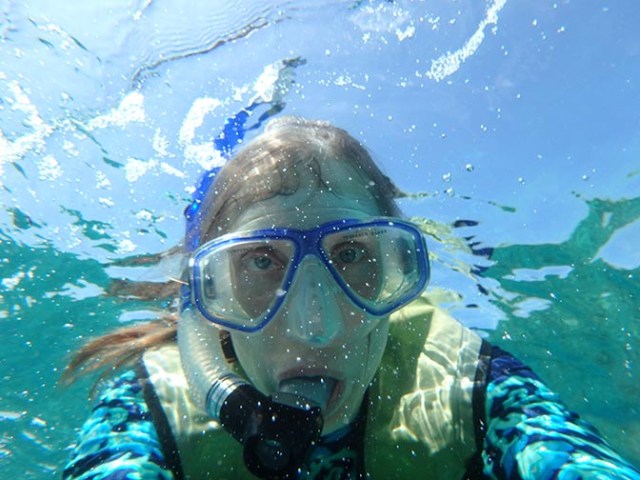
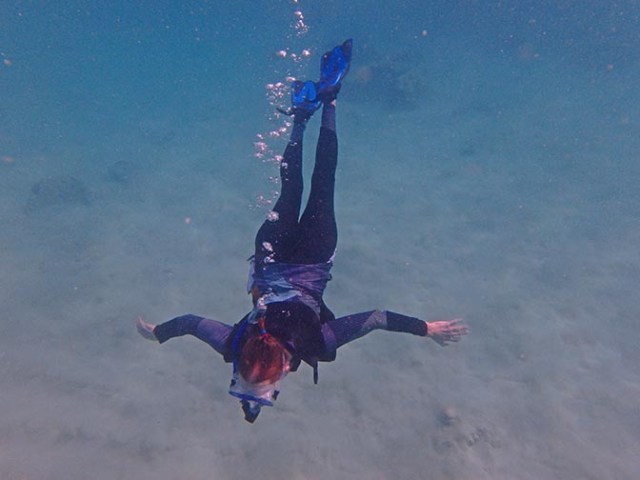
underwater snorkel selfie

Sometime before the cruise started, I received a notice saying that excursion had been cancelled. My sisters were quite looking forward to it as one had never been snorkeling and the other not for a very long time. It’s one of my favorite things to do so I’m always up for snorkeling. Knowing there’s not much near the dock at St. Thomas I found a different snorkel excursion as a substitute. This one went to a place called Christmas Cove and mentioned the possibility of seeing turtles and rays.

Crown Bay port in St. Thomas

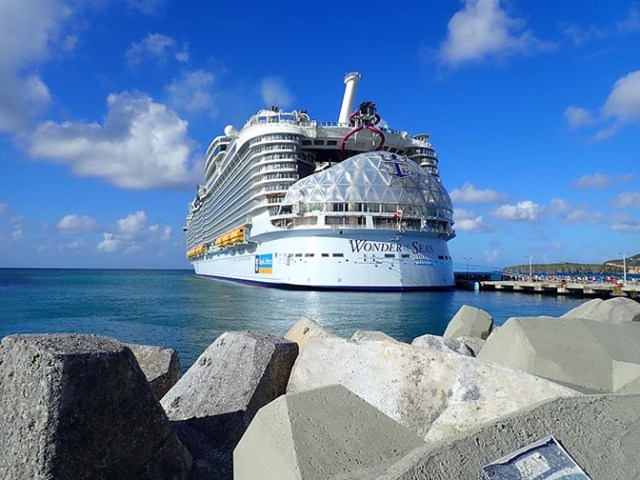
At the port in Saint Thomas nothing looked familiar. The bow of Symphony of the Seas sat nearly on the shore and there was no room on our side of the dock for any more ships. The skyride was nowhere in sight. My other visits to Saint Thomas had been at the Havensite dock and I did not know there was another. Apparently Royal Caribbean’s giant ships like Symphony of the Seas are too big for the main dock and they dock at Crown Bay. This dock could hold two ships, one on each side rather than the 3 in a row at the more familiar Havensite dock. We were the only ship there on our visit. Judging by the name and things posted at the port this appeared to be Royal Caribbean’s private dock.

The port had all the usual cruise port shops, which looked much newer than the shopping area I remembered from the other dock. It’s a couple miles to town, but people can take a taxi. The little cove was full of the same sort of seaweed we’d seen streaking along the sea near the ship for the past few days, only there it was lapping the shore. Having booked the excursion late in the game since we were originally scheduled for a different one, we ended up on the second run near the end of our port time. Given a choice I’d have picked the earlier time, but there was no choice offered when we booked. The earlier time was probably already full.

small corals in Christmas Cove

We just stayed onboard until time to meet for our excursion rather than getting off earlier to explore. There’s just shops there anyway and the snorkel excursion was already enough time for me to spend in the sun. I was happy to see that the blurbs on their website about St. Thomas excursions mentioned that only UV blocking swimsuits or reef safe sunscreen would be allowed to protect the coral. Caribbean coral needs all the protection it can get as coral worldwide is in trouble with Caribbean coral already 80% gone. Along with warmer oceans, pollution, overfishing, human caused breakage, and storms, chemical sunscreens also damage the coral and kill their larvae. It just takes the equivalent of one drop in an Olympic sized pool to cause harm so imagine how much devastation many bodies covered in chemical sunscreen brings. Unfortunately nothing was mentioned about it on the ship nor posted in the port, nor mentioned on the excursion. While we waited for the boat some people slathered themselves in chemical poison without repercussion, probably without knowing they were contributing to the demise of the coral they were so excited to go see.

sea life in Christmas Cove

Unlike when we took a tour with Trilogy in Hawaii, who had a large container of reef-safe sunscreen available to all and insisted nobody use any that wasn’t, the crew of this excursion didn’t even mention it.
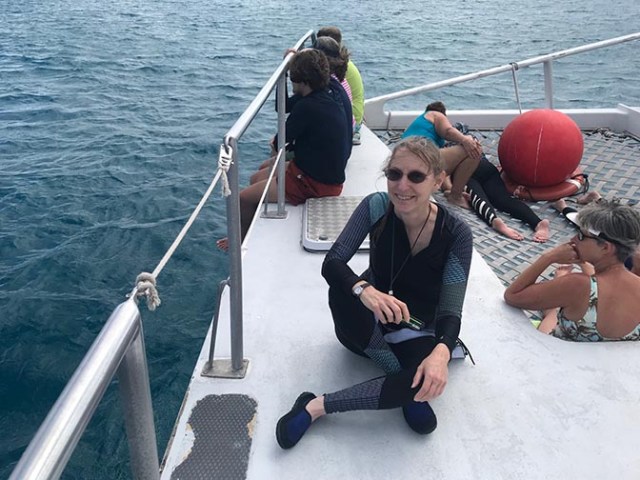
Linda on the snorkel boat

The original waiting area by the dock had no shade so us and a few other early arrivals waited nearby where there was some until we were sent over to a place closer to where the boat docked. At least that spot had a tree, though after more and more people arrived it didn’t make shade enough for everyone. Boarding was by whoever got to the boat first and we were lucky to get on just in time to get the last shady places to sit. The center of the boat had a covered area, but the bow and stern were both open to the sun so the people who ended up out there had no shade at all.
on the snorkel boat some people got shady seats and others did not

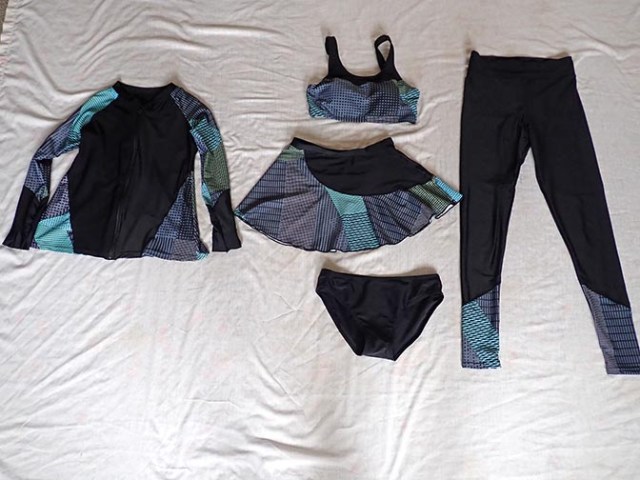
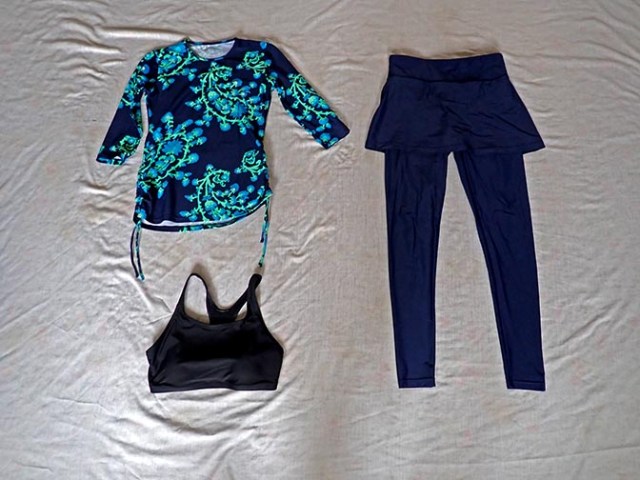
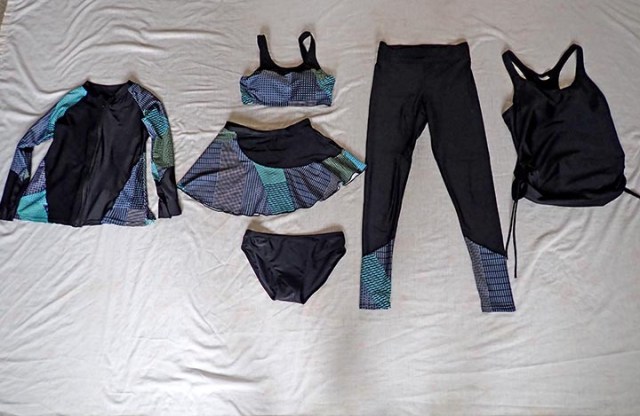
From where we sat we could see one guy out in the sun at the stern getting redder and redder and sweating up a storm looking like he was about to have a heat stroke, but he managed to survive the whole thing without one. He did not have a hat, but really could have used one. Since I was on doxycycline to keep from getting Lyme disease from a tick bite I got in Vermont just before this trip, and doxycycline makes you extremely sensitive to the sun, I had to be very careful about sun exposure that trip. The full body UV blocking swimsuit I got just before the trip and some good reef-safe sunscreen made things like snorkeling possible for me that otherwise wouldn’t have been while on that antibiotic, but even with those I still had to stay out of the sun as much as possible.

Barbara and I got the last center inside seats, and Linda got one across the aisle on the edge

On the way to Christmas Cove the crew handed out snorkel gear and explained how to use it. I have my own, but did have to take my nemesis, the snorkel vest, from them as those are required on cruise ship excursions. They just had the standard open snorkel that can get water in it, which you then have to blow out. Mine is a dry snorkel that keeps the water out, which is much nicer unless you want to dive when it then acts like a float making diving even a short distance under the surface very difficult to do. Not that diving with a snorkel vest works either because even if you don’t put any air in it there’s always some residual air from a previous user that just won’t squeeze out.
Barbara in Christmas Cove

I’ve always found warm salt water to be quite buoyant and far harder to get under than to stay on top of, but my sisters said that might just be me. One in particular said she drops like a rock and wasn’t comfortable out in the water until she got a pool noodle to help her keep afloat. The other was happy to put air into her snorkel vest. A bit too much at the start as she had to let some out to get her face in the water. I really don’t know why I’m naturally buoyant in warm salt water and they’re not. It isn’t about weight. I weigh about the same as one of them and I never noticed any difference in buoyancy between now and back when I was about 30 pounds heavier. It’s not about the level of fitness because that has not affected my buoyancy over the years either. Maybe it’s a tension thing. I’ve always found snorkeling quite relaxing, where they thought it was a pretty good workout.

sea life in Christmas Cove

People had the option of jumping over the side of the boat or taking the stairs to the water, of which the boat had two sets at the stern. Nobody jumped. Everyone waited their turn for the stairs. We were ready at the start, but then they said you can’t walk across the deck in the flippers so after taking those off and then having to put them back on when we got to the back we ended up in the second group, though just barely. While waiting around near the boat for everyone else to get in I saw a large stingray down at the bottom in the sea grass. Barbara saw it too, but Linda was having equipment issues and went back to the boat. We were lucky that it took awhile for the rest of the people to get in since that gave us a chance to see the stingray and it was the only one we saw.

staghorn coral

Finally everyone but Linda was in the water. They led us closer to shore where there was rocky structure for fish to hide in and some coral. I tried to stay with Barbara, which isn’t always easy when snorkeling, but we managed to stay near enough to find each other whenever we got separated. Most of the coral was fairly small, but there were some pretty good sized patches of staghorn coral. Unfortunately a lot of it was broken. I don’t know if that was from a hurricane or human caused damage. There were quite a few small brain corals and I saw one fan coral and a bunch of tubelike structures I didn’t recognize. They had warned of fire coral, though when I saw that before in Belize it was much larger than those tube things so they may have been either young, a different kind, or some entirely different sort of creature. Fire coral looks like coral, but is actually not coral at all, but rather something related to jellyfish – and it stings. Like actual coral there are different types of fire coral so some of what looked like unfamiliar coral species could have been the fire coral. Everything that looked like coral was small and near the bottom so not where anybody would accidently touch it.

spiny black sea urchins

There were lots of black spiny sea urchins, some of them quite large. The bigger fish tended to mostly hide under the rock ledge, but would come out sometimes. Smaller fish stayed in sight more. I did not see the abundance of striped sergeant majors that are usually present in large schools when snorkeling in tropical places.

big rock that the top stuck out above the water

Before swimming back to the boat Barbara and I swam over to some rocks sticking out of the water and there was a lot of life near them. Sealife likes structure. I hadn’t realized Linda had ever made it out there, but on the way back Barbara pointed her out on her pool noodle, so apparently she was aware that Linda had gotten back off the boat and gone snorkeling after all.

When we got almost to the boat the current was strong enough that Barbara mentioned having a hard time getting there. Pushing her toward the ladder did the trick. I wasn’t having any problems and was able to get us both there. Could be that the current was catching her air-filled snorkel vest and pushing her away, where mine was empty. Linda was not with us, but she made it to the ladder on her own.

fish near the rock ledge

I always enjoy snorkeling, but it is definitely more fun when there is more to see and quite sad that more is not done to protect what little coral the Caribbean has left. This site did have some coral and sealife, but not nearly as much as expected in a snorkel site, and no turtles while we were there. As is often done on snorkel excursions in the Caribbean, on the way back to the port the crew served rum punch. They also had a selection of other rum drinks as well as the water and soda they had available on the way there.

Copyright My Cruise Stories 2022
Posted in Caribbean, Ports of Call, Royal Caribbean, Shore Excursions, Symphony of the Seas | Tagged , , , , , , | 4 Comments

Bonaire Island Tour

Constellation in Bonaire

After returning from a great snorkel excursion on Bonaire, we had time to change into dry things, put our wet stuff out on the balcony of our cabin on Celebrity Constellation, and head back out to see something of the island. The stand advertising taxi tours that had been at the cruise port in Kralendijk earlier was gone, but there were still a few vans and cars parked waiting to give tours. The price there was quite reasonable, just $25 per person for a 2 hour tour of which you can choose the north or south part of the island. If you start the tour early enough you could do both, but we only had time for one or the other in order to make it back before all aboard. We took the south tour. We had a great driver named Martha who told us about all sorts of things on the island. We’ve done a lot of impromptu van tours in various places, and this was one of the best. Quality of these tours often depends on the driver even if they all do go to the same places.

the salt farm leaves a box of salt crystals at the gate for people to take

The capital city of Bonaire is Kralendijk. which is where cruise ships dock. Bonaire is the B of the ABC islands – Aruba and Curacao are the other two. All three sit outside of the Caribbean’s hurricane alley. Bonaire is a special municipality of the Netherlands, and a part of that country. The island’s original Arawak inhabitants were deported by Spaniards in the early 1500’s to work as slaves in copper mines on Hispaniola. Bonaire was colonized by the Spanish in the 1500’s and conquered by the Dutch in the 1600’s. Like our driver Martha, most of the current population are a mixture of Dutch and African descent. The climate is generally warm and dry, but also humid and windy.

beach in Bonaire

Our island tour started with a drive alongside the ocean, passing a lot of beaches. Some of them had people near the shore either returning from a dive or getting ready to go out for one. Bonaire is very popular for diving and snorkeling. Soon we came upon salt flats. Martha said Columbus came to the island looking for gold and found salt. There are 2 natural canals and 2 manmade ones that go into the area of the salt mines. The water comes in green due to the good bacteria that live in it. As water evaporates it turns to pink. The first areas we passed were pink, later there were green ones.
salt flats in Bonaire

Like so many places around the Caribbean, slaves were brought to the island from Africa. While most islands used them in sugarcane plantations, on Bonaire it was to harvest the salt. Now it is all done by machines. Something similar to a combine. Once the salt flats are dried the salt gets mounded up into hills and then loaded on ships.
salt pile and machinery

There were some giant salt hills far behind a gate, and a box of salt out in front of it that people could help themselves to. Martha had a giant crystal, far bigger than the chunks in the box, which are more like rocks than what people expect to see as salt. Those chunks can be ground up and used though, completely organic sea salt.

salt loading bridge and blue obelisk

There’s pipelines and a bridge now, a whole mechanized system for loading the salt on boats for export. No more slave labor, but there are still 4 obelisks in different colors marking where ships of old could wait to be loaded with salt.

seahorse (internet photo)

Martha said that divers like to go under the salt bridge because they find seahorses living there. She did not say if they were any close enough to the surface for snorkelers to see them.

slave huts

The slaves originally lived in a village called Rincon far across the island and had a 7-hour walk to and from the salt mines every day until tiny little coral huts were built for them to stay in during the work week, where they then walked back to the far away village on weekends. There is a set of slave huts beside the sea, and just down the road some replicas.

replica slave hut and red obelisk

Other than the color the replicas and originals look much the same. They’re about as spacious as a tent intended for 2-4 people, but slept 8-10, which would have meant packing them in like sardines. It’s hard to understand how anyone could treat another person that way, but that’s far from the worst slaves had to endure. The huts have no doors or windows, just open spaces where doors and windows should be. The hut roofs are not high enough for anyone taller than a small child to stand up inside.

lighthouse

Not far past the slave huts we stopped briefly at a lone lighthouse on the beach.

flamingos

A bit farther down the road we saw a small flock of flamingos in a shallow pond. There was a much larger flock in the distance, too far away to look like anything but a sea of pink. We saw a few more flamingos here and there along the way, but not a large flock. There are over 10,000 of them living in the Pekelmeer Flamingo Sanctuary, but tourists are not allowed there.

kiteboarders

Besides snorkeling and diving, other popular sports on Bonaire include kiteboarding and windsurfing. Along one stretch of the beach the sky was sprinkled with brightly colored kites. So many it looked like it must be hard to keep them from tangling up in one another, but the people out there know what they are doing. Martha said they were really farther apart than they appeared. Sometimes one would come in close to shore. Some of them jumped up out of the water quite high, which was fun to watch.

windsurfers

In a different area there were some little resorts and a crowded parking lot where people go to learn, practice, or just have fun windsurfing. That area was full of sails from the windsurfers, who apparently start learning as young as 4 on miniature boards. Lessons can also be found on the island for kitesurfing.

feral donkey

Besides flamingos the island also has many wild donkeys, left over from the days when they were used to haul salt to the waiting ships. There’s over 700 of them at a donkey sanctuary, and others that roam free around the island. People can go into the donkey sanctuary for a fee when it is open. We came across one standing by the roadside. Though she was a wild donkey, she was not afraid of people. Quite the opposite, she stood quietly for photos, let us pet her, and was quite disappointed that we didn’t have any treats for her. Martha said people often bring them carrots or apples.

cactus fences are popular in Bonaire to keep out feral donkeys

Fences made from many live cacti growing in a row are quite popular on the island to keep the wild donkeys out.

the goats made a run for it

Some goats behind a fence in somebody’s yard ran away when we got out of the van to take their picture so the domestic goats were much shyer than a wild donkey.

view through the door of a slave hut

After our tour we got back to the ship with plenty of time to spare before all-aboard time. When cruising you always want to be back on time because unless you are on a cruise ship excursion when it is time to go the ship is not going to wait for stragglers to come back.

Copyright My Cruise Stories 2022
Posted in Caribbean, Celebrity, Constellation, Port Cities, Ports of Call | Tagged , , , , | 2 Comments

Global Village in Dubai

the entrance to Global Village

Our 3-week cruise on MSC Lirica started in Italy and ended in Dubai. We spent a night on the ship before disembarkation so we had more time to explore than is available in the average port stop. This is an especially good thing if you want to see Global Village as it is a ways out of town and doesn’t open until 4pm.

antique cars

Global Village is not near any of the other tourist attractions of Dubai. It’s not actually close to anything. Even the main attractions of Dubai sit quite a distance from one another as Dubai is huge, though they are not so far away as Global Village. It doesn’t cost much to get into Global Village (about $4 each when we were there) so the main cost is in transportation to get there and back.

pavilions on the main walkway

Global Village is something like a combination of a souk on steroids and a theme park. The majority of people you see around the tourist sites of Dubai are from elsewhere, either tourists just visiting or workers from other countries. Not so at Global Village. There we saw more locals than tourists.

Korea pavilion

The women are usually all in black. They wear an abaya which is something like a robe or long dress along with a head scarf (hijab). Some add a niqab which covers their entire face except the eyes. They don’t all walk behind their husbands though. We saw some walking side by side and some even walking ahead. There were also lots of groups of just women. At the entrance there are several ticket windows for ladies only. All of the ticket sellers in the ladies’ line were women, and most of the others as well. The men usually wear white robes, called a dishdasha among other names. Their headdress, which may be white or other colors is a keffiyeh or shemagh consisting of a square scarf tied with a cord.

Bosnia pavilion

Like Oman, men in Dubai are allowed up to 4 wives, though wives are expensive so mainly only the wealthy have more than one. It’s not just living expenses. They have to pay the father for their bride. We did see families there with one man and several women. Also some with nannies along to help with the children. The children often wore western style clothing even when the mothers had nothing visible but their eyes. The nannies tended not to be locals and also wore western style clothing, setting them apart from the wives in a family group. In some family groups some women wore niqabs while others did not.

inside the Bosnia pavilion

As the 4pm opening time approaches lines begin to build outside Global Village. As soon as it opens people pour in in droves. We got there about 10 minutes after opening and they were pouring in nonstop. Many locals and some tourists too.

replicas of Burj Khalifa and a pagoda just inside of Global Village

The entrance itself is very Arabian in appearance. The first walkway beyond the entrance is lined with buildings with representations of things from all over the world on the outside. Just the other side of the entry there’s a (much shorter) replica of the Burj Khalifa, which is still the world’s tallest building (for now) and located in a different area of Dubai.

Has the colosseum eaten the Leaning Tower of Pizza … I mean Pisa?

Nearby buildings portray the Roman colosseum with the leaning tower of Pisa jutting out of it, and the Eiffel Tower with the opera house of Sydney Australia next door. The Statue of Liberty is on the outside of one of the buildings lining the initial walkway, and there’s an Asian pagoda across the way.

Taj Mahal at Global Village

A very white building on the corner is reminiscent of the Taj Mahal.

bridge across the waterway between pavilions

Around a corner beyond the main entry a very wide walkway with a water feature down the center is surrounded by facades from different countries around the world.

inside the Iran pavilion

Behind each facade are lots of little shops selling things from that country. One country’s shops might be full of mainly honey and dates while another is mostly clothes.

Iran pavilion

One side of the main walkway has large facades mainly representing countries of the middle east, most of which each have their own Pavilion.

Africa pavilion

On the other side there are some different countries with the most colorful being one pavilion for all of Africa. The entrances to the Africa pavilion had actual Africans dressed in their traditional clothing to greet people on the way in. The ones we saw spoke English to us, but they probably speak Arabic too.

Syria and other pavilions at Global Village

Not all countries of the middle east are in that one main grouping. Some are on different walkways, like Syria.

Japan pavilion

Global Village covers quite a lot of territory, which is probably why it is so far from town since it had to be somewhere with enough space to spread out over many acres. It takes a lot of space to shop around the world all in one location.

inside the Africa pavilion

Iran of course has Persian rugs, and Africa all sorts of unique items. All of the countries of the Americas both north and south were lumped together in one pavilion, as was most of  Europe, probably because there are less products from there that would appeal to the people of Dubai. China of course had a large complex because wherever you live it seems like just about everything is made in China.

free samples

Interspersed between and among the shops are lots of little eateries and small food booths.  In one spot there was even a guy with a fancy teapot passing out free little cups of tea. There was also one with coffee samples in another location.

teapot snack shack

Most of the snack shacks are typical little rectangular boxes, but not all. Some of the snack shacks had unique shapes like a teapot or a boat.

waterfront marketplace

Fountains and waterways ran down the middle of the main walkway, and there was a section that had floating shops in little boats.

rides

There was also a carnival area with rides, and several places offering shows. Definitely a place worth seeing even if it is a bit of a distance to get there.

fountain

In between some of the pavilions there’s a wide-open space where people had picnics on the grass. Near one end we saw a large fountain with horse sculptures. After dark the fountain had a light display of ever-changing colors.

Ripley’s Believe It or Not next to a replica of the Sydney Opera House a

There was so much to see it Global Village that we mostly just skimmed the surface taking photos from the outside. We did go into some of the pavilions, but not all and did not venture into the area with amusement park rides.

Americas pavilion

If you’re ever in Dubai and have time to go there, Global Village is definitely worth seeing. It’s the sort of place you could spend all day there and not see it all – except that it’s not open all day so that’s not even an option.

boat snack shack on the waterway between pavilions

Copyright My Cruise Stories 2022
Posted in Lirica, Middle East, MSC, Port Cities, Ports of Call | Tagged , , , , , , , | 3 Comments

Westerdam Hits and Misses

Holland America Westerdam

Westerdam in Hakodate, Japan

Every cruise and every ship has its high points and low points. There are always some things you really love and some things you could do without. Of course which things are hits and which are misses depend entirely on each person’s individual tastes. One person’s absolute favorite thing may be the thing someone else hates most. So it’s a good thing cruise ships have all sorts of options. These are entirely my opinions of the things I liked and didn’t particularly care for on our Vancouver to Shanghai cruise on Holland America Westerdam.

Hits

Westerdam back deck

smoking shelter on the back deck

One of my absolute favorite things about the Westerdam was their new smoking rules. On previous trips they had a smoking side on the promenade deck, which is not good for anyone trying to get some exercise walking or jogging around it. I was quite happy to see that the Westerdam has joined her sister ship, the Oosterdam, in having the only smoking area onboard outside at the back of the lido deck. It’s not where you have to walk through it to get anywhere else, and being at the back the ship sails out of the smoke when in motion. It is next to a pool, but the ship has another pool so that area can be avoided completely by anyone not wanting to breathe in tobacco smoke. There is a shelter there for people to sit under.

Westerdam in Juneau

Westerdam promenade deck

Without smoking the outside area of the promenade deck is a great place for exercising. The Westerdam has the awesome sort of promenade deck that circles around the entire ship. It’s a very popular place for passengers to walk and jog. Most of it is shaded by lifeboats or higher decks so there is a bit of shelter from sun or rain, which is much nicer than the top deck jogging tracks some ships have. The Westerdam even has several drinking fountains spaced around the promenade deck for the people who walk or run there.

Holland America’s Navigator app puts the daily schedule literally at your fingertips with all of the ships daily events and activities conveniently available in your phone or other mobile device along with with free chat, menus, the ability to book things like shore excursions, specialty dining, or spa appointments. It’s also the portal to paid internet.

cruise ships have lots of artwork

Holland America flower painting

Refurbishments to the ship replaced anything that may have began to look worn keeping the ship from looking old. In spite of a major makeover they did keep some touches of the original décor like Dutch flower paintings and scenes of the old world.

Most cabins on the Westerdam have bathtubs rather than just a shower, which means even if you just use the shower you still get a longer clothesline. Inside cabins just have showers, but on a lot of ships only suites get tubs so a lot more people get them here.

pork ossobucco

this was one of my favorite meals on the Westerdam

For the most part the food on this cruise was very good.

There were lots of different options for daily activities including some itinerary related guest lecturers.

towel alligator

giant alligator in the towel animal zoo

At the nighttime cabin cleaning the steward left chocolates and a towel animal. One morning the lido deck was covered in towel animals.

Crow's Nest Lounge on the Westerdam

Crow’s Nest Lounge

The bridge crew often made announcements of where to look when there was something worth seeing like whales off the starboard bow. There was also a great indoor viewing area in the crow’s nest lounge with floor to ceiling windows all across the front of the ship.

On the second half of a back-to-back cruise, which Holland America calls a Collector’s Voyage, they did not make the people who were already onboard attend the safety drill, just the ones who embarked that day. At the end of the first half they had a special luncheon that all the people staying for the next voyage were invited to, and the first night of the second half little plates of homemade chocolates were delivered to all the Collector’s Voyage people.

cruise ship pool

the main pool area has a sliding dome so it can be indoor or outdoor

The ship has a sliding dome over the center portion of the Lido so on cold days or in bad weather the main pool and surrounding area can be indoors.

Misses

old and new centerpieces to the Westerdam's atrium

Westerdam’s old and new atrium centerpeices

The new modern minimalist type décor replaced the beautiful old crystal sailing ship that used to hang in the atrium with an ugly swirly thing. The new décor makes the ship seem quite plain and far less grand than it was originally and a lot of the new furniture is very uncomfortable, including the seating in the theater.

theater on the Westerdam

the new theater furniture was quite uncomfortable

While the Navigator app is a great idea, and very useful when it functions properly, some parts of it didn’t work. The menus were always at least a day behind so we could only see what we had already eaten and not the current night’s dinner choices.

Older ships like the Westerdam tend to have continuous airflow into the cabins. You can adjust the temperature, but can’t turn it off. The ceiling vent is in the center of the cabin so continuous airflow means nonstop noise day and night. It’s not that noticable in the daytime, but definitely annoying when trying to sleep at night.

doing laundry on a cruise ship

view of laundry lines from above

The ship has no self serve guest laundries. We were on a 28-day voyage and sending clothes out for the crew to wash is expensive. So that meant a lot of hand washing in the cabin’s bathroom sink. Good thing we had a bathtub because besides a longer built-in clothesline, that also means more space for tying up additional clotheslines.

While the main cabin has continuous airflow, there is none in the bathroom. Besides fogging the mirror and steaming up the room when anyone showers, if you handwash any clothes you have to keep the bathroom door open to get anything dry. Even if you don’t do laundry and just hang a swimming suit it dries a lot faster with the bathroom door open.

cruise ship spa chairs

heated ceramic chairs in the Westerdam’s thermal suite

One of the heated ceramic chairs in the spa’s thermal suite did not work. This meant only 5 of everyone who bought the thermal package’s favorite loungers were available unless someone used the cold one – which defeats the purpose of having it heated. It was out of order for the entire cruise.

The paid internet did not always work. Holland America’s free onboard site is the only page it would open some days which does not help a bit for things like checking email – which is important for people like us who have someone at home running our business while we’re away who is not familiar with it and may have questions. Once we got out to sea even though there were less days left in the voyage the price for upgrading to their fastest internet went up. Their categories were one that allowed for social media sites only, one that would go to websites and emails and things and one that allowed streaming. Cruise ship internet is always notoriously slow, but I thought it rather dirty of them to jack up the upgrade price as soon as they got far enough out for it to slow down considerably, expecting people to pay a higher price for less days of coverage. Not a way to inspire satisfaction among their guests, that’s for sure. Then again since people we talked to who had the streaming upgrade said theirs didn’t work any better for emails or anything than ours did maybe it just saved us some money.

It was very very cold inside the ship. In warm climate cruises they always crank up the air conditioning so you need a sweater inside, but on this cold weather cruise when you would expect heat instead of air conditioning it was even colder than usual throughout most of the ship.

cruise ship dining room

dining room

On the last evening after serving dinner, but before bringing out dessert they have a little presentation to acknowledge the behind-the-scenes people – which would be fine except that a bunch of the guests in the dining room take their dirty napkins and start swinging them around in the air flinging off whatever might be on them be that bits of food debris or germs. Considering that unsanitary behavior among passengers it would be best to do the introductions before serving any food while the napkins are still clean. (This cruise was taken pre-covid so that may have changed now that people are more conscious of trying not to spread disease among passengers. At least I hope so.)

Copyright My Cruise Stories 2022
Posted in Holland America, Shipboard Life, Westerdam | Tagged , , , , , , | 6 Comments

Saint Thomas

Symphony of the Seas in St. Thomas

Saint Thomas

The main US Virgin Islands consist of Saint Thomas, Saint John, and Saint Croix. The group also includes Water Island and about 50 other small islands and cays. Cruise ships stop at Charlotte Amalie on St. Thomas and Frederiksted on St. Croix. St. John is accessible by boat from St. Thomas. The US Virgin Islands are a territory of the USA, as is Puerto Rico. These Caribbean islands, previously called the Danish West Indies, lie in the leeward islands of the Lesser Antilles east of Puerto Rico and west of the British Virgin Islands.

Like many Caribbean islands the earliest inhabitants – in this case thought to be Arawaks and Ciboney – were displaced by the Caribs before European exploration of the area. As with other Caribbean islands, much of the indigenous population died of European diseases they had no resistance to, or died from the harsh conditions of forced labor, being replaced by hardier slaves imported from Africa. Slave rebellions on St. John and St. Croix led to the abolishment of slavery and the downfall of the Danish sugar plantations. The US Virgin Islands became an economic burden to Denmark until finally being sold to the USA during World War 1 when the US feared the islands might be seized by Germany.

view of the port from the ship

Tourism now makes up a major portion of the islands’ economy. Periodic destruction from hurricanes has been a problem in the area throughout its history. These are hilly islands of volcanic origin. Tourists flock to the islands for white sand beaches and coral reefs. Like the rest of the region, these reefs are negatively impacted by pollution, warming oceans, overfishing, development, and tourists as well as natural disasters like hurricanes. Coral is one of the world’s major food chain bases so its destruction affects a lot more than just the tourism of a given area.

there's lots of cheap Caribbean cruises available

cruise ships at the Havensight dock

Saint Thomas Cruise Port

Charlotte Amalie where the cruise ships dock has two ports with dock space for multiple cruise ships. Paradise Point skyride is within walking distance of Havensight, the main cruise port. Lots of shops are within walking distance and there are also shops right at the port. This dock holds 3 ships in a line. There may be local tours available at the port or in town. Taxis are available at the port to take people into town.

view of dry docks by the island from Symphony of the Seas

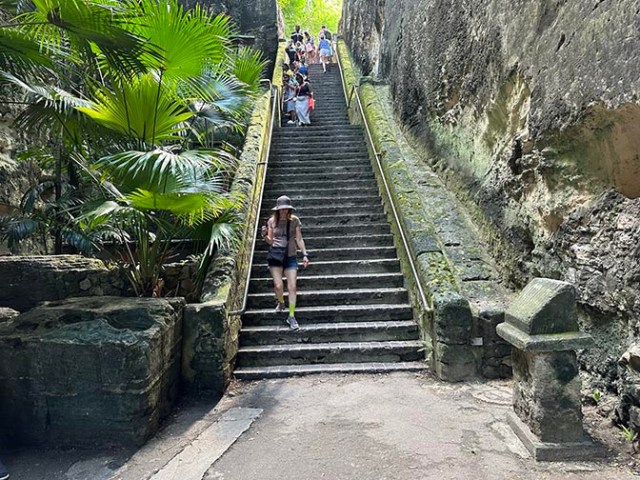
There’s another cruise ship dock west of town called Crown Bay. This is where Symphony of the Seas docked on our visit. It could hold two ships, but ours was the only one there that day. We did not go exploring beyond the port on foot, but rumor has it there’s a beach about a 20-minute walk away and google maps says it’s about a 40-minute walk to a place called 99 Steps, at which Blackbeard’s castle sits at the top. Crown Bay appears to belong to Royal Caribbean due to its logo being present in signage at the port, but the internet says other ships dock there too.

dock in St Thomas

The shops at Crown Bay looked considerably newer and nicer than the ones at the Havensight dock did the last time I was there. Taxis are available to take passengers into town or other destinations. I had not been to this dock before on previous visits to Saint Thomas so nothing looked familiar when we came into port.

windmill at the port

Besides shops and things this port also had a windmill.

the crew had some practice driving lifeboats around while we were docked in St Thomas

Things To Do or See in St. Thomas

The island has many beaches. Snorkeling is one of the most popular excursions. Sailing (which may be combined with snorkeling) or a visit to St. John or Magens Bay are also things people like to do there.

raindrops on the window

St Thomas Skyride

Other options include a pirate museum, botanical garden, island tour, kayaking, parasailing, Coral World, an eco tour, zipline, watersports, and of course the ever-popular skyride – which was a disappointment the last time we went there as a road had been paved to the top taking out all the things there used to be to do up there other than shops and a restaurant. The view from the top and from the skyride is great though.

map of the Virgin Islands

Saint John

The island of Saint John is a close neighbor to Saint Thomas. It is a smaller and less populated island. Much of it is a national park. There is ferry service between the two islands. One of the routes runs from Charlote Amalie to Cruz Bay, the main town on St. John, which has shops, restaurants, and places to stay. Hiking, beaches, and snorkeling are popular activities there. We had originally booked a snorkel excursion that went to St. John, but it got cancelled so we did not get to go there.

Copyright My Cruise Stories 2022
Posted in Caribbean, Ports of Call, Royal Caribbean, Symphony of the Seas | Tagged , , , , , , , | 2 Comments

SeaCow Snorkel in Bonaire

Constellation in Bonaire

Bonaire is rumored to have some of the best snorkeling in the Caribbean. On our cruise on Celebrity Constellation, we booked what they billed as a Double Dip Snorkel excursion. Our original booking was for 8:30am, which would give us lots of time to explore after the excursion. A couple days before the port we got a notification that the time had changed to 11:30, which was the second time option offered for that tour. Apparently they did not have enough people to fill two runs and the ship chose to put everyone at the later run, though the Sea Cow crew said the earlier one would have been preferable for both weather and having less other people in the area. They mentioned not being able to convince the cruise ships of that so they must all cancel the earlier time slot when two are offered and don’t both fill. Which is unfortunate for passengers wanting more time after their excursion to see other things. The ship stayed in port until 8pm, so we did still have some time to see part of the island afterword.

soft coral

While our original meeting place at the early time was inside the ship, for the later one it was out on the dock. We went out a bit ahead of the time, which turned out to be too early for our meeting point to be ready so we wandered into the closest port shop to kill some time. Should have stayed there a bit longer because just as we got back the wind whipped up and blew down most of the canvas shelters the ship people had set up on the dock. Only a couple right where they check people’s ship cards were left standing when the rain began to pour buckets. Waiting under that wasn’t helpful as it was pretty much raining sideways in the wind so we went back into the ship for about 5 minutes until the actual time to meet. We had to scan our cards and belongings to get in, and cards again to get back out a few minutes later, but within that time the rain had stopped. We got pretty well soaked in the few minutes we were out in the rain, but we were going to get wet snorkeling later anyway.

SeaCow

The SeaCow is an open sided boat with a canvas top over most of the seating, but not all of it. It wouldn’t have kept anyone dry the way it had been raining so it was a good thing the rain didn’t last long. The sun came out about the time we got to our snorkel spot at Klein Bonaire, a small uninhabited island about half a mile off the coast of Bonaire. The three crew who were not the captain each had a group to follow them once people got in the water, group numbers assigned according to where people happened to sit in the boat. We were group 1 and went with the one female guide. Once a full group was in the water and ready they set out, mainly drifting with the current, but going deeper or shallower depending on what there was to see. Once all 3 groups were off and snorkeling the captain untied the boat and it followed. Somewhere along the line the boat went ahead of everyone and stopped at the point where we were to get back in.

corals

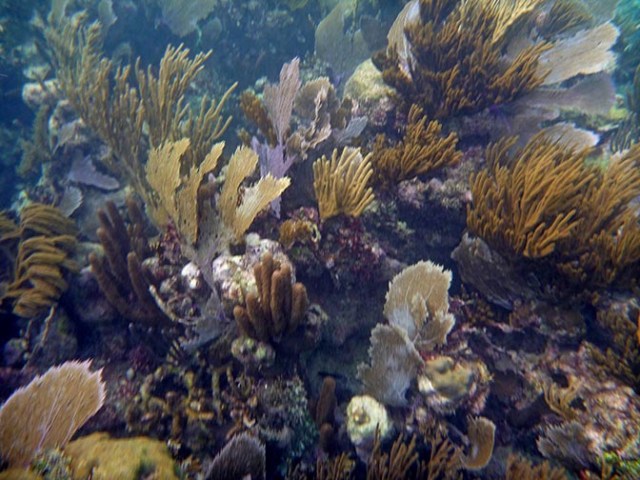
Along the way we saw lots of coral, some of it pretty big for what you usually find in the Caribbean, and in most areas more plentiful. There were also lots of fish. The fish are generally more colorful than the coral. Caribbean coral is mostly brown or yellow, not like all the colors found in places like Australia’s Great Barrier Reef. There was a variety of corals. Some areas had a mixture of different types and others had one predominate variety.

tube sponge

There were lots of purple tubes, some of which were quite tall. Our guide identified them as tube sponges, which she said only grow about an inch a year, so the bigger ones were quite old.

fire coral

There was also fire coral, which is not actually coral, but a relative of jelly fish and it will sting you if you touch it. It rather resembled seaweed, except that it was solidly fixed in place rather than waving in the current like actual seaweed. This fire coral did not look at all like the fire coral we saw previously on a snorkel excursion in Belize. There were a lot of soft corals which do wave in the current like seaweed. Also lots of brain coral and some pretty big elkhorn coral. We saw some fan coral too and some other types as well.

turtle

A turtle swam below us for awhile, the only one we saw. The uninhabited little island we were by has turtle nesting grounds, but it was not nesting season when there would have been a lot more turtles. Klein Bonaire (Little Bonaire) is a marine preserve so nobody can build anything there to save the turtle nesting areas from destruction.

coral restoration structure

Later we came by what the guide referred to as Christmas trees. These branched metal structures had little bits of coral hanging from them, something Bonaire does to accelerate the growth. Once the bits have grown to the size they want they are glued onto places in the reef that need restoration. They’ve had an over 90% success rate with over 30,000 bits used in restoration of their reefs. The work is all done by a volunteer group, of which one of the guides on our boat works with. It probably helps that Bonaire is south of the area of the Caribbean normally hit by hurricanes, which can severely damage coral in those areas, but there are still all the other issues that affect coral like water temperature, pollution, PH, and human activity. With Caribbean reefs generally at an 80% loss, restoration is definitely important, though this was the first place we have seen any effort to do so. Every person in Caribbean waters (or anywhere else where there’s coral) can do their small part to help save the reefs by using reef safe sunscreen instead of harmful chemical sunscreen.

drop-off by the wall

After everyone got back in the boat they served juice, water, or soda before going back out for our second snorkel run. That’s why the excursion is called double dip, 2 different snorkel sessions along different areas of the little island. The water felt noticeably colder the second time in, probably due to the depth. It was a shorter run that went along the edge of the island where the land drops off from a shallow ledge at the shoreline to much deeper water. All sorts of coral grew vertically out of this wall. The wall went straight down for a ways, then sloped steeply into an abyss so quite a lot of the coral in that area grew out of the wall, though some was beneath us on the upper part of the sloped area before the bottom disappeared into the deep dark blue of the depths.

wall of coral

The wall had some ins and outs and pockets or hollow places where fish could hide. The corals often grew horizontally out of the wall and then turned to vertical growth where they had some room to spread without being up against the wall. While brain coral is usually round, there were a few sort of U-shaped ones in that area.

fish in the coral

Fish came in all sizes and colors. There were many female parrotfish, who are not nearly so brightly colored as the males. They still do their job of scraping algae off of coral though. Parrotfish are an important part of the ecosystem, keeping algae from growing too thick and suffocating the corals. The sandy beaches of the island are all made up of tiny fragments of coral pooped out of parrot fish. Most people on those beautiful sandy beaches have no idea they’re hanging out in ancient fish poop.

elkhorn coral

The boat drifted along and came out ahead of all the snorkelers again on the second round. Snorkeling with the current is definitely a lot easier than swimming against it, especially in places like that with a pretty strong current. It’s no work at all to go with the current, just relax and let it take you – as long as you pay attention to where you are going and stay out of the coral and rocks. In this case also staying with your assigned group.

fish by the wall

Back in the boat they served rum punch and other drinks on the way back. That’s pretty standard on Caribbean snorkel excursions. If they are going to include alcohol it is never before the snorkeling is finished. On this boat their punch had a higher rum to punch ratio than usual. Pretty strong stuff. Once we got back the boat docked right in front of the ship in the same little dock where it had picked us up. We had just a few yards walk to get back to the ship from the drop off point.

returning to the SeaCow

Manatees are sometimes called sea cows. It is highly unlikely anyone will see a manatee in Bonaire, but not totally impossible as there is at least one confirmed sighting of one in their national marine park. The most likely sea cow anyone will find there is the boat on which we took our snorkel tour. This was one of the better snorkel tours in the Caribbean as there was more coral than most in Caribbean places, likely due to their restoration efforts.

angelfish

Copyright My Cruise Stories 2022
Posted in Caribbean, Celebrity, Constellation, Ports of Call, Shore Excursions | Tagged , , , , , , | 2 Comments

Pinto Deer of Clallam County

Normally deer are pretty much just brown. They might have black tails or white tails, and fawns have white spots, but deer of any specific variety all look pretty much the same as one another with a whole lot of brown. Pretty much anywhere deer are found there are exceptions, and some people are lucky enough to spot one.

yearling piebald deer

Less than 2% of deer have excessive white, which for some reason is called piebald. In horse colors piebald refers to black and white patches, whereas pinto is any color and white so it would make more sense to call them pinto deer rather than piebald. Skewbald is any color other than black and white so that would also make more sense than calling brown and white deer piebald. Paint is another horse color term, but that one is a breed closely associated with quarter horses. All other horses with white and colored patches are pintos whether they are piebald or skewbald. Apparently the term piebald is used more loosely with other animals. In piebald deer the skin under the colored patches is black, but under the white it is pink. Some sources say they are extremely rare with estimates at anywhere from 1 in 20,000 to 1 in 30.000 or even less, which is a whole lot less than 2%.

white deer (internet photo)

Albino deer are even more rare having no pigment at all. These have white hides and pink eyes, noses, and hooves. Estimates are this occurs in about 1 out of 100,000. If a white deer has normal dark eyes and hooves it is leucistic, which while still quite a rare occurrence is not nearly as rare as albino.

deer in a yard in Gig Harbor on the Kitsap Peninsula, which is next to the Olympic Peninsula
(internet photo)

The piebald color is a genetic condition, which unfortunately can include issues other than color. Some of these deer have shorter legs than normal, roman noses, overbites, curved spines, or crooked legs. They can also have internal problems. Sadly some are born too deformed to survive. Those that survive can live to breeding age and can produce normal or piebald fawns.

yearling deer by the Elwha River in Olympic National Park (internet photo)

The Olympic Peninsula, and Clallam County specifically seem to have more than the usual number of piebald deer. Dungeness Park, which is most well-known for the Dungeness Spit certainly has its share. Part of the park is the Dungeness Wildlife Refuge, which mainly consists of the 5+ mile spit where people can take a long beach hike to a lighthouse. The other part of the park is the Dungeness Recreation Area, a county park with over 200 acres of forest, meadows, and bluffs with a campground and trails. I have personally seen 5 of the piebald deer there.

yearling siblings with their mom at Dungeness Park

Two are siblings with a plain brown mother. As yearlings they still hang with mom and are nearly her size. I’ve seen these two on and off in the park and nearby yards since they were born.

small deer at Dungeness

Once in early spring I saw another one in a seasonal swampy area of the park. Due to the time of year it had to be a yearling, but that one was quite a lot smaller than the two brown adults it was with. By its size it appeared either a very late fall baby or born way too early that spring, but odds are it was probably just stunted in its growth as can happen with the piebald deer. The brown coat on this one was a significantly lighter shade of brown than the other two yearlings.

Another one which just appeared to me as a big white spot on a hillside was confirmed to be an adult buck with a lot of white by a lady with binoculars. Perhaps the father of the yearlings. In a different part of the park there was an adult standing alone on the trail one day that had just a couple small white spots surrounded by a wide ring of tan fur much lighter than the rest of its brown coat. It had no antlers, but it was late winter when bucks may not have any so that one could have been either a buck or doe. I would guess buck because that trail runs past a small school and some kids there seemed familiar with that particular deer and called it Toby. Unfortunately it left the trail and ran off to the school before I could get a photo of it. While driving by I saw a pair of entirely very light tan deer in a yard near the park a couple times too, but I don’t know if deer of a far lighter shade of brown than normal have any relation to the piebald deer. Even though some live there a trip to the park is nowhere near a guarantee of spotting a piebald deer. The park is full of ordinary brown deer which are the ones even frequent visitors to the park see most often.

Historically many cultures did not hunt white deer, some considering them as ghosts or messengers from the spirit world. Others thought they were sacred or supernatural, or just that it was bad luck to shoot one. In today’s world some places protect them by keeping them off-limits to hunters, but many places do not. Hunting is not allowed at Dungeness Park nor in Olympic National Park so the ones there are safe from human hunters.

Copyright My Cruise Stories 2022
Posted in USA, Washington | Tagged , , , , , | 2 Comments

Kayaking in Stoddard, NH

view of the Airbnb from the kayak

In between flying to Boston and staying in Vermont, we spent a couple nights at a lakeside Airbnb in Stoddard, New Hampshire. This house was down a dirt road in the woods. Quite remote from town, but not from other homes as the shore of the lake was pretty well surrounded by houses. Some seemed older and somewhat humble, but most looked quite nice with a few appearing new and gigantic.

houses dot the shores of Highland Lake

The Airbnb we stayed in on Highland Lake had a couple kayaks and a paddle boat out in the backyard for guests to use. A dry-entry platform for kayaks next to the dock was half covered by the paddle boat, but there was still room enough at the end to hold a kayak while getting into it. Highland Lake is a 697-acre lake sprawling between two counties in southwestern New Hampshire. It’s popular for summer activities and winter snowmobiling.

party barge on Highland Lake

Our visit was during October. Too cold for swimming, but we took the two kayaks out for a paddle around the area of the lake near to the house. It’s definitely still in use at that time of year as we saw other kayaks as well as a sort of party barge type boat full of people, and a bass boat with a lone fisherman. Also a small boat that the people were rowing when we first saw it, but under engine power later. The lake is classified as a warm water fishery and is home to several species of fish of the sort that can survive under winter’s ice.

kayaking on Highland Lake

Of the home’s two kayaks, John had the blue one and I had the red. Both were one-person kayaks. We paddled across the channel to the scenic bridge linking the island where the bnb host lives to a smaller uninhabited one, around the owner’s island, and into a shallow cove on the other side of a neighboring peninsula.

little cove

The water in the little cove stayed calm and flat even when a sudden short burst of wind brought heavy ripples to the surrounding area. All of the near shore areas seemed pretty shallow. There were lots of lilypads with no frogs on them. We did not see any frogs at all. Some areas also had seagrass or milfoil, which liked to tangle itself around the kayak paddles.

lots of lilypads, no frogs

The weather was one of those sort of if you don’t like it wait 5 minutes days. It could be sunny, windy, or overcast one minute and something completely different the next. The water had a bit of a current going, which got noticeably stronger anytime the wind picked up. It wasn’t much of a hindrance to paddling but setting the paddle down to take any photos meant drifting sometimes speedily toward shore, rocks, the other kayak, or other obstacles so being aware of the surroundings and not just the object of the photo was always important. I have a waterproof camera, but not a floating strap and it would probably be impossible to find if it went overboard and sank so I wore my running belt which is normally for holding a water bottle and kept the camera snugly zipped into the belt’s pocket. It stayed safe there, and had no chance of getting lost even if something disastrous like the kayak flipping over had happened – which it didn’t.

other kayakers

Most of our time out on the lake it was just us. We saw a bit of fall foliage in the surrounding trees, though more had yet to turn than the amount of them that already had. The party barge passed by close enough that we had to cross its wake, but the waves it made were fairly small. Big enough to feel them, but small enough not to cause any sort of problems. The other two boats we saw out there didn’t get that close and neither did any other kayaks.

it’s a big lake

We had fun paddling around the lake. It’s the first time I’d been in a kayak since our Uncruise around the San Juan Islands, which happened shortly after I broke my arm inside the elbow joint and was under strict instructions by both my doctor and physical therapist not to paddle. I could only ride as a passenger in a 2-person kayak that trip.

kayaking by the shoreline of a little island in the lake

Luckily, I can paddle now. Though I don’t have quite full range of motion and have a bit of nerve damage that extends to the fingers of that hand, it appears perfectly normal and none of it is enough that anyone else would ever notice since nobody ever pays attention to whether or not a person can fully straighten or fully bend their arm – and people rarely do either one anyway. I’ll never do a chin-up or anything similar again, but that’s not life hampering for me. It would probably devastate my daughter and granddaughter though since they are into ninja warrior competitions and that requires a lot of arm strength.

nice scenery

The biggest issue for me is that before the break I could make properly folded towel animals with the towels rolled tightly enough to hold them together on their own, but ever since I haven’t had the finger strength or dexterity to do that and have to hide rubber bands beneath folds on the heads to hold them together. The crowning glory of towel animals on my blog is the fire breathing dragon, which besides being my own invention, was the last one I made before the broken arm.

kayaking Highland Lake

Anyway, I’ve wandered a bit off the subject of kayaking around a lake, but some things end up bringing back memories by association. Kayaking is a lot of fun so I’m glad to be perfectly capable of paddling one by myself now. Cruising doesn’t get any smaller than this!

bridge by the bnb owner’s house

Copyright My Cruise Stories 2022
Posted in USA | Tagged , , , , , , | 8 Comments

Exploring Dubai

sign at the port

We came into Dubai on the MSC Lirica as the disembarkation port on a 3-week cruise that started in Italy and sailed around the Mediterranean before passing through the Suez Canal. We had port stops in Israel, Jordan and Oman before reaching the United Arab Emirates. Visiting Petra on the Jordan port stop was our main reason for taking this cruise, but we enjoyed the other ports as well. Our ship overnighted in Dubai before disembarkation, and we had a very late flight which gave us two days to explore.

roadside flowers

The cruise terminal in Dubai is not near town. Security screens your bags as you leave the port building so there’s a bit of a line to get out if you leave the ship the same time as everyone else. The port is too far to walk anywhere, but you can leave by taxi, uber, free mall shuttle bus, big, bus or hop on hop off bus. The big bus or hoho bus are expensive, but Dubai is huge and their routes cover a long distance. We saw maps around the city for the hoho bus and it had 3 separate routes with connecting points.

taxis by Wild Wadi water park – these are the cheap tan taxis

At the port the taxis vi for the highest bidder when there are more passengers wanting a ride than taxis available, but you can get an Uber for less than the price of a taxi or take the free mall shuttle into town. From the mall you can catch a taxi for much less than at the port. If you have the time and want to go a lot of places you would get your money’s worth to take the hoho bus, especially if one of the places you want to go is Global Village, which is a bit of a distance outside of town.

Mercato Mall

We opted for the free shuttle, which went to Mercato Mall. It’s a small mall by Dubai standards, though not really all that small. The decor there is Italian themed. In December it’s all decorated up for Christmas, like many other places in Dubai.

inside Mercato Mall

We wandered around the mall a bit, then found a taxi out front. Taxis in Dubai are pretty cheap in town so long as they are the tan sort with a taxi sign on top. The black ones that don’t say taxi charge a whole lot more, though if there aren’t any of the tan ones around and you use Uber you can get that same black car for a lot less money than you pay if you just hop in it as a taxi.

beach view of Burj Al Arab

We asked the taxi to drop us at the Burj Al Arab, which is the 7-star hotel that is shaped like a sail, and one of the major landmarks of Dubai. It was raining, which is rare for Dubai. The driver made a quick stop by a beach for the view of the hotel from there. In nicer weather that beach would be a great place for a walk, and the views of the Burj Al Arab are better there than at the hotel itself.

Burj Al Arab

When you get to the hotel, unless you are staying there or have a meal booked in one of its restaurants you can’t even pass through the gates to look at it from the outside. The taxi let us off at Wild Wadi, a water park next door to the hotel. If you walk around the area there are places where you can get a decent picture of it.

Souk Madinat Jumeirah

From there we walked to Souk Madinat Jumeirah, which is a modern recreation of an ancient market. Souk is an Arab word for a marketplace or bazar, and there are all sorts of them in different countries. Some have all new items, others are more like a flea market. Some are item themed like a gold souk or textile souk.

shop in Souk Madinat Jumeirah

This one has lots of little shops, all with new merchandise with quite a variety of items. It also has restaurants, parking, and entertainment. We walked from around in the souk for awhile until the rain let up, then went on our way. We didn’t see any taxis outside so we just headed in the direction of Palm Jumeriah until an empty one went by to flag down.

view of a beach on Palm Jumeriah from the monorail that runs up the middle to Atlantis

Palm Jumeriah is a man-made island in a shape resembling a palm tree. Each of the palm fronds is wide enough for a double row of homes or other buildings, giving each of them beach front on one edge of the palm frond. A main street runs down the center, or trunk of the palm tree. It continues out to an outer ring around the palm. The outer ring is home to a number of hotels, including Atlantis, which is where the taxi dropped us off.

Atlantis Hotel

Atlantis has a little booth outside on the sidewalk where people can book activities within the hotel, like a visit to their water park or aquarium. It also has a section of shops and restaurants where anyone can walk in whether they are staying there or have any activities booked or not. Like other touristy places in Dubai, Atlantis also had Christmas decorations in December. They also have prayer rooms alongside the restrooms for their Muslim customers. All the restrooms we saw in Dubai were clean, had western style toilets, and provided toilet paper, things we did not always find in other places in the middle east.

Inside the shopping area of the Atlantis Hotel

Everything in Dubai tends to be expensive, probably even more so at the fancy hotels. We had lunch in a little Asian restaurant in Atlantis. A little bowl each of fried rice and sweet & sour chicken, along with one cup of coffee and a pot of tea cost 180 dirham or nearly $50 USD.

Palm Jumeriah boardwalk across from Atlantis

After lunch we took a walk on the boardwalk that runs along the edge of the water next to the road on the outer circle. Neither the boardwalk nor the road go all the way back to the mainland. The only way is down the trunk section at the middle of the palm.

view of the bridge from the end of the boardwalk

The boardwalk went about 3.3k before it ended where the road had a bridge to continue farther. If it had been a nice day we would have had a great view of the city skyline including the Burj Khalifa, the world’s tallest building, but all of the buildings there were barley visible through the thick fog or possibly a mix of fog and smog that hung about all day.

foggy view of Burj Al Arab from the boardwalk

We did get a fairly decent view of the Burj Al Arab, which is closer to Palm Jumeirah than the Burj Khalifa so it appeared both larger in the view and not nearly as shrouded in fog. We didn’t walk out the other direction on the boardwalk from Atlantis, but on the map it appears to go a similar distance.

on the monorail

A monorail runs down the trunk of the palm from Atlantis to a stop called Gateway on the mainland, with several other stops in between.

view from the monorail

We took the monorail back, which probably cost more than a taxi, but was easily available and worth it just for the views. At the Gateway station you can catch trains, busses, or taxis, or call for an Uber.

Global Village

We had intended to take the train to Mall of Emirates, which is the one with the indoor ski facility just to kill some time, but enough time had passed by then to take a taxi straight from there to Global Village. We would have liked to go sooner, but it didn’t open until 4pm. That was how we found out how expensive the black taxis are since that was all that was available at the monorail station. On the way back we went by Uber and though the distance was farther going all the way to the cruise port it cost less for one of the same black cars that also runs as a taxi, which was how we learned that choice bit of information.

view from the bridge on the way into Souk Madinat Jumeirah

Copyright My Cruise Stories 2022
Posted in Lirica, Middle East, MSC, Port Cities, Ports of Call | Tagged , , , , , | 2 Comments