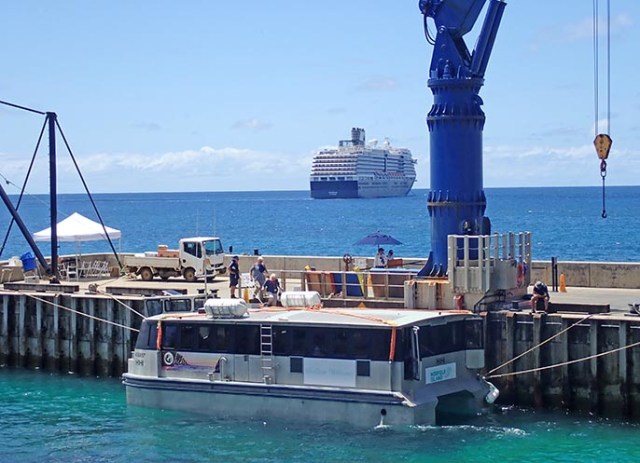
island tender at Cascade Pier
Norfolk Island, Australia is more than 1000 miles from mainland Australia. It’s of volcanic origin and about 5 miles long and 3 miles wide. None of the animals associated with Australia are native to the island. Neither are its venomous spiders and snakes. Other than domestic animals and creatures of the sea, Norfolk is mainly home to birds and insects. The highest elevation in the island is about 360 feet above sea level. The coastline mainly consists of cliffs. Tourism is the island’s main industry.
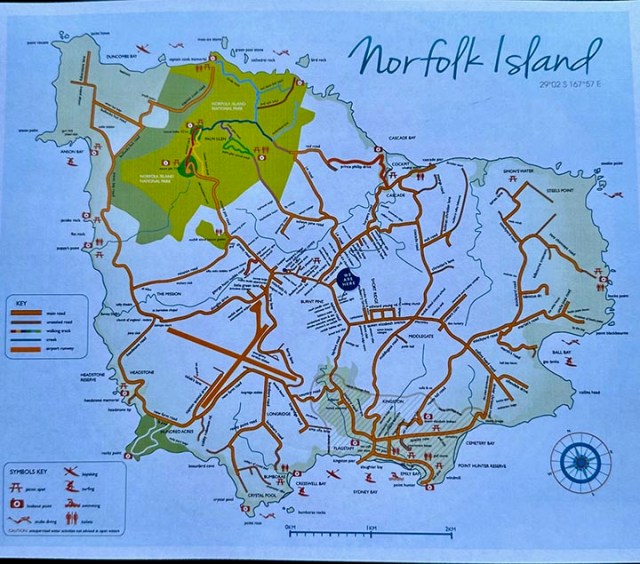
Norfolk Island Map
About half the island’s residents are descendants of the mutineers from the bounty and some Tahitian women that the mutineers brought with them to Pitcairn Island where they lived before being relocated to Norfolk Island. Prior to that the island was used for two different sets of convicts. One as Sydney was first being settled, which turned out advantageous for Sydney’s settlers since food was more easily grown on Norfolk Island at that time, and the second time for repeat offenders. Before that the island was not inhabited full time, though it did have some historic artifacts from Polynesian visitors. The rest of the population mainly comes from mainland Australia and New Zealand.
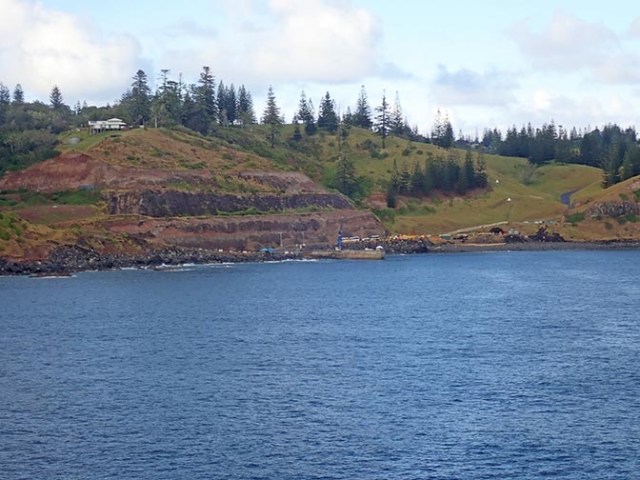
view of the tender pier from the ship
It’s a tender port with a couple different dock options, of which the one best suited to the day’s weather will be used – if the tenders can make it in at all. Sometimes the sea is too rough and the port gets skipped. This is a port with a high likelihood of getting skipped, but luckily the seas were not so rough to prevent us from coming ashore on our scheduled port day there. The docks are located at Kingston and Cascade.
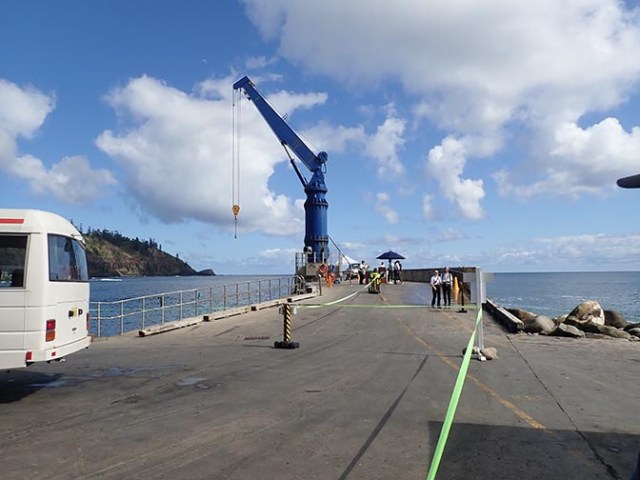
Cascade tender pier
Tenders come out to the ship from the island rather than using the ship’s tenders at this port. The tender crew is also from the island and were far more skillful in docking their tenders than the Nordam’s crew had been with theirs. They managed to dock on both ends without crashing the tender into the ship or the dock, and made it to the dock on the first try. Neither of those things were likely when using the ship’s tenders. They also knew how to tie a proper knot to the cleat on the dock, another thing that sometimes escaped the ship’s tender crew.
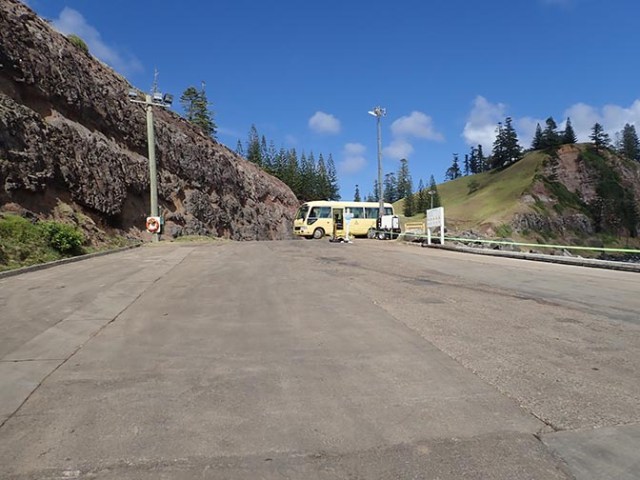
shuttle bus near the dock
Holland America Noordam anchored out near the pier called Cascade, which is a remnant from the whaling industry of the past. Cascade is just the name of the pier. There’s nothing else there. Free shuttle busses wait to take people to the nearby town of Kingston. Other busses wait for tours booked through the ship.
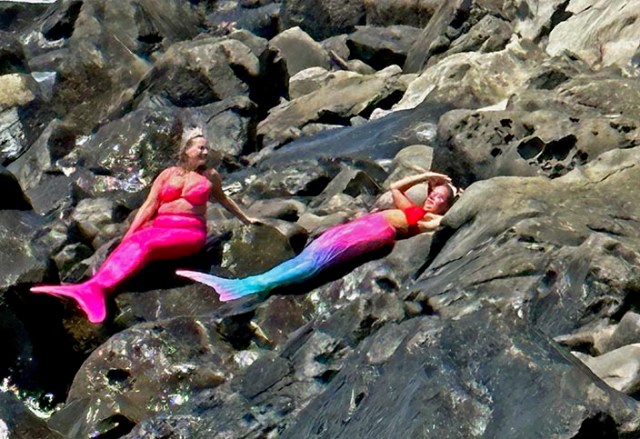
mermaids on the rocks
Mermaids aren’t normally seen from the Cascade pier, but there were a couple out on the nearby rocks entertaining the crowd waiting for the next tender to arrive. The entertainment of the crowd was incidental though. The mermaids were a couple crew members who like to pose in mermaid costumes and were really there for their own enjoyment. They didn’t swim in their costumes at that location because the sharp rocks and harsh waves were far too dangerous for swimming in that area.
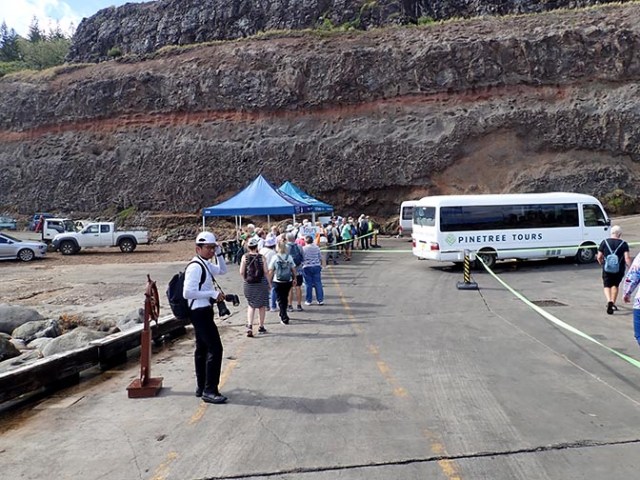
shore excursion bus
Kingston has all sorts of shops and some restaurants. There is a visitor’s center and another tour place where people can go to book tours. Both are a bit of a walk from the shuttle stop. I just saw them from the bus and don’t know if they book last-minute tours for cruise passengers or if they are just there for people staying on the island. There were a couple last-minute local tours available right at the shuttle stop as well as a few local crafts for sale. One of the tours from the shuttle stop went up a mountain, the other to the Kingston pier.
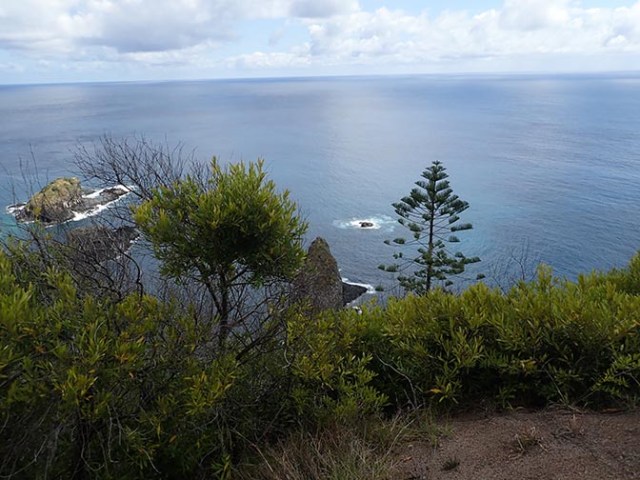
view from the national park
Ship’s excursions offered at this port included a fish feast, golf, a hike in the national park, a visit to a botanical garden, museum tour, 4×4 adventure, glass bottom boat tour, liqueur factory, historical tours, and a scenic drive. Whether a ship’s excursion or just the shuttle driver to town, locals are likely to share a bit of island history. All of our drivers and tour guides mentioned that they personally are descendants from the Bounty. Locals are quite friendly and go out of their way to be helpful. Someone we met on the ship left their jacket on one bus and another driver on a different bus tracked it down and brought it back to the port for them.


