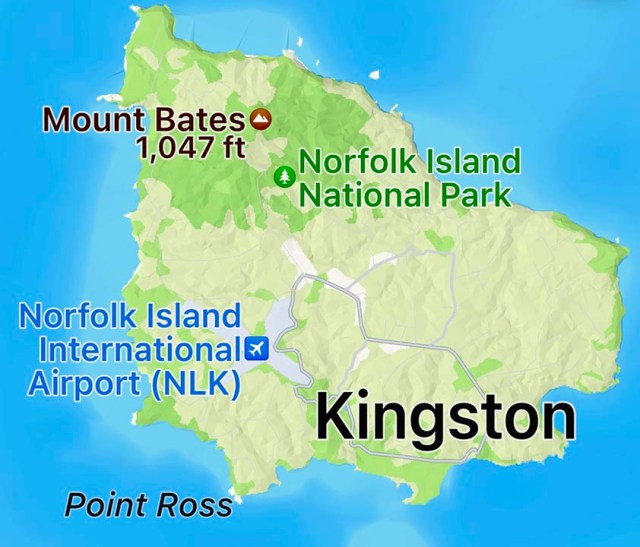
map of Norfolk Island
Norfolk Island was a port stop on our cruise on Holland America Noordam that went from San Diego to Sydney. Our ship docked at the Cascade pier on Norfolk Island, which is not close to anything. Though not attached to the Australian continent, Norfolk Island is an external territory of Australia. I had booked a hike through a forest at that port. John originally had a fishing excursion booked there, but it got cancelled. He didn’t want to join me on the hike so he just visited the island on his own. This is his story from that port.
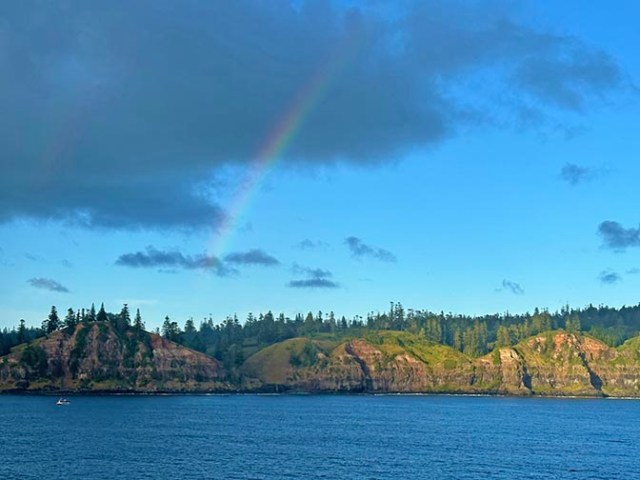
rainbow over the island
In the middle of nowhere approximately 877 miles east of Australia, Norfolk Island emerges from the warm South Pacific waters. Additionally two smaller islands, Phillip and Nepean make up the territory of Norfolk Island. Deep South Pacific waters surround this super remote group of islands. Remote is an understatement there. Very few cruise ships visit each year.
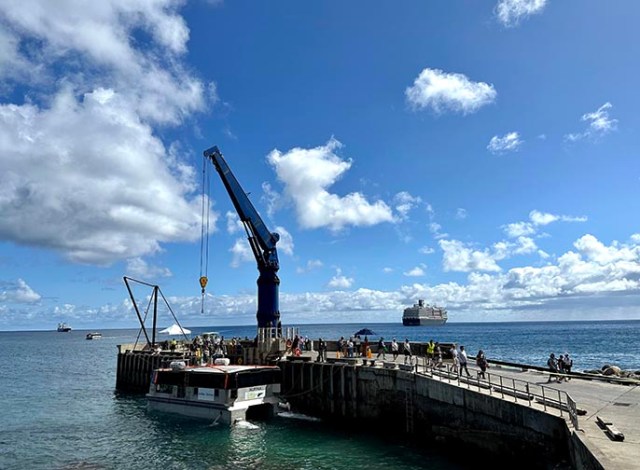
tender at the pier
According to the last census, just 2,188 people live on Norfolk Island full time, but hundreds more visit on vacation. Visitors to the island don’t have cellular service because the system is antiquated and the only cell phones that work there belong to locals. As our cruise ship Noordam pulled up to the island, lush greenery dominated the scene with ocean waves slapping the shoreline.
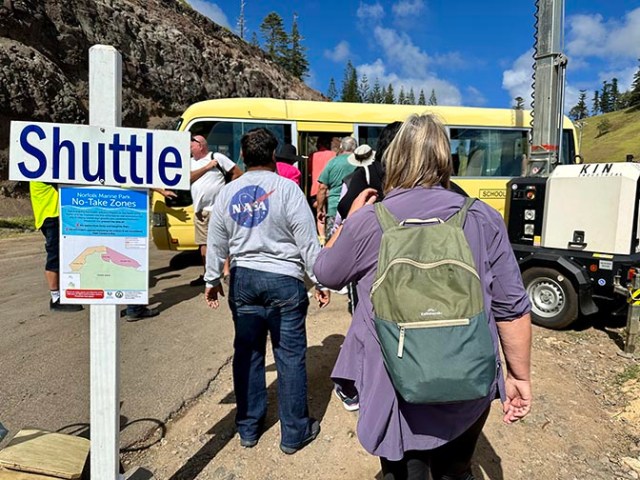
free shuttle at the tender pier
This port stop was a tender port with local experienced tenders taking guests from the boat to the Cascade Bay dock where free shuttles waited to take passengers on a short drive to town. Once in town, more shuttles waited to either take guests to Kingston Dock or Mount Pitt. Each of the destination shuttles had a nominal fee of less than $20 USD.
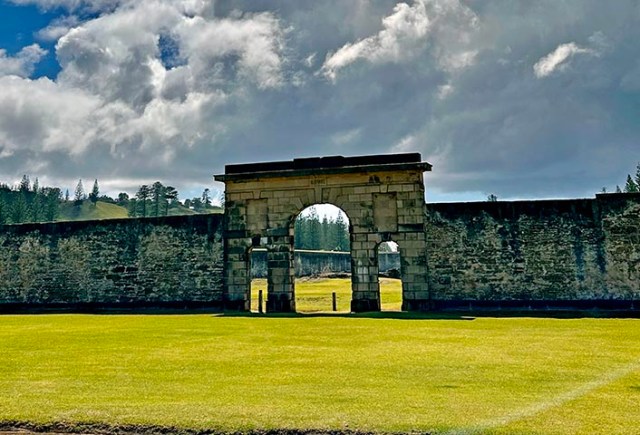
prison gate
I choose to go to Kingston Pier first. The ride took a few minutes and delivered everyone to a grassy area near the old buildings now designated a UNESCO World Heritage Site.
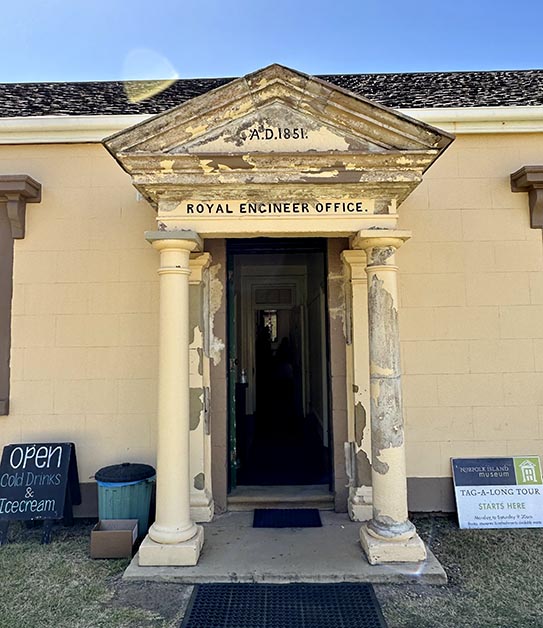
old building
In addition to the Kingston Pier, built in 1839, an old penal colony dominates the area with watch towers strategically placed to keep prisoners from escaping. Norfolk Island’s first residents were Polynesians. Like pretty much everywhere we stopped on this cruise the island was visited by Captain Cook. Many of the residents today can trace their roots to mutineers from Pitcairn Island from the ship Bounty of Mutiny on the Bounty fame.
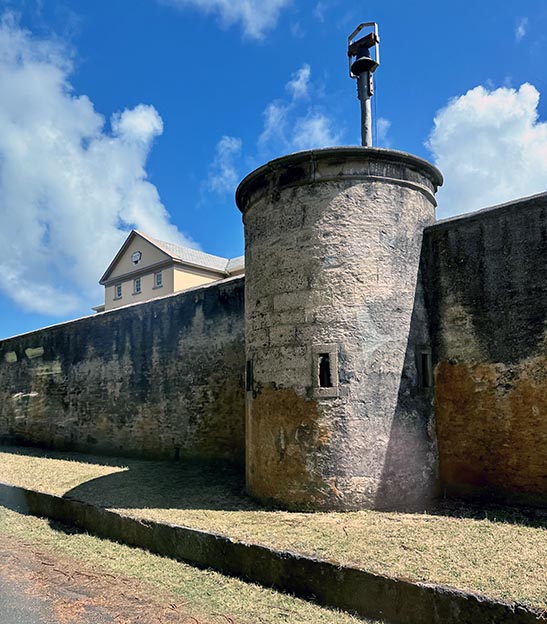
prison tower
A series of buildings and exhibits create a living museum of historical displays. There’s also a nearby cemetery filled with headstones from local fishermen and whalers who tragically lost their lives.
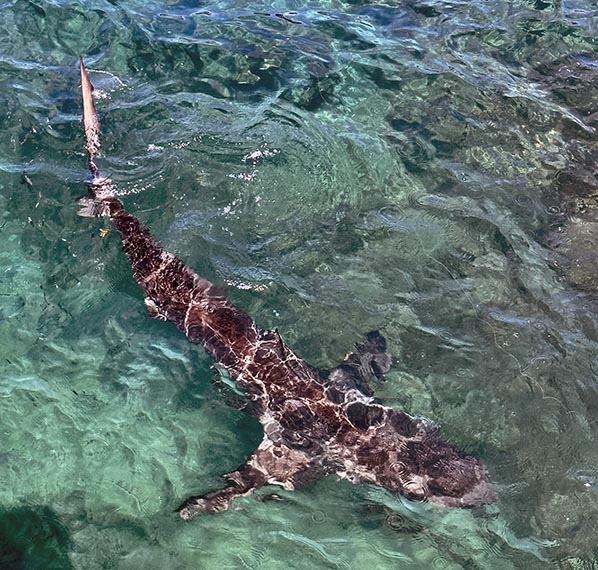
shark in the water
A walk along the pier reveals lots of sharks and other fish species. Locals enthusiastically cast lines in hopes of catching a fresh dinner. Some locals fish off the end of the pier at night on a quest to catch yellowfin tuna.
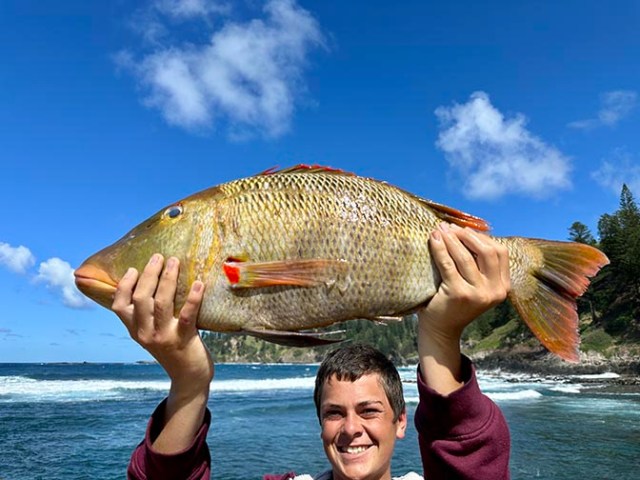
a fisherman shows off his catch (not a tuna)
Kingston Pier is located close to deep drop-offs where tuna feed and is one of the only places in the Pacific Ocean where anglers can catch tuna from a dock. The night before my visit a local caught a 50-pound yellowfin and was quite proud of his catch.
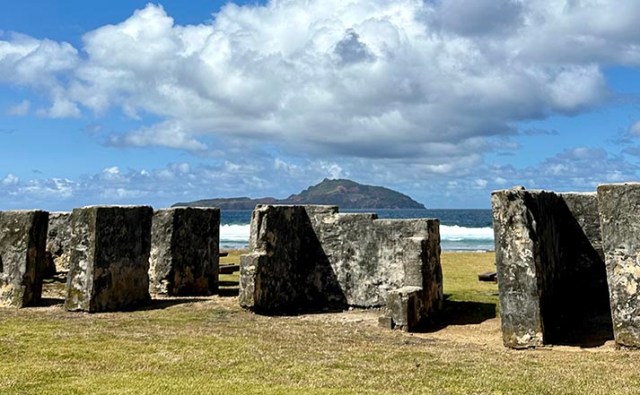
giant rocks
After visiting all of the buildings and wandering the dock watching anglers catch fish, I decided to take the shuttle back to town to catch the Mount Pitt Shuttle.
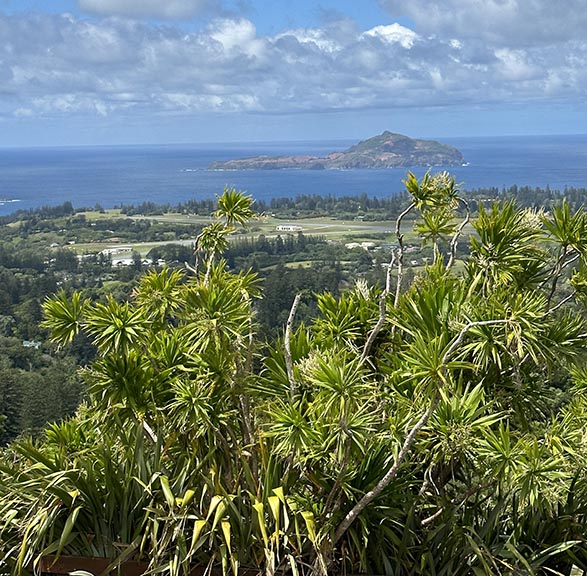
trees and view
The shuttle to Mount Pitt took just minutes – this island is small at just 13.4 square miles. Mount Pitt Lookout has a 360’ view and is the second highest point on Norfolk Island at 1,050 feet.
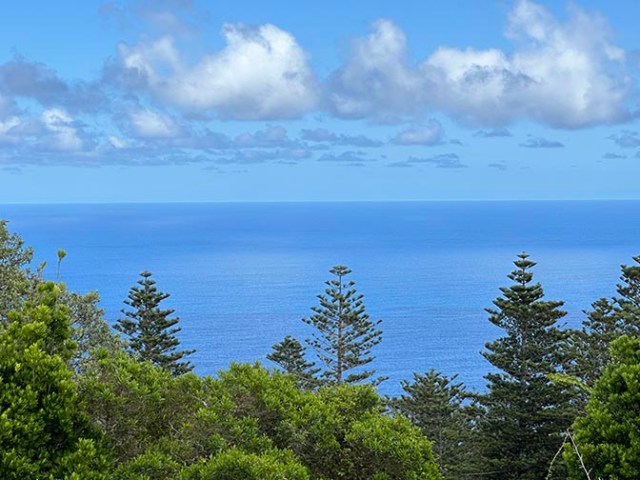
Norfolk Pines
Norfolk Island National Park surrounds the area with Norfolk pines and green grass in the foreground and the blue/green waters of the South Pacific beyond.
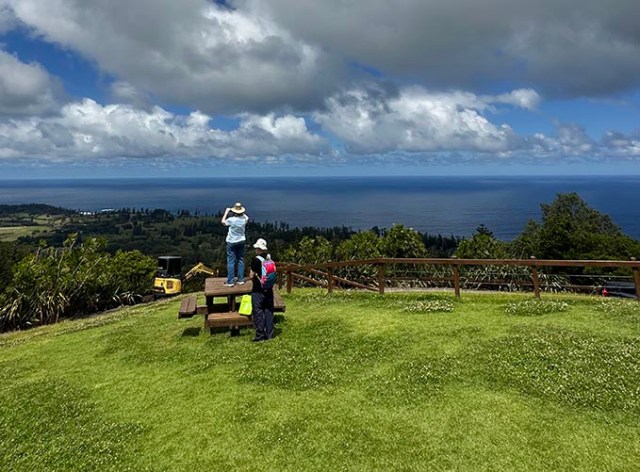
random people trying to get a better view
Visitors often stand on the picnic tables to gain just a couple more feet for their panoramic photos.
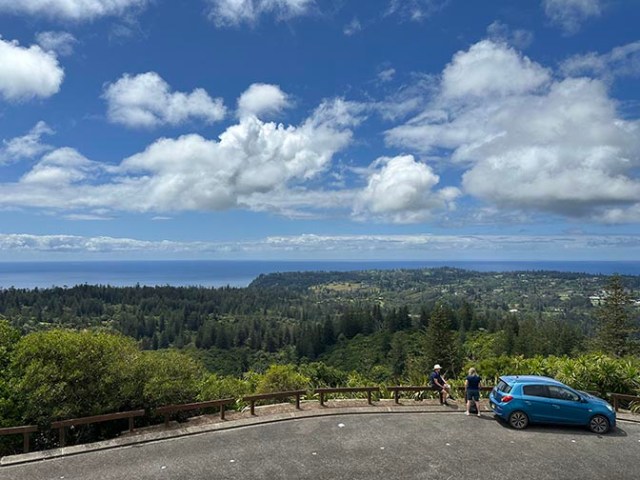
people enjoying the view
After spinning in circles enjoying the amazing views, I boarded the shuttle back to town and got dropped off at the edge of town.
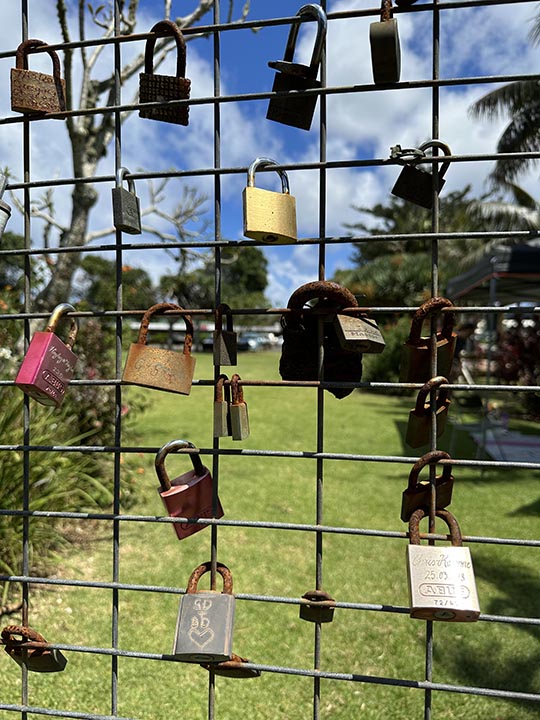
locks on a fence
The main street is not very long and has a well-stocked grocery store as well as a variety of other small shops and restaurants. I highly recommend both shuttle destinations if you have time during your stay on the island. Locals are super friendly and willing to share their small island’s treasures. Even on this remote island people put locks a fence along one of the town’s streets.


