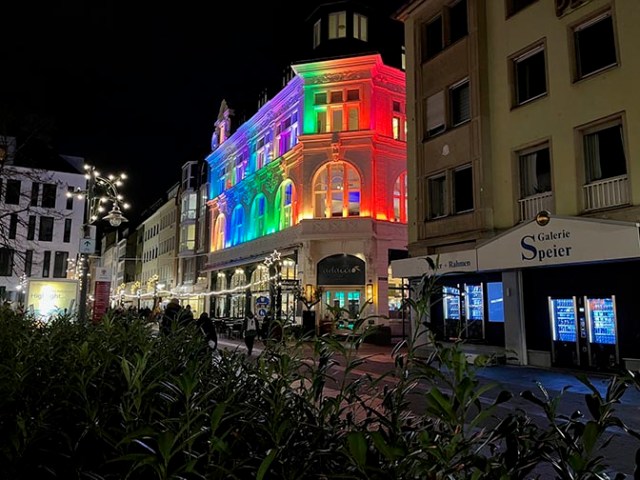
colorfully lighted building in Koblenz
Koblenz, Germany
Koblenz, Germany sits on the banks of the Rhine River where it joins with its tributary, the Moselle. The name originates from the Latin word for confluence and the town’s name was spelled with a c as the first letter before 1926. It has a population of over 124,000. Koblenz was originally a Roman town founded in 9 BCE. The oldest building in town is the Basilica of St. Castor built in 836. The city was heavily bombed in WW2 and rebuilt afterword, but still has an old town and castles. Four mountain ranges can be seen from the city. It also has vineyards and forests. Average temperatures range from winter lows of about 30°F (-1°C) to summer highs of about 77°F (25°C). The temperature rarely dips below 17°F (-8°C) or rises above 89°F (32°C). Snow may fall from November through March. January is usually the coldest month and July the warmest. Average annual rainfall is between 9 and 10 inches, usually falling on a total of about 136 days throughout the year. Average annual snowfall is less than 3 inches, falling about 19-20 days out of the year – not all in a row. Castles are the main tourist attraction besides watching the Moselle flow into the Rhine, but there are also churches and other historic buildings. The city has statues and monuments too. There is a statue of mischevious boys with one perched on the fountain that intermittently spits water on passersby. The place where the two rivers meet is called the German Corner and has a massive statue of Kaiser Wilhelm I on a horse. The original was built in 1897. It was destroyed in World War 2. A copy built in 1993 now sits in its place.
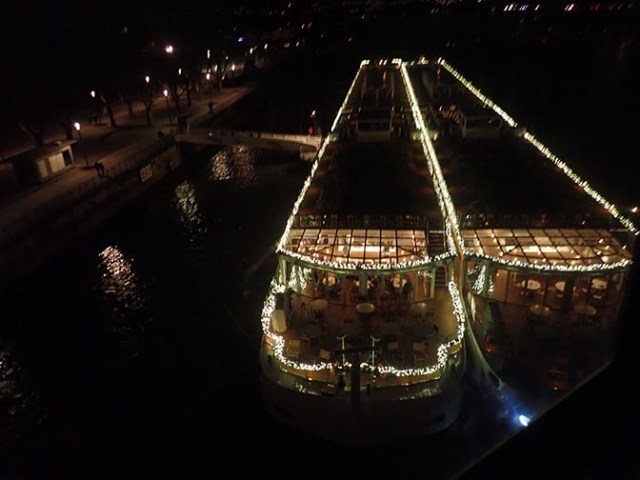
two Viking ships in Koblenz
Koblenz River Cruise Port
Before reaching the actual stop in Koblenz, Viking Skirner made a brief stop to let people out to board busses up to nearby Marksburg Castle. While people toured the castle the ship moved onto Koblenz and passengers arrived by bus after the castle tour. The port in Koblenz is right in town. Our ship was docked next to another Viking ship under a cable car running from that side of the river up to a fort on a hill on the other side. We had to walk through the other ship to get to and from ours.
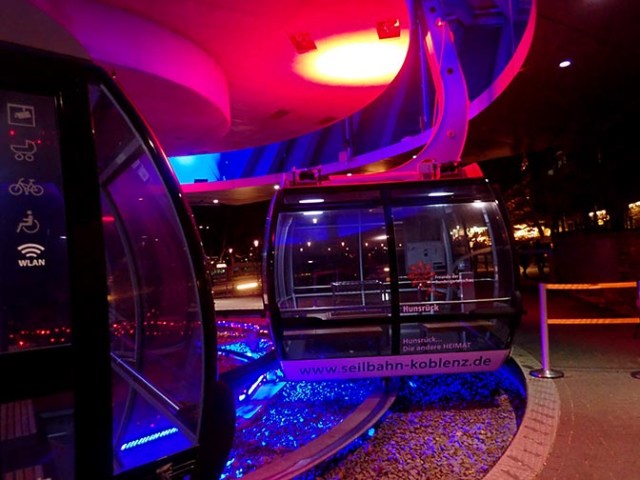
cable car
Round trip rides without exiting the tram car were an option as well as getting off at the top to see the fort or a Christmas garden. Shops and other things in town were an easy walk from the ship since the town came all the way to the river’s edge. The gondola entry was just steps away from where our ship docked. The walk from the busses that brought us there from the castle was farther since the road ended at the riverside a short distance from our ship where we had to walk past a couple other ships to get to ours.
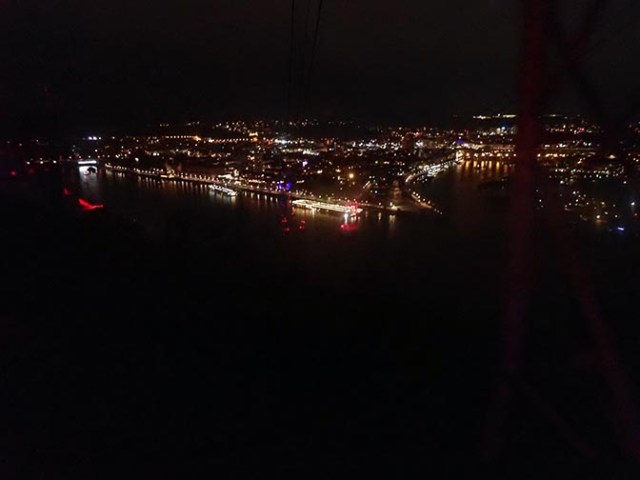
view of Koblenz from the cable car
Since it was the dead of winter when days are short and we had spent most of that one in scenic sailing past castles on the Rhine before visiting Marksburg castle our time in Koblenz was spent in the dark. Of course it’s a city so dark doesn’t mean you can’t see anything because there are lights.
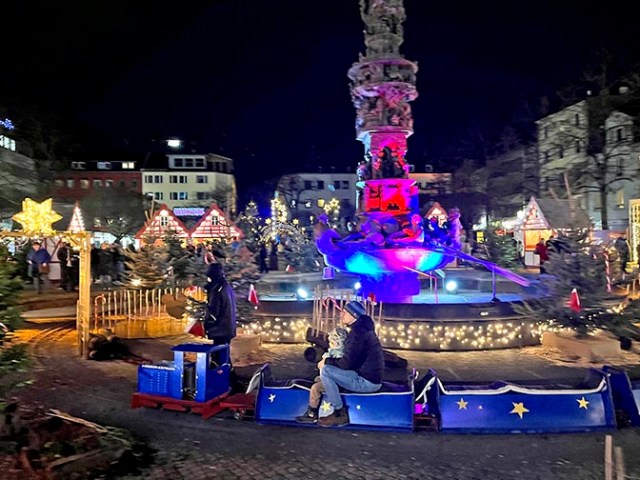
little train at the Christmas market in Koblenz, Germany
We walked to a Christmas market that wasn’t too far from the ship. It was a very small one, but it had a feature that we didn’t see at any other Christmas markets. There was a little train going around a Christmas tree in the center of the market square, just big enough for very small children to ride.
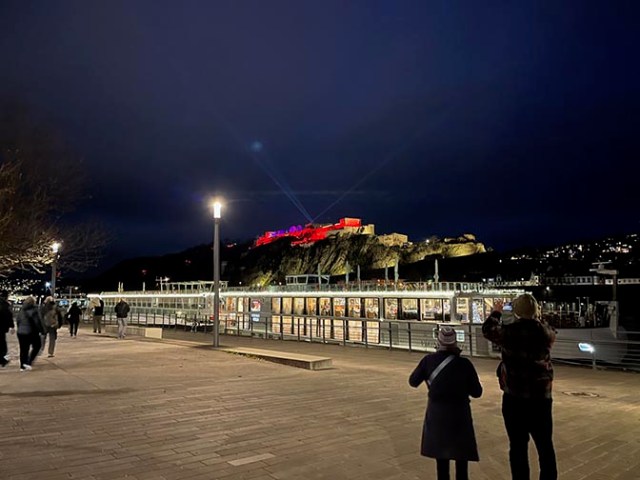
view of the Ehrenbreitstein Fortress in red lights on the hillside on the other side of the river
After visiting the market we took a ride on the cable car. It was pretty convenient since the entry on that side of the river was right by where our ship docked. The 16 gondolas that make up the ride have glass panels around all sides for a fantastic view as you cross the Rhine River up to the Ehrenbreitstein Fortress high on a hill on the other side.
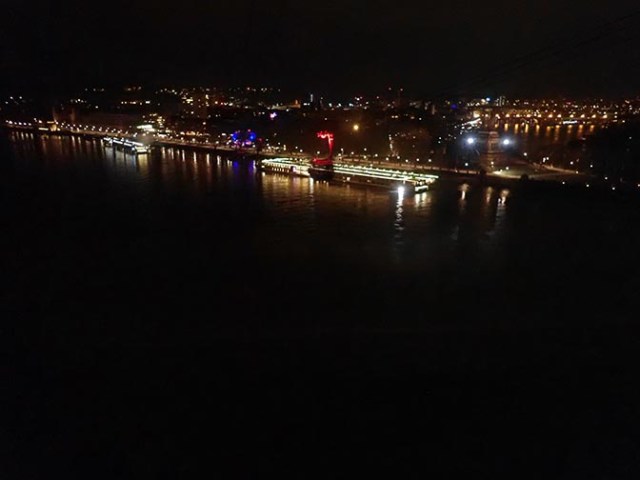
Ships docked on the Rhine in Koblenz – the red light is a cable car
Of course since we went across in the dark our view was just of the lights of the city, the cable cars, and our ship (and others) docked alongside the riverbank. The fortress at the top is the second largest preserves fortress in Europe. It has restaurants, gardens, viewing platforms, museums, and multimedia exhibits on the fort’s history as well as other topics. Tours are available there, but we stayed in the cable car and just rode it round trip up the hill and then back down.


I love the feature of that small train carrying small children around the market square at Christmas. That sounds very special…a little market with a big heart.
It was a cute little market.