Antarctica
Our Antarctic cruise on Holland America Oosterdam spent 4 days cruising the Antarctic Peninsula. At the start we were given a map of the planned route for the time we spent there. The cruise was much longer, 4 days is just the time spent in Antarctica.
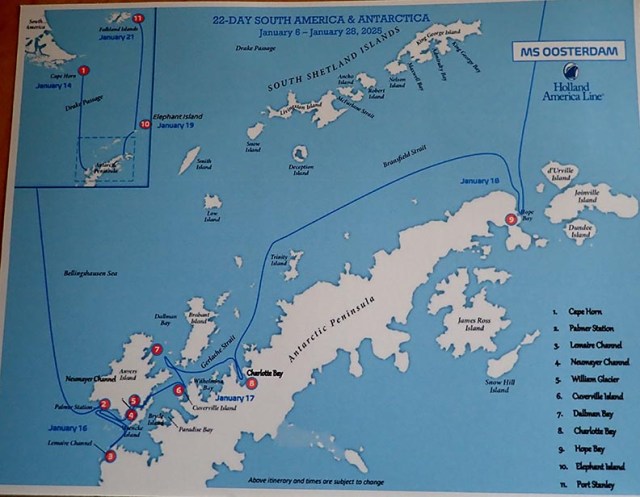
planned Antarctic route
Planned routes don’t always turn out as actual routes on any cruise, especially in a place like Antarctica. Weather, ice, or other factors can affect where you go.
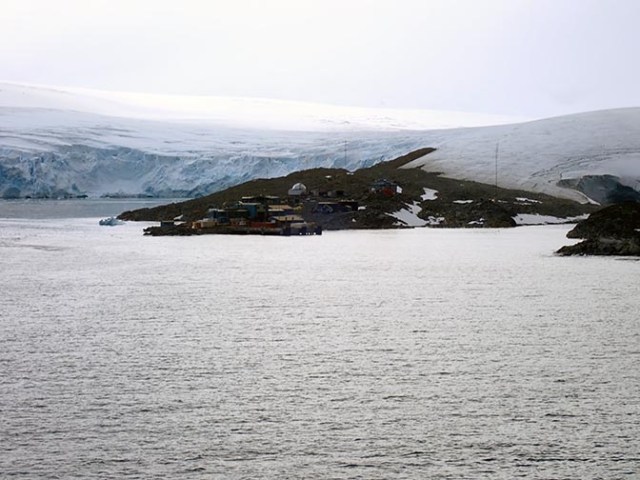
Palmer Station
On the first day we stopped at Palmer Station and brought some people aboard from there. The station has zodiacs, one of which dropped off the visiting crew. This is a United States research station that has been there since 1968.
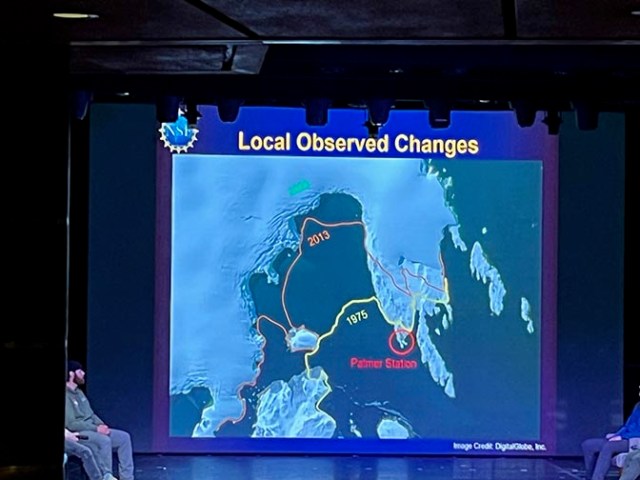
ice retreat at Palmer Station
They spent several hours onboard and gave a lecture about their station at two different times because there’s not enough space in the theater for everyone to go there at the same time. One of the things they showed in their lecture was how much the ice has retreated from the land by the station over the years.
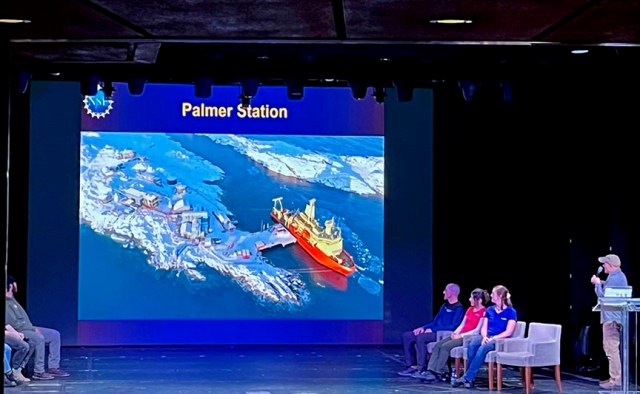
image of Palmer Station shown at the lecture
There were some Adélie penguins on the ice near the station, but from the ship they just looked like little black specks. There are a lot of big ice bergs and some small bergy bits floating around the area. The station is quite large with multiple buildings.
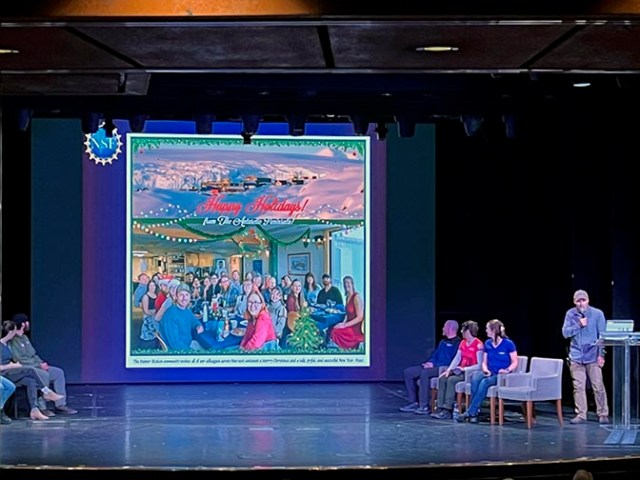
Palmer Station crew
It is located on Anvers Island, the only U.S. station on the continent located north of the Antarctic Circle. The station supports science year-round and accommodates about 20 people in the winter and up to 44 during their summer. Only about 8 or 10 of them came aboard the Oosterdam.
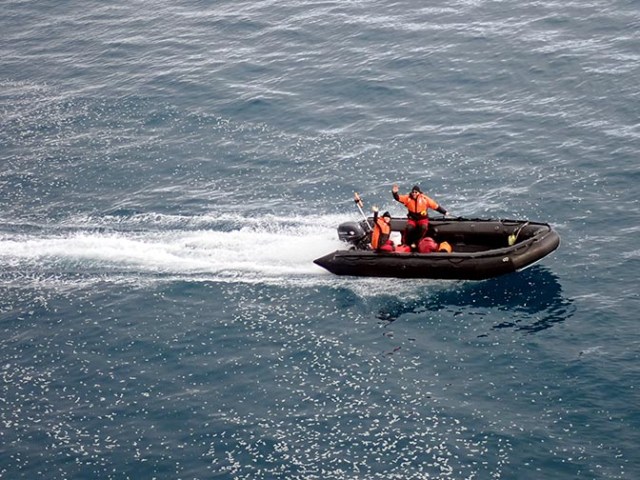
zodiac crew waving at the people on the Oosterdam on their way back to Palmer Station after dropping off some visitors
Once the guests were onboard the ship left the area to do some scenic sailing before returning the people to their research station later in the day. They took back a bit of fresh produce from the ship, a real treat for people living so remotely that they only have fresh things when a supply ship (or cruise ship) comes in.
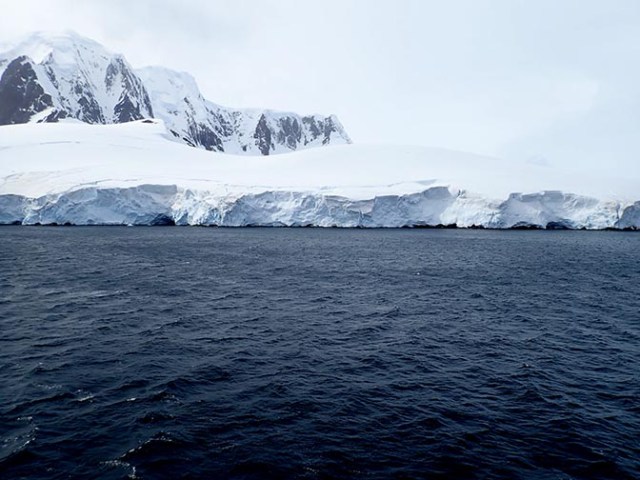
land in the ice
Antarctica is not just ice in this area. There is a lot of bare rock, some with lichen and moss growing on it. The station itself is on bare rock, though there are mountains and ice sheets very nearby. The bay around the station has ice along the rocky parts as well as ice bergs and bergy bits. We sailed into Lemaire Channel, which was announced as one of the most scenic areas of the cruise. It had snow-covered mountains with abrupt edges at the waterline where icebergs calved off.
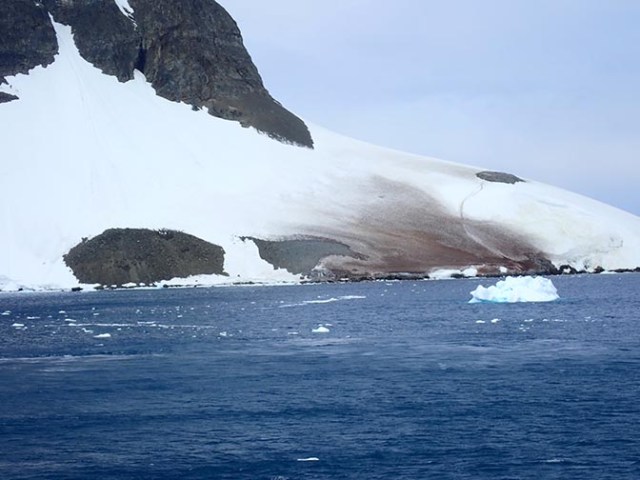
penguin rookery and trail
There were lots of dirty patches with little trails leading up the mountains in the places where penguins live. The dirty patches are caused by penguin poop and their many treks up the mountain make the little trails. The penguins looked like little specs in the snow. Later we saw some swimming closer to the ship. Some people also spotted whales.
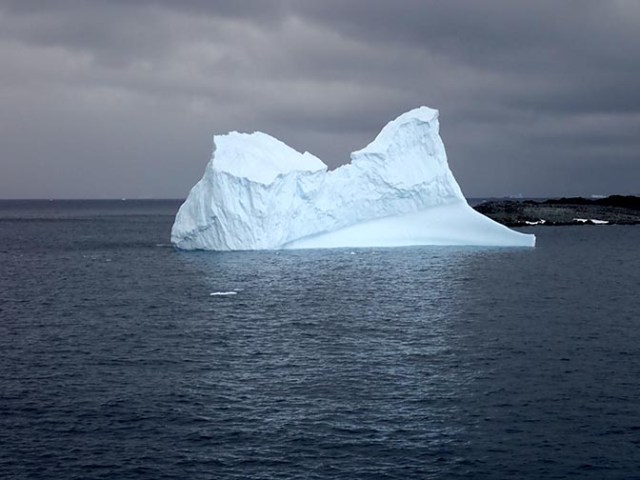
iceberg
Cruise ships normally travel toward their next destination during the night unless they are docking for an overnight in a port. The first night in Antarctica our ship drifted with the icebergs with people on watch to make sure we didn’t hit or get hit by anything rather than trying to sail anywhere among the icebergs and bergy bits in the dark. Since it was summer in the far south the night was very short with just a few hours between sunset and sunrise.
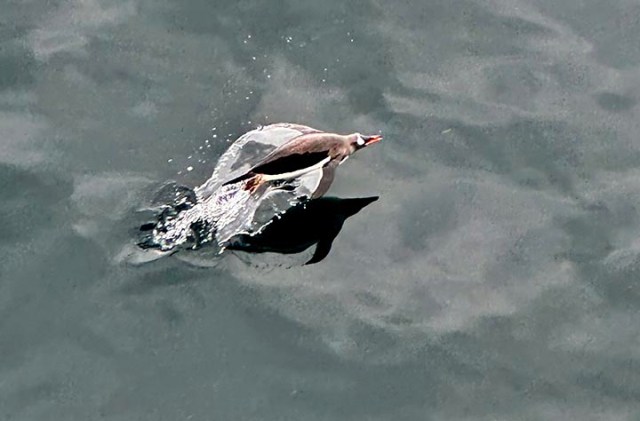
swimming penguin
On day two of our Antarctic Adventure we saw a humpback whale out the window at breakfast, then three penguins swimming along right next to the ship from the balcony in our cabin on the way to Curvervill Island. Penguins swim under the water and then pop out above the water before diving back in and swimming underneath again. They can swim very fast when they want to. Fast enough to keep up with the ship at the speed it sailed there.
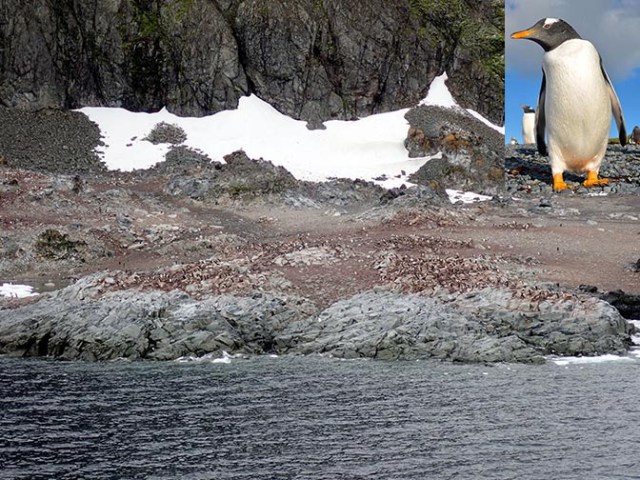
penguin rookery with gentoo penguin inset
At the island we got close enough to a gentoo penguin rookery to see, hear, and smell the penguins. The penguin rookeries there smelled very strongly of penguin poop. It doesn’t break down very fast in such a cold climate. The area was a quite scenic with water so clear you could see the blue ice of the icebergs under the water as well as the white ice on the surface.
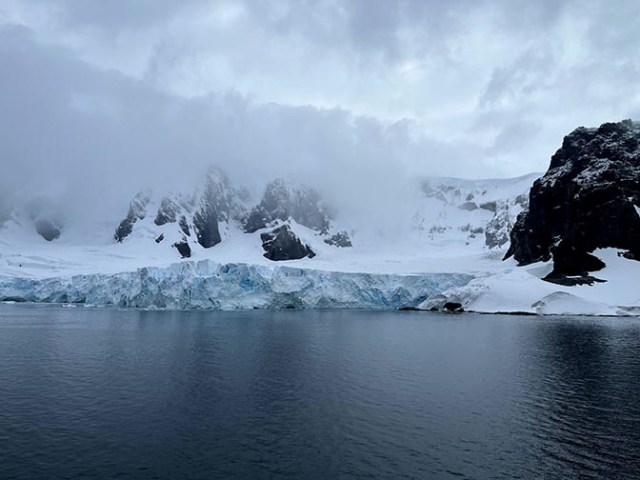
misty mountain and ice
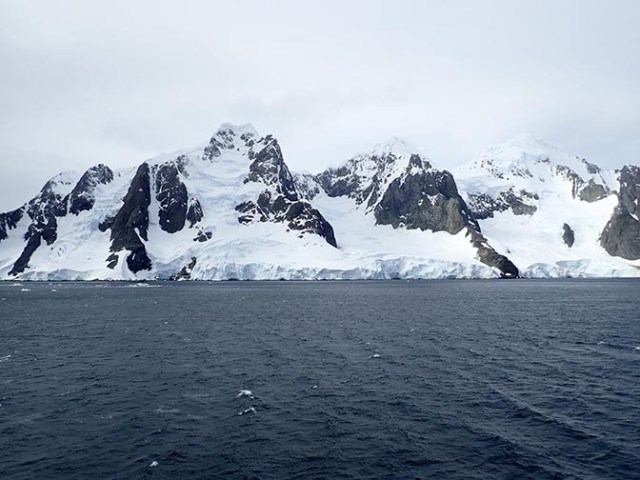
Far from being nothing but ice, the Antarctic Peninsula has huge mountains of snow-covered rock towering over the sea, often with abrupt edges along the water’s edge where icebergs calve off. Here and there bare rock pokes out of the snow along the sides of what otherwise would appear to be nothing but a huge mountain of ice.
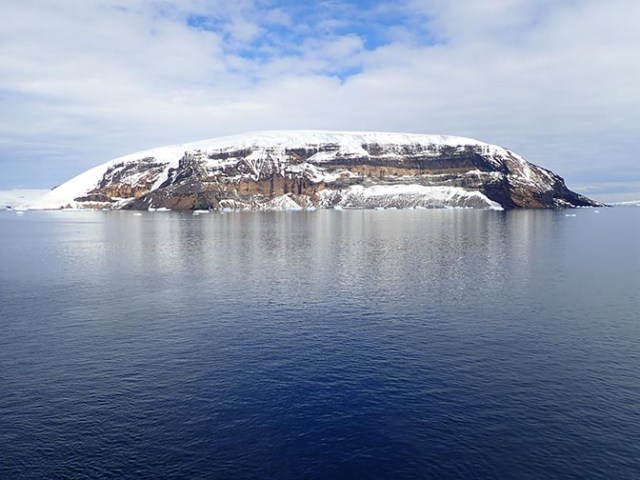
Antarctic scenery
There is also more life than most people expect, not just the things that live in the sea, but also in the moss and lichens visible on what would otherwise be bare rock – sometimes even on just a bit of rock poking out of the snow. There is of course a whole lot of totally bare rock without anything growing on it there as well.
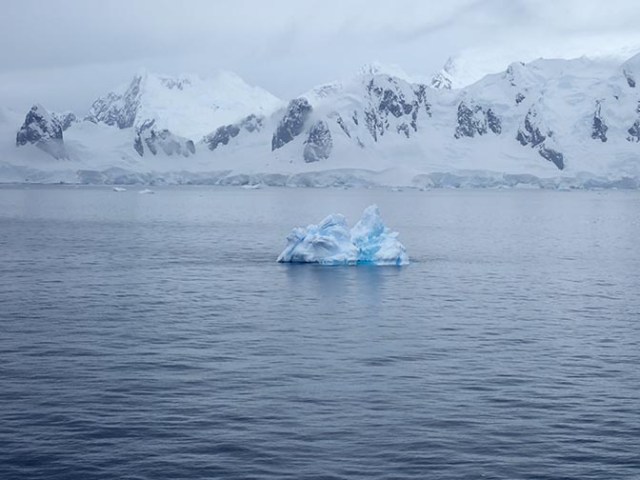
iceberg
Weather in Antarctica can change abruptly whether because a system moved in or because the ship sailed a short distance into different weather. Clear views become misty to just plain white, and even though it’s summer it often snows lightly for a bit. Although more isolated than the rest of the planet, Antarctica is not as isolated as people think. Besides all of the research stations various countries have on land, during the summer season there are many boats in the sea. You may not see many of them, but if you have some sort of navigation app that shows all of the ships in the area there are a lot.
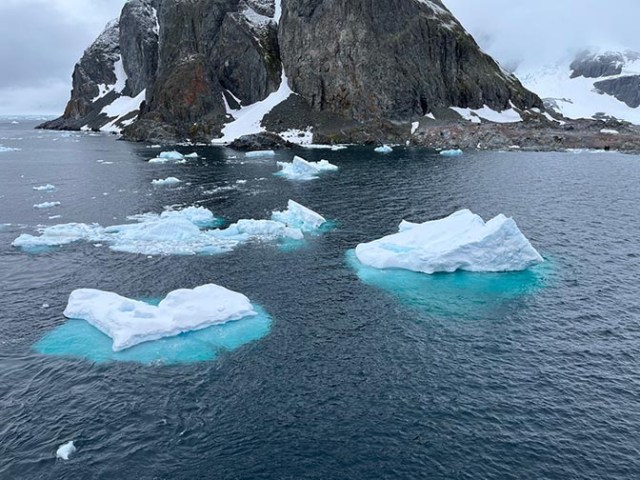
icebergs by a penguin rookery
Our next spot on the Antarctic itinerary was a visit to Dallman Bay, which was all about wildlife. It’s a protected marine environment and an important site for studies on how the warming ocean effects Antarctica’s wildlife. We saw fin whales there and more penguins.
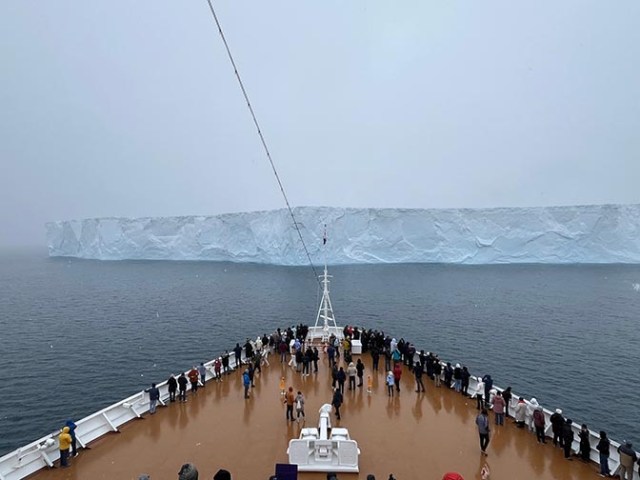
tabular iceberg in front of the ship
Then the ship came upon a large tabular iceberg. Or at least the largest iceberg we had seen so far this journey. It was 60 meters high and longer than the ship is wide. Tabular icebergs are quite square on the edges, and like all icebergs the part you see is only about 10% of the berg because the rest of it is underwater. Large as it was, apparently it was small for that sort if iceberg as they are the ones that break off of the ever-shrinking Antarctic ice shelf.
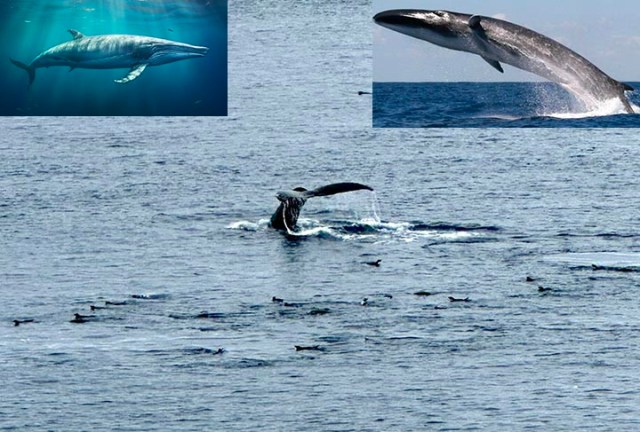
unknown whale tail and swimming penguins with fin whales inset
The last scheduled stop for the day was Charlotte Bay. There was too much ice to venture in too far, but we found curious whales near the entrance to the bay that kept everyone entertained spy hopping and working their way closer and closer to the boat. They surfaced often and one even waved a fin at the entranced crowd. They did not say what sort of whales these were. Maybe fin whales like we had seen earlier or maybe not.
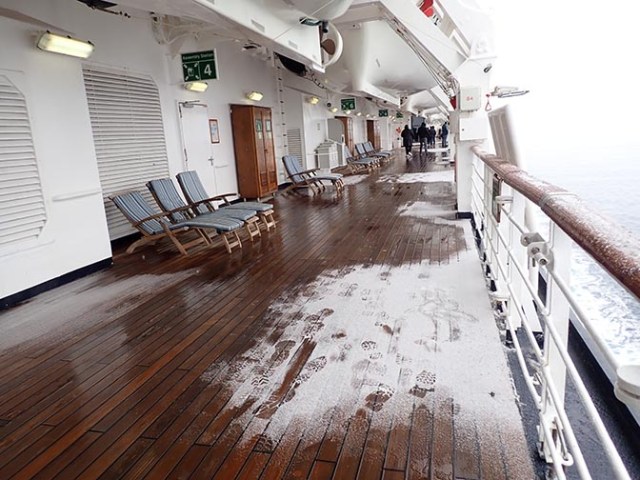
snow on the deck
The third day we sailed into Hope Bay. In the early morning the sky was full of mist and fog. Visibility was poor and the outside decks had a dusting of snow. Later after sailing into Hope Bay the weather cleared.
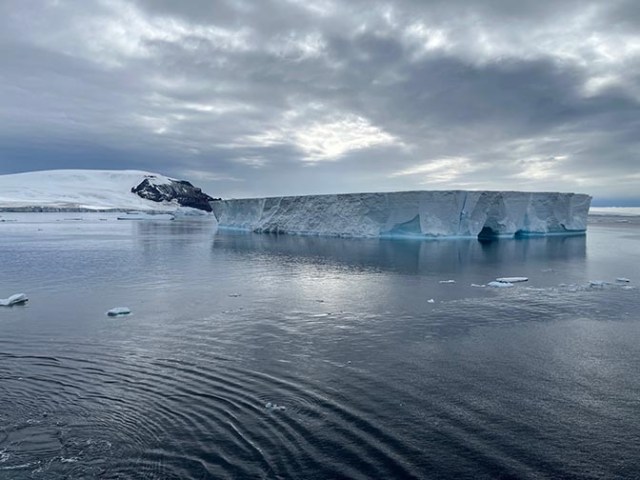
tabular icebergs
We passed by and were surrounded in many large tabular icebergs. Definitely not a good sign for the ice shelf that they come from.
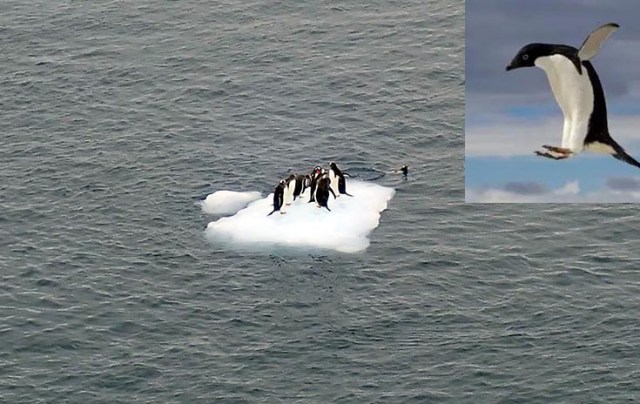
Adalie penguins on ice
There were also lots of bergy bits floating around. At first it was just ice, then a big one floated by with a lone penguin on it. Later just about all of them had penguins. Sometimes a big berg with just one bird and sometimes a small one covered in them. Also big ones with many and small ones with few. These adorable Adélie penguins hop on and off of the bergy bits with ease.
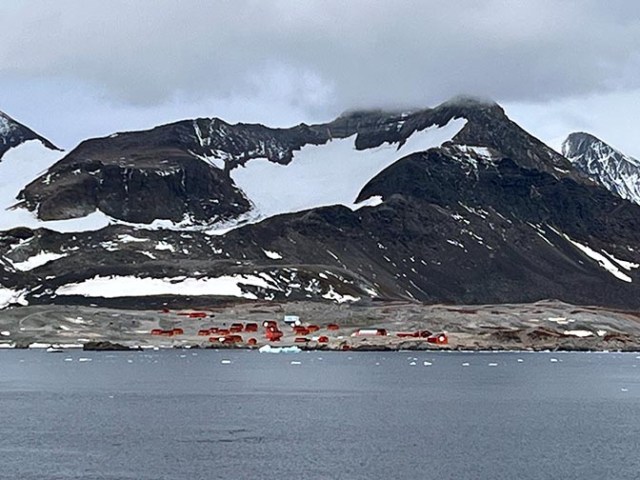
Esperanza Station
The ship stopped near the tip of the Antarctic Peninsula within sight of Esperanza Station, which belongs to Argentina. Over 50 people live there year-round including entire families. It has been there since 1953 and has its own radio station. There are 43 buildings powered by 4 generators. It’s in Hope Bay and esperanza means hope in Spanish.
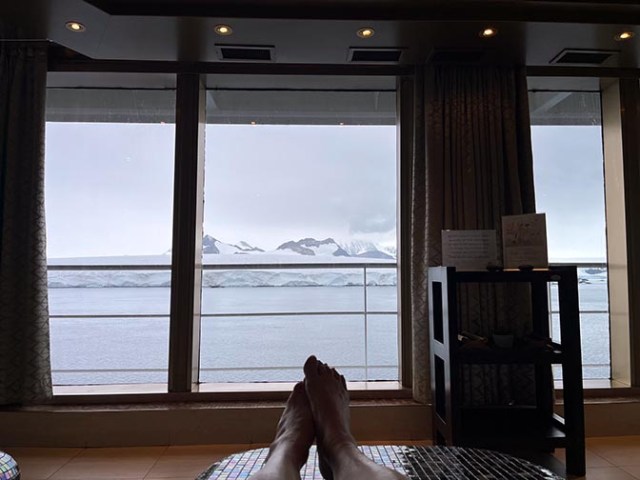
watching the scenery from the thermal suite in the spa
We were surrounded in beautiful scenery with snow covered mountains, huge ice bergs, and many bergy bits. Most of the bergy bits had penguins on them. Humpback whales were feeding off the bow.
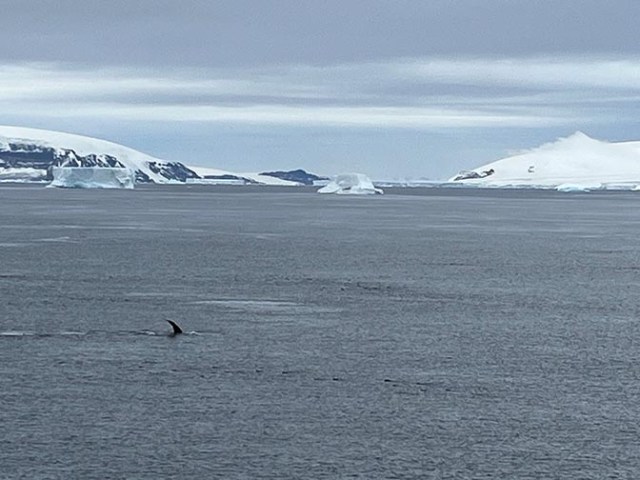
whale fin
Penguins flocked to the water where the whales were. Probably in search of an easy meal from the fish disturbed during whale feeding. Thousands of penguins make a lot of noise, but at least there was no smell since they were all in the water or on bergy bits rather than on land at a rookery.
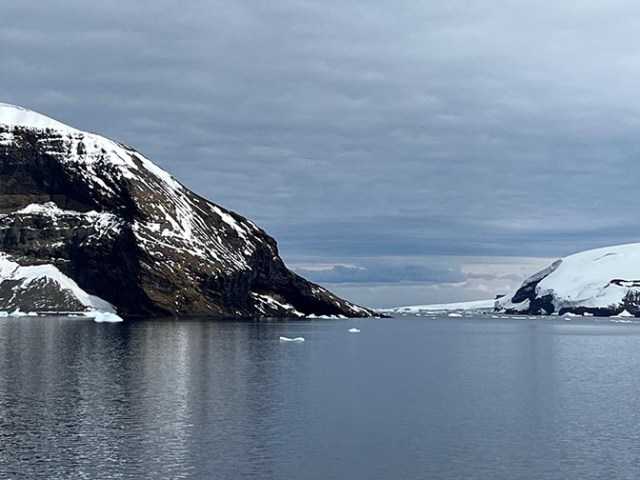
Antarctic scenery
After sitting in that spot for awhile we passed by Esperanza Station, which is next to the rookery were all those penguins come from. The ship passed through a narrow gap with land very close on both sides. We could definitely smell penguins from there. It got misty and cloudy again for awhile, then cleared up. Weather changes frequently and sometimes suddenly there. The scenery is beautiful with lots of ice bergs and snowcapped glacial mountains with abrupt edges along the water where ice bergs calve into the sea.
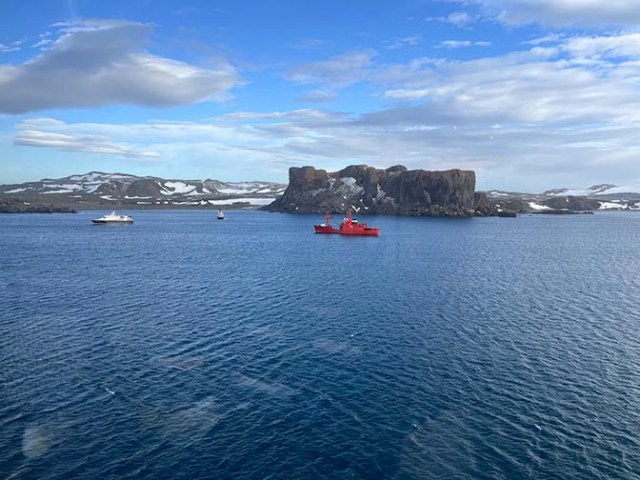
ships in the bay at King George Island
Our last day in Antarctica was scheduled for a visit to Elephant Island where we were to arrive in the morning. Cruise ship itineraries are always subject to change. Instead the ship diverted to King George Island in the South Shetland Islands to evacuate two passengers for medical reasons. The evacuation was a slow process. The ship sat in the bay for quite some time before a zodiac arrived from the Chilean base onshore. It came with a boatload of people, all but two of which went inside from the little dock that folds out from the side of the ship. Two stayed with the zodiac along with 3 ship’s crew on the dock. Eventually one of the patients came out. The one wrapped in a blanket was the only way to tell it was the patient as they did come out under their own power rather than carried or rolled on a stretcher. The zodiac left with about half the people it came with and the one patient. The captain announced that it would return for the other one and it would be 45 minutes to an hour before the ship could get underway again. We were asked not to take photos or videos of this zodiac or any of the evacuation procedure.
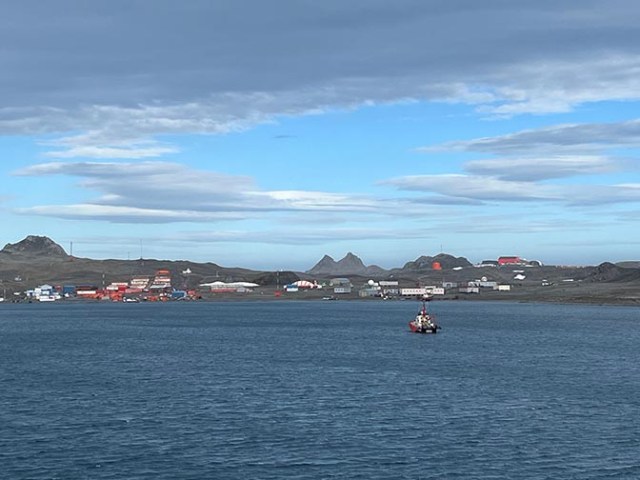
Presidente Eduardo Frei Montalva base on King George Island
People were brought the Chilean base because it has a 1,300m long airstrip where a plane would come later that day to take the evacuees to a hospital in Chile. The base is called Presidente Eduardo Frei Montalva. It’s permanently occupied. Its airstrip provides a lifeline for personnel and supplies for many other Antarctic bases and research stations. The two medical evacuees were the only people from our ship to set foot on land in Antarctica, but I’m sure they wished they hadn’t as their medical situation would have to be pretty dire to evacuate them there.
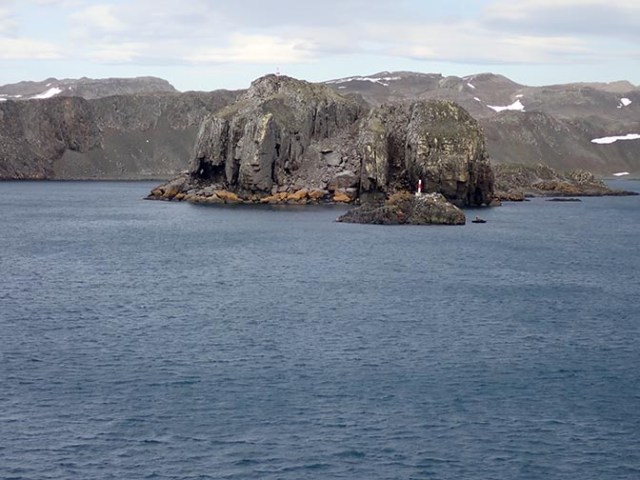
lighthouse near the Chilean base
This was the second place on this cruise we went to that is not on a normal cruise ship schedule and where even the captain and crew had not been before. The first was cruising through some unnamed scenic fjords in Chile while evading a windstorm earlier in the cruise before the ship went to Antarctica.
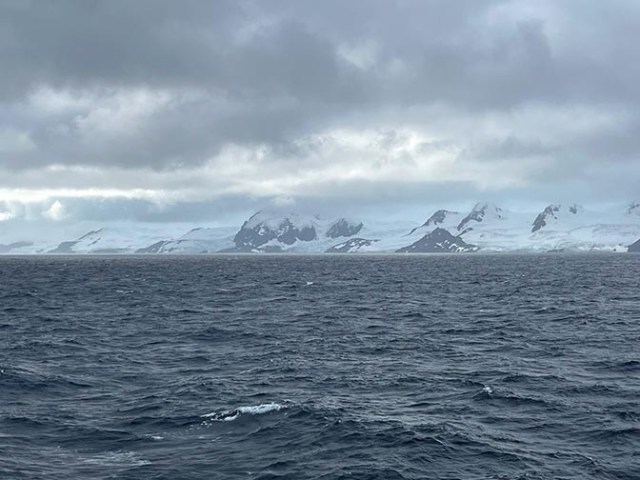
Elephant Island
We finally made what had been the intended destination for the day at Elephant Island in the early evening. Conditions were windy and stormy with fairly high seas, fog, and a bit of snow. Much of Elephant Island was invisible in a fog bank, but we did see a bit when we first got there and we got close enough at Point Wild to see where Ernest Shackleton’s ill-fated Endurance expedition ended up.
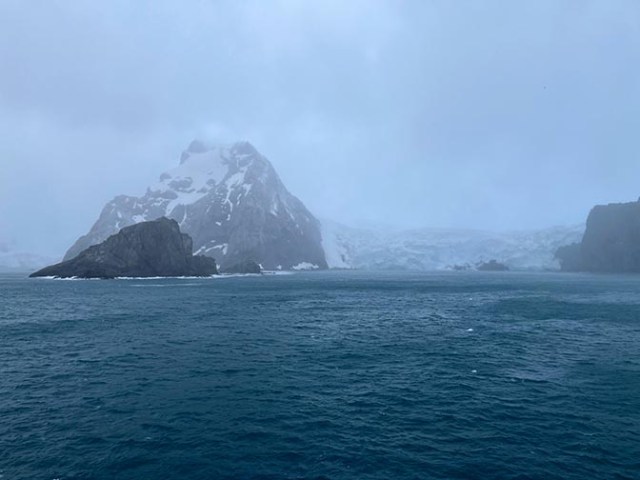
Point Wild
After having been trapped in the ice in the Weddell Sea for 11 months their ship broke up and sank so the 28 men escaped in 3 lifeboats eventually making landfall on Elephant Island after having floated on an iceberg for 5 months. Knowing rescue was unlikely a few of them set out in one of the boats for a 800-mile journey to a whaling station on South Georgia Island. The 22 men left behind used the two remaining lifeboats overturned for shelter and lived on penguins and seals with a small blubber burning stove for 4 1/2 months awaiting rescue.
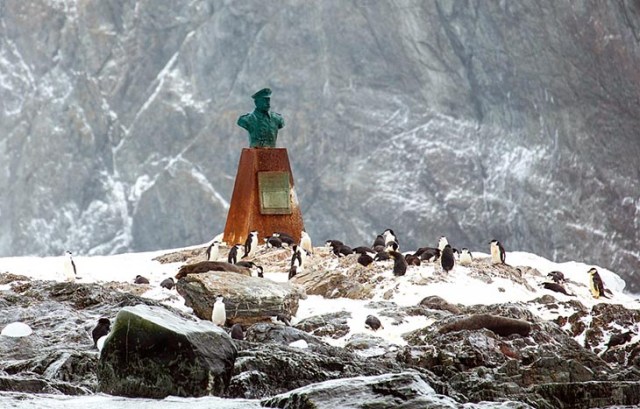
statue on Elephant Island (and penguins)
There is a statue there of Captain Luis Pardo who eventually rescued them in 1916 after Shackleton’s several failed attempts. We followed the route of Shackleton’s lifeboats along the coast of Elephant Island. Although visibility was poor due to our stormy conditions and high winds we were told it was worse when they arrived.
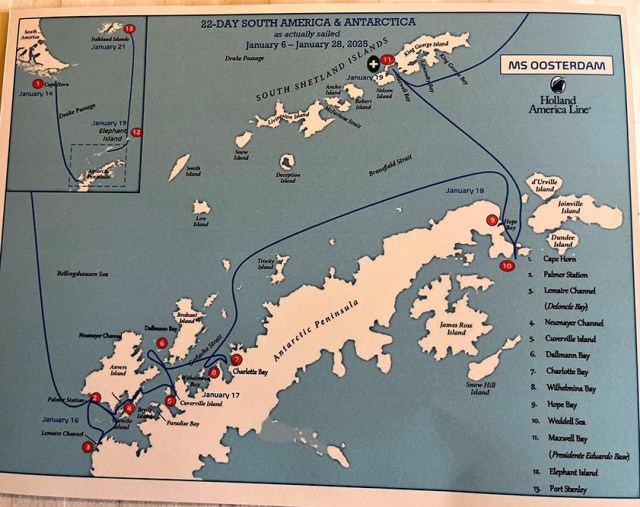
map of our actual journey
After passing Point Wild our ship turned north and headed toward our next stop at Port Stanley in the Falkland Islands with the Antarctica part of the journey finished.
Copyright My Cruise Stories 2026


A place I have often dreamed of visiting. Loved all of the pictures, info and historical context here. It sounds like the area is a bit more “busy” than I might have thought – more ships out and about. I do hope the wildlife can adapt as best it can to the environmental changes going on.
I was surprised at how many ships and research stations there were in Antarctica too. Summer there certainly felt a lot more like winter than summer with all the ice and snow. Cold, but beautiful. Definitely not the only place on the planet experiencing climate issues, but probably the one most likely to affect the rest of the world since the shrinking ice shelf is a major contributor to rising oceans. Definitely a place worth seeing even if only from the decks of a ship. There are small ship adventure cruises that take people to shore, but those cost a whole lot more.
Anartica is soul changing. Great photos.
Well said and thanks.