Food on Holland America Zaandam

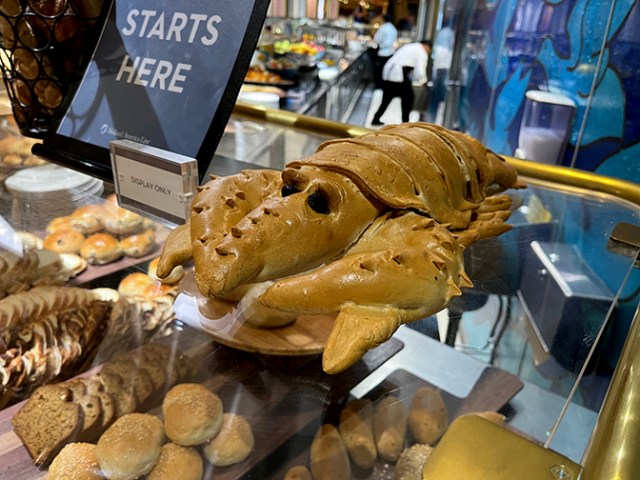
bread lobster decoration at the breakfast buffet

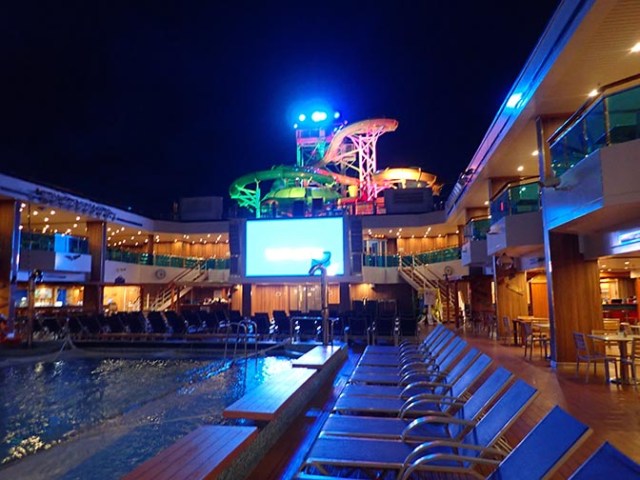
Holland America Zaandam doesn’t have an extensive variety of eateries like some huge ships have, but there’s plenty to eat and nobody ever need go hungry while sailing on any cruise ship, even a smaller one like the Zaandam.

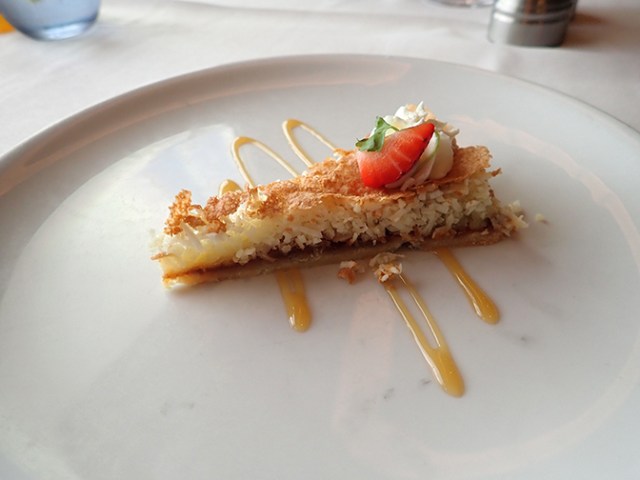
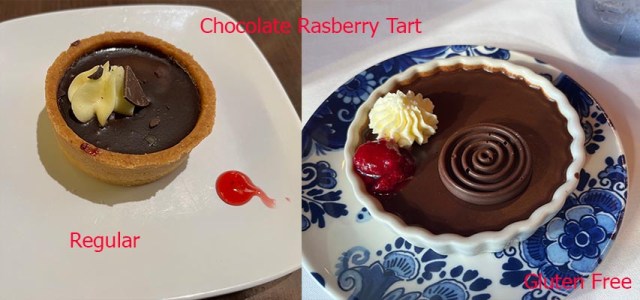
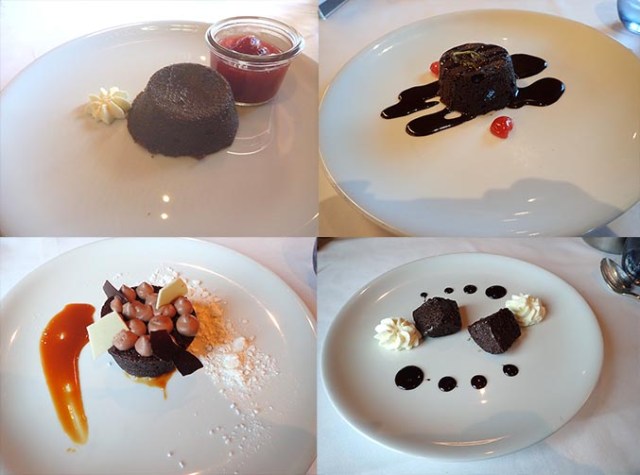
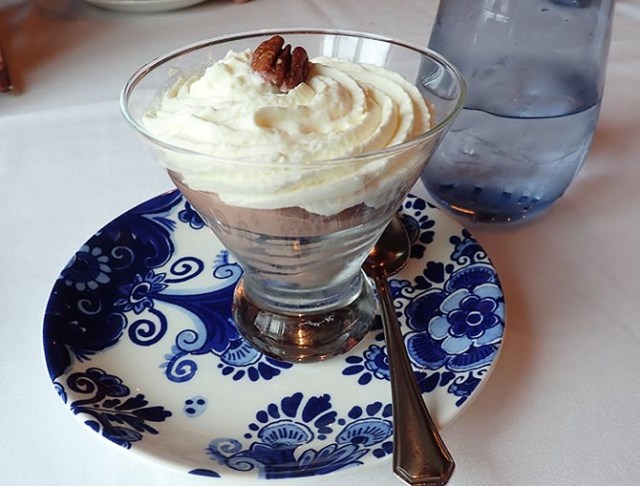
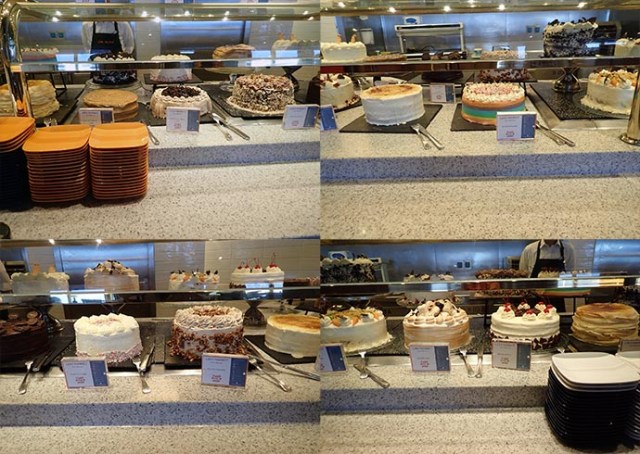
best dessert of the cruise

Food that is included in the cruise fare can be found in the dining room, the buffet, and in the poolside grill and taco bar. Between them all there is a variety of options available.

flourless chocolate cake in the dining room

There are just two pay-extra eateries on the Zaandam, the Pinnacle Grill and Canaletto. These are the standard premium restaurants on Holland America’s ships.

Pinnacle Grill

The Pinnacle Grill has its own space, which is open during lunch and dinner. Suite guests can have breakfast there, but it’s not open for everyone then. Lunch there is about half the price of dinner. The Pinnacle Grill is Holland America’s upscale steak house, though it offers other options besides steak. If you want to pay for it in the dining room you can try some of the Pinnacle Grill’s meals without actually going there, but if you’re going to pay extra for food on a cruise ship you might as well actually go to the place and get the whole experience rather than just an expensive plate of food in an otherwise free dining room.

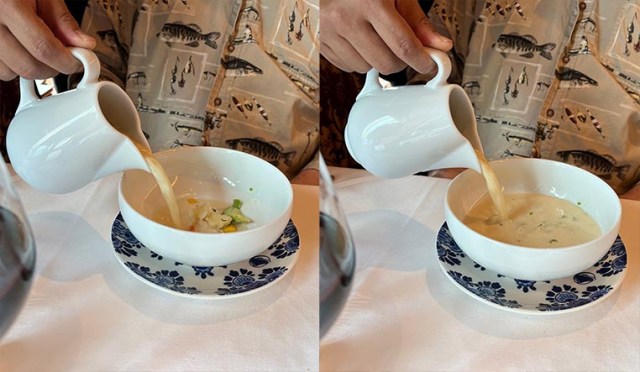
appetizer in the dining room

Canaletto is pretty clever in that it’s located in a corner of the buffet and only used as a separate restaurant at dinner. This works out well because the seating is available for people eating at the buffet for breakfast and lunch when a lot of people eat there, but then sectioned off during dinner for their specialty Italian restaurant when less people eat at the buffet so they don’t really need the extra seating. It saves from having a space on the ship dedicated just to a restaurant that is only open during dinner.

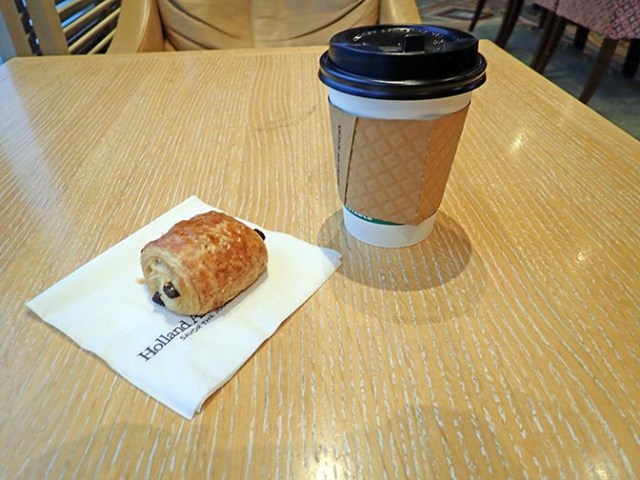
Explorations Cafe coffee bar

We did not eat at any of the specialty restaurants on the Zaandam, unless you count the coffee bars of which they have one in the Explorer’s Cafe on deck 5 and another in the Crow’s Nest on deck 9. We did occasionally get specialty coffee for John and dairy free hot chocolate for me in those places.

dining room eggs benedict

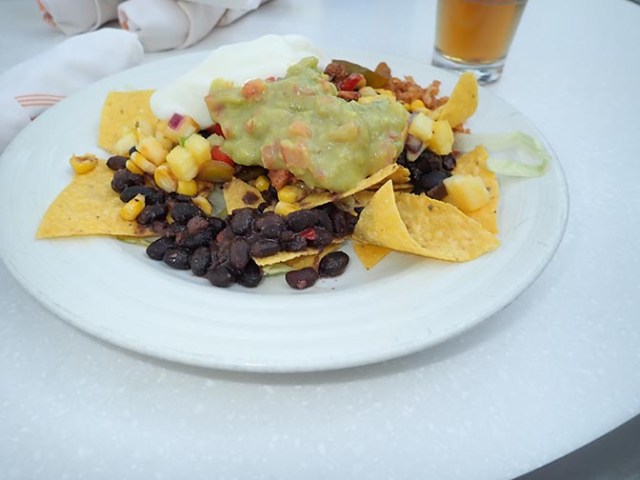
We also didn’t try the pool grill, though they do offer both gluten free and non-beef options. We did have lunch at the taco bar next to the pool grill one day, which has a variety of serve yourself toppings and fillings to choose from, and chips, tortillas, or taco shells to put them in or on.

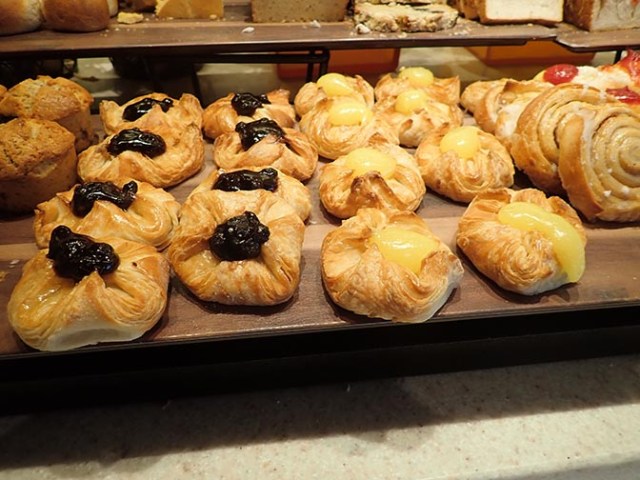
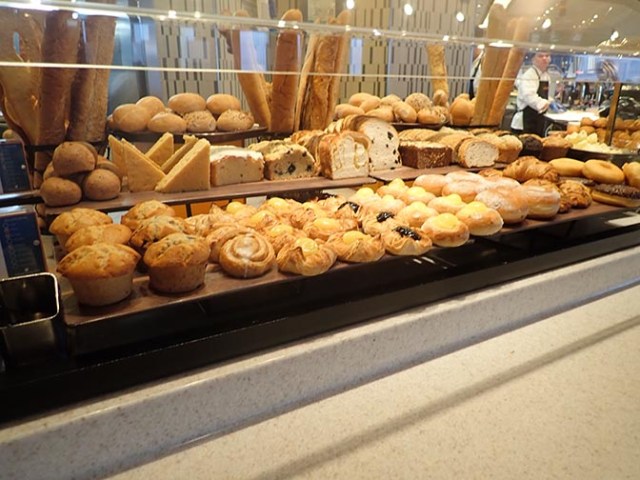
pastries at the buffet

The buffet did not make anything gluten free on site, but they did have some pre-made items available for the asking. Different stations serve different things with breakfast having stations for eggs benedict, omelets, or waffles as well as grab and go pastries, and the main line with things like scrambled eggs and breakfast meats. Fruit, yogurt, parfaits, and hot and cold cereals are also an option at breakfast.

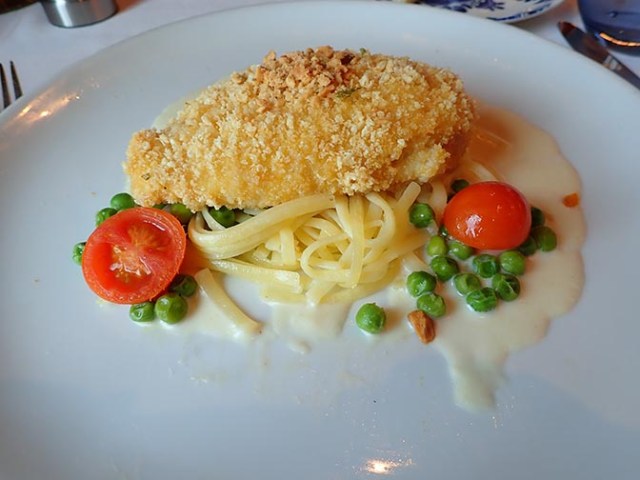
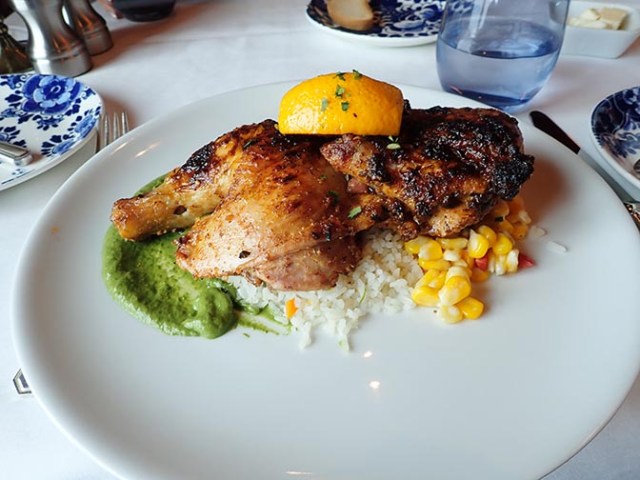
parmesan crusted chicken

Lunchtime in the buffet had a pizza station, sandwiches, various hot dishes that changed from day to day, some sort of distant lands option, a main line with meat and sides, and of course desserts.

appetizer at the Alaska brunch

The dining room had limited options for breakfast or lunch, but they did change the lunch menu daily. One day they had an Alaska brunch, but even there if you wanted anything gluten free it had to be ordered the night before. They did not make anything as simple as gluten free pancakes on the spot without a pre-order.

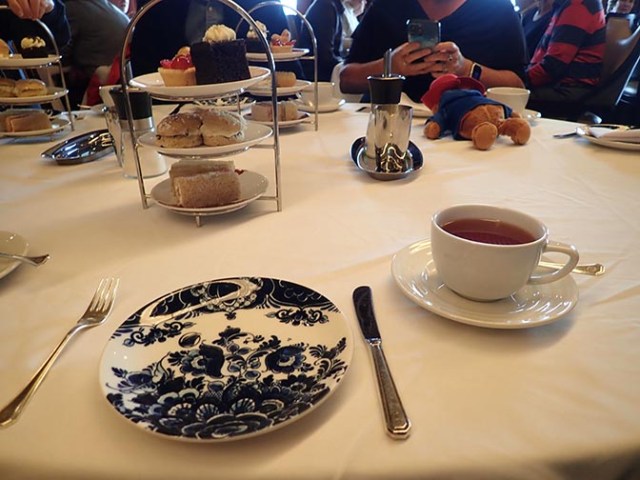
Dutch Tea

The dining room served tea each afternoon. They called it Dutch Tea, but it seemed like a basic afternoon tea with little towers of little tea sandwiches, scones, and pastries. Each table had a little tower on it that people there could take things from. Each item was different. They would bring something gluten-free on request at the tea without pre-ordering, but it didn’t have all the things like the normal one in the photo above has.

shrimp taco

Mostly we had breakfast and lunch in the buffet and dinner in the dining room, which is pretty typical for a lot of cruise ship passengers. We did have lunch in the dining room one day. I ordered a salad which came with some sort of balsamic vinegar dressing. I don’t know what was in it, but one bite of that dressing set me into a coughing fit with my throat feeling like it was closing up and I couldn’t hardly breathe. Guzzling a bunch of water eventually cleared things up, but needless to say I did not eat any more of that. During the rest of the cruise with any other salads that came with a little square pot of brown dressing I avoided the dressing even if it didn’t look exactly like that first one. I haven’t eaten any brown salad dressing on a Holland America ship since.

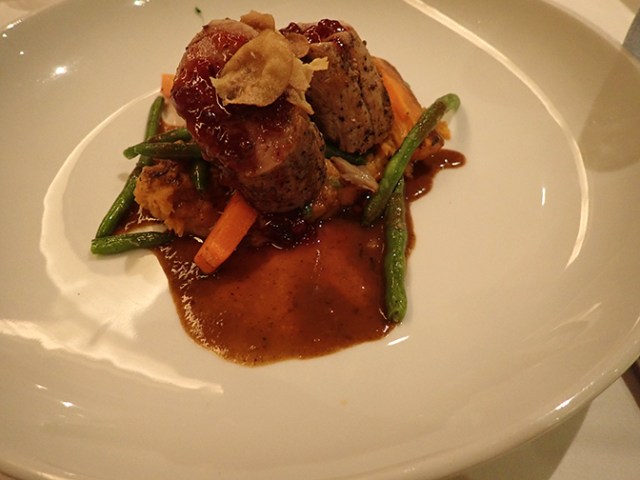
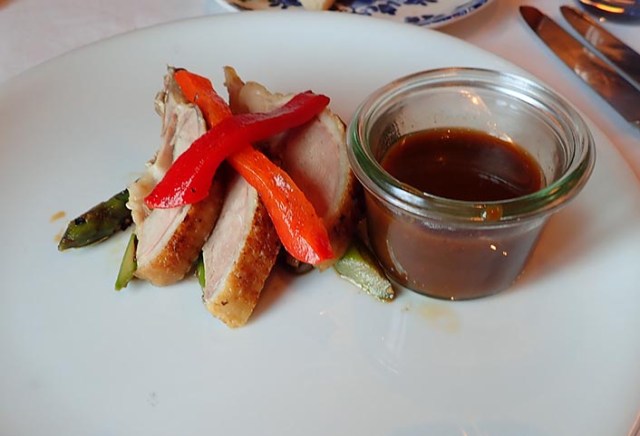
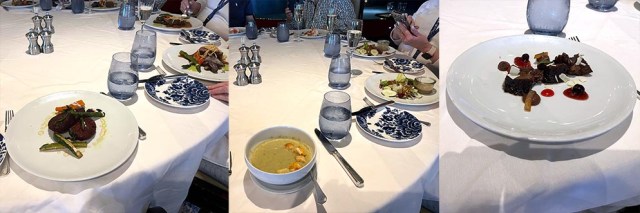
pork dinner

Other than the scary salad dressing the food was good. There were a variety of choices every night. A lot of the options involved seafood which is not my favorite thing, but most of the other people at the table generally ordered it. There was always some sort of poultry or pork and you can pick the main from one dish and have it with the sides from a different one if you ask, which was nice because what comes with their everyday roasted chicken is not as good as things that come with meals that are only offered once.

lamb chops

When we first got on the ship the itinerary in the app was not showing any formal nights, but they ended up having one formal night and one orange night. Orange is not a color I generally wear, but I did have one shirt that had a bit of orange in a dragonfly printed on it and John had one that had orange in some ducks so that was what we wore. Some people went all-out orange, but most were more subtle. They did not serve lobster at the formal night, though it was on the pay-extra for stuff from the Pinnacle Grill menu every night.

porpoise (internet photo)

Our most memorable dinner was the last night of the cruise. Our table was by the window, but we were on the inside end of it with two people between each of us and the window. It was somewhat of dinner and a show with orcas appearing outside the window early on in the meal, followed a bit later by humpback whales, and finally by a pod of porpoises. The couple on the seats next to the window had their phones out filming the various creatures. The lady in the middle on my side of the table was quite large and popped out of her seat looming directly over the poor lady by the window and just about completely blocking my view any time there was anything worth seeing so I didn’t see the orcas at all and just one spout from the humpbacks. The porpoises were right outside our window playing in the ship’s wake repeatedly popping up completely out of the water in sets of 3 so they were fun to watch even through just a small spec of window space not blocked by other people. They were pretty small so it was easy to see the entire animals, even the whole group at once. Unfortunately we couldn’t take any photos since other people had all the window space. Figures a night we weren’t seated next to a window would be the only night there was any marine animal action to see.

Copyright My Cruise Stories 2025
Posted in Holland America, Shipboard Life, Zaandam | Tagged , , , , , , | 1 Comment

Cisternerne

columns in the water

When looking up things to do before our visit to Copenhagen on the way to our Viking river cruise out of Budapest, I came across a place called Cisternerne. It’s an art exhibition inside of an old cistern. It wasn’t the art I was interested in though, it was the fact that it was supposed to have stalactites like a cave – and I like caves.

pathway through the arches

The Cisterns were once used as a reservoir for Copenhagen’s drinking water. They could hold over 4 million gallons of water. The cisterns were built in just 3 years starting in 1856. By 1933 they were no longer in use and eventually drained in 1981. In 1996, the former underground water reservoir was turned into an exhibition space. It is now a part of Frederiksberg Museums, used as a venue for art exhibitions and other events where the uniqueness of the location is a major attraction.

phone light through archways

Located under Søndermarken Park, the Cisterns is the only dripstone cave in Denmark. The natural formation of stalactites and stalagmites commonly happens in abandoned concrete structures, as they have formed within the cisterns. These types of geological formations are quite fragile, so visitors are not supposed to touch them. Online information said the formations here are particularly diverse and breathtaking for this type of feature and are expected to enhance the viewer’s experience when viewing the art exhibited there. All of the exhibits pictured on various websites at that time included visual artworks – and light inside the cisterns. Now there are more dark ones so they must have decided they like doing dark exhibits there.

columns in the water

This all sounded quite good when investigating the place online. Much of the info about Cisternerne online showed walkways through the cistern with the art displayed on the walls as the major attraction. That is the main focus of the place, but it did say that you could see the stalactites too, which was what we went there to see.

geese in the park

We took a taxi from our hotel, as it was not in the same area of the city where we were staying. The taxi dropped us off in front of the zoo and the driver pointed to a park across the street saying that was our destination. We walked down a snowy trail in the park not really knowing what we were looking for. There was a flock of geese that looked much like Canadian geese in a field. After a bit we came across a couple glass sort of pyramids in the middle of a field, the first structures we had seen. One of them had a sign out front saying Cisternerne and a sign on the door saying it didn’t open until 11am.

entrance to Cisternerne

The entrance is through that glass pyramid in middle of the park. Exhibits there change periodically. The guy selling the tickets said something about the exhibit at that time being some sort of American artist, but we told him we were there to see the cave formations rather than the art and didn’t pay attention to who he said it was. He replied that the stalactites were not highlighted in this exhibit, which was one of sound rather than sight. He said it would be dark inside and the music loud, but we might still be able to see some stalactites after our eyes got used to the dark. That was quite disappointing to hear, but we had come quite a way from our hotel to see the cave so we went in anyway.

pathway in the dark

We went in when it first opened and though there was a group of school kids waiting to get in when we got there, they must have had some sort of lecture or something before they were actually allowed inside because we wandered around for awhile with nobody else inside before any of them showed up.

entry and exit path

Once we got down the stairs and through the door it was very dark and the ticket guy was not kidding about the loud music. It was very loud. In this particular exhibit the music was the only art. There were no pictures or paintings of any kind and also no light at all except the pathways you walk on, which were lighted so people could follow the path through the cistern. There is water everywhere that the pathways are not so it is important to stay on the path. Since it was so dark that the water only looked like dark space you couldn’t even tell it was water. Of course anyone straying off the path would know instantly that it was indeed water. The main pathway between the two stairways was lighted on both sides while the rest were just lighted down the middle.

pathway

The pathways were made of metal and hovered just above the water. They wound through the cistern with lots of corners and parallel pathways. In between there were columns and sometimes stone arches.

what the phone sees when the naked eye sees nothing but darkness

Most of this was not visible in the dark, but phone cameras are pretty good about picking up things the eye can’t actually see. There were no railings or anything on the sides of the pathways so following the light to stay on the path was the key to staying dry.

near the ceiling of the outer edge of the cistern

The sides of the cavern have arches with walls that looked to slant down into the water beyond the arch, though it was hard to tell in the dark. In this particular exhibit there was not much to see other than the lighted pathways. Features like columns and arches could only barely be seen in the dark, but the phone photos definitely show it much better than what could actually be seen. I guess the purpose of this exhibit was just to wander around and listen to the music which would have been disappointing even if we hadn’t been there intending to see cave formations since as well as being way to loud it barely even sounded like music. Add a few ghostly projections floating around and it would have been suitable for Halloween. Especially considering pretty much all that we could actually see was the lights on the pathways, not much of the other things that the phone pictures show.

stone arch

Cisternerne didn’t show up on any of the tourist maps we found in Copenhagen, but the zoo directly across the street did. It is a bit of a walk through the park to find the two small glass pyramidal shapes above ground, one of which is the main entrance. The other was closed while we were there and inside of that one the stairway leading down to the cisterns was blocked off.  The two are in sight of each other though so it’s a short walk from the closed one to the open one. It’s possible that the one that was closed when we were there may be used as an exit during busier times or for different exhibitions. It would make sense to use that side as an exit so people wouldn’t be going both directions on the entry stairs, though I have no idea if they actually do that. If you come by taxi the people at the zoo can supply numbers to call for a return taxi when you are ready to leave. They even let us wait inside out of the cold for it to arrive. Busses go by there too. The closest train station is called Valby located 1.3 kilometers away.

Copyright My Cruise Stories 2025
Posted in Day Trips, Europe | Tagged , , , , , , , | 2 Comments

Viking Longship Cabins on Viking Skirnir

wraparound balcony on the Explorer Suite

Viking Skirnir is one of many of Viking’s longships sailing Europe’s rivers. Sister ships to the Skirnir have identical deck plans. There are no inside cabins on a longship, but the below water level cabins just have long narrow windows near the ceiling since the rest of the cabin is underwater. Tall people can see out of the window from the floor, but shorter people will need to stand on the bed or a chair in order to see out. There is a wide ledge by the window that is useful for storing things, but also eliminates floorspace from the cabin.

balcony from balcony cabin

All cabins have a closet with hanging space and shelves. There’s a few drawers too and room to store suitcases under the bed. The shower has a small clothesline. Sending laundry out for the crew to wash is expensive. You can wash a small amount of clothing in the little sink. The line doesn’t hold much, but there is a bit of structure in the shower that can be used to either hang things on or tie a clothesline to. Most of it is on one side, but there’s a bit on the other side to tie the other end of a line.

standard bathroom

Some walls in the cabin are magnetic enough to hold up magnetic hooks.  The wall under the window in the below water level cabins comes in useful for that. Cabins on higher decks have glass on the outer wall which is great for a view, but leaves them only the outer wall of the bathroom for any magnetic needs.

outlets on one side of the bed in a standard cabin

There are 4 sets of outlets with one American and one European style outlet above each nightstand and at either end of the long desktop that runs from the closet to the end wall. One of the European ones has the charger for the audio receivers for the shore excursions plugged into it. The ones by the bed have switches above them for controlling the room lights from the bed. A bottle of water and an ice bucket are provided. There is an ice machine in the hallway for anyone who wants to get some. Cabins are cleaned twice daily. Beds can be split into two as on ocean ships.

standard cabin – below water level except for the window

Standard Cabins

We stayed in a standard cabin, which are found on deck 1. Only the little slit window is above the waterline and the rest of the room is below it. These are considerably less expensive than cabins on higher decks. On a wintertime cruise the room was very cold when we first got there, and it seemed to take days to get the heat to go up a degree or two. It gradually got slightly warmer, but was pretty cold in there for the whole trip as the actual temperature never reached where the thermostat was set. Public areas in the rest of the ship weren’t exactly warm either, but not as cold as our room. Whether it was because they keep the ship cold or because of the cold water on one wall of the room I can’t say. The warmest place was the bathroom because it had a heated floor. The cabin had very small nightstands on either side of the bed and a stool under the desk. For anyone who can afford it, I’d recommend booking one of the above water cabins. Besides the chill in the standard cabins, you hear the ship’s engines. The movement of the ship through the water is also loud sometimes. Even when it is docked you can often hear sounds from other ships passing by. You also definitely know when the ship goes through locks, even if it is pitch dark in the room in the dead of night because of the noises passing through the water. These cabins are listed as 150 square feet, but that is more likely square footage of the ceiling area rather than the floor since the ceiling extends out to the window, but the wide ledge under it shrinks the floorspace by about a foot and a half across that side of the room.

French balcony cabin

French Balcony Cabins

Deck 2 has French balcony cabins down one side of the ship. There are also a few on deck 3. These cabins have sliding glass doors that open for fresh air or window free viewing, but they do not have an actual balcony outside of those doors. Other than being above the water and having a view, the interior is similar to that of the below water level cabins. Views from deck 2 are just above water level. Though the square footage of 135 square feet makes these sound smaller than the standard cabin, they really aren’t since the shelf under the window takes up quite a lot of what would otherwise be floorspace there.

balcony cabin

Balcony Cabins

Balcony cabins are found on decks 2 and 3. These rooms have an actual small balcony outside of the sliding doors with chairs and a small table. These rooms are a bit bigger than the below water and French Balcony cabins at 205 square feet. They have space enough for a bigger nightstand and a chair besides the stool underneath the desk.

Veranda suite living room

Veranda Suites

Veranda suites are more spacious than regular cabins at 275 square feet. One side is set up as a bedroom and the other as a sitting area or living room.

bedroom of veranda suite

The bedroom has a French balcony and the living room has a couch, chairs, and table as well as a full veranda with sitting area. The suites have a larger bathroom than the other staterooms.

explorer’s suite living room

Explorer Suites

There are just 2 explorer suites at the back of deck 3. These are significantly larger than the Veranda suites at 445 square feet and have wraparound balconies from the back to one side of the ship. They also have a French balcony in the bedroom and a dressing area between the bedroom and bathroom.

Copyright My Cruise Stories 2025
Posted in Europe, Shipboard Life, Skirnir, Viking | Tagged , , , , , , | Leave a comment

Puerto Montt, Chile Cruise Port

Puerto Montt sign by the tender dock

Puerto Montt is a city in southern Chile. It’s the capitol of the Los Lagos region and serves as a gateway to the Lake District, the Andes Mountains, and the Chilean part of Patagonia. It has a population of over 280,000.  On a clear day you can see several nearby volcanos from in or close to the city. Some of them are still active.

volcano peeking through the clouds

Puerto Montt got its name from the president of Chile at the time it was first settled, whose last name was Montt. Like other neighboring towns, settlers were invited in from Europe and many came in from Germany. Old Bavarian German type architecture can still be seen in some of the buildings in this area of Chile.

view of Puerto Montt from the ship

Money in Chile is the Chilean peso, abbreviated as CLP. USD $1 is equal to CLP $942.69   so things priced in pesos look a whole lot more expensive than they actually are. That’s down from the $979 it was at the time of the cruise just a few months ago though as American dollars are currently losing value compared to other currencies of the world.

painted building at the port

The climate in Puerto Montt is oceanic with mild winters and cool summers. It rains frequently, especially in autumn and winter – which are opposite when those seasons occur in the northern hemisphere since Chile is in the southern hemisphere. It is warmest from December to March. Average temperatures vary seasonally from 39°F to 68°F and rarely dip below 29°F or rise above 75°F. Annual rainfall is about 67 inches per year and it rains at least slightly about 222 days of the year.

tender at the dock in Puerto Montt

The port is a small tender port. Tender ports are where the ship anchors offshore and brings people to the dock in small boats called tenders.

inside the port building

There is a small shopping area with booths of locals selling a variety of things in the port building. It also had a little tourist information stand. Upon return to the ship scanning of people’s belongings is done at the port rather than on the ship, or at least it was on our visit.

ship and tender

Buildings in the part of the city nearest to the port tended to look old and often unkempt and there was some graffiti. In areas a bit farther away things looked much nicer in many places. There is not much to do in the immediate area near the port so it’s a good idea to book something in advance.

seals on the bulbous bow

There were seals swimming around the ship when we first arrived. By the time the tenders came back from shore there was a pile of them resting on the ship’s bulbous bow.

Copyright My Cruise Stories 2025
Posted in Holland America, Oosterdam, Ports of Call, South and Central America | Tagged , , , , | 3 Comments

Moorea Cruise Port

Noordam in Moorea

Bahia d’ Opunoha or Opunohu Bay is where cruise ships often anchor when visiting Moorea in the Society Islands of French Polynesia. Passengers tender to a pier near the small remote town of Papetoai. There isn’t much near the pier so a tour or taxi is required to leave the area. Some ships may still Anchor near Cooks Bay and tender to a dock there. That used to be the main port, but now most ships go to Opunohu Bay, which is where Holland America Noordam went on our cruise across the Pacific Ocean. There is not much public transportation on the island.

inside the U of the tender pier

The tenders dock on one long side of the outside of a U-shaped pier. Excursion boats dock inside of the U part. The outside of the short end and the other long side are up against land. At our visit next to the tender dock there were 2 areas with local crafts for sale, a restroom, and locals near where people exit the tender offering last-minute water-based tours. More locals farther back near the taxi stand offered land-based last-minute tours.

last minute water tours at the pier

The internet said there may be rentals of scooters and bicycles near the tender dock as well as shuttles to beaches or a pearl factory. I did not see any of those things, but since I went straight from the tender to a snorkel boat on the other side of the dock when we got there, and then from the snorkel boat into a very long line for the tender when we got back I barely looked around the port area so there could have easily been things there that I did not see.

craft booth at the pier

There are ferries between Moorea and Tahiti, but there is not a ferry dock near the Opunohu Bay cruise port on Moorea. (There are ferries near the cruise dock in Papeete, Tahiti). Moorea is a volcanic island just under 52 square miles in the Windward Islands group. The highest point of the island is Mont Tohive’a at 3960 ft (1207m). Money is the pacific franc, which is tied into the euro with the exchange rate always set at 1 euro per 119.33 F. American dollars (but not coins) are generally accepted, but not necessarily at a favorable exchange rate. Most places will take credit cards.

map of Moorea

The island is the remains of half a volcano with 8 peaks and two symmetrical translucent bays, Cook’s (Paopao) and Opunohu. The name means yellow lizard in Tahitian. From overhead the island appears roughly as the shape of a heart and is one of the top honeymoon destinations near Tahiti. Popular activities in the lagoons include snorkeling, diving, feeding rays, and jet skiing. Whale watching tours and swimming with dolphins in a natural reserve at the island’s dolphin center are popular activities. Other activities include helmet diving, sky diving, hiking, or a visit to Tikiparq zipline and obstacle course or the island’s Tiki Village for a traditional feast and Polynesian dance show. Many of those activities were not offered through the ship or at the port so people would have to book them through outside sources and make sure they had transportation to get there and back. When booking through outside sources it’s necessary to insure you have enough time to meet your transport, get to the destination, do the activity, and return to the ship within the time the ship is in port. Outside bookings often want people to take the first tender to shore, but that first tender doesn’t have room for everyone and people on ship’s excursions may have priority on the tender over those who don’t.

land tours at the tender pier

There’s not much to see or do at the port itself so if you want to see anything besides the few craft booths there booking something is the way to go whether that is through the ship, through an outside source, or with the locals offering last minute tours at the port.

excursion boats in Moorea

Cruise ship excursions offered at this port from our ship were a Motu beach picnic with ray feeding, a photography expedition tour of the island, dolphin watching, a catamaran sail and snorkel, a bus tour around the island with a stop at a panoramic lookout, a 4-wheel drive tour to the interior of the island, and a snorkel safari.

Copyright My Cruise Stories 2025
Posted in Holland America, Noordam, Pacific Ocean & Islands, Ports of Call | Tagged , , , , , , | 3 Comments

Saint Martin Cruise Port

ships in Saint Martin

Saint Martin is a 34-square mile island that is half French and half Dutch. The story is that a Frenchman and a Dutchman started out from the same spot walking the perimeter of the island in opposite directions with the dividing line drawn across the island from the point where they started to the place where they met. Whether the Frenchman just walked faster, had easier terrain to cross, or as in one version of the story I heard replaced the Dutchman’s water with rum, the French ended up with the largest part of the island. The Dutch however have both the cruise ship port and the airport. They also have casinos. The French side has some topless beaches and even one where clothing is optional.

small jet at Maho Beach

The island’s most famous beach is Maho Beach on the Dutch side near the airport. It’s famous for lowflying planes over the beach heading for the runway just across the street. People flock there to get photos of the underside of airplanes flying barely overhead. The first time we went there it was a big beach with a small bar. The second time was after a storm and most of the beach was gone, though the locals said it would come back. The small bar had expanded into not only a much bigger bar, but an entire shopping center with a pool.

parasailers at Orient Beach

If you want a beach with more options of things to do, Orient Beach on the French side has things like parasailing, jet skis, windsurfing, banana boats, and more. The north end of that beach is clothing optional, but it’s a big beach and on most of it people are clothed. There’s a little bar right on the beach and options of beach toys for rent and parasail boats. Also a bunch of little resorts and hotels by the beach along Orient Bay. The beach there stretches along the bay for 2 miles so there’s a lot of beach.

sign at the port

Currency on the French side is the euro, and on the Dutch side – officially called Sint Maarten – it’s the Netherlands Antillean guilder. Like other Caribbean islands vendors near the cruise port are happy to take US dollars. The average temperature is 80°F. The lowest is generally 68°F and the highest 89°F. The windier end is by Orient Beach on the French side, making sports like windsurfing and kitesurfing popular there. Average annual rainfall on the island is somewhere between 41-46 inches, with a lot more websites pegging it closer to 41 than 46. English is the dominant language on the island.

shops at the port

Ships dock at the cruise port in Phillipsburg on the Dutch side. The port itself is home to most of the standard shops found in cruise ship ports and some other shops as well. There’s a pretty large shopping area and also food and drinks available. There is not a beach at the port, but there’s a pretty nice one right across the bay in Phillipsburg.

bar at the port

Water taxis are available at the port to take people across the bay into town where besides the nice white sand beach, there are shops, bars, restaurants, and a casino. There’s also a land taxi stand at the port where people can get island tours or taxi rides to other areas of the island, with Maho Beach being the most popular individual destination from there. For people who would rather walk than spend a few bucks for the water taxi, Phillipsburg is within walking distance of the cruise port. It’s about a mile to the center of town.

top of the zipline at Pelican Peak

Also within walking distance of the port, Pelican Peak is one of several ziplines on the island. You can also get there through an excursion from the ship, which will provide transportation from the port. The base to the zipline is at the bottom of a mountain. The zipline runs all the way down from the top.

Sky Explorer lift at Rockland Estate

Excursions from Enchanted Princess at Saint Martin: Under Two Flags Island Drive; Best of Saint Martin; Easy Scenic Drive of Dutch & French Saint Martin; Rockland Estates & Sky Explorer; Local Connections Around the Island Tour with Local Artists; Local Connections Chef’s Table Experience with Culinary Expert; Local Connections Toppers Rhum Tasting & Cooking Class  with Master Distiller; Orient Bay Beach Club Experience & Lunch; Orient Bay Beach Club Experience; Sky Explorer, Schooner Ride & Canopy Tour; Sky Explorer, Schooner Ride, Flying Dutchman & Canopy; Rockland Estate, Sky Explorer & Flying Dutchman; Trail & Beach Horseback Ride & Scenic Drive; 4×4 Buggy Safari & Beach; Downtown Phillipsburg by Segway; Rhino Rider Boat Adventure & Happy Bay; Lagoon Cruise, Marigot & Scenic Island Drive, Local Connections America’s Cup 12-Metre Yacht Race with Sailing Experts; Golden Eagle Catamaran Sail, Snorkel & Beach Break; Spirit of Sint Maarten Luxury VIP Snorkel Cruise; Circle Island Scenic Cruise, Snorkel & Beach; Lagoon Kayaking Adventure; Helmet Diving at Sea Trek Underwater Park.

Copyright My Cruise Stories 2025
Posted in Caribbean, Enchanted Princess, Ports of Call, Princess | Tagged , , , , , , | 1 Comment

Skagway Cruise Port

Zaandam in Skagway

Temperatures in Skagway, Alaska range from wintertime lows in the 20’s Fahrenheit to summertime highs in the 60’s Fahrenheit. It averages about a week’s worth of rain per month with the least rainy months from February to June and the rainiest in September and October. July is generally the warmest month and January the coldest. Annual rainfall averages about 27 inches and snowfall about 54, which must be mostly fluff since the average annual precipitation is only about 31 inches. Currency is of course the American dollar since Alaska is part of the USA.

Grand Princess at the Railroad Dock

Skagway cruise port can hold 4 ships at the same time at its cruise ship docks, the Broadway Dock, Railroad Dock, and Ore Dock. The railroad dock can hold two ships at the same time. There is a ferry dock between the Broadway and Railroad docks, which has ferries going to Haines. Smaller cruise ships sometimes dock at the ferry dock.

train by the dock in front of the Zaandam

In Skagway, the White Pass Railroad is the most popular excursion and some docks have tracks running to that individual dock where a train will park to take just people from that particular ship on excursions up the mountain. Most people opt for the one that goes up to the top of the mountain and back, but there are options that go on into Canada taking the train one direction and a bus the other.

landslide by the railroad dock

There was a visible scar on the hillside next to the railroad dock, where Grand Princess happened to be. Last year that dock was closed due to a landslide blocking it. It’s open now, but you can definitely see where the landslide occurred. The hillside is very steep next to the Railroad Dock.

Zaandam gangway in Skagway

From the docks in Skagway it’s a pretty short walk to town. There’s also a train station there where people who book the train through sources other than cruise ships board the train. Trains from cruise ship excursions will give people the choice of disembarking in town or back at their ship.

train ready to load passengers at the Broadway Dock in Skagway

At some docks the train has tracks going down the pier, but the Broadway dock where Holland America Zaandam docked had a very short distance down the dock from the ship to shore so the train stopped on shore in front of the ship rather than on the pier next to it. That pier did not have tracks.

booth for booking last minute tours

When first stepping off the dock onto shore, there was a parking area with tracks for the train to park on as well as pavement for busses and other land transportation.

the sign offered quite a variety of tours

A little booth had a sign offering quite a variety of last-minute excursions people could book there.

rainy day shelters for waiting for excursions

Next to that sat two shelters so people waiting for excursions have shelter on rainy days or shade on hot ones.

stream walk sign

There was also a sign there about a stream walk that people can take as they walk into town.

Skagway salmon creek by the cruise dock

You might see salmon in the stream if it’s the right time of year.

old steam engine

steam engines like this one once pulled the trains

In town there’s an old steam engine on display. That one and others like it were the first train engines on the railway. It’s mostly diesel engines now, though there is at least one steam engine still running. Next to the old steam engine there’s a giant rotary snowplow that once kept the tracks clear in winter. I think they just shut the train down in the winter since it’s mostly a tourist thing rather than a working railway now and no cruise ships go there in the winter. All the summer help leaves and the tourist shops all shut down in the winter, which is true for all the main Alaska cruise ports since there are no winter cruises to Alaska.

tugboat at the next dock

Stories you’ll hear on pretty much any Skagway excursion include the tale of Soapy Smith, an all-round bad guy and leader of a gang that would rather rob other people of their gold than go mine their own. The tale goes that he got the name by selling cheap soap for a high price, enticing people to buy it by wrapping a bar in a $50 bill – which would have been a lot of money back then. They thought they had a chance to win it, but only members of his gang ever actually got the money. While trying to crash a meeting about how to get rid of him, he ended up in a shootout with Frank Reid. Soapy died instantly from a bullet straight to the heart, whereas Frank took a couple weeks to die slowly, the town hero for getting rid of Soapy for them.

Skagway street car

Things to Do in Skagway

The red onion salon besides being a historic place in its own right has a prostitute museum upstairs. There are a lot of historic buildings in Skagway.  Many of them are shops now. There are also plenty of restaurants and a bakery where you can buy some real Alaska sourdough bread. There’s also a National Parks Visitor’s Center  in town. The Gold Rush Cemetary and Liarsville Gold Rush Trail Camp are within walking distance of the ship.

Excursions in Skagway include taking a helicopter out to a glacier for dogsledding, a streetcar tour around town, various train excursions, bus tours to the Yukon, river floats, kayaking, wildlife tours, scenic tours, dog musher camps, gold panning, waterfall tours, bike tours, ziplining, various tours to White Pass, and wilderness hikes. You can pre-book excursions through the cruise ship or through various outside sources or book one of the many last-minute tours from the booth at the port.

footbridge in Carcross, Yukon

More Blogs about Skagway

White Pass Railroad 2012

White Pass Railroad 2016

Experience the Yukon and Suspension Bridge

Posted in Alaska, Holland America, Port Cities, Ports of Call, USA, Zaandam | Tagged , , , , , , , , | Leave a comment

Copenhagen River Cruise

river cruise boat in Nyhavn

For what turned out to be our one full day in Copenhagen since our flight got cancelled the day we were supposed to go and we had to spend a night in Seattle (at the airline’s expense) and fly out the next day we started out intending to take the hop on hop off bus tour, which we had booked the night before. We walked out toward the waterfront where the map showed stops for the HoHo bus, but when we found one the driver said he was doing a different tour that day and that the regular one wasn’t running. So we just ended up walking around town instead, which probably worked out to seeing more than we would have on the bus anyway. (We did get a refund for the bus tickets, but through the card, not the booking site whose help link went nowhere.)

little mermaid statue

After not getting on the bus we walked along the waterfront a bit and came across Copenhagen’s famous little mermaid statue. She more has what looks like legs with some fins at the foot end than a full mermaid tail as they are usually depicted. The statue has been there since 1913. It has been vandalized and restored a few times. Shortly after the mermaid statue we walked by Saint Alban’s church.

Saint Alban’s Church

Later we came across the king’s palace when it was nearly time for changing of the guard so we stayed for that. They had two little rocket shaped booths at each door, one on either side. Only one door had two guards, and both booths were facing with the open end forward there. The other doors had one or no guards, with the back of one facing forward if there was just one, and both booths turned around for any door with no guards. These guards would alternately stand in front of their booth or march a bit away from it and back. They all did the standing and marching in unison regardless of how far their door was from any of the others.

palace guards

When it was time for the change some cops cleared a path where the new ones needed to go. They came in with quite a large group, some of which were also a marching band. The newcomers marched nearly all the way around the square before stopping for a bit. Then the band members played some songs while the others stood stock still. After the band marched away some of the others marched to each door where two would surround the current guard while one of the two inspected the booth. Then they went back to the line and a different soldier (or two for the door that had 2 guards) came out and stood facing the guard who’s time was up before taking their place. The one leaving joined the group which then marched to the next post and repeated the whole thing until a replacement was left there. That was done over again at each door until every guard was changed.

Nyhavn

After that we walked some more and came to Nyhavn, a canal with colorful buildings along the edges. One side had a whole row of cafes, each of which had outdoor seating just like all of the other ones we had seen around town. Indoor seating was also available at some if not all of them. The story we heard on the colorful houses was that illiterate sailors of old would know which house they were to stay in when they came to port because of the color.

river boat restaurant in Nyhavn

There were also ticket booths where people could book canal cruises in long, wide, flat-looking boats. Some of the bridges aren’t very high above the water which is why the canal boats can’t be very tall. There was more than one company with that sort of boats. We booked with the one at the end of the canal right after one of their boats had just come in so we got right on as soon as the previous group disembarked. It had both indoor and outdoor seating. We picked indoor since it was very cold. There was a heater running along the side of the ship by the floor under the windows, which was great for hand-warming. I needed that badly since my hands were so cold all my fingers had turned red even though I was wearing gloves.

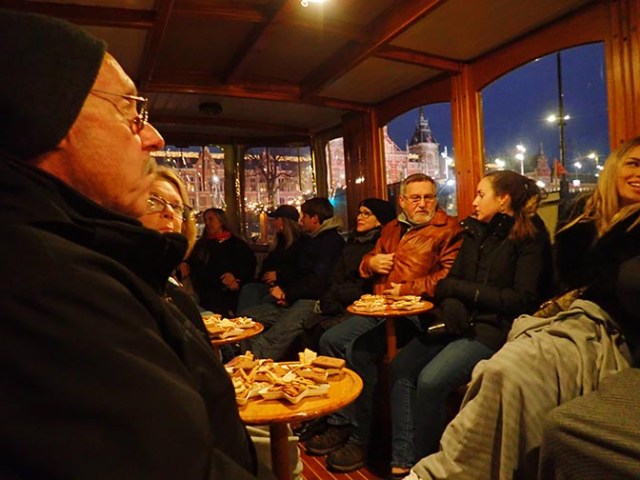
inside the canal boat

The boat sat there a bit while more people got on and was nice and warm inside until it was ready to leave. Then in spite of the fact that outdoor seating was available, several people opened up the window next to their seat and let in all the cold. One of them eventually went outside, but left the window wide open to keep on freezing all the people inside who would have preferred to be warm.
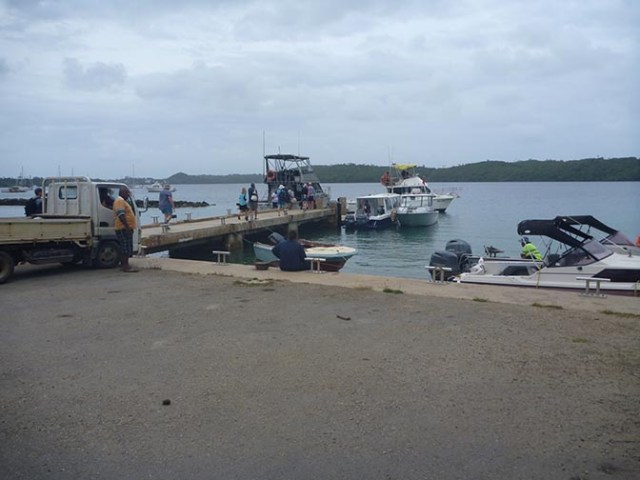
replica of Michael Angelo’s David

The boat sailed up the canal passing all of the things we had walked by on the way there, though this time there was narration to say what they all were. It stopped near the mermaid statue so people could see it, but the view from land for that one is better than from the water. As the boat passed by the replica statue of Michael Angelo’s David the guide commented about it being a perfectly proportioned man. When we walked past that same statue earlier we had thought the head, hands, and feet looked overly large and other bits of the naked statue kind of small compared to the rest of the figure.

bridge over the canal

Then the boat turned around and seemed to be going back to where we started from until it took a turn into a side canal and went through a bunch of other little canals past things we had not seen before.

about to go under a bridge

It cruised under a whole bunch of bridges of various heights. Some of them it barely squeaked under while others had a bit of room to spare. One rather tight corner just past a bridge had a series of tires hanging on chains to prevent boats from scraping the sides.

the rules only apply to people who follow them

The tour guide said if the tides are too high then they can’t do tours as the boats won’t fit under the bridges. Regardless of how many times he warned people they could not stand up outside when passing under a bridge he had to tell someone (often the same person) at each and every bridge to sit down if they wanted to keep their head attached to their body, though he did not put it quite that bluntly. By the last bridge he did say that one last photo would be their very last photo if they didn’t sit down, though he managed to say it without showing too much frustration.

we passed by buildings the guide identified as luxury apartments

The canal tour lasted for one hour and was a good way to see a bit of the city and get a different view of things than you see from land. Also a chance to warm up sitting next to a heater on the boat after walking around town in the cold. Things it passes by include the Geiflon Fountain and a bunch of buildings on land – The Citadel, the opera house, Amalienborg, the Royal Danish Theater, Christianborg Palace, Christianshavn, Church of Our Savior, and Freetown Christiania.

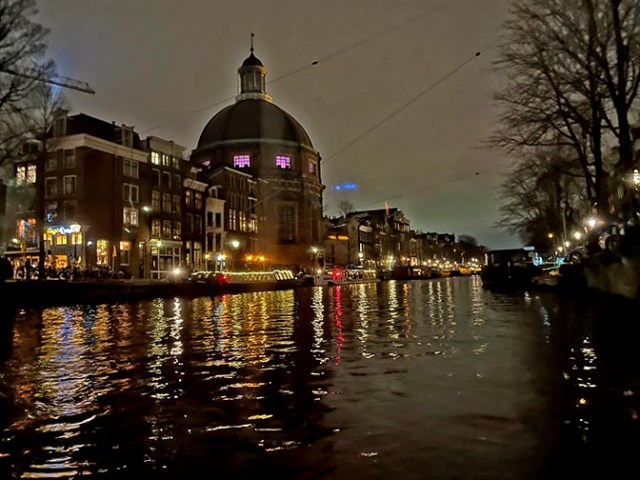
canal in Copenhagen

The longest bridge we saw crossed a very wide canal. We walked over that bridge later. It had separate lanes over most of it for bikes and pedestrians, but in some places they kind of crossed. Watching out for bikes is very important because they go very fast and don’t stop for pedestrians. In some spots it’s amazing they avoid crashing into each other.

watch out for bikes on this Copenhagen bridge

When we walked across the bridge we saw boats passing under it, including canal tour boats.

canal tour boat about to pass under the big bridge

The canal tour company we sailed with is called Stromma. They also have sailings from another nearby dock, including longer tours. In addition to providing canal tours, the company also has 2 Seabins Ocean Dustbins in Nyhaven that suck down litter out of the water including particles as tiny as 2 millimeters. These bins collect 2 tons of garbage each year. They also installed 20 biohuts within the Copenhagen harbor to provide food and shelter for small fish for a greater survival rate of those fish.

walking across the bridge

Copyright My Cruise Stories 2025
Posted in Day Trips, Europe | Tagged , , , , | 3 Comments

Panoramic Vienna

church in Vienna

Vienna, Austria

Vienna is the capitol of Austria with a population of over 2 million people. Currency is the euro. 1 euro at last check was equal to $1.10 USD. That is likely to change in the dollar’s current downward spiral. Vienna was home to the world’s first psychologist, Sigmund Freud, and visits by Mozart and Beethoven. Vienna has a dry continental climate with warm summers and cold winters. The temperature varies from winter lows of about 27 degrees F to summer highs of about 79 degrees F. Average annual rainfall is close to 24 inches with July generally the wettest month and February the driest. Its history dates back over 2000 years from early Celtic and Roman settlements to the capitol of the Austro-Hungarian Empire. Austria was annexed by Germany during World War 2. It was not part of the Soviet Union, but was occupied by Soviets after World War 2. It remained neutral during the cold war per a 1955 treaty granting its independence and joined the European Union in 1995. Tourist attractions in Vienna include palaces and cathedrals, concerts, museums, historic buildings, an amusement park, and a zoo. And of course the Spanish Riding School and its famous Lipizzan stallions.

building in Vienna

Vienna River Cruise Port

Viking Skirnir docked in Vienna at the main river cruise port near the Imperial Bridge (Reichsbrücke). From there it is a 10-minute walk to the nearest U-Bahn (metro, underground, or subway) station called Vorgartenstraße. This station is on the red line which goes to the city center. Tickets are available in machines at the station for single journey or 24-hour passes that also include busses and trams. Cash may be required for payment.

Viking ships were stacked up to 4 deep with ours nearest land. Just behind it there were more Viking ships, then a row of river cruise boats from many other lines stretching down the side of the river for quite a distance so it is quite the popular port for river cruises. Most are likely just Danube River cruises rather than the voyage all the way from Budapest to Amsterdam that our ship was on.

bus photo

Panoramic Vienna Tour

Viking provides a tour at each port that is included in the price of the cruise. Sometimes there are additional tours people can pay extra for. The included tour for this port was called Panoramic Vienna. It started with a bus ride around town with a guide pointing out major sites that we saw in passing. When the bus tour part of the excursion finished it stopped relatively near the Hofburg palace, though not right at it as we had to walk a bit to get there.

Hofburg Palace

After disembarking the bus everyone followed the guide through town while she talked about some of the things we passed, and a lot of history about the Hapsburgs who ruled Austria for over 600 years.

there are a lot of details near the roof of palace buildings

Viking provided an audio system called Quietvox in which the guide has a unit that broadcasts and everyone else has one to listen. Each guide has a different channel which people on their tour group tune in to so even if you get close to another group from the ship you hear only your own guide unless you switch to a different channel.

horse statue

The Hofburg palace included many buildings and covered quite a large area of the town. One of the statues on the grounds of a rider on a horse was the first horse statue ever built that was balanced on only two of the horse’s hooves without using the tail or anything else to help hold it up.

inside the church

The guided part of the tour ended in a shopping area near a very tall and ornate church, which people were allowed to go inside for free. That was to be the meeting place an hour and a half later for anyone wishing to take the bus back to the ship, which we did not do. Inside the church it had huge stained-glass windows and very ornate details. Looking up and to the back of the church there was an enormous pipe organ sprawling across that entire end of the church on a balcony above the entrance.

pipe organ in the church

Many of the old churches we saw on this trip had the same set-up with large pipe organs on a balcony high above the main floor of the church.

Lipizzan mare and gelding

Near to there we saw several carts with two horses each waiting to pick up passengers. We asked a driver with two white horses if that was where the Lipizzan mares went since the nearby riding school only has stallions. He said his horses were indeed Lipizzans, but that only one of them was a mare, the other being a gelding. First time I’d ever heard of a Lipizzan gelding.

Lipizzan stallion in the courtyard at the Spanish Riding School

While there are far more geldings than stallions among male horses of most breeds it’s just stallions that are ever mentioned pertaining to Lipizzans, though it’s probably just a small number of the breed that actually end up at Vienna’s famous Spanish Riding School. Perhaps gelding is the fate of individuals unable to perform all the difficult maneuvers required of the stallions in the riding school. Of course there have to be mares in a breeding facility or they’d soon run out of stallions to ride. Stallions for the riding school come from the Piber Federal Stud in an Austrian village called Piber.

stallion on the monitor

There was a pay-extra excursion offered on the ship to see the stallions perform, but we did not do any pay-extra excursions, just the ones included with the cruise. We did walk past the facility where we could see some horses in their stalls, and one got walked across a courtyard. There were a couple TV monitors by the walkway that showed stallions performing.

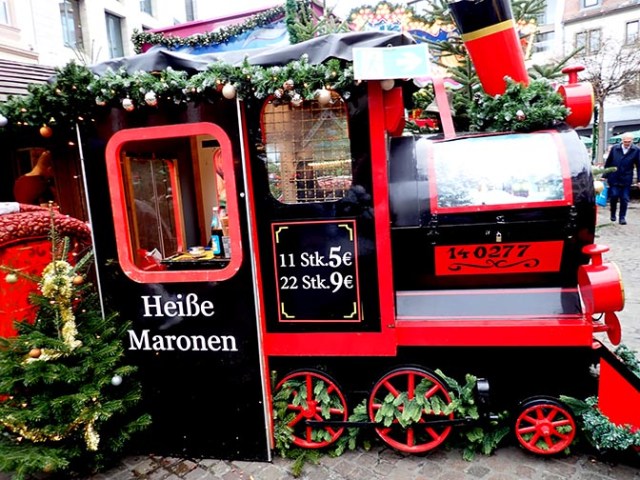
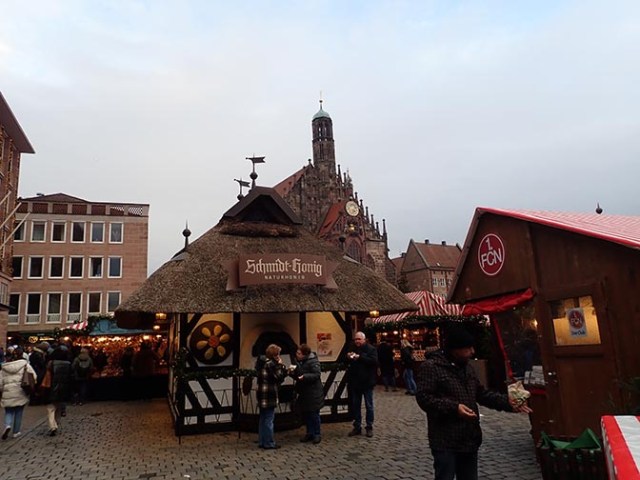
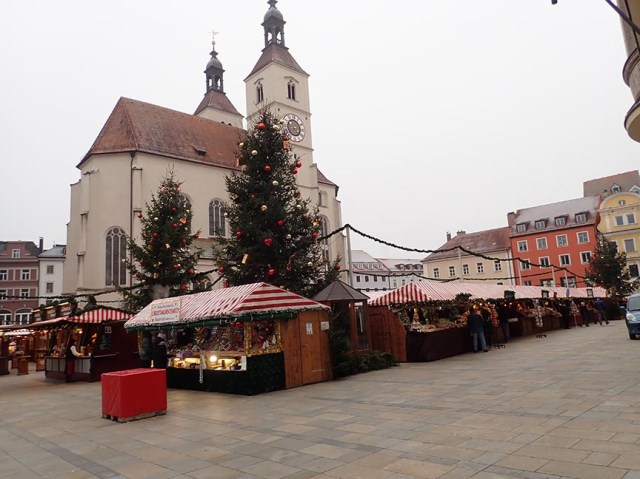
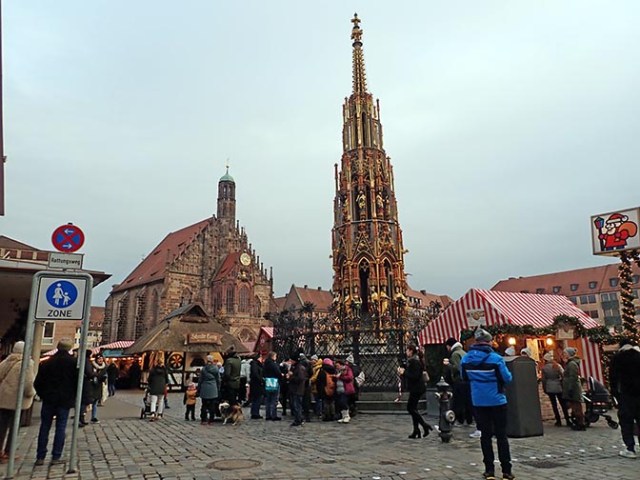
towering church and Christmas market

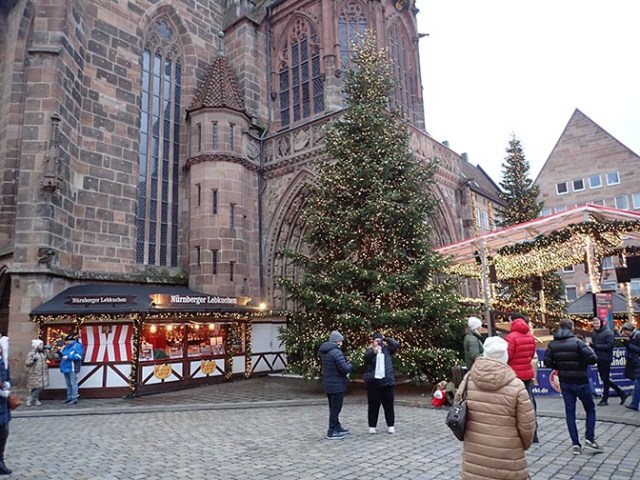
The Christmas market near the church was not due to open for a bit when we got there so we visited a nearby Lindt chocolate store and a couple souvenir shops while waiting for it to open. Apparently a lot of people must confuse Austria with Australia because a popular item at the souvenir shops appearing on t-shirts, hats, and other things was a sort of street sign like yellow diamond with a silhouette of a kangaroo that said no kangaroos in Austria.

Even the cashier at one of the stores was wearing a t-shirt with that logo. Oddly though it was late November and quite cold outside there were no sweatshirts in any of those shops, just t-shirts. They did sell warm socks, hats, and gloves though.

stall at the market near City Hall

The Christmas market there was bigger than it looked at first glance as the booths wound around a corner. From there we walked to city hall where there was a bigger Christmas market, and we went through another one along the way. Vienna has a lot of Christmas markets.

double carousel at a Christmas market in Vienna, Austria

The Christmas market near city hall had a double-decker carousel in the midst of the many booths selling food, hot drinks, Christmas ornaments, gifts, and other trinkets. A lot of the booths in the various markets had the same items as each other rather than handcrafted things specific to only one booth.

oldest Ferris wheel in the world that is still in operation

The oldest Ferris wheel still in operation is in Vienna at Wurstelprater amusement park about a mile and a half from city hall.  The cabins that you ride in actually look like little cabins and each one holds 6 or 8 people comfortably, though more could squeeze in.

inside the Ferris wheel

The Ferris wheel was built in 1897 in honor of the 50th year of Emperor Franz Joseph’s reign. It stands around 213 feet tall and is located near the entrance to the amusement park. With a diameter of about 200 feet it is nearly as wide as it is tall. Its name is the Weiner Riesenrad. A lot of things in Vienna are called Weiner because in German Weiner means Viennese. It’s also associated with sausage because of wienerwurst, a sausage originating in Vienna.

view from the Ferris wheel

The first pod that stopped in front of us while we waited to get on had tables and chairs in it. Some people got out, then an attendant went in and cleaned off all the tables while the ride sat there. Then it moved on and an ordinary one with a bench in the middle came down, which we were allowed into. It has windows on all 4 sides, of which the middle ones on the longer sides will open for people to take unobstructed photos. The bench is wide enough to for people to sit back to back on both sides. Nobody sat for long though as everyone stood near windows. There were only 5 people in the overly large car so we could move around from one window to another to get photos from different places.

view of the little Christmas market at the park from the wheel

The wheel only goes around once before you have to get off. It’s more about the views and riding the oldest Ferris wheel still in use than it is about actually having a fun ride. It stops frequently and sits in one spot for awhile before moving onto the next one so there is plenty of opportunity for photos from all directions. Once you get to the top there is quite a nice view of the city. There’s also a good view of the amusement park in which the wheel resides. The park has a lot of other rides including several roller coasters and a more traditional Ferris wheel. There’s also some little rides for very small children.

giant pretzel booth

The amusement park is not too far from the port. The weather was cold and winds that were predicted to be quite heavy that afternoon started picking up while we were at the top of the wheel so we didn’t spend a lot of time looking around the booths at that park’s Christmas market before heading back to the ship, though we did stop there long enough to have a hot drink and share a giant soft pretzel. European wheat is different from the wheat in America and not nearly as likely to bother non-celiac people with gluten sensitivities to American wheat.

Christmas decorations on a street in Vienna

Taxis and Ubers were readily available in the touristy areas of Vienna so anyone not wishing to walk from place to place had those options in addition to public transportation.

Copyright My Cruise Stories 2025
Posted in Europe, Skirnir, Viking | Tagged , , , , , , , | 2 Comments

Oosterdam Obstructed View Balcony Cabin

view of Antarctica from obstructed view balcony

Cabins of the same category are mostly the same from one to another on any given cruise ship, but there are always some within a category that are different. The most obvious difference is accessible cabins, which are usually larger and if fully accessible will have features like roll-in showers and some things lower down like the seamail box outside the door and the clothesline that pulls across the shower. Sometimes there are other differences as well.

Oosterdam in Puerto Chacabuco, Chile

On a lot of ships you find ocean view cabins with partly or fully obstructed views, but it’s not so often that there are obstructed view balcony cabins. The Oosterdam had some though. Being obstructed view they are a slightly different category than standard balcony cabins, and with obstruction comes a lower cost. Obstructed ocean view cabins are generally found behind lifeboats or structural features of the ship. With Oosterdam’s obstructed view balcony cabins it’s the part under the railing that goes across the balcony itself. Generally that is see-through plexiglass, but in these cabins it’s a metal wall. Above the railing there is nothing obstructing the view.

deck 4 open bow on the Oosterdam with a view of Antarctica

The obstructed balcony cabins on the Oosterdam are found near the bow on deck 4. Deck 4 on this class of Holland America ships has a big open balcony where passengers are allowed to go when the ship cruises through scenic places. The metal wall around the bow extends back to the balcony cabins near the bow on that deck.

obstructed view balcony

Furniture inside the cabin is high enough to see over the wall when sitting on it, and there is nothing blocking the view if you stand on the balcony. The only things you can’t see is whatever you would see through the plexiglass that regular balcony cabins have instead of the metal wall. Anything seen above the plexiglass is the same. You can even see the view over the wall when sitting on the deck chairs out on the balcony. Just not the water up close that is usually seen through the plexiglass. Besides the lower price for being obstructed, the benefit of this sort of balcony is that it is nearly double the size of a standard balcony so you have lots of space to stretch out in the deck chairs – which are accompanied by a foot stool for doing so. There’s also a small table on the deck. Standard balconies don’t always have enough space to stretch your feet out before they come in contact with that plexiglass wall.

bathroom cabin 4020

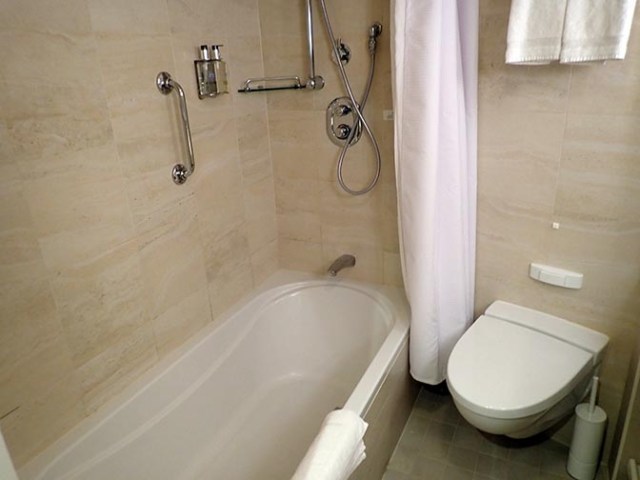
When you first enter the room there is a bathroom on one side and closets on the other. The bathroom has a tub/shower combo so it is slightly larger than bathrooms where there is just a shower. Bathtubs are standard in most cabins except interior and accessible on Holland America. On many cruise lines only suites have tubs. There’s a cabinet above the sink with three shelves inside and a mirror on the door. The space above the sink is also a mirror. A rack above the toilet holds the towels. There’s a shelf running along the wall underneath of the sink that is the biggest storage space in the bathroom. Also some room on the counter to put a few things.
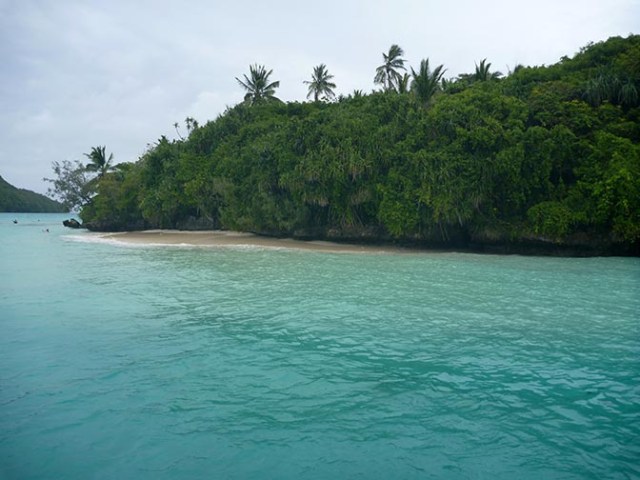
separate shampoo, conditioner, and body wash

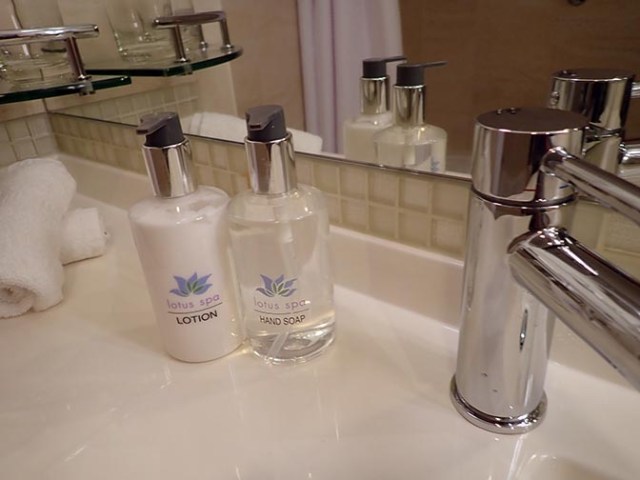
It has 2 glasses in holders on the wall as well as two other wall mounted holders that might have been intended to hold soap, but since there is liquid soap in a container mounted on the wall that isn’t necessary so they can be used for other small items. A bottle of hand lotion is mounted on the wall next to the hand soap. The shower has separate shampoo, conditioner, and body wash mounted high enough to be convenient for taking a shower, but too high for taking a bath as you have to stand up to reach them. Nice to have all 3 and not the nasty all-in-one garbage that some ships have. Speaking of garbage, there is a small garbage can in the bathroom and one that has separate sections for garbage and recyclable paper in the main cabin area.
closets

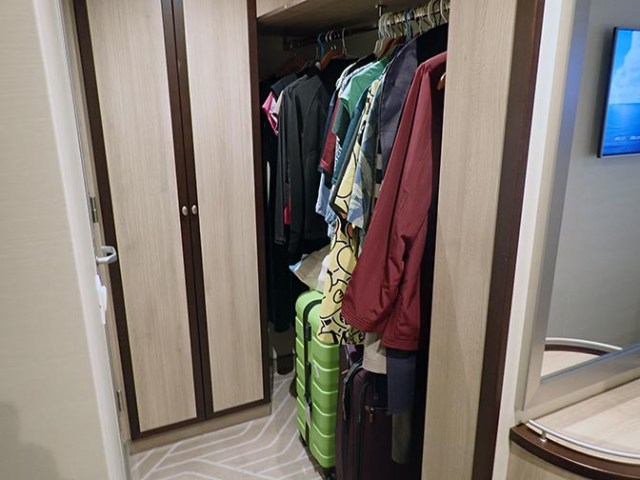
There are 3 closets. Two of them have hanging bars and fold-down shelves that you can put down to use or leave up and not use if you have things that need more space to hang down. There’s also a fixed shelf above the hanging rack. The third closet has shelves and the cabin safe. Some shelf space is taken by lifejackets. Little fleece blankets and bathrobes were also on one shelf in that closet. I have not seen the little blankets in a cruise ship cabin before, but this was a cruise to Antarctica.

view of the room from the balcony end

There’s a curtain you can pull across to block that little hallway from the main cabin area, which is nice at night because there’s a motion light under the closet that will light up if anyone walks past it and also a small light that stays on in the bathroom even if the brighter light is off.

room from the door end

There are 2 large hooks mounted at the top of the wall between the closet and the TV, which is set within a larger wooden frame. The far end of that wall has a desk which has the small refrigerator underneath it and some open space with a cushioned box you can store things inside of as well as use for a stool. There is a mirror above the desk with a light on one side. It has four 115-volt USA style outlets to plug things into and two 220-volt round ones. The hairdryer which is found in a cupboard on the side of the desk uses the round one. There’s also a make-up mirror and wine glasses in that cupboard. There’s an ice bucket and glasses on the desk and if you requested ice on the paper that was in the cabin at check-in the steward will fill the ice bucket for you. The refrigerator comes full of mini-bar items that you have to pay for if you use, but we ask the steward to clear those out and then we can put whatever we want in it.

towel elephant with chocolates for eyes

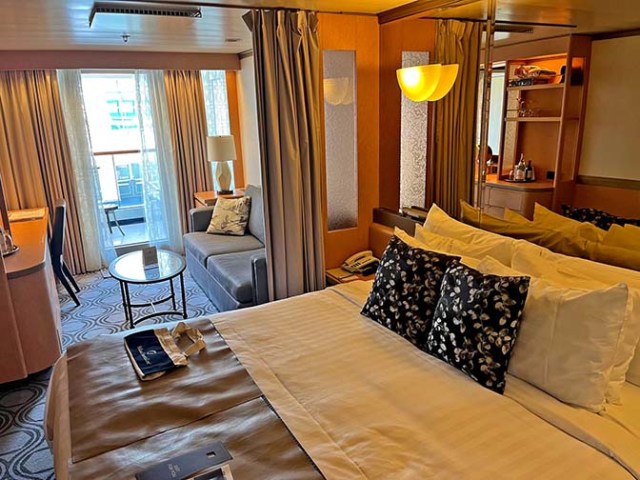
As is standard on cruise ship cabins, the bed can be set up as one or two. There is a nightstand with two drawers for each bed or each side of the bed if you have it set as one. Each nightstand has a USB port above it and there is also one at the desk. The wall above the bed is a mirror and there is a little reading light on either side. On the other side of the room across from the desk there is a small couch with pillows. In between there’s a little oval table and one chair.

Doors on cruise ship cabins are usually magnetic, but on the Oosterdam the magnetism wasn’t very strong on the door. We had a small door magnet, but it kept sliding down or even falling off when the door opened or closed so we ended up putting it on the much more magnetic frame around the door. The walls in the hallway next to the door were also far more magnetic than the door itself. That is not always the case. On some ships the door is the most magnetic thing in the room.

magnets are useful on cruise ships

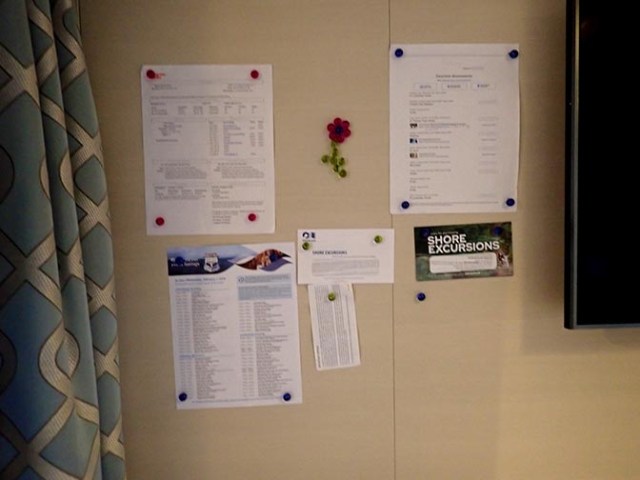
Any wall space that isn’t covered by something is magnetic. Magnets are quite useful on cruise ships. We bring magnetic hooks which work for hanging things on the wall in the cabin as well as for holding laundry lines over the tub when there isn’t any structure to tie them too. On some ships the shower or bathtub walls are very strongly magnetic, but on this ship they are pretty weak so it took several magnetic hooks to hold up a line with wet laundry. We also bring small magnets to keep all our paperwork organized on the wall. Holland America uses digital tickets for excursions, but we still have things to hang like a print-out of the itinerary for the cruise, any info we need for anything else, and the daily newsletter of things happening on the ship.

making use of magnets and structures on the shower walls to hang lines for drying laundry

Holland America does not have any self-serve guest laundries and it is expensive to send laundry out for the crew to wash so we bring soap that is intended for handwashing laundry and some extra clotheslines since the built-in one that pulls across the tub doesn’t hold much. One of my lines is made from several braided lines so a bit of the clothes goes between the lines and it doesn’t need any clothespins and the other has built-in clothespins, but it’s still useful to bring a few for use on the built-in one that is just a string or if I have more line space than built-in clothespins on that line. When you get to 4 stars in Holland America’s loyalty program, which takes 200 points, you get free laundry service.

cabin art

Artwork in the room consisted of a painting of nothing. Just a bunch of colors thrown on canvas. One bit sort of resembled a sunflower, but it would take a lot of imagination to make much of anything else. With some imagination it’s possible to see things like ice, snow, or even the sea, but none of those things are actually there. A painting of nothing is better than one of a sinking ship, which is what was in our cabin on the Zaandam.

merpent tile art

The bathroom had a couple decorative tiles. One was a single tile depicting a couple of what looked like old-fashioned Dutch people in an old sailing ship. The other was a double tile with a merpent. That is a cross between the ugliest mermaid ever and a sea serpent. It had a sea serpent tail with a human body top half. The person part was mostly facing forward except that the part where it joined the tail looked like a big bare butt. Above that it had 6-pack abs, naked boobs, and a seriously ugly face with horns on top its head. Maybe it was some sort of mythical old sea god or something. It was also blowing a giant seashell horn. If it didn’t have the boobs it would look more male than female, but those were undeniably female.

This room was located above the theater. We could hear the nightly shows through the floor if we were in the room during performances. We did not hear any of the daytime events in the theater, just the main shows of the evening. The other noisy thing was when it was windy outside it would whistle through where the balcony door didn’t quite seal shut even if it was locked. If it was really windy – which it often was on a cruise to Antarctica – we could sometimes hear the dividers between balconies rattling too.

Overall it’s a nice room and I would book this category again given the opportunity since you get a larger than normal balcony for a lower price.

Copyright My Cruise Stories 2025
Posted in Holland America, Oosterdam | Tagged , , , , , , | Leave a comment