
the Space Needle is the highlight of the Seattle Center and the symbol of Seattle
Seattle
Seattle is the largest city in Washington State with a population of over 800,000. It’s nickname is the Emerald City due to the abundance of year-round greenery. Washington is called the Evergreen State due to its native evergreen trees. These include fir, cedar, pine, hemlock. and spruce. They are mainly on the western side of the state, but the drier east side does have pines and some fir trees. The term skid row originated from Seattle’s early days when logs were transported down a steep hill to the mill using a skid road of greased logs. Skid Road eventually morphed into the term skid row which is currently used to describe an impoverished area.
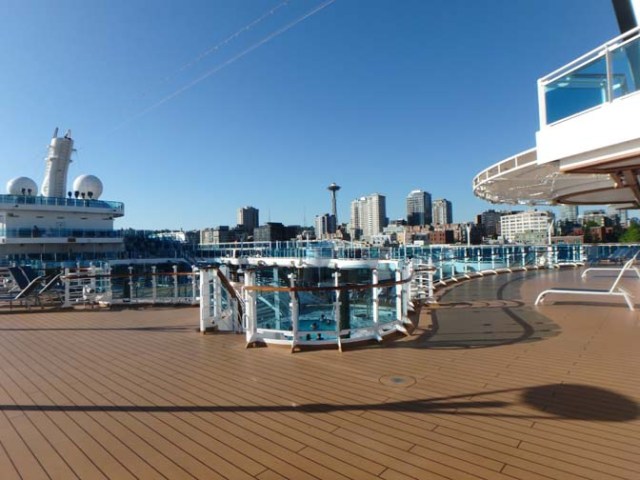
view of Seattle from a cruise ship
Seattle has a temperate climate where generally summers are not excessively hot nor winters excessively cold. Average annual precipitation is just over 37 inches so the city isn’t as wet as its reputation indicates. However the rainfall is often light so the 150-167 annual rainy days makes it seem a lot wetter. Some winters have snow, but some don’t and the snow doesn’t tend to stick around more than a few days most of the time. The average annual snowfall is 6.3 inches. Some years have more, others less or as previously mentioned none. The average annual precipitation of western Washington is much higher at 66 inches.
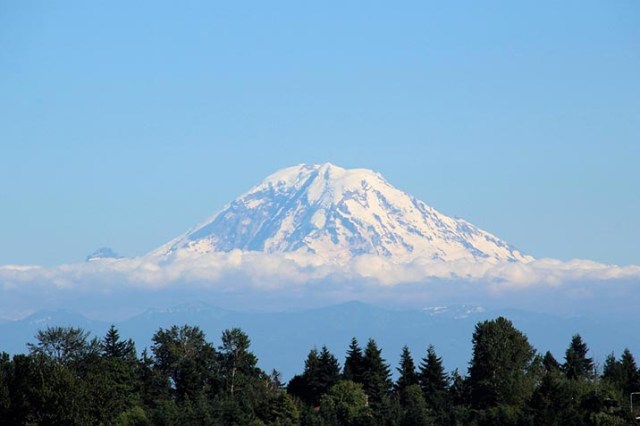
Mount Rainier
The Olympic Mountains can receive over 200 inches of rain annually. Some places on or near the coast like Forks (120 inches) or Sekiu (about 100 inches) have a lot of rain too, while other areas of the Olympic Peninsula like Sequim (16-17) or Port Angeles (25-29) have a lot less. The Cascade Mountains receive 80-150 inches of rain annually, with the majority of that falling on the west side of the mountains. The Cascade Mountains are the range where the state’s 5 volcanos reside. Mount Saint Helens is the best known for its 1980 eruption. Mount Rainier is pretty well known too since it is the tallest and home to a popular national park. It is also the closest to Seattle. The other three are Mount Baker, Glacier Peak, and Mount Adams.
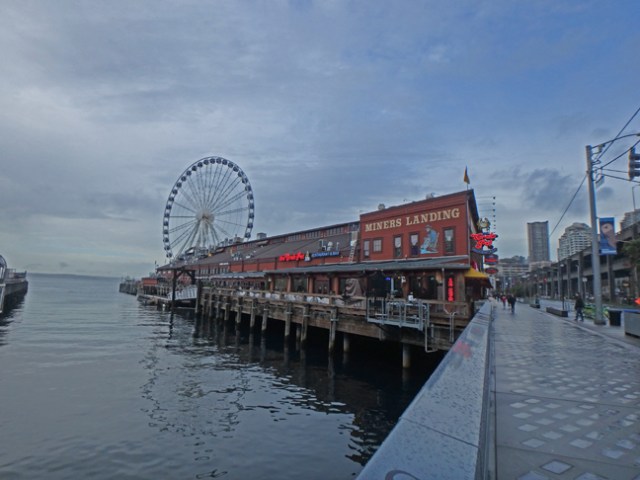
Seattle’s Pier 57 Miner’s Landing and Great Wheel
Seattle has lots of things for tourists to do. The Seattle Center is home to its famous Space Needle along with other attractions. The waterfront has its share of things to do as well including day cruises and the Seattle Great Wheel. Seattle has quite a variety of parks and museums. It also has theater shows, sports teams, and a symphony orchestra. A monorail transports people between downtown and the Seattle Center.
Seattle Cruise Ship Ports
Cruise ships in Seattle dock at either Pier 91 or Pier 66 on the Seattle waterfront. The cruise ship season runs from spring to fall with up to 3 ships in port on the same day.
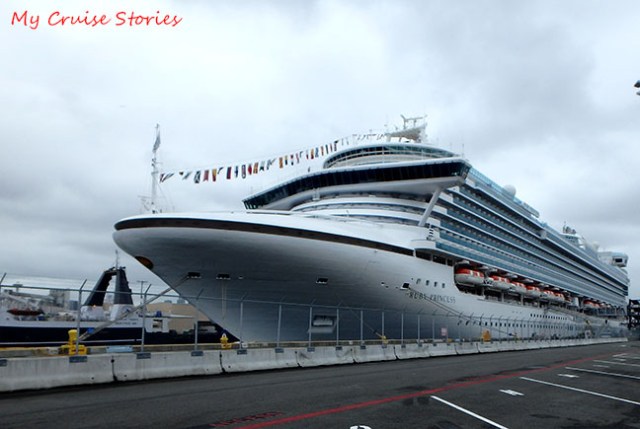
Ruby Princess at Pier 91 in Seattle
The main cruise ship terminal is Pier 91, which can hold two cruise ships at the same time. Most of the major cruise lines dock there for embarkation and debarkation. This pier is not near the main touristy waterfront area. There is parking nearby and shuttles take passengers from the parking areas to the port. Taxi’s, Ubers, airport shuttles, and other shuttle services also bring passengers to the port from other locations. When embarking in Seattle we have generally found the service good and the lines to move quickly. For disembarkation there are waiting areas for pre-arranged transportation, and often a line of taxis and other ride services available for people looking for last-minute transportation.
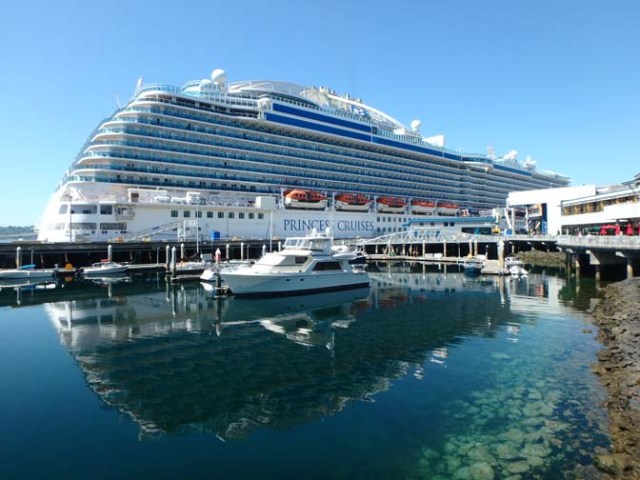
Royal Princess at Pier 66 in Seattle (port stop, not embarkation)
Seattle’s other port is at Pier 66 in the heart of the touristy area of Seattle’s waterfront with space for one ship. It is within walking distance from the ferry terminal and also close to other attractions like the Seattle Aquarium and Pike Place Market and within walking distance of the Seattle Underground Tour. Ships making a port stop in Seattle that is not for embarkation or disembarkation are likely to stop at this pier. Norwegian cruises use this pier for starting and ending their cruises rather than pier 91 where most other lines go. There is a parking garage near this terminal, or people can park in cruise parking lots and take a shuttle to the pier. The garage closest to this pier is a bit more expensive than other parking options.
Boarding Carnival Luminosa
People are only allowed to register for a Carnival cruise online a couple weeks prior to the cruise, a couple days earlier for platinum or diamond guests. This is pretty inconvenient on land and even more so when doing back to back cruises. When you do your registration you also choose your boarding time and the earliest times go first so if you want to board as early as possible then registering as soon as you can is a necessity. Cruise ports tend to be crowded at the early boarding times though and don’t always disembark as quickly as expected so choosing an early time generally means either waiting in a long line outside or waiting in some sort of room inside of the port before actually boarding the ship. For a smoother boarding experience with far less likelihood of lines or long waits to board choosing a later time works well.
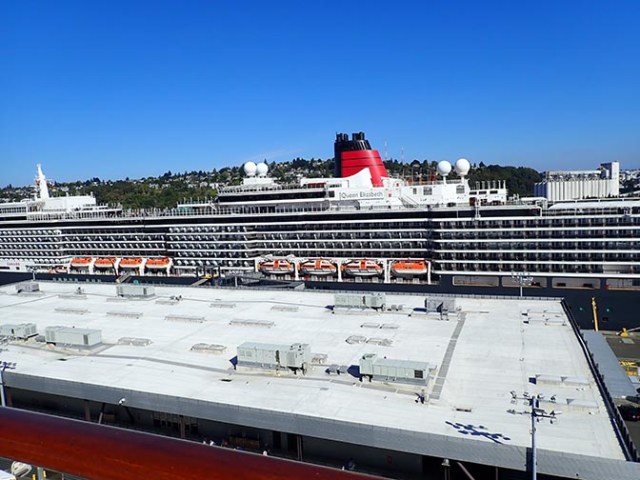
Cunard ship at Pier 91 in Seattle
We had a sort of early boarding time for the Luminosa in Seattle and arrived at our scheduled time of 12:30 to a very long and unmoving line even though it was past the time boarding was supposed to begin. Luggage collection didn’t have a line, but once that was dropped off it was a long walk to the back of the line for boarding the ship. It sort of intermingled with one for a Cunard ship, but at the point where they separated the Cunard line moved quickly and the Carnival one not at all so the smart ones from Cunard found a way through the Carnival line to the end of their own line rather than waiting behind all of the Carnival people to the separation point.
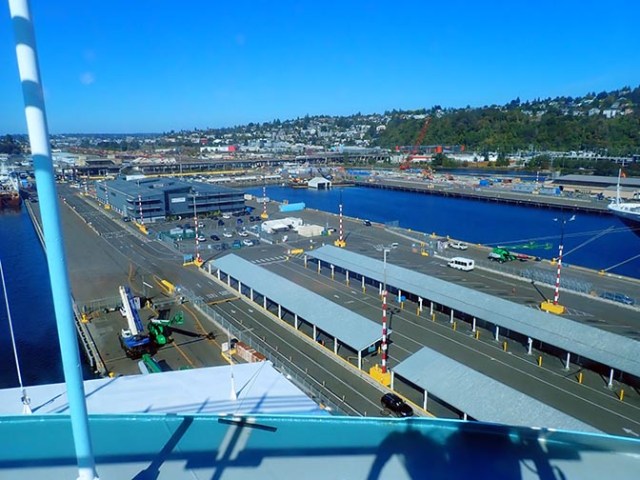
the line went way out into the second shelter back when we got there
Boarding the Carnival Luminosa was a lot slower than is usual in Seattle. The Luminosa’s line crept slowly forward for a bit, then stalled completely for quite awhile. The other ship was going to Alaska, which is where most of the ships from that port go. The Luminosa on the other hand was sailing to Australia. Despite many warnings from Carnival by phone, text, and email prior to the cruise about all of the documents required for boarding, a lot of people did not have handy things like proof of travel insurance which was required for that cruise or proof of the electronic visa required for entry into Australia. It’s always a good idea to print out any documents you might need to show before boarding so they are handy and easily accessible, or at least take a screenshot so you have something to show that you can find quickly on your phone. Rumor had it some people were denied boarding when they could not find the necessary proof of the required documentation. Apparently they ignored all the emails, texts, and calls warning them they needed it, or just thought like so many people do these days that the rules didn’t apply to them. Meanwhile they stuffed up the line by not having everything they needed ready to present.
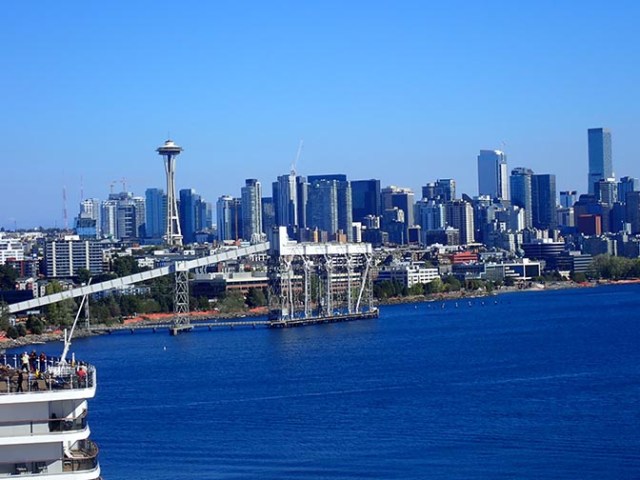
view of Seattle from the ship
Once the line finally started to move we eventually made it up to the building where it separated into people who came at their assigned boarding time and a longer line for those who were early or late. By the time we got to that point it was actually past our assigned window of time, but since they realized people like us had arrived on time, but been waiting in a very long line for quite some time they let us into the on-time line. The only people given priority boarding on that cruise were suite guests because about 3/4 of the people were platinum or diamond. They couldn’t give so many the priority boarding they would otherwise be allowed and we had to wait in the main boarding line.
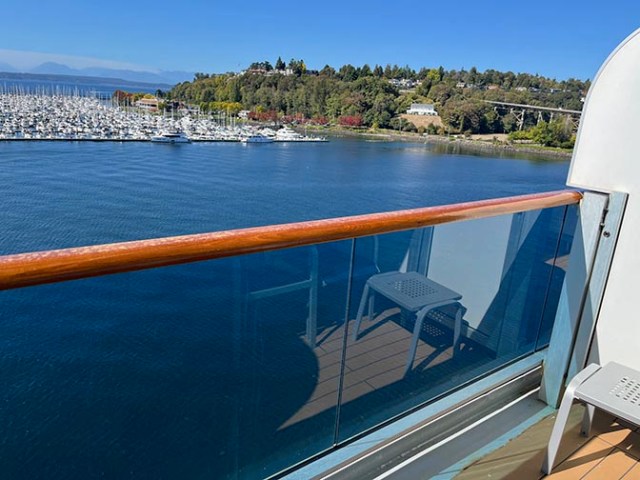
view of a marina next to the cruise port from our balcony on the Luminosa
When we eventually made it to the check in desk we found out that the holdup was indeed caused by all of the people who didn’t have the documentation that was required in spite of the numerous texts, phone calls, and emails from Carnival prior to boarding day warning people that all of those things were needed. We breezed through quickly and with no problems at all since we had printouts of the necessary proof as well our boarding passes and had our passports handy, all of which had to be shown to move on. Meanwhile other people were holding up the line scrambling through their phones looking for proof of insurance or the e-visa.
Once we got through that first check in point there were still more to go through because they were just screening people for the necessary documents before letting them in. Luggage screening and the actual check-in process awaited once inside, but we did eventually get through it all and board the boat. That was the longest it ever took us to board in Seattle, though it has taken longer when sailing out of some other ports.


 Cruise Stories