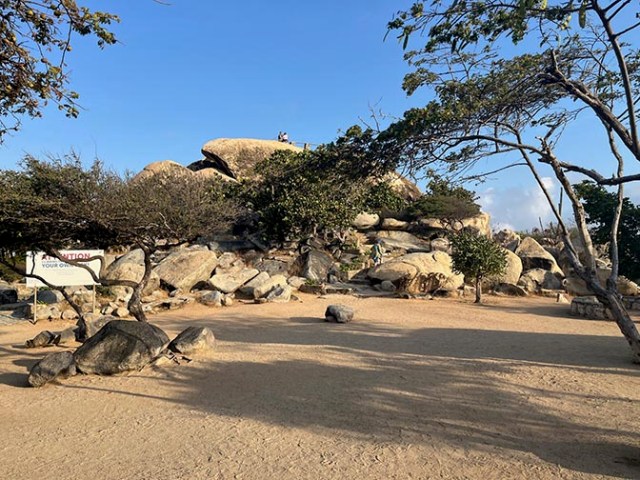
Casibari Rock Formation
Aruba
Aruba’s motto is One Happy Island. There are lots of beaches on the 70-square-mile island. The country is an autonomous member of the Kingdom of the Netherlands. Prior to 1986 it was part of the Netherlands Antillies, but gained partial independence and is now self-governing. Aruba has a dry arid climate with mostly warm sunny weather year-round. Annual rainfall is about 15-18 inches per year.
Aruba Cruise Port
Ships dock at the Aruba Cruise Terminal in the capital city of Oranjestad. There are 3 docks. Usually there are no more than 3 ships docked at the same time, though the port has capacity for 5. There are some shopping booths at the port which may or may not be open. It’s a short walk into town from the dock. There’s a free trolley that runs to town on a continuous loop for those who would rather not walk. There will likely be taxis available at the port for taxi tours or to take passengers to a beach.
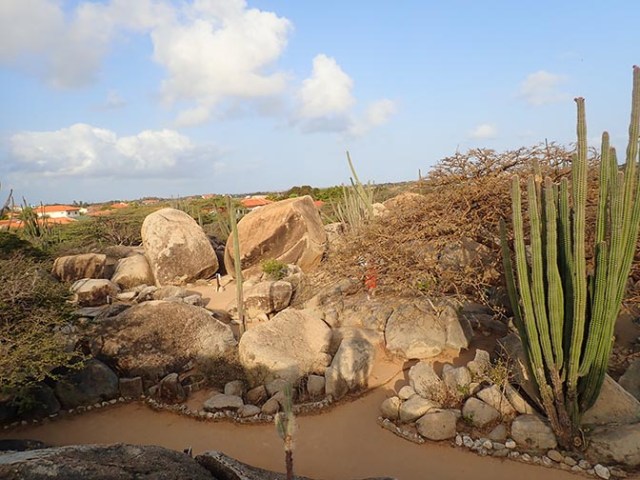
Casibari Rock Formations on the Aruba by Land and Sea tour
Excursions offered in Aruba on Nieuw Amsterdam included Atlantis Submarine, certified scuba dive, off-road 4-wheel drive adventure, 4×4 to natural pool for swim & snorkel, snorkel & beach, sailing & snorkel, hidden gems of Aruba, Aruba by land & sea, natural wonders of Aruba, Kukoo Island Discovery & beach (Kukoo is the name of the bus, not another island), Aruba walk & taste, eagle beach express, discover scuba diving, colors of Aruba, and Aruba town & countryside
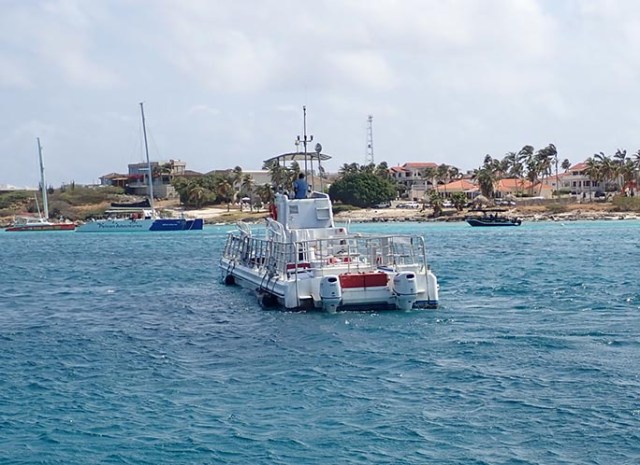
semi-sub
Aruba by Land and Sea
For our port stop in Aruba on Holland America Nieuw Amsterdam we booked a shore excursion through the ship called Aruba by Land and Sea.
Ship’s Information About the Tour
Information provided by Holland America for booking this excursion said a ride on the Seaworld Explorer semi-sub provides views of the wreck of the German freighter Antilla and the land portion of the tour visits the Casibari Rock Formations and the Baby Natural Bridge. The tour was said to explore the full beauty of Aruba on a tour that takes you around the island and under the sea.
The Seaworld Explorer is a semi-sub which does not fully submerge. View the ocean from the hull of the vessel 5 feet under the surface of the water. Must be able to descend 10 steps into the vessel. View amazing sealife and the Caribbean’s largest shipwreck through large clear windows.
Return to shore for a panoramic drive to the California Lighthouse where you can admire the magnificent view of the crashing waves of the windward coast and tranquil waters of the leeward shore. From here continue to the awesome Casibari Rock Formations and climb the rock gardens to the highest boulder. You will then visit the Baby Natural Bridge – a bridge of rock formed by the wind and the sea. Finally keep an eye out for the gold mill ruins at Boca Mahos en route back to Oranjestad, Aruba’s capital.
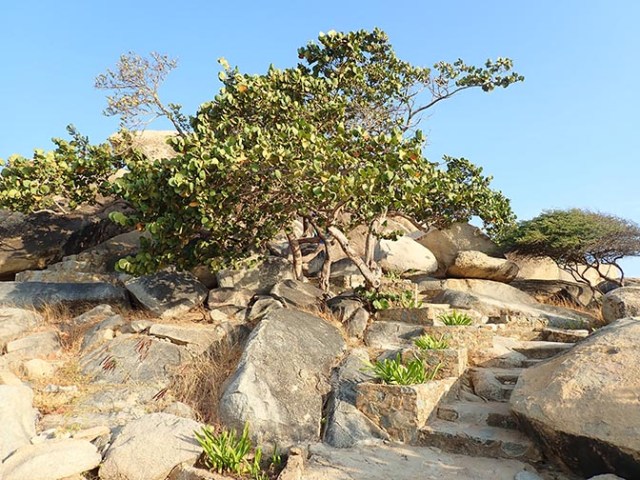
stairway up the rock
The Actual Tour
The Aruba by Land and Sea tour started out meeting in front of the port building shortly after the ship docked. It was early in the morning so there weren’t any lines to get off the ship. Nothing was open yet so the only people who had any reason to leave were those with early tours. After checking everyone in and getting on the bus we headed to our first destination at the Casibari Rock Formation. This little rock mountain and surrounding rock garden reminded me of the Baths at Virgin Gorda, but without the pools. It looked a lot like batholiths, but actually consisted of tonalite boulders. Tonalite is an intrusive igneous rock, meaning it forms from magma that cools slowly beneath the Earth’s surface. These are often a component of batholiths, but batholiths which are also formed from slowly cooled magma form deeper in the earth and contain other types of rock. Tonalite forms from one magma intrusion whereas batholiths form slowly over millions of years and combine multiple intrusions. Both surface through tectonic uplift and erosion. Batholiths cover a larger area above and below the surface.
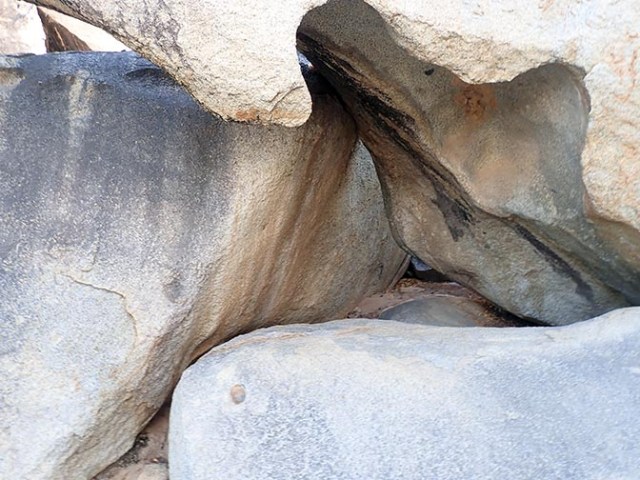
you have to go through this hole in the rock
There is a stairway up to the top of the Casibari Rock Formation. At one point people have to duck down and go through a hole in the rocks. The guide warned us to keep our heads down, but the rock got some people anyway because as you approach the end of the tunnel the overhanging rock is just a bit lower than what you are already ducking for, right about the spot where you think you’re just about out and people are more likely to start lifting their heads up rather than ducking down farther. Plus if you are already ducking down you’re more likely looking down than up and may not see that lower hanging bit of rock.
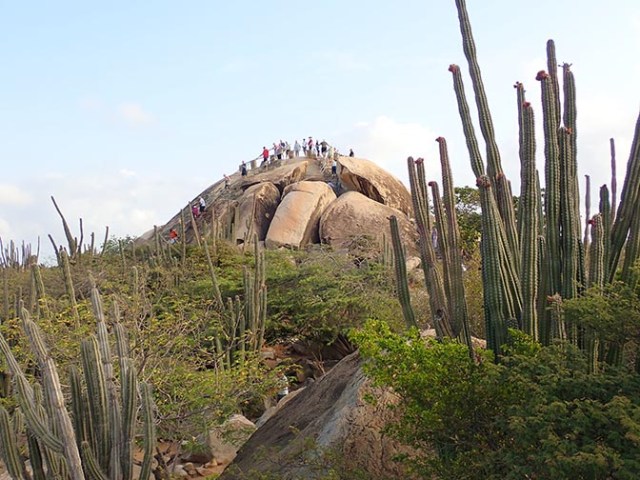
people on top of the rocks
At the top of the rock hill there’s a sort of flat spot. It’s not level, but not so steep as the hill either. Kind of a little bit of ups, downs, and uneven spots in what would otherwise be a somewhat flat, but slanted hilltop with fantastic views all the way around.
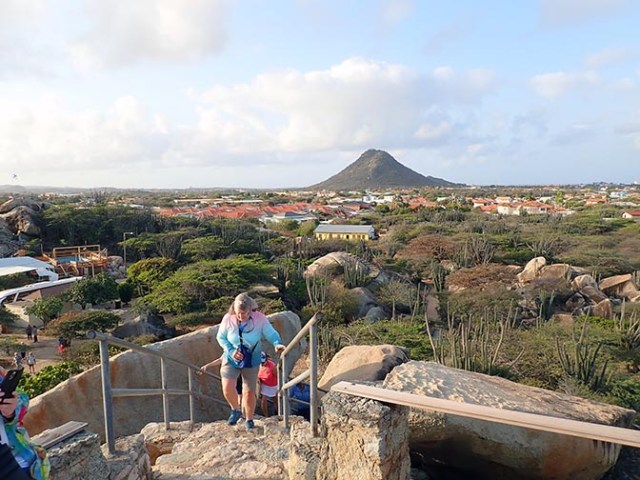
view of Hooiberg and someone coming up the down stairway
It’s not the only high spot in mostly flat Aruba. From the top you can see Hooiberg, a conical volcanic hill that is Aruba’s second highest point at 541 feet (165 meters) above sea level. Though it is a volcanic formation, Hooiberg is not active. There are no active volcanoes in Aruba. The highest point is called Mt. Jamonta which stands 620 feet high.
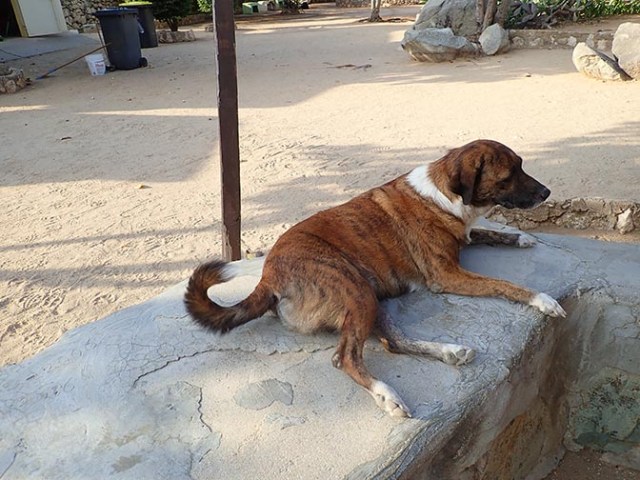
dogs don’t read signs
A different and more direct stairway takes people back down. Near the bottom of that there’s another stairway leading up a lower little rock hill. The surrounding area has gardens and pathways and more giant rocks. There were a couple dogs there who apparently didn’t see the no dogs sign before they came in. They didn’t belong to anyone, just stray dogs who came in on their own.
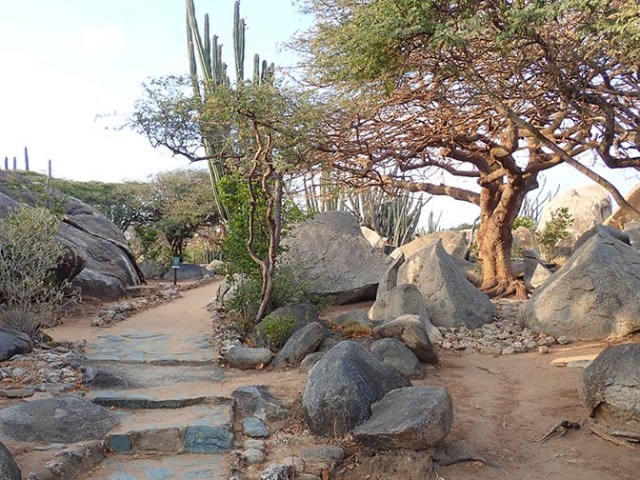
pathway to more rocks at Casibari Rock Formations
Though the place was fairly small, there was more to explore there than we had time to see on a brief stop on a cruise ship excursion.
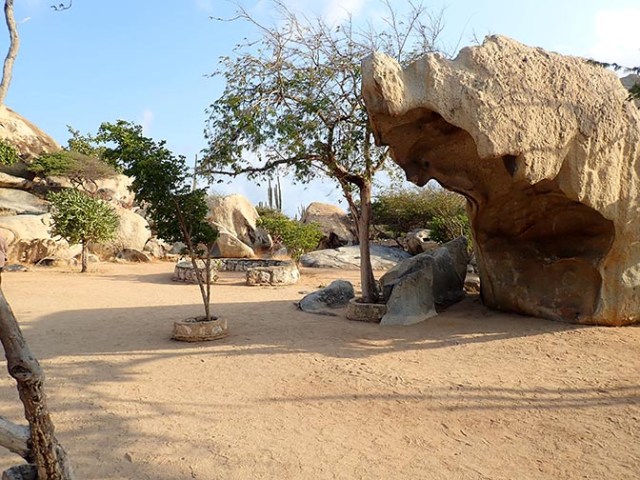
a smaller rock formation
Whenever the bus was traveling the guide, who was a wealth of local knowledge, told us all about island history and lots of information about things we passed by as well of things we went to see. His local knowledge version of island history passed down through the generations differs from official versions where the names of the original inhabitants’ tribes are either lumped together under a different name or left out altogether and there are inaccuracies in the official version of interactions between the original local tribes. Official versions are from the view of invading Europeans whereas the islander’s version comes from their ancestors’ side of the story.
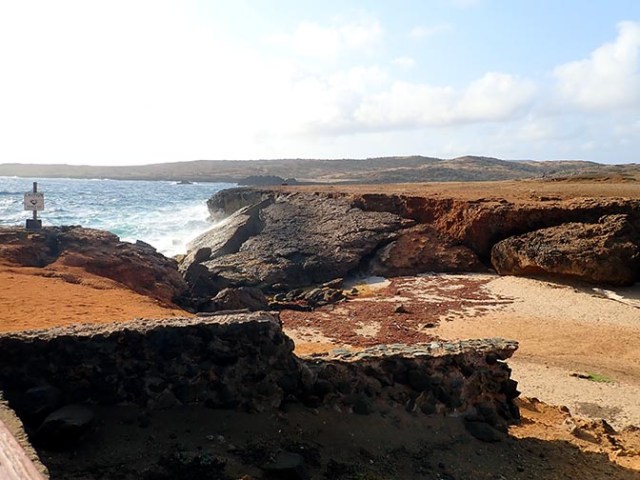
collapsed natural bridge
The next stop brought us to a natural bridge. The island has others, but she said this was the only one currently accessible by motor vehicles. There used to be two in that spot, but the larger one has collapsed and now just looks like enormous rocks lying on the beach.
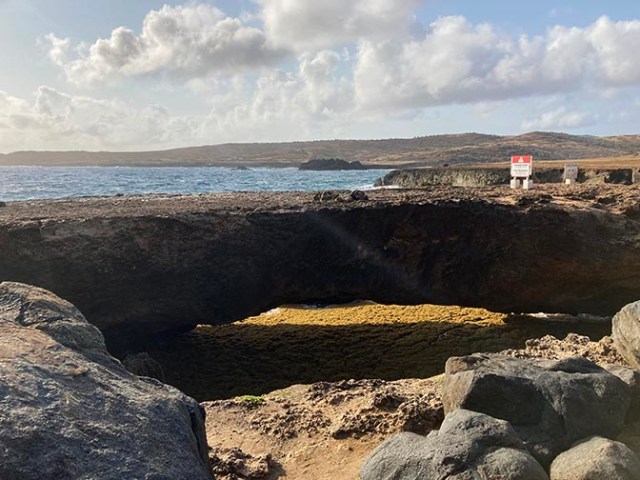
Baby Natural Bridge
The small one, which is actually quite large, is still intact, though she said the collapse of the larger one weakened it putting it that much closer to its own eventual collapse. The water pooling under it was full of seaweed.
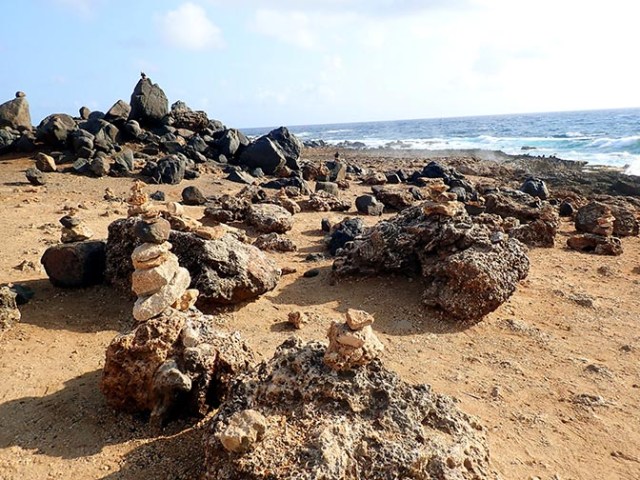
stacked rocks
There were multiple piles of rocks all over the area where tourists come and build rock stacks. According to our guide, two of three species of lizard native to the island have gone extinct because they lay their eggs under the rocks and when people pick those rocks up to stack them all of the eggs blow away. So don’t be the tourist that stacks rocks without being aware of the environment and any harm that it might cause. This isn’t the only place where rock stacking tourists damage the environment.
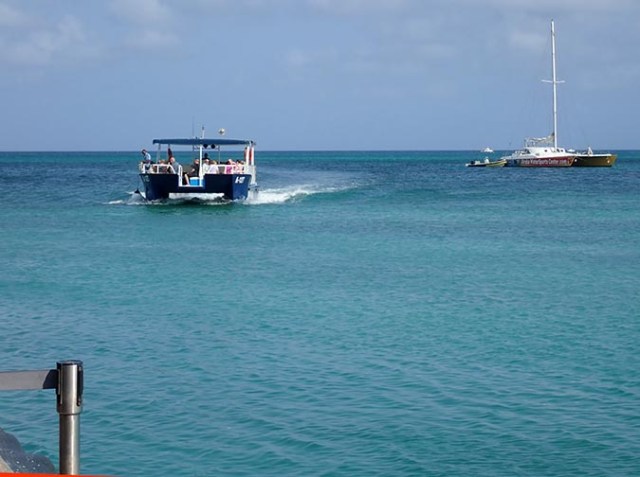
transport boat to the semi-sub
After the first two land stops the bus brought us to a pier where a boat picked us up to take us out to the semi-sub. This one was run by Atlantis, the same company who has the Atlantis subs, which are actual submarines that dive down deep into the water. Semi-subs have a top portion that stays above the water and a below-water-level window-lined chamber passengers descend into to view fish and whatever else is under the water through the windows. The submarine tour in Aruba cost a lot more than the one we took on the semi-sub.
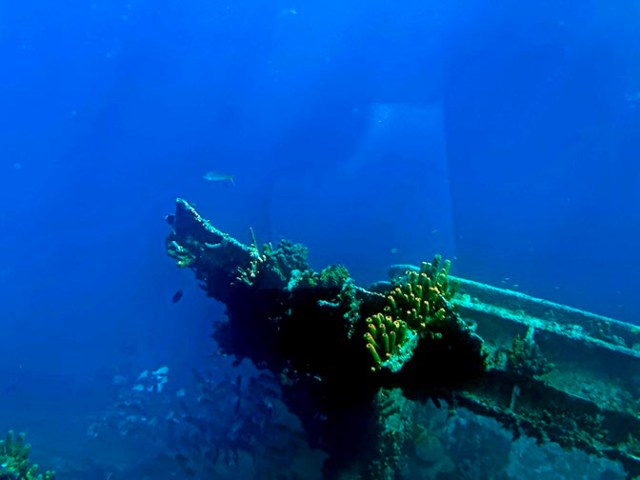
a piece of the shipwreck
Unfortunately the destination for the semi-sub on this tour was the wreck of the German freighter Antilla, which I have already seen twice on snorkel excursions on previous trips to Aruba. There are other wrecks in the area as well as reefs. This is biggest wreck. It would be nice to see something different, but I always end up at the same one. At least the semi-sub went to a different part of the wreck than where the snorkel boats go.
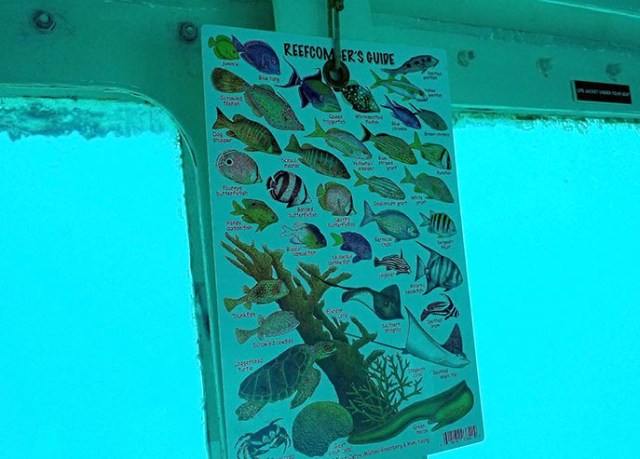
fish ID chart in the semi-sub
The water was pretty hazy so there wasn’t a clear view of anything that didn’t come right up to the window. It also didn’t help that maneuvering the vessel meant an explosion of a cloud of bubbles from a little propeller on one side or the other that looked much like the sort of portable fan people use to cool their homes and we were sitting at windows right next to them. The little propellers were even in little cages that looked just like the ones around a free-standing fan.
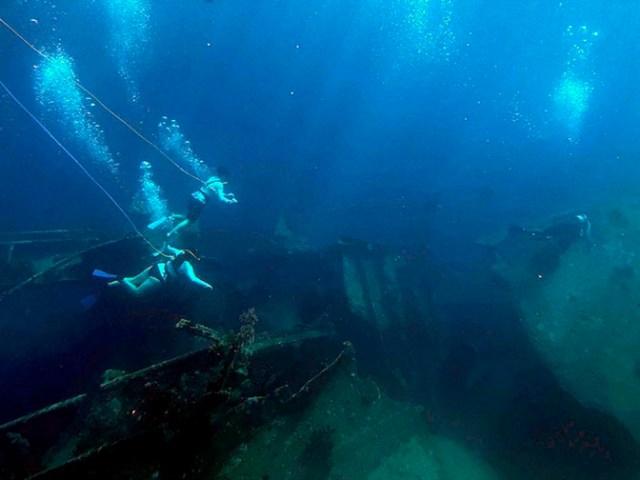
snuba people exploring the wreck
The wreck is 80 feet long and in pieces so you can never see all of it at once. The people getting the best view were the scuba divers and also some people doing snuba, which is sort of a combination of scuba and snorkeling. They have a hose going to a surface air supply rather than carrying a tank on their back like scuba divers or getting air from just above the water’s surface through a tube like snorkelers. Our ship did not offer snuba, but they likely came from one of the many hotels near the dock where we boarded the boat that took us out to the semi-sub.
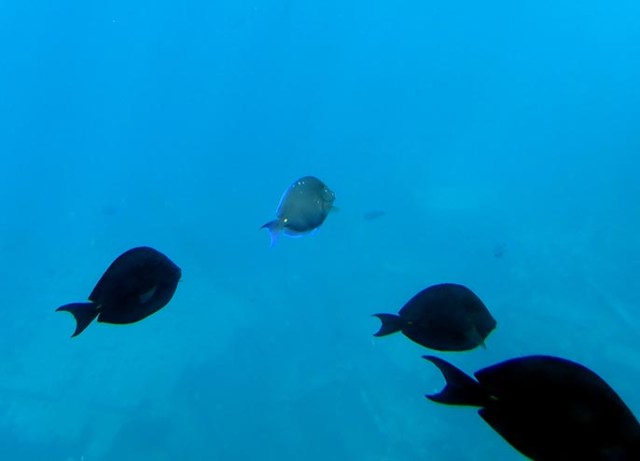
fish outside of the semi-sub
There were lots of fish near the wreck and sponges growing on it. Also lots of people snorkeling, though they were in a slightly different area of the wreck than the semi-sub. The divers and snuba people came closer since they were at or near the bottom rather than on the surface. The snuba people would need to watch for boats though since their air is surface supplied. They did not get close enough for the semi-sub to interfere with their equipment.
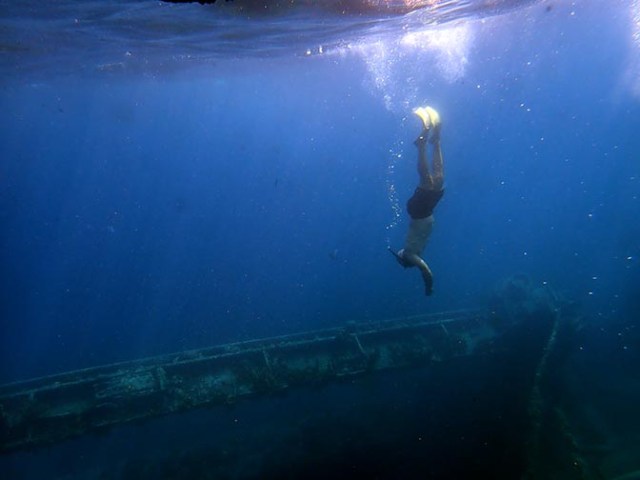
snorkeler from the semi-sub crew diving under the water
One snorkeler did come close, but he was from the semi-sub crew, giving people something to see with his antics and feeding the fish so a bunch would come close to our windows. Some blue tangs had already come up to the window, but he brought in schools of snappers and sergeant majors as well as some other fish. He was able to free-dive all the way to the bottom with just a snorkel where you can only get air at the surface. Apparently he could hold his breath for a long time since he stayed down there quite awhile.
Near the end of our time in the semi-sub a turtle swam close enough for us to see it. It was clearly visible, but a bit too distant for cameras or phones to get a decent photo of it. Then our time there was over and we had to take the ladder-like stairs back to the surface and wait for the boat to arrive and return us to shore.
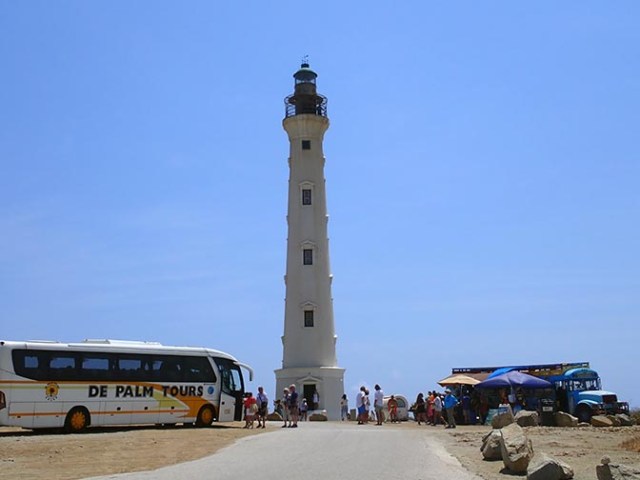
California Lighthouse
The last stop on the tour was the California Lighthouse. It was not named after a place, but rather after a ship called California that sunk there before it had a lighthouse to warn it away. Of course, the ship could have been named for a place. Like many lighthouses in earlier times a lighthouse keeper had to man it, but it’s automated now. The former keeper’s house got turned into a restaurant. There was also a food bus next to the lighthouse.
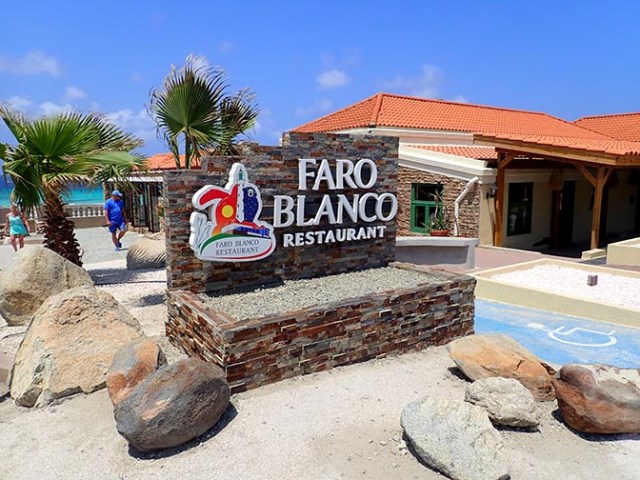
Lighthouse Keeper’s house turned restaurant
People can climb to the top, but we only had 15 minutes at that stop and you have to pay to climb it so we just took photos from the ground. We saw lots of birds landing on cactus there, pecking at it so it must be a food source for them. A couple tiny lizards ran from a barren rocky area into some groundcover vegetation to hide. There were not any stacks of rocks in that area. Probably too much cactus for people to look for any rocks they can stack, much to the benefit of the lizards or perhaps that species might die out as well.
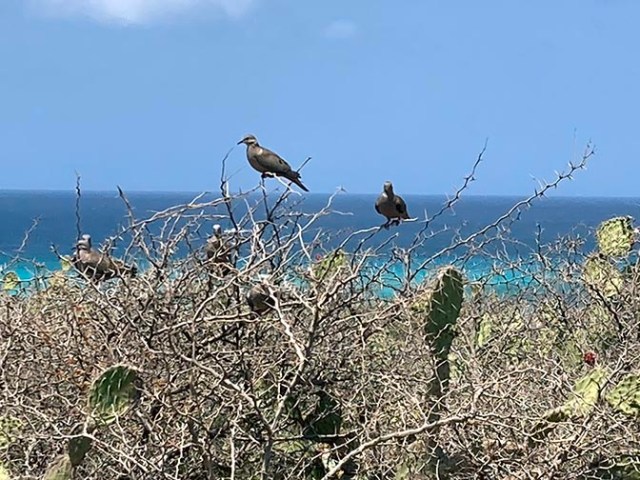
birds by the lighthouse
It was very windy at the lighthouse with enough sand blowing around to turn the air the color of sand. Our guide said people can order a meal at the top of the lighthouse. It comes from the restaurant in the keeper’s house so the server has to walk all the way from the restaurant to the lighthouse and then up all the stairs to the top to get the food there.
We did not have to show our ship cards when embarking or disembarking the vessel this cruise, they just scanned our faces. We still needed the cards for room keys, onboard purchases, and to get through security at the ports though. One lady fell asleep on the bus on the way back and then when the port security guy came onboard it took her forever to find her card after someone woke her up so we sat at the gate for a very long time when otherwise it would have just been quickly hold up the cards so the security guy can see them and be on our way.
We enjoyed this excursion. It was a different view of the wreck than from snorkeling and I hadn’t seen any of the land sites that we went to before. My sister hadn’t even been to Aruba before so everything was new to her.


 Cruise Stories
Your trip looks and sounds fabulous! I just returned from the Bahamas on Disney’s new ship, Destiny. I loved it!
Cruises are always fun. We find things to like about every ship. The Bahamas have some nice islands to visit too.
Loved all the pictures and your details of this trip. Looks like a great place to visit, and I really didn’t know much about Aruba before now.
Thanks. I’ve only visited Aruba as port stops on cruise ships, but it would be a nice place for a longer visit.