
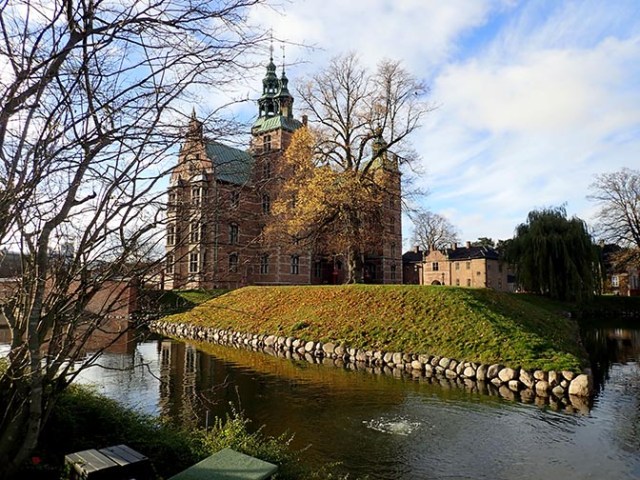
Rosenborg Castle
Prior to our European river cruise on Viking Skirnir, we spent a couple days in Copenhagen, Denmark before moving on to Budapest where the cruise began. We stayed in a hotel called Wakeup Copenhagen-Borgergade. The hotel had a great location within walking distance of a lot of Copenhagen’s attractions, but the room was tiny and the bathroom weirdly surrounded in frosted glass instead of actual walls.
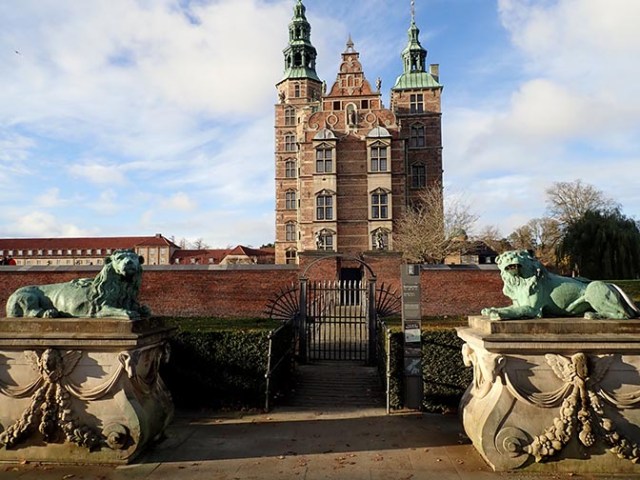
not the entrance
The closest attraction to our hotel was Rosenborg castle, which was just a few blocks away so we went there the first day we arrived after checking into the hotel. We got there late enough to get a room on arrival, but on departure day we did make use of the hotel’s luggage storage lockers which they have available for guests who need somewhere to put their things for awhile before checking into or after checking out of their room.
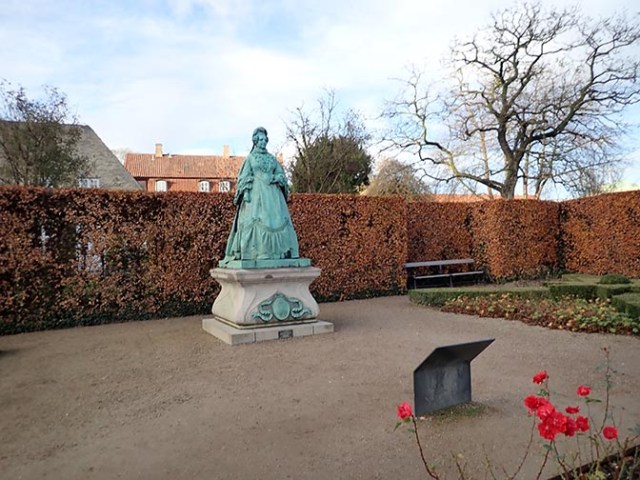
statue in the rose garden outside of the castle
Rosenborg Castle was built from 1606-1634 as a summer palace in the country for King Christian IV, who died there in 1648. This one was his favorite castle. It may have been a country estate at the time, but the city has grown up around it now. The castle remained in use as a royal residence until 1710. It was also the place where the Danish royals stored their greatest treasures since about 1660 – treasures which they could show off to their guests as a mark of their wealth and position. The castle became a museum in 1838.
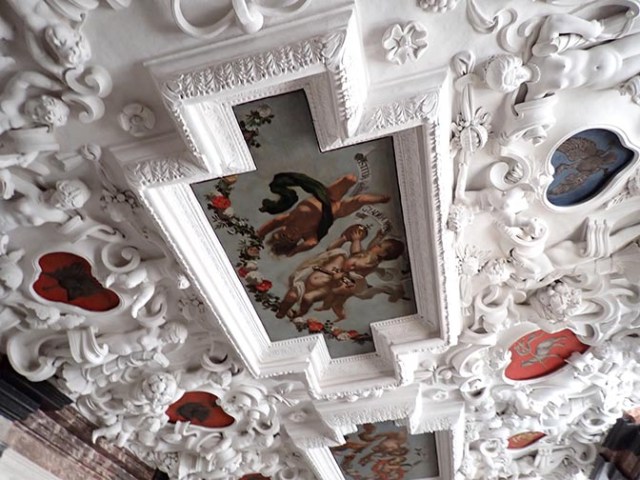
decorated ceiling
Apparently the royals of that time liked very ornate things as just about everything in the castle is quite ornate. All of the ceilings have at the very least paintings. Most have structural décor as well.
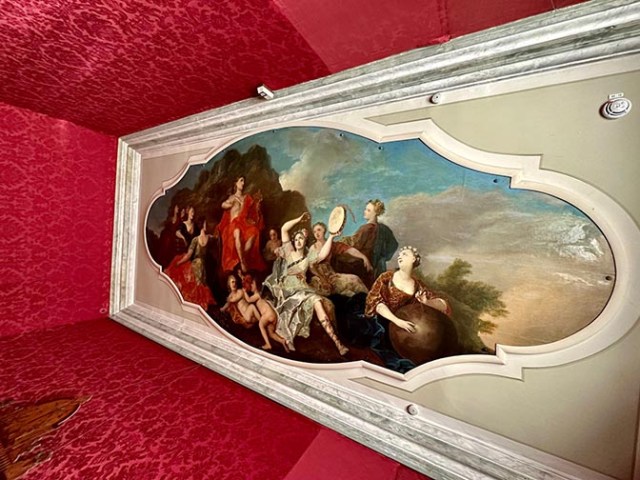
ceiling art
They really seemed to like paintings of people who were naked or nearly so as that was the topic of much of the ceiling art. Even when it looks at first glance like there’s one where the people all have clothes on there might be some nude people somewhere in the painting.
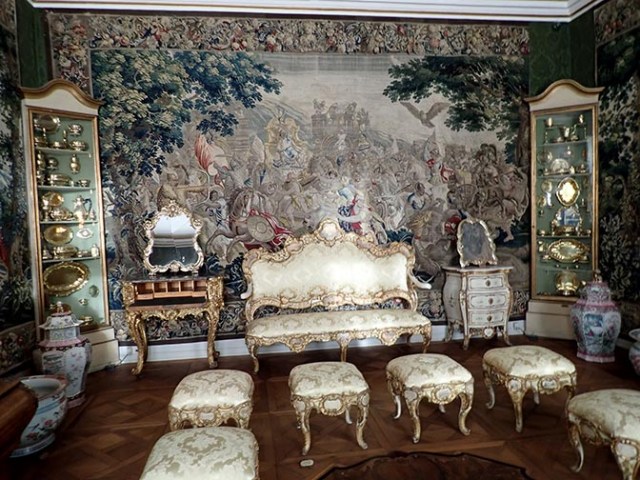
room with fancy tapestries on the walls
The furniture, dishes, and even keys on display are also very ornate. Some of the walls have massive tapestries. Much of the castle is within the area tourists are allowed to go, but some spaces are not. The self-guided tour winds through several floors of the castle as well as a couple additional spaces accessed from outside. At the desk where tickets are purchased there’s an option to scan a QR code for audio to compliment the self-guided tour and there are informational brochures available in quite a variety of languages.
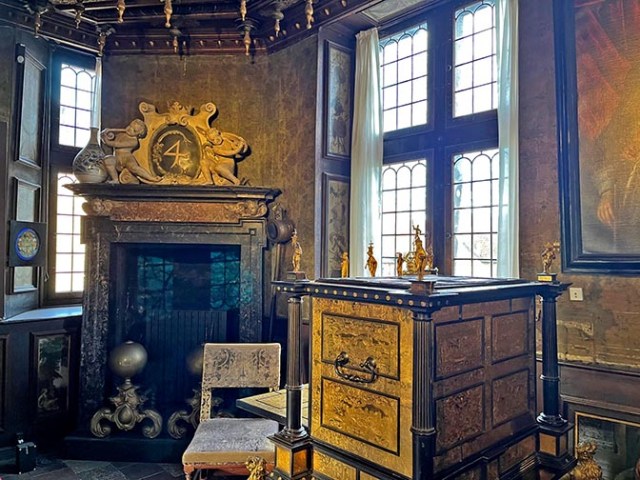
winter room
On the ground floor a room called the Winter Room was undergoing renovations, which appeared quite necessary considering some of the exposed inner walls showed quite large gaps and cracks. According to the brochure this room contains 3 secret music channels which are likely some sort of tubes or open space in the walls where music could be heard in the room from musicians playing in the basement. The room labeled as Christian V’s chamber in the brochure has a mouthpiece in a windowsill which they assume was used for communication with a hall at the other end of the castle.
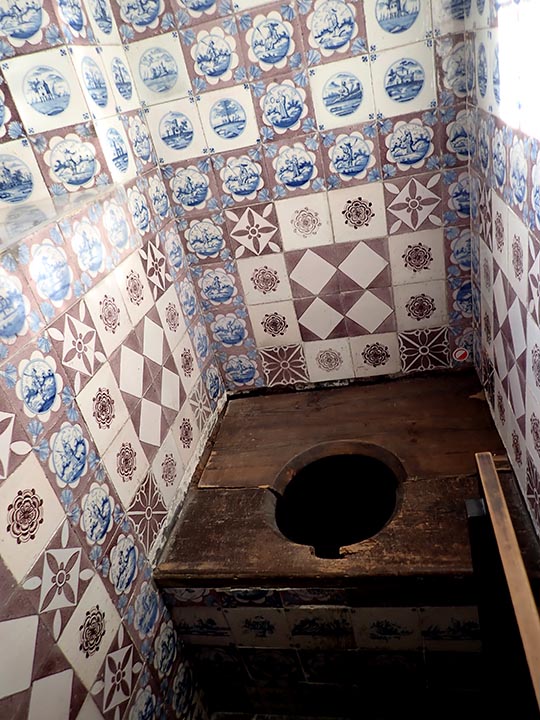
king’s toilet
Besides all the ornate decoration of the castle itself and objects within it, there are also many portraits of the former occupants in various places around the castle. One small room on that floor was completely covered in tile except for a wooden commode in one corner, which is labeled in the brochure as Christian IV’s toilet. This was the only bathroom in the tour, but the brochure says the castle has 3, each of which has its own chute to the moat. There was nothing else in the bathroom, but since this castle predates indoor plumbing they may have had a pitcher of water or something for hand washing. Or else they just didn’t care since it also predates the discovery of bacteria and back in the day even doctors inadvertently spread disease through unwashed hands.
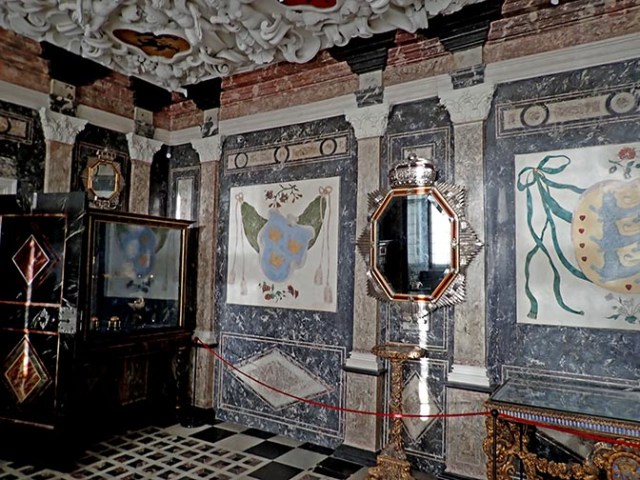
Marble Chamber
A room called the Marble Chamber had marble everywhere.
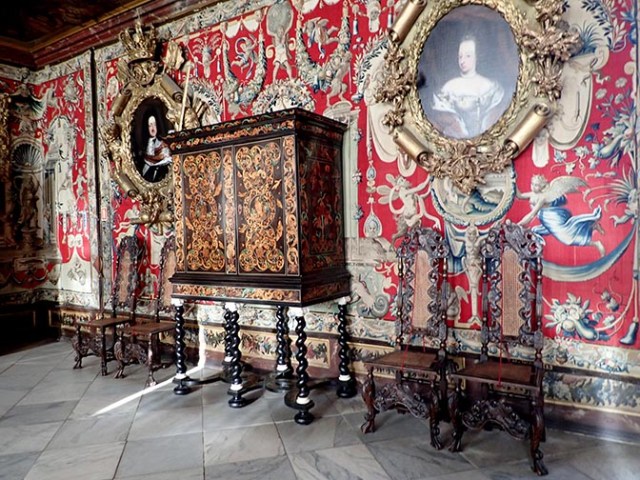
room in the castle
After visiting the 9 rooms on the ground floor, the tour continues up a stairway to the first floor, which has 14 rooms. Throughout the castle Some areas are set with furnishings as they would have used them. Others have displays of things like dishes, jewelry, small statues or other ornamentation – or some of each. Most are open or just have some things roped off, but in a few rooms all of the displays are behind glass.
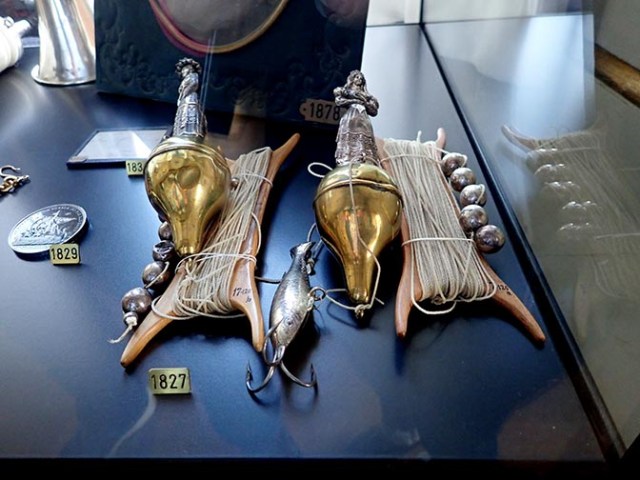
royal fishing tackle
One of the rooms on this level has mirrors all around the walls, ceiling, and even part of the floor, which gives the impression that you are looking down through many levels when looking at the floor part, though it is really just the floor and ceiling reflecting each other. Although this room is the least ornate, mirror glass was quite expensive at the time the castle was built so a room full of mirrors was an impressive extravagance. Just about everything in the castle has extravagant decorations. Even things like fireplaces, cabinets, beer steins, chess pieces, and weapons. They even had fancy fishing tackle.
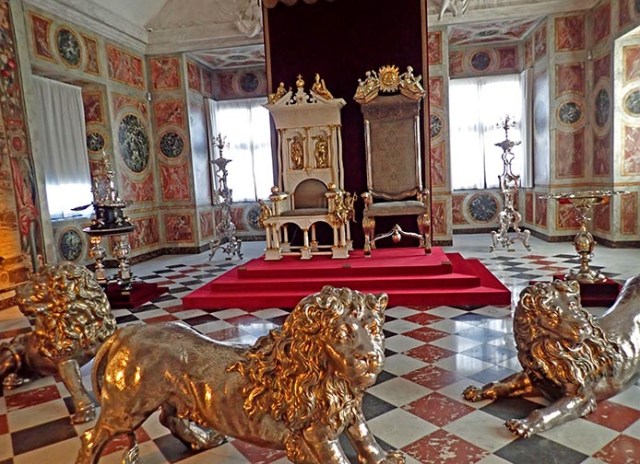
throne room
The second floor, which is the third one visited since the first was called the ground floor is a long open room with the king and queen’s thrones at one end and another throne at the other end.
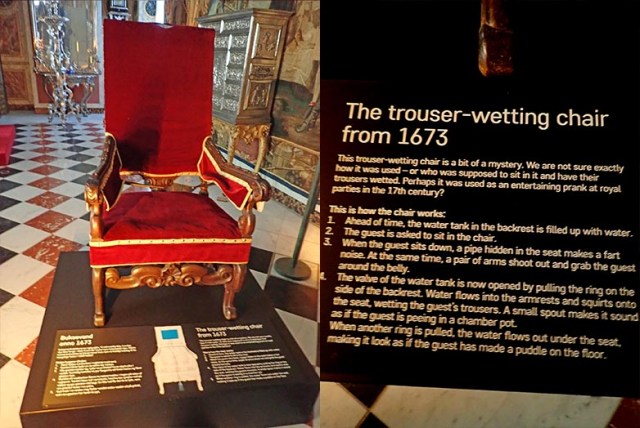
trouser wetting chair
Near the other throne there’s a chair called the trouser wetting chair from 1673 that would trap the unsuspecting victim who sat there and dump water on them while making fart sounds and then leaking to the floor as if they were wetting themselves. A very strange thing to have, but pretty impressive technology for way back then.
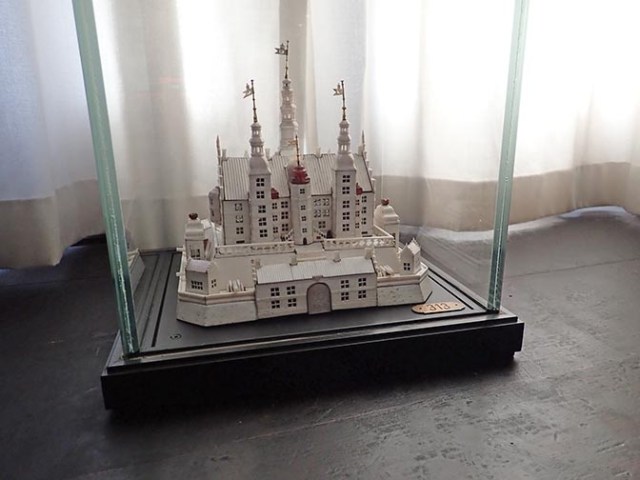
castle in a glass case in a castle
Some of the statues in the castle depict horseback riders in saddles without stirrups, but not all. There were 2 very ornate saddles on display in the basement which looked like they were made from fabric rather than leather. One was a wedding saddle which also had no stirrups. There were all sorts of artworks in glass cases throughout the castle – even a castle. Definitely not a model of Rosenborg Castle since the little one looks nothing like the real castle.
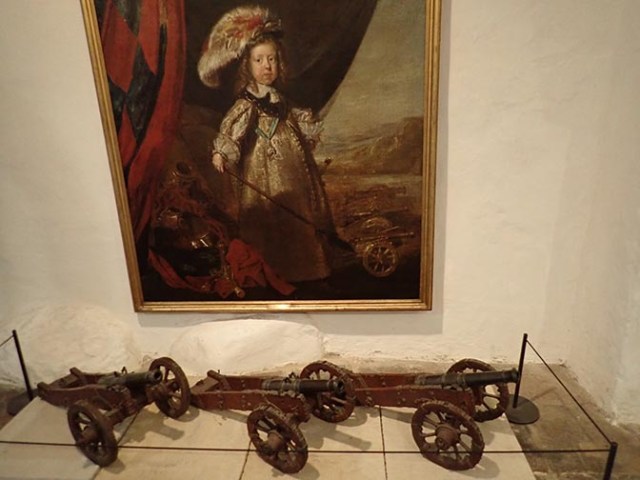
portrait of a prince hanging above toy cannons
The basement held numerous displays of weapons from various eras from swords to guns – most with ornate decorations like everything else in the castle. It had some instruments that look like big circles, but were used to calculate the positions of the planets and to predict eclipses. The planetarium equipment was from 1682.
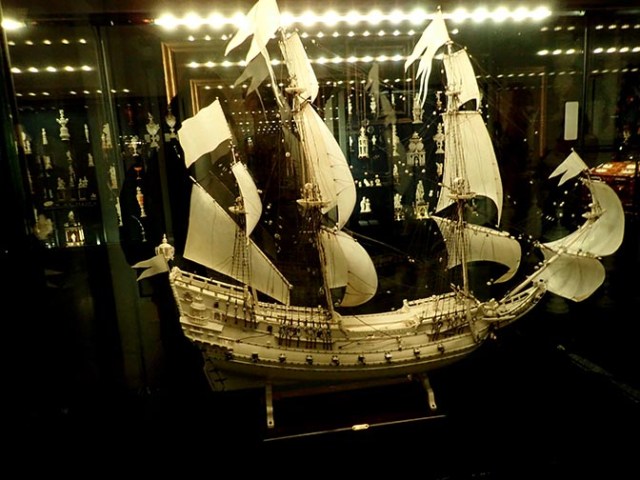
ivory sailboat
Other things found in the basement included giant kegs and a storage area that still has many bottles of ancient wine. Also a display of ivory and amber items. There was quite a large sailboat made from ivory and a whole army of chess figurines that look like they’re made out of gold. On the way in there’s a portrait of a small child next to 3 miniature cannons – war toys for royal boys.
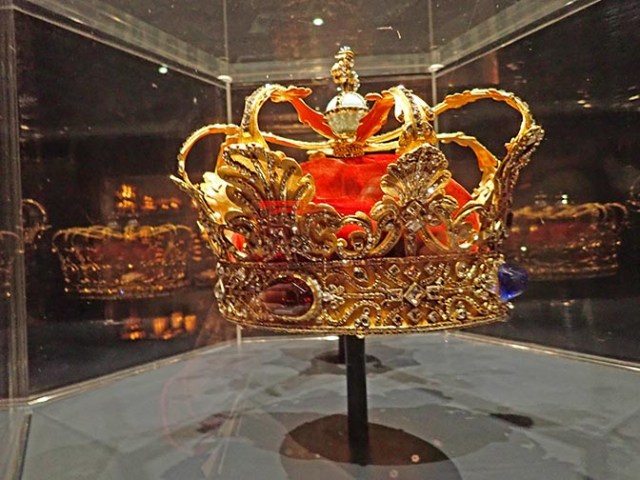
king’s crown
The treasury held crowns, crown jewels, and some more swords. The centerpiece is Christian Iv’s crown from 1596 in a glass case. The crown jewels include 4 sets – pearls, rubies, emeralds and diamonds. Information there said diamonds could only be worn in Denmark by the sitting queen.
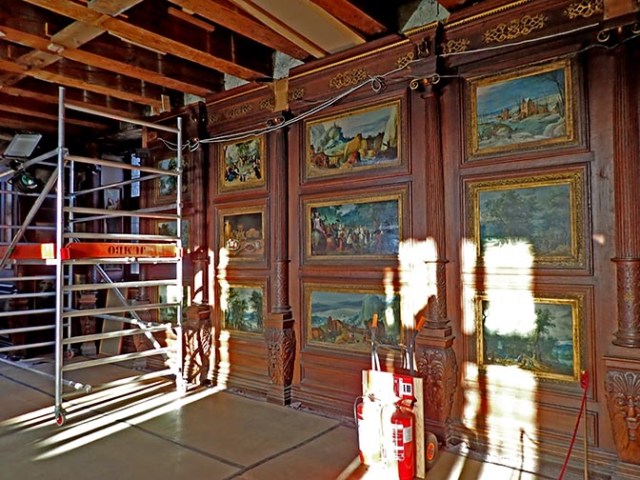
winter room undergoing renovation
The brochure lists 11 different kings of the castle from 1534 to 1863. All of them were named either Frederik or Christian with 6 Frederiks and 5 Christians. I’m not sure why the first Frederik who is listed as Frederik II was included since it says he died in 1588, which was before the castle was built for Christian IV, who is the second one listed. The last one, Frederik VII, lived both before and after the year it says the castle became a museum.
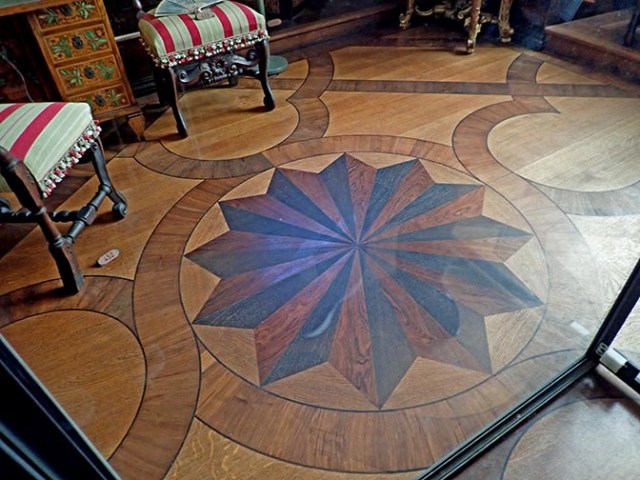
fancy floor in the castle
During the same time period there were 17 queens. Their names had a bit more variety, though there were 3 named Sophie (and one with Sophie as a middle name), 3 named Louise, and 2 each of Caroline and Charlotte. The rest didn’t share names other than there was an Anne and an Anna, and 3 with the middle name Amalie. One of those was Charlotte Amalie, which is the name of the city where cruise ships port in Saint Thomas, US Virgin Islands.
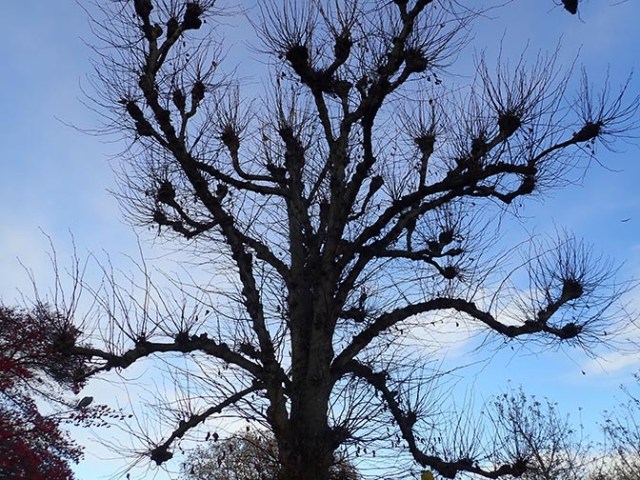
Linden tree
Overall there’s quite a lot to see and you can take as much or as little time as you want to go through the castle. The extensive grounds around the castle are like a park with a flower garden, lawns, pathways, and some statues. Also lots of locals walking dogs. Some of the trees have crazy pod things that look like big burls where a group of branches grows. The whole tree is covered in what looks like burl-type growths. That appears to be from pruning since all of the pruned linden trees we saw had those, but unpruned ones did not.


 Cruise Stories
Ironically, apart from the “throne” (toilet), I’d love to live here!