Endicott Arm Again


Zaandam in Endicott Arm

When we initially booked a cruise on Holland America Zaandam it was scheduled to go to Tracy Arm and Glacier Bay. Later that schedule got altered to Tracy Arm and Endicott Arm. We were supposed to go to Tracy Arm on the way to Juneau and Endicott Arm on the way back according to the most recent itinerary before the cruise started. On the way to Juneau we bypassed Tracy Arm and just continued on to Juneau. Apparently at some point they had planned that. We were not given an updated itinerary that didn’t include it, but the captain neglected to mention Tracy Arm when detailing all the places we would go that cruise in a short appearance onstage before a show on the second night of the cruise. The cruise director also neglected to mention it while talking of things to come the night before the itinerary said we were to go there. That makes three strikes for me on Tracy Arm. Previous cruises on Norwegian Sun and Ruby Princess were supposed to go to Tracy Arm, but went down Endicott instead. Both of those were last minute changes due to ice blockage. Quantum of the Seas was scheduled to go down Endicott Arm, but turned around without any sort of announcement to the passengers long before reaching Dawes Glacier at the end. I had thought with Zaandam being a smaller ship and this being a later season cruise we might finally make it down Tracy Arm, but no such luck.

You can’t see Sumdum Glacier through the fog

Our Zaandam cruise was its last Alaska cruise for the season. The weather definitely said summer is over being rainy at all of our Alaska ports. Turning into Endicott Arm in the morning fog hung over the tops of the mountains and Sumdum Glacier near the entrance to the arm was shrouded in fog. Though the name is entertaining, it doesn’t actually mean someone thought it was a dumb glacier. In the Tlingit language it means big noise – probably due to the loud cracking sound of ice breaking off when a glacier calves, which is often preceded by thunderous rumbles.

waterfall in Endicott Arm

As we went farther and farther down Endicott Arm the weather cleared and the sun even came out. There was still a bit of fog at the tops of the mountains, but down at water level it was clear, sunny, and the warmest weather we had during our entire time in Alaska on that cruise, which is not to say it was actually warm. Just that with long johns, several layers of clothes, a warm winter jacket, hat, and gloves you could stand outside for quite awhile without absolutely freezing. Even if the weather is actually warm when you get near a glacier the temperature feels freezing. Because the glacier is of course a massive amount of ice.

waterfall and bergy bits

There’s only two glaciers to see in Endicott Arm. Sumdum Glacier is a hanging glacier visible on a mountain near the entrance to the arm. The mountain, called Mount Sumdum, spans the land between Endicott and Tracy Arms. On a map it looks like the glacier is not only bigger on the Tracy Arm side, but also closer to the water. Since I’ve never managed to actually cruise Tracy Arm I have no actual knowledge of how it looks from there. Tracy Arm also has twin Sawyer Glaciers, but you have to get to the ends of the channel to see them.

Dawes Glacier

The other glacier in Endicott Arm is Dawes Glacier down at the far end of the arm. On this visit the water was flat calm all the way there and the weather sunny at the glacier end with fog only at the mountain tops. My two previous visits there were at sunrise with the sun behind the glacier making it really hard to get a decent picture. This one was later in the day so other than some distracting reflections in the very clear and still water by the glacier it was much better for photos.

Zaandam at Dawes Glacier

As usual the ship spun a very slow circle as close as it could get to the face of the glacier so people on either side of the ship would have a chance to see. Not that people can’t wander over to the other side of the ship, but all of the public viewing areas get pretty crowded so it’s nice to see it away from the crowds in your own cabin, especially if you have one with a balcony. Holland America opens up the bow for scenic areas like this and many people congregated there. They have a tradition of serving pea soup at glacier viewings, which is quite tasty if you manage to snag a cup of it. They just had the occasional crew person bringing a tray of cups of soup out from the kitchen on this ship rather than a table set up with a pot of it so you had to be in the right place at the right time to get one. We happened to get lucky and come across a crew guy just as he got to the bow with a full tray.

scenery near Dawes Glacier

The bow cam channel on the stateroom TV was a really good way not only to see what is straight ahead if watching from your own room as the ship makes its way down the channel, but also a good way to see how crowded it is out there. Both the upper bow accessed from the front of deck 6 port side, and the main bow accessed through the theater were quite crowded not only at the glacier, but also for the last bit of the way there. The upper bow has stairways to the lower bow, but they were closed while the lower bow was open for glacier viewing. The stairways up from the promenade deck to the bow remained open so the theater was not the only access point, though everyone ended up herded through one small door whether going to or from the bow so the lines had to take turns for going in or out. You would think they would open the door on the other side and have one side for in and one for out, but they just opened one.

The front edge of the glacier is in a narrow channel

Dawes Glacier at the end of Endicott Arm was not the most impressive of glaciers the previous times I went there. Like most glaciers it is receding and has gotten smaller since my last visit. The ships used to get somewhat closer, but the face of the glacier has now retreated into a narrow channel so they can only get close enough to where they have enough space to turn around – probably a couple miles away. Eventually that glacier may retreat beyond a bend in that narrow channel where it won’t even be visible from where the cruise ships stop now, but that is probably still some years down the road. People who have never seen a glacier before may have been impressed, but not likely anyone who has. I did overhear other people saying they thought it was pretty small so it’s not just me.

Dawes Glacier

The captain and cruise director were hyping up Dawes Glacier in their short talks at the shows where they neglected to mention that we weren’t going to Tracy Arm or why. From the way they talked you would think we were going to Hubbard Glacier, which actually is massively huge and quite impressive. After having seen Hubbard I fail to be impressed by smaller glaciers though I do like seeing Sumdum Glacier because of the funny name.  Perhaps the captain and cruise director had not actually seen Dawes Glacier before and expected something bigger as both said it would be their first time going down Endicott Arm. Their previous cruises all summer must have gone to Glacier Bay and maybe even Tracy Arm as was scheduled for this cruise.

If I hadn’t been to Dawes Glacier before and known what to expect I’d have been pretty disappointed after hearing all the hype about what a grand and impressive glacier it is. Then again people who have not ever seen a glacier before might be impressed as they wouldn’t have any others to compare it to – and it is bigger than Mendenhall Glacier in Juneau. Anyone booking a cruise to Alaska specifically to see a glacier would be best off finding one that goes to Hubbard Glacier. It’s farther north than most of the round-trip one week cruises go so it’s not on that many cruise schedules, but definitely worth a visit if you find one that goes there.

the glacier looks like it has tire tracks on it

Besides being fairly small as tidewater glaciers go, Dawes is also kind of a dirty looking glacier having a couple moraines running through it. Moraines are where edges in the ice meet. Each edge has a lot of dirt it that pushes along at the end of the ice. These give this glacier the appearance of having dirty tire tracks running up the glacier. A terminal moraine is the ridge formed at the farthest end of a glacier’s advance. The terminal moraine to Dawes Glacier is called Wood Spit. It’s nowhere near the current face of the glacier. It’s located about 30 miles away in Holkham Bay near the entrance to Endicott Arm.

one of these bergy bits resembles a submarine

Other than the glaciers there’s lots of scenery with trees and waterfalls along the sides of the fjord and many bergy bits floating in the water. Even though they’re natural ice chunks calved off a glacier, bergy bits often look like ice sculptures of recognizable things – especially if you have a good imagination. On this trip we saw bergy bits that looked like a jet ski, a swan, a submarine, a whale, and a whole bunch that looked like fish. Bergy bits are miniature icebergs too small to actually be considered an iceberg.

icy wave runner bergy bit

Sometimes there are seals or sea birds on some of the bergy bits, but other than a few birds in flight we did not see any creatures on this visit.

As we slowly worked our way down the fjord toward the glacier the weather got nicer and nicer, but apparently it was where we were going rather than the weather itself. When we came back up the fjord the fog got thicker and the air colder the farther we went and by the time we got back to the opening to the inlet the sun hid behind the clouds again. Sumdum glacier was shrouded by even more fog on the way out than it had been on the way in. As glaciers go Sumdum is not impressive at all, at least not on the Endicott Arm side. Even on a sunny day it’s just a small patch of ice on a distant hill. It’s all about the name on that one. It’s fun to say “I went to Alaska and saw Sumdum Glacier.” Then people wonder why bother to go see them at all if you think it’s just some dumb glacier.

entrance to Ford’s Terror

There’s a small inlet branching off of Endicott Arm called Ford’s Terror. Cruise ships don’t go into it, but you can see the opening to it as the ship sails by. It’s called Ford’s Terror because of a naval crew member named Ford who rowed up the inlet in a small rowboat in 1889. He went in at slack tide, but became trapped in there for the next 6 terrifying hours unable to row back out in the turbulent waters of the incoming tide. Had he known he would be able to get out once the tide changed he might not have been so frightened.

sailing past Ford’s Terror

Endicott and Tracy arms both branch off in opposite directions from the same entrance off the main channel, called Stephens Passage. There was nothing blocking the entrance to Tracy Arm so I’m not sure why we didn’t go there. Somebody said it was closed. The same person also said Glacier Bay was closed, but the Grand Princess went there. It left Vancouver with our ship and went to all of the same ports we did, but was in Glacier Bay while we were in Endicott Arm so obviously they were wrong about Glacier Bay. It’s possible our ship didn’t secure a permit to go to Glacier Bay that day, but even that seems a bit odd since the cruise was scheduled to go there well in advance and had been going there all season. The scenery in Endicott Arm is pretty, and it was nice to have that little sun break.

Copyright My Cruise Stories 2025
Posted in Alaska, Holland America, USA, Zaandam | Tagged , , , , , , , | 1 Comment

Budapest

Budapest

Budapest, Hungary

The region where Budapest is located was first occupied by Celtic tribes and over the centuries conquered by Romans, Mongols, the Ottoman Empire, the Austrian Empire, and the Soviet Union. Buda and Pest were originally separate cities along with an earlier lesser know one called Obuda. Eventually all three combined in 1873 to make one city called Budapest. The original town of Buda was on one side of the Danube River while Pest was on the other. Hungary gained independence in 1989 with the collapse of the Soviet Union and became a member of the European Union in 2004. Budapest is the capitol of Hungary as well as its most populated city.

Chain Bridge

The parts of the city that were once Buda and Pest were first connected by the Chain Bridge across the Danube River built in 1849. There are now 7 bridges connecting the two. Currency is the Hungarian Forint. One US dollar equaled 368.41 forints when we were there a few months ago. Now one US dollar equals 339.11 forints as the dollar continues to decline compared to other currencies worldwide. Shops in Hungary often accept euros and US dollars, but at a steep exchange rate so it is better to have the local currency or use a card. The climate is temperate and humid with warm summers and cold winters. Average yearly rainfall is about 19-31 inches.

Elizabeth Bridge

World War 2 was hard on Budapest. All 7 of its bridges were destroyed or damaged in the war and had to be restored or rebuilt. It lost 80% of its buildings as well. Many have been restored or rebuilt, but there is still much scaffolding around the city where things are under repair. Buda Castle above the city has a wall on one end where guard’s barracks used to be that is currently mostly just the one wall – with scaffolding. It also had construction going on below the castle walls.

construction zone at the bottom of the castle wall

I’m not sure what the deal is with European hotels, but they don’t seem to like privacy in the bathrooms. The one where we stayed in Copenhagen just had frosted glass around the entire bathroom. Prior to boarding Viking Skirnir in Budapest we stayed at the H-2 Hotel for a few days. It had a nice spacious room, but only the toilet was enclosed with walls and a door. The shower and sink were just open to the room. The shower had frosted glass on one end, and just plain glass on the side by the sink. There was a mirror on the wall opposite it so not only is the glass see-through, but you are also reflected well beyond it.

scooter tour in Budapest

Tourist attractions in Budapest include thermal baths, castles, caves, museums, historical buildings, river cruises, churches, and walking tours. The thermal baths are famous for being heated by natural hot springs. Some of them are, but for anyone to which having the natural hot spring is important research carefully before going because some of them are just ordinary water while others actually are heated with natural hot springs. Some are large with many pools and the older ones have architecture relevant to the time they were built. Another tourist attraction is a large Ferris wheel called the Budapest Eye.

funicular

Other activities include segway or scooter tours, a hop on hop off bus, and a funicular up to Buda Castle. The funicular goes up castle hill from near the bottom of the chain bridge up to the castle grounds. A funicular is cable railway system on a steep slope with a set of two cars running on parallel tracks that balance each other out as one runs up while the other goes down. These are used in many places around the world to transport people up and down steep hills. The one in Budapest has 3 compartments in each car offset from each other with the ones above rising higher than the ones below. Fantastic views can be had from outside of the funicular at the top of the hill and from bridges crossing over the funicular track. There are many excellent viewpoints on the castle grounds as well.

one car of the funicular

The first day we went there the funicular had a long line with a wait of about an hour to go up so we waited until the next day and went back first thing in the morning when we could go right up with no line. We were the second group of the day to go up so there were no crowds when we first got to the castle.

view from the funicular

The funicular offers a wonderful view of the city from the lowest of the three compartments on the way up or down. The windows in the middle and top compartments are much smaller and the compartment in front blocks most of their view. You can see the track from the larger window at the back of the upper compartment, but as there are walls on both sides of the track that window doesn’t show much else.

castle gate

The funicular is the fast way to the top of castle hill, assuming you are there when you can actually get on it without waiting in a long line. The little castle express busses available at the bottom by the hop on hop off bus stop would be faster at times when the line is long. Those busses make 4 stops on top the hill whereas the funicular has just one station at the top and one at the bottom. There’s also stairs so people can just walk up the hill if they want to.

tower at Buda Castle

The top station of the funicular lets out at Buda Castle, which could be a destination on its own. It has sprawling grounds with views of the city all along the wall on the side above the Danube River. Besides the main palace buildings it had an older looking one with a tower that had stained glass windows.

tower in a hollow surrounded by high walls

There were signs on the castle about a museum and gallery inside, but nothing was open while we were there. There’s a lot to see just walking around the grounds on the outside of the castle. It has many statues and viewpoints as well as the architecture of the castle itself. Some of it has been restored after being damaged in World War 2, but there was still much under construction. There was an ancient stone tower down in a hollow where the only thing anyone would see out the window is a wall. It looked even older than the other old tower.

restaurant at Buda Castle

A coffee shop/information booth sat in the courtyard in front of the castle and there was a restaurant in another courtyard accessed through a walkway to the backside. There was also a little mirrored building on the backside with a sign saying it was both tourist information and a gift shop. None of those were open during our early morning visit.

parliament building

The parliament buildings near the Danube River are a major tourist attraction. Along the side of the river not far from there a bunch of old shoes make a memorial for people executed in that spot by Nazis near the end of World War 2 in one of the many atrocities committed by the Nazis during that war. At that time they were low on bullets so the Nazis tied the entire group of victims together and shot one of them. That person fell into the river, dragging the rest in with them to drown. The shoes in the riverside memorial are the actual ones the victims wore when they died. Some are tiny children’s shoes. It’s terrible what can happen when one evil leader conditions their minions to think of certain other people as less than human.

shoe memorial from World War 2

Some visitors to the shoe memorial leave things in the shoes, sort of like putting flowers on a grave. Some of the tiny shoes were full of toys and candy.

St Stephens cathedral towers over all the buildings around it

The parliament buildings are the tallest in Budapest with one exception. Saint Stephens Cathedral is exactly the same height. That is intentional rather than coincidental, done to indicate that man is not above god. The castle and other buildings on the other side of the river sit higher since they are up on a hill, but apparently it was the height of the building itself rather than how high the top reaches that mattered.

Copyright My Cruise Stories 2025
Posted in Europe, Skirnir, Viking | Tagged , , , , , | 1 Comment

Melk Abbey

arched entry to the inner courtyard at Melk Abbey

Melk, Austria

Melk is a city in Austria at the confluence of the Danube and Melk Rivers with a population of over 5000 people. It is best known for Melk Abbey, home to Benedictine monks since 1089. Melk has a temperate humid climate with temperatures ranging from winter lows in the low 30’s F to summer highs in the upper 70’s F. It generally snows about 60 days each winter. Currency is the euro. Tourist attractions besides the monastery include castles, churches, a museum, and the Danube Valley. Melk is in a wine-growing region where vineyards dot the hillsides between villages.

Viking Skirnir in Melk, Austria

Melk River Cruise Port

Melk has several docks for river boats of which the dock itself is shaped like a boat. We parked at one of them. Another ship parked behind us just after we got there. The gangway from the ship goes to the boat-shaped dock, then it has a gangway up to the shore. From there it was a short walk to a parking lot where busses waited to take people up to the abbey on top of a hill.

entry gate

Melk Abbey

Melk Abbey first opened in 1089, and has had a monastic school since 1160. It was rebuilt between 1702 and 1736 in the current baroque style. The site was once a Roman garrison. It was handed over to the Babenbergs as a castle residence in 976. They were Austria’s first ruling family before the Hapsburgs who took over in 1101 then ruled for 600 years before the Ottoman Empire. When the Babenbergs left Melk to move elsewhere they put Benedictine monks in charge of the buildings to safeguard their ancestors who were buried there. There have been as few as 8 to as many as 100 monks in residence over the centuries with the count at 22 when we were there. One of those monks teaches at the school that now inhabits a good portion of the building. Because it is still a functioning Abbey as well as a school no photos were allowed inside the building.

view of the abbey from the top of the parking lot stairs

Busses park in a lot above the abbey with a stairway down and some excellent views along the way. The abbey itself perches high above the river with excellent views of its own.

waiting to go in

At the abbey we waited out in the cold while the guide got tickets for everyone when we first arrived in the courtyard. Then 3 guides who worked there came out with one assigned to each of groups A, B, and C. Passengers from Viking Skirnir assigned to groups D and E would come half an hour later. The guided tour took 1 hour. We were allowed to take photos at the start of the tour while we were still outside, but once we passed through the door where they took the tickets no more photos were allowed except from a terrace while outside on a bit when we went out one door and across the terrace to another door leading into the library.

inner courtyard

The first thing past the entry door were giant portraits of Marie Antoinette’s mother and her husband who were the first royals to visit the abbey. Back in the day there were no hotels so monks put up travelers in the monasteries. Travelers of that era generally were royals as most common people didn’t have the time or the money to venture very far. The very long hallway was called the royal hallway. It had many rooms where visiting royals stayed.

stairway to the ticket door

Going into some of the rooms it was a bit disappointing that none of them remain furnished as they would have been way back when those royals visited there. The only things remaining were the original giant ceramic heaters in a corner of each room and what little bits of the beautifully patterned wooden floors were visible rather than covered by carpet – which is there to protect the floor as the only visible areas are not where people are allowed to walk. Other things in the room were set up like a museum with articles in glass cases, none of which and anything to do with the royals.

building view from the terrace

In another area there were some ornate gold-plated chalices that were gifts to the monks from visitors, but artifacts in the rooms were mainly from the monks. The item the guide talked about most was a monstrance, a word that resembled monstrous which is what it sounded like she said. Monstrous fit that artifact since it is a fancy golden thing holding the jawbone and one tooth of the person that they consider their patron saint, though he neither died there nor was he from there. Our monastery guide said that the body was brought in because they wanted a holy person. He’d been an Irish explorer hanged in Vienna for being different while he was on a pilgrimage to the holy land. The tree he was hanged from bloomed in winter so they decided he was a holy person. Now he’s Saint Coloman, patron saint of the Abbey and of Melk. I personally find collecting and or displaying human bones quite creepy. The tree blooming in winter isn’t creepy, but Google’s story about him is. There it said that he was a missionary hanged after falsely being accused of being a spy and he was made a saint because his body showed no sign of decay and his blood healed the sick. Who uses the blood of a dead body for healing? In most cases that would make people sicker.  The guide did not mention that bit, just the tree thing.

view of Melk from the terrace

At the end of the long hallway there was a room called the marble room which was where visiting royals dined. Most of the marble walls were fake marble rather than real, which the guide said in the modern world would actually cost more because of the time it takes to make it, but back then it was a cheap imitation that looks pretty much like the real thing. That room also had a ceiling which was painted to appear curved, but was actually flat. Painted columns running from the top of the wall over the edges of the ceiling look like they are standing straight up from the center of the room, but if you look up from the end of the room you can see the curve.  Another room we saw later had an actual curved ceiling and it really was hard to tell the difference between that and the illusory one.

library from the outside

After walking across the outside terrace we went into the library. It is currently in what the guide called the baroque style which is original to that room. She said this is the last year to see it in its original form as it is scheduled for renovation and will soon be redone in a different style. The first room of the library has leatherbound books, some of which are over 1000 years old. They are all science type books in a variety of ancient languages arranged by subject whether that is medical, philosophy, or something else.

picture of a picture of inside the library

The second much smaller room in the library has books that are only several hundred years old and written in modern languages still spoken in various countries. The spiral stairway in that room leads to other rooms of the library where only librarians working there are allowed access. The library has 12 rooms, but just two are included on the tour.

We took a different spiral stairway down to the church portion of the abbey. Cleverly placed mirrors gave that stairway the appearance of going infinitely up or down unless you notice the reflection of your face in the mirror in what appears to be many stories down an endless spiral.

picture of a picture of inside the church

Inside the church was even more ornate than the ones we saw previously this trip, and they were all quite ornate. It had a large and very fancy pipe organ at the top balcony area at the back, which is typical of old European cathedrals. The front alter area pictured gilded figurines of Saint Peter and Saint Paul going to heaven rather than a crucifix like adorns most catholic churches. There is a very modern alter forward of that where current services are performed as they want to face the parishioners now rather than having their backs to them as was done in the original alter area.

On each side of the church there is an ornate coffin up on the wall, one an actual occupied coffin and the other an empty one honoring someone buried elsewhere. Heading from there toward the back of the church there is on each side a clear case on the wall with an actual skeleton of unknown people from the catacombs of Rome. A gift from someone in the past. I thought 3 dead bodies in the sanctuary of a church of which 2 are visible skeletons was even creepier than the monstrous thing. The guide did mention that the monstrance is considered the monastery’s most precious artifact. I guess they don’t find bits of dead people disturbing and nightmarish.

outside corridor

The church is the last thing on the tour. Even though it is still an actual operating church that still holds services like any other functional church, the tour exits through a gift shop like pretty much all tourist attractions everywhere. There’s also a couple more gift shops where entry is optional before you get to the exit. One of those was open and the other closed. It has a little café too. Since we had about an hour between when the tour ended and when the busses would arrive the gift shops and café were popular places for people to hang out since they were warm and the outside cold.

cat on the stairway to town

There was a long steep stairway leading into town. We found the first and only cat we saw outside in Europe on that stairway. It could have been a pet from somewhere in the town, a stray, or belonged to the abbey since a place that old probably needs some rodent patrol. The only other cats we saw the entire time were through the window of a cafe in Amsterdam that was not open at the time.

clock

We wandered through the gift shop a bit and still had some time to kill before meeting the bus. Since it was very cold outside we went to the little cafe and shared a dessert for a warm place to wait. A lot of other people from our ship were in there too.

dome on top of the Abbey

The tour of the abbey was the included (and only) excursion for the port stop in Melk. Unlike our previous stops, the boat did not stay at the dock the whole time. Instead it went through the next lock while anyone who went on the tour was away. Then it waited at a port on the other side of the lock for the passengers to return by bus. The bus ride was half an hour, but they said it took the boat more than 2 hours to get there. There was no port stop in Ybbs where we got back on the boat. Just walking from the bus to the boat which then left as soon as everyone was onboard. Shortly after it entered another lock. There were 63 locks on the journey so we passed through a lot of them.

Copyright My Cruise Stories 2025
Posted in Europe, Shore Excursions, Skirnir, Viking | Tagged , , , , , , , , | 8 Comments

Petrohué River Rafting Adventure

white water rafting

One of the excursions offered on Holland America Oosterdam in Puerto Montt, Chile was called Petrohué River Rafting Adventure. It promised a class 3-4 rafting trip with spectacular scenery of old-growth forests and breathtaking views of the surrounding mountains and volcanos. The tour also included a picnic lunch and wetsuits provided for the rafting.

ready to go at the starting point

Other notes in the booking information said that guests must be fit and have stamina enough to paddle in rough open waters perhaps for long periods of time. The ability to swim and walk over uneven terrain was also required. Allowed age range was from 12 to 80. It also mentioned wearing comfortable walking shoes and to wear light-colored clothing to avoid attracting horse flies, of which it said only a few lived near that river. Additional instructions included to wear a swimsuit under your clothes and to bring a towel and a set of dry clothes.

lots of rafts

The bus ride from the port to the river was a bit over an hour long. Every now and then a guide would give a little bit of history about a town we passed through along the way. Mostly about when the towns were founded a bunch of Germans settled there as well as local people from Chile so they had some German architecture and German influence in the food.

big drop

The guide said that the Petrohué River is in Patagonia, and that it is so clean you could drink out of it. On a clear day you can see 5 volcanoes from the river, but we did not see any through the clouds. They also said you could see to the bottom of the river on sunny days. Through most of our journey we could not see below the surface, though there was a bit near the end where we could see some of the rocks on the bottom.

a moment of relaxation

After saying a sunny day would provide excellent views of the 5 different volcanoes, she added that the advantage of that day being a cloudy, humid day with some rain was that we would not be surrounded in horseflies as they didn’t come out in that weather. Apparently there are a lot more of them on the river than the cruise ship blurb said there would be. Even with the clouds and bit of light rain we saw one here and there.

paddles up to celebrate successfully navigating a rapid

The first stop was at a supply shed where they handed out wet suits, along with jackets, booties, helmets, and life jackets. It rained while we were there, but then stopped and didn’t rain again. This stop had restrooms and a changing area. It turned out not to matter what color clothing people had on or what shoes they wore as the rafting was done in the provided gear. It’s best to wear a streamlined sort of swimming suit that will fit under a body-hugging wetsuit. Anything you have on under the wetsuit will be soaking wet by the time the rafting trip is over so the towel and dry clothes were definitely right on the mark. However anything you don’t wear under the wetsuit will still be dry so a second one of whatever you take off isn’t actually required.

paddling down the river

If you want to keep your socks on so as not to put your bare feet into probably wet booties that who knows how many other people have worn then a pair of dry socks is needed, as is of course underwear since you’re wearing a swimsuit instead. Leggings will fit under the wetsuit so bring dry pants if that’s what you plan to wear under it. Some people were given jackets made from wetsuit material, but others just a light pullover raincoat sort of jacket. The wetsuit is overall style so if it’s not a warm day the people with the thinner jackets may want to keep their shirts on, in which case having a spare dry shirt would be necessary as well.

you get wet

The guide mentioned that anyone with glasses needed a strap for them or they could fly off your face and get lost in the river. They did not have any straps to provide with the gear so if you need one you have to bring it yourself. Considering that water will rush over you multiple times during the journey if it is possible to go without glasses that’s the best option since glasses don’t come with windshield wipers.

rafts going down the river

Once everyone changed into their gear we all got back on the busses and headed to the river. Everyone’s bag of dry stuff stays on the bus while the people go out to the rafts. The buses will be at the pull-out when the rafts get there so people have dry clothes to change into when they arrive.

splashdown

At the launching site the first thing as people got off the busses was dividing people into groups of no more than 6 guests plus one guide. The raft I was on had just 5. One couple plus the 3 stray lone people which was one other lady and a man besides me. My husband and his wife did not want to river raft. The other lone lady was not traveling with anyone else. My husband went fishing and the guy said his wife was just doing whatever she wanted to.

that face

Meanwhile while people were piling off the busses and getting divided into groups the guides unloaded rafts from the two trailers that brought them there. Each group was assigned a guide and a raft. My group’s guide was named Franko. These guides all spoke English, which not a lot of the people we had come across in Chile so far did. It’s a good idea to learn some Spanish before going there.

carrying rafts down to the river

The part of the notes of what to expect about walking on uneven ground applied to carrying the raft down to the river at launching and then back up to the trailers afterword. It’s loose dirt filled with rocks of all sizes and some sticks so it’s definitely a good idea to look at where you are putting your feet while carrying the raft to and from the river. That’s right, the participants on this excursion carry the rafts they ride in to and from the river. They are way too big and heavy for the guide to carry alone and it would take a long time for the guides to make all the trips necessary to get each raft in and out of the water if other people didn’t help.

in the raft

The strongest paddlers were supposed to sit in front, so the two men in our raft took that position. One of the other ladies and I had the middle while the other lady had the next spot back and then the guide went to the very back. There are big cushions across the middle of the raft that divide the spots and look like where people would sit, but actually people sit on the outer edge of the raft. The front people had a little bootie pocket to tuck a foot into. Everyone else put a foot under the dividing cushion.

through the waves

It’s a fast-moving river and the rafts can only go one way so if you bring anything with you make sure it is both waterproof and secure. I brought a small waterproof camera, which was in a case that had a strap hanging around my neck. I also buckled one side of the strap into my life jacket. Had I not buckled it into the life jacket I probably would have lost the camera to one particularly rough wave that flipped it up as high as the buckle and turned it around, but couldn’t take it from me since it was fastened down. I normally would have also had a neck strap on the camera itself for excursions like this, but forgot to bring it. Anything that falls in the river is lost forever. The rafts keep moving with the flow of the water and there’s no way to turn around to go back and look for anything.

calm spot

There are not a lot of opportunities to take photos because of the need to paddle, but there were some calm spots where we weren’t paddling where I could pull the camera out for a quick photo or two. They did have a photographer who paddled ahead in a kayak and then parked himself on a rock in a couple of the rapids to get photos  which people could buy if they had cash. He sent all of the photos he took whether it was your raft or not, which was a lot of pictures. He tended to park his kayak on a rock in the middle of a rapid so he got some good action shots in places where I was busy paddling and couldn’t take any photos.

paddling instructions

At the start of the journey once everyone got their boats in the water and got settled into their spots the guides worked on things like how to hold the paddle, how to paddle it, and working in unison with the other people on the raft. It’s up to the front two people to paddle at the same time, and the people behind them to move their paddle in time with the person in front of them. If the guide says forward everyone paddles to move the boat forward. If he says back then everyone is to paddle to move the boat back. He mentioned right and left, but never asked only one side to paddle. Stop meant get your paddle out of the water right now, and rope meant grab the rope that runs around the outside of the boat and lean toward the middle because the next wave is going to be a doozy.

happy paddlers

On the way there we were also given instructions on what to do if you fall out which was grab the rope if you are close to the boat so you don’t get separated from it, and swim to the boat if you are too far to reach the rope. Last resort was the guide throwing a rope to a swimmer and having to pull them in. If the raft flipped then we were to swim to one of the other boats and hold on until the guide got ours flipped back.

rafts parked at the edge of the river at the end of the journey

We had a couple people come close to falling out of our boat, but nobody actually did. One of the guys said he nearly fell in, but nobody noticed when that happened. The lone lady tipped back so far the back of her head touched the water so everyone though she was on the way out. She managed to pull herself back into a sitting position and since she was closest to the guide he also grabbed hold to help pull her back in. None of the rafts flipped over. Never stand up in the river if you fall out was also an important instruction because you could get your foot caught under a rock and then the river would suck you down under the surface.

ready to take the raft out of the water

Most of the paddling was in short spurts of just a few strokes followed by stop, but after stop was called the next forward might come nearly immediately or it might be awhile so it was very hard to know when there might be time to pull out the camera for a quick photo or two. Only when there was a long enough calm patch of water. There were some sort of calm spots, some pretty calm spots, and some up to class 3 rapids. Even the calm spots could have giant rocks jutting out or just below the surface so sometimes paddling was necessary there too.

picnic site

When we reached the take-out spot the boats paddled to shore and then got carried back up to the waiting trailers. It was very uneven ground with rocks so definitely need to watch where you put your feet. After dropping the boats on the trailers we walked up the road to the picnic area. The road was much flatter ground than the hill that we carried the boats up.

cable crossing

Just before getting to the rustic wooden buildings there was some sort of cable crossing that people must use sometimes to cross the river.

serving lunch

The busses were parked near the buildings so we all got the floor of the bus dirty walking in there to get our bags in the wet muddy booties. There were changing rooms and restrooms there and a deck area where empanadas and coffee, tea, cocoa, or cold water were available for lunch.

volcano in Chile

On the way back the sun had started to come out and the tip tops of a couple of the volcanoes peeked out of the clouds. The bus stopped at a viewpoint so people could get out and take photos. With just that little bit of sun there were multitudes of giant horseflies buzzing around everywhere at the viewpoint so we got a bit of a taste of what a sunny day was like and were definitely better off without the view of volcanoes from the river no matter how fantastic it would have been.

This was a very fun excursion and a lot more exciting than typical cruise ship excursions usually are.

Copyright My Cruise Stories 2025
Posted in Holland America, Oosterdam, Ports of Call, Shore Excursions | Tagged , , , , , | Leave a comment

Snorkeling in Moorea

Noordam in Moorea

Moorea Snorkel Safari

As we disembarked the tender in Moorea, a guy with a sign for our excursion number (13) stood in an empty boat with rows of seats under a canvas top just across the dock. The top of the island was shrouded with fog and later it rained a bit, but you’re going to get wet snorkeling anyway. Weather like that is great for preventing sunburn, but a bit chilly for wet people sitting in an open boat. Other than the somewhat leaky canvas top the boat was open all the way around.

snorkel boat

They took us for a bit of sight-seeing on the way to the first stop, first going at a good vantage point for ship photos and then past a closed resort on the shore with another resort on a hillside above it that is still in operation. Much of the water is very shallow throughout that lagoon with coral just under the surface so there are marked paths that the small boats follow to keep from running aground.

resorts on the shoreline

The first stop had lots of small sharks and big stingrays near where the boat anchored and small patches of coral teeming with fish beyond. The current was pretty strong there, but the water was quite shallow so standing in or walking through sandy patches between the corals was pretty common whether as a means of getting somewhere or just to look at stuff without drifting away. Of course all those people standing or walking in the sand stirs it up and makes the water murky so swimming out farther than where most people went to where the water was still clear was the best way to see stuff. Most people stayed near the boat.

stingray

They had said we didn’t need fins, but while fighting that strong current I wished I’d put mine on. It took quite awhile to get out as far as they allowed, but there were lots of fish and patches of coral with nobody disturbing the sand so it was worth it. The water was quite clear there. Where all the people were walking around disturbing the sand the water was filled with sand particles swirling around in it. I would have gone farther, but they had a guy on a jet ski patrolling the area who made it clear where the limit was on how far I could get from the boat.

reef shark

It took next to no time at all to drift back to the boat on the swiftly moving current. Swimming against the current definitely would have been easier with fins. I think they didn’t want people to wear them because so many of them stood or walked around instead of swimming and they’d be more likely to accidently step on the corals if they had all that fin sticking out beyond their feet. A lot of them had shoes on though so unless they were watching where they put their feet they could easily step on things without noticing.

snorkel boats at the first stop

Since the water was so shallow everything under it was close-up almost as if we were diving near the bottom, but with no diving required. There were a lot of different fish. All the sharks and rays stayed near where the boats anchor up. There were other boats besides ours all in the same area. Probably the place they are allowed to anchor so they don’t disturb the coral elsewhere since it was mostly all sand in that spot. Things other than sharks and rays stayed out in the coral patches, but the water everywhere was shallow enough to stand in with your head and upper body above the water in any of the sandy patches between corals. I’d rather swim regardless of the depth because that doesn’t disturb the bottom, but most of the other people did not seem to feel that way.

brain coral

After snorkeling awhile in that spot everyone got back on the boat and it moved into a more sheltered cove without the current. Swimming away from the boat was much easier there, taking very little effort at all. There weren’t as many rays or sharks at that location, but plenty of fish once you swim a bit away from the boat. It pulled up nearly to shore there in some pretty rocky sand without much to see, but farther away from the boat there were a lot of patches of coral and I even saw some puffer fish.

puffer fish

I tried to stay where there weren’t any other people because even though you could easily swim everywhere there without disturbing the sand, people still kept walking around and mucking it up. Without the current the other place had to clear the sand away the water at this location got even murkier than at the other spot when they did that. It was totally clear when staying away from people who couldn’t be bothered to swim or float – which is way easier than walking on the sand anyway. Luckily most of them didn’t venture far from the boat and the few who did stayed on the surface. Probably also wanting clear water to snorkel in.

big fish

This was quite different from most places we’ve gone snorkeling. Usually when snorkeling from a boat the water is deeper than people are tall so they have to swim or float rather than walking around mucking up the bottom. It was nice to see things up so close when drifting over top of the corals. There were a few too tall for that where going around rather than over them was necessary, but most were just far enough under the surface to float over without touching them. Corals are fragile and can be sharp.

lots of fish

On the boat they offered juice or water between the two stops and pieces of fresh pineapple after the second one. The second stop was near a beach where other people from the ship had a land-based excursion on that motu. A motu is a small islet on a coral reef. There was a picnic area and small restroom onshore where the other people were. They were at the edge of the water on the beach with a big ray when we first arrived, but went back into the woods shortly after.

corals

Returning to the port there was a very long line to the tender to wait through before returning to the ship. It would have been nice if the excursion boat could have dropped us off at the ship rather than the tender pier, but the only place I’ve ever seen excursion boats allowed to load or unload passengers directly from the ship is in Belize where it’s quite a long distance between where the ship anchors and the port.

black fish

Copyright My Cruise Stories 2025
Posted in Holland America, Noordam, Pacific Ocean & Islands, Ports of Call, Shore Excursions | Tagged , , , , , , , , | 1 Comment

Rockland Estate in Saint Martin

Enchanted Princess in Saint Martin

Having already tried the zipline at Pelican Peak on our last visit to Saint Martin, we booked the four-event tour at a different place on our visit on Enchanted Princess. The shore excursion listed on Princess’ website called it Rockland Estate. Nowhere on the property did we see that name mentioned, though it is listed on the Rainforest Adventures website as the name of the eco park portion of the former estate where the ziplines are now located. Some of the ship’s excursions there offered less of the features, but we wanted the whole package. Rainforest Adventures is the name on a sign at the entrance and on their website.

sign in the museum

A little museum at the park called it Emilio Wilson Estate. He was the first black man on the island to buy a former plantation where his ancestors had worked as slaves. He lived in the plantation house until it was destroyed in a hurricane, then spent the rest of his life living in a former boiler house from the plantation’s sugar cane production days. The restored plantation house is now the home of the museum. It’s a small museum with a few artifacts and a lot of signs with different historical bits. Busses back to the cruise ship dock come only once per hour for each ship so the museum is a good place to go if you have some extra time when arriving at the bottom of the mountain with a lot of time before the next bus. There is also a bar, restaurant, and gift shop.

lower tram station for the sky explorer

Our excursion started with gathering the group on the dock, then a bus ride to the estate where we were shown where to catch the return bus before getting dropped off. There they had separate lines depending on how many activities people booked.

Sky Explorer

Once everyone was briefed on how things worked there and what order to do things in we were free to go to the loading area for the Sky Explorer, a ski-lift style tram that brings people up the mountain. On the way up we passed over a tram stop for the schooner ride, which involves riding an inner tube down a 750-foot track on the mountainside. We were told to do that last as it had rained earlier and the track needed time to dry.

almost to the tram station at the top of the sky explorer

At the top of that tram there was both the entrance to the Canopy, which is the zip line course, and another ski-lift style tram identical to the first one except that it didn’t go nearly as far. That one brought people to the top of the mountain for the Flying Dutchman ride. People not going on the canopy went there, but those on the canopy tour were to do that first.

everything platform – top station of sky explorer, bottom of sentry hill tram, and starting platform for sentry hill zipline canopy tour

The first thing to do was walk up a few stairs to an area where there were helmets hanging on a fence, zip-line harnesses spread out in rows on the ground, and lockers along one wall. The lockers were free to use for any items not allowed on the zipline course, which was anything loose or bulky. A camera on a neck strap or phone in a pocket was allowed, but chest or head mounted cameras were not.

trail to the first zipline platform

Once everyone was harnessed and ready we walked up a trail to the first zipline platform. There were a couple of toilets at the side of the start of the trail in case anyone needed them before or after the zipline, though if anyone wanted to go ahead of time they would need to do that before getting the harness on. Especially if they’re female.

people waiting for a turn at one of the platforms

Everyone could have gotten through the course a lot more quickly and efficiently by having a worker on each platform and just sending people through as they got there, but they did the same thing every zip line course everywhere (or at least all of the ones I’ve ever been on) does and had the workers go with a group of guests where one or two go first at each platform to catch incoming guests on the other side while another stays at the platform to hook everyone up to the lines, then comes across last. Which means everyone in the group has to wait for everyone else at every platform. Rather than the single zipline every other course I’ve ever done has, this one had two side-by-side and would send across two people at the same time so even though there were a lot of people that cut the wait between each zip in half. Since this course had less platforms than most and a steady stream of people passing through them it still would have been more efficient just to have a worker stay on each platform.

view of Princess Juliana Airport

A lot of places along the zip line course had excellent views, going in different directions from different places. One platform had a viewing area extended out to the side where people could see Princess Juliana Airport in the distance, though it was far enough away that even large jets weren’t that easy to see. Then again nothing too far away was easy to see since it was a pretty cloudy day. Princess Juliana Airport is next to Maho Beach where people go to photo the undersides of airplanes flying directly overhead as they come in for a landing.

people on the zipline

The zipline course has four different lines with the series of platforms set up so that the last one ends up back at the beginning of the course. Quite convenient both for picking up anything left in the lockers and for catching the Sentry Hill lift up to the top of the mountain for the ziprider.

people coming in for a landing at the end of a zipline

None of the lines in the canopy course are especially long or steep, but it’s still fun to do them. There wasn’t a huge price difference between booking all the things or just some of them so might as well go for everything if you’re going to be there anyway. That way it doesn’t feel so much like you just got there and you’re done already.

unhitching people from the zipline

About the time we got unharnessed it started to rain. We had already gone out to the tram and were just about to get on so we went ahead and got on anyway. Pretty much everyone else hunkered down under the roofed harnessing area to wait for the rain to stop. When we got about halfway up it started to pour so we were pretty soaked by the time we got to the top. Luckily it was still pretty warm out so even wet on the top of a mountain it’s not really all that cold.

view of the top of the mountain from a zipline platform

Between the exit of the Sentry Hill lift and the entrance to the Flying Dutchman there are a series of viewing platforms and some steep stone stairways. Once you reach the top there is a bar and restrooms as well as the staging area for the Flying Dutchman.

Bar at the top of the Flying Dutchman ZipRider

The Flying Dutchman is the prime attraction for this park. It’s a ZipRider similar to the one at Icy Strait Point in Alaska, except it has only 4 lines instead of 6 and the ride is shorter and steeper. In both rather than wearing a zipline harness there is a chair-like harness permanently attached to the cable that comes the line empty and backwards after the people get out at the bottom. This one came up in pairs. People start out together with one on each of the two paired lines, but they go down individually.

view from the top of the Flying Dutchman

The cable spans about a mile with a drop of over 1000 feet and it takes about 45 seconds to get from the top to the bottom. Near the bottom the lines become more horizontal and less vertical and at the end there are giant springs for stopping like at the end of each zip line.

loading a person into the Flying Dutchman

At the top of the Flying Dutchman the workers have a list and you have to get your name on that list in order to get the ride down. It was closed for the rain when we got there. They let things dry off for about half an hour before opening it up again, during which time the area got quite a lot more crowded since all the other people who had waited out the rain by the canopy ride made their way up to the top. They still would have gotten wet on the way up since the seats were pretty wet, but not so wet as we did. We were ahead of them on the list since we had come up sooner and gotten on the list right away, though still behind people who had already been up there when it got shut down for the rain.

people going down and harness chairs coming back up

There’s wooden rails around each loading area, which you stand on to get into the harness. Then you are sitting in its cushy little chair all strapped in and ready to go down. One pair of people goes down while the other two harnesses come back up for the next pair. Though you leave together you may not arrive at the bottom at the same time. If one person weighs more than the other the heavier one tends to go faster.

going down the Flying Dutchman

The ride is fun, but also over pretty quickly so it’s definitely good to do the canopy course as well so it’s not all over so fast.

going over the platform for the schooner ride on the sky explorer

After completing the Flying Dutchman we were intended to take the Sky Explorer back up and get off at the platform for the Schooner Ride. After the brief but heavy rain the track for it was soaked and since it was a cloudy day there was not enough sun to dry it out. All the workers said that ride can only run when dry so it was shut down for the rest of the day and we did not get to go on it. That was a disappointment since it was the one thing there that was totally unlike anything we have ever done before. It involves riding an innertube down the mountain on a track made especially for that ride.

a bit of the schooner track seen from the sky explorer

We finished the Flying Dutchman about 6 minutes after the hourly bus left so we had lots of time to go to the museum and gift shop before the next bus came. The restaurant and bar were of course another option, but we did not go there.

displays in the museum

Besides our ship there was one from Royal Caribbean docked that day and some of their people were also at that park. Busses for that ship came 15 minutes earlier each hour than ours. We were at the bus stop well before their bus came. When it was about time for the bus to arrive someone from the park came and asked if everyone there was for Royal. All the others were, but there weren’t very many and no more came so she said we could go on that bus too. They all stop in the same place at the port. The only difference is that they need to mark off on their list how many people from each ship have gone back to make sure nobody gets left behind. Some other people from our ship showed up at the bus stop after we got on, but before it left. They did not let any of them onto that bus.

looking down from the sky explorer

Overall it was a fun excursion even if it did rain so we didn’t get to do everything. We were refunded 15% of our excursion price for missing out on the schooner ride. We would rather have done the ride.

Copyright My Cruise Stories 2025
Posted in Caribbean, Enchanted Princess, Ports of Call, Princess, Shore Excursions | Tagged , , , , , , , , | 1 Comment

Holland America Nieuw Amsterdam

Nieuw Amsterdam in Cabo San Lucas

As the fourth ship in Holland America’s line to bear the name, the current rendition of the Nieuw Amsterdam was completed in 2010. Its maiden voyage set sail from Venice on July 5 of that year after being christened by Princess Maxima of the Netherlands on July 4. The ship weighs 86.700 GT with a length of 936 feet (285.3 m), beam (width) of 106 feet (32.3m) and draught (depth of the ship under the water) of 26 feet (7.9). It has 11 passenger decks and a passenger capacity of over 2100 people.

view of the back pool from a deck above

The size of this vessel is important in that it is within the old Panamax dimensions, which means it can fit into the original locks in the Panama Canal. Since we were on a Panama Canal voyage on this ship that directly affected our cruise. We traversed through the old section of the canal that the USA built with completion in 1914 rather than the new larger and more technically advanced locks built by Panama that opened in 2016. We did get slight glimpses of new parts of the canal at both ends, but not a full view.

the first part of our journey on the Nieuw Amsterdam

Holland America Nieuw Amsterdam is a signature class ship, which is the same class as the Eurodam. It’s very similar to the vista class, which includes Holland America’s directional ships – Noordam, Zuiderdam, Oosterdam, and Westerdam. (P&O’s Arcadia is also of the vista ship class as it was originally intended to be a Holland America ship.)

it costs extra to use the retreat

The main difference between the signature and vista class ships is the addition of a half-deck at the front of the ship. The vista class ships have the Crow’s Nest lounge on deck 10 above the spa and fitness center, but the signature class has staterooms on deck 10 in that extra half-deck area and has the Crow’s Nest located in an additional deck 11. The Nieuw Amsterdam also had a small outdoor sanctuary area called the retreat with sheltered cubicles and some open seating that people have to pay extra for on deck 11 and some pay to use cubicles taking up prime space in the pool area on the Lido deck.

Passengers on the deck 5 bow above crew on the deck 4 bow in a lock on the Panama Canal near the end of the canal journey when it wasn’t as crowded. At the first lock the bow was wall to wall people.

With the extra deck of rooms this ship had more people than the vista class, but less public space. Besides the paid cubicles taking up prime real estate on the pool deck, it also had less bow space for people to stand for a view in scenic areas. The big deck 4 bow was a crew area on this ship. Instead of an extra small bow above deck 4, the main big bow was on deck 5, though it didn’t go out quite as far as the deck 4 bow. That only left decks 6 and 7 for additional small bows. They all got pretty crowded when the ship sailed into the Panama canal. It takes a long time to go all the way through so later in the day the crowds thinned in all of the various viewpoints around the ship.

giant pot of plastic flowers

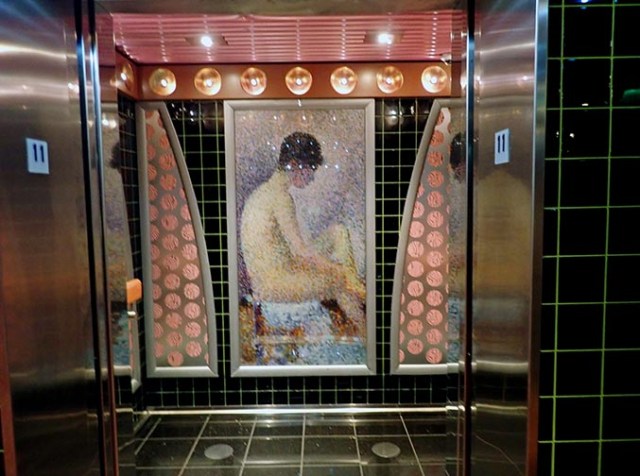
The décor is sleeker and more modern than on some of Holland America’s other ships. It looks nice, but has far less nooks and crannies for hiding ducks. A lot of places where other ships have statues this one had pictures or plaques. It still managed to have some strange statues though. Odd or ugly statues seem to be a requirement on nearly all cruise ships. This one had a couple of silver torsos minus any heads or the rest of the body.

giant silver apple

One deck had a giant silver apple hanging out of a wall. Giant pots of fake white flowers adorned elevator bays in public areas, but the tops were open and hollow. Plants fake or real are a popular duck hiding spot, but in these only the outside areas where the duck wouldn’t fall unretrievably down into the deep hollows of the giant pot worked for hiding ducks.

picture in a cabin hallway

Red was a prominent color in some of the décor. Unlike other Holland America ships we have been on which have different types of pictures from one cabin deck to another, this one had old-time black and white photos in all of the cabin deck hallways. Most of the photos were either old Holland America ships or old photos from New York. Often both.

stairway painting

It had paintings of various renditions of the Nieuw Amsterdam and other ships on one stairway, but the other two were more random in their stairway art rather than keeping with a theme all the way down like some other Holland America ships I’ve sailed on.

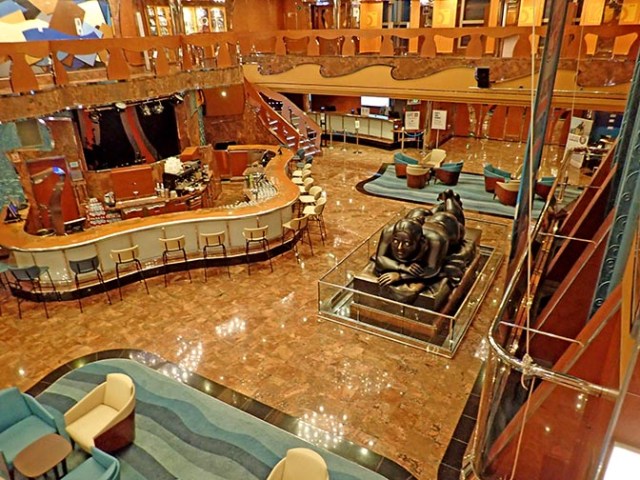
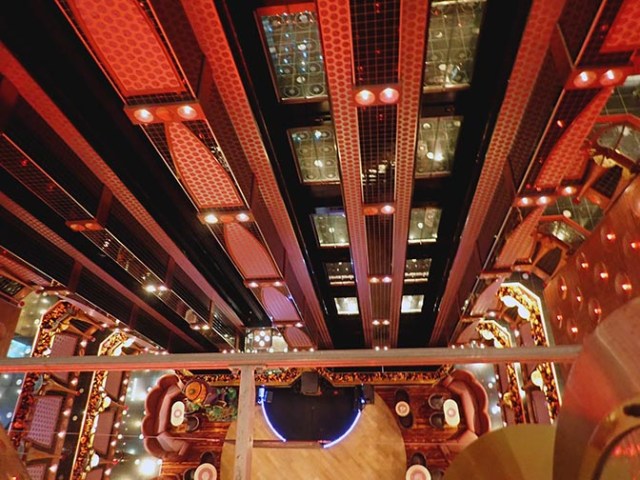
atrium centerpiece

Nieuw Amsterdam was the original name for the city now called New York when the area was under Dutch control. It was changed to New York in 1664 when the English took control away from the Dutch. That explains why a lot of the ship’s décor had a New York theme. The atrium centerpiece was a model of New York with buildings going up and underneath of each building an elongated version like a reflection of that building in the water going down. It was lit up with everchanging colors of lights. There were maps on some of the stairways and elevator bays of New York back when it was still Nieuw Amsterdam with the Dutch names for things on the maps.

show in the main theater

The ship’s theater spans the front of the three lower passenger decks with entrances to the main floor on decks one and two and the balcony on deck 3. There are stairways within the theater from the lower floor to the balcony as well as outside of it. Deck 1 is also home to guest services, future cruises, the lowest level of the central atrium, and some staterooms.

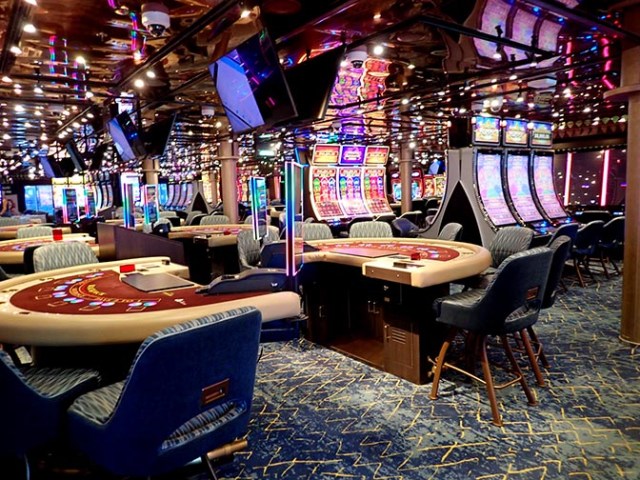
casino

Besides the theater, deck two contains the lower level of the dining room, several bars and lounges, the Pinnacle Grill, and the casino. On the Oosterdam a couple months before sailing on the Nieuw Amsterdam, the future cruise guy had warned us that as each ship went into dry dock they were going to get converted from completely non-smoking interiors to smoking casinos with the gallery bar getting taken over by the casino. Nieuw Amsterdam was a non-smoking ship when we booked the cruise, but went into dry dock the month before. Exactly as he had said, the gallery bar had been converted into part of the casino. It did have glass doors added on either end of that section. The official smoking policy for Nieuw Amsterdam was active players only on select nights rather than all of the time so it wasn’t nearly as bad as we thought it would be. In fact most of the time there was nobody smoking in there at all. We did smell it one night from the theater, which is near the casino, but that was it so apparently they rarely had it open for smoking. Coincidently the same future cruise guy was on the Nieuw Amsterdam.

if you forget what day it is the elevator will let you know

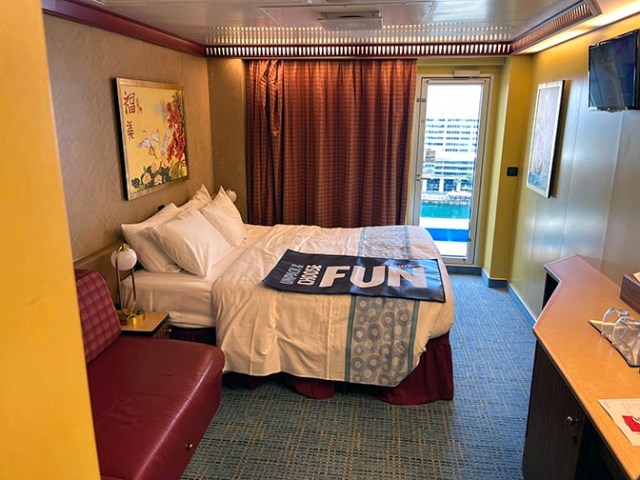
There didn’t seem to be consistent air flow throughout the ship, at least in regards to the temperature. They seemed to keep it so that the upper decks would be more comfortable, but the lower decks were very cold. It got colder the farther down in the ship you went and our cabin was on deck 1 so it was very cold. There’s a thermostat in the cabin, but it’s mostly just for show because if the ship’s air is on AC you aren’t going to get heat out of it no matter how far into the red section you put the dial. It’s also the sort that you can’t turn off so there was constant frigid air coming from a ceiling vent.

library

The ship had a new library like the other Holland America ships we have been on recently, but it was just a library like the Oosterdam had without the attached coffee bar like on the Noordam. The only all-day coffee bar was the one up in the Crow’s Nest, which was also a regular bar. The library has different sections for different types of books and is stocked with new books as well as a small book exchange section. Besides the library and theatre other things on deck 3 include the Ocean Bar, upper level of the dining room, some rooms used for meetings or events, the ship’s shops, and the outside promenade which runs all of the way around the ship and is a popular place for people to walk.

in case you get lost the carpet points out the way – and the arrow is green on the starboard side

Decks 4-7 are just cabins, other than the front bow balconies on decks 5-7 that are open when the ship passes through particularly scenic areas – like the Panama Canal on our Nieuw Amsterdam cruise. Deck 8 is also mostly passenger cabins other than the very front which houses the ship’s bridge.

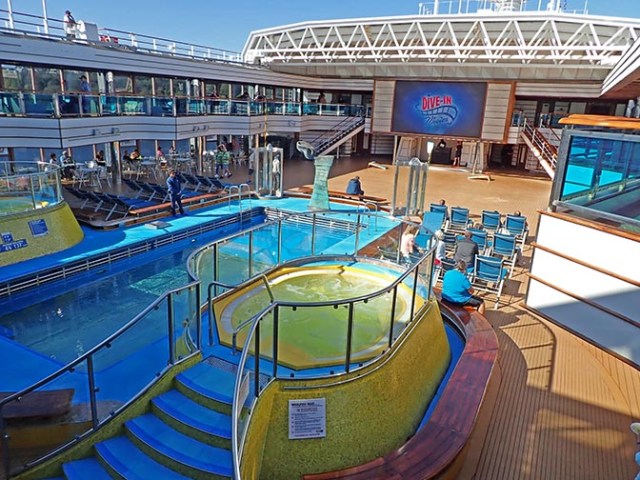
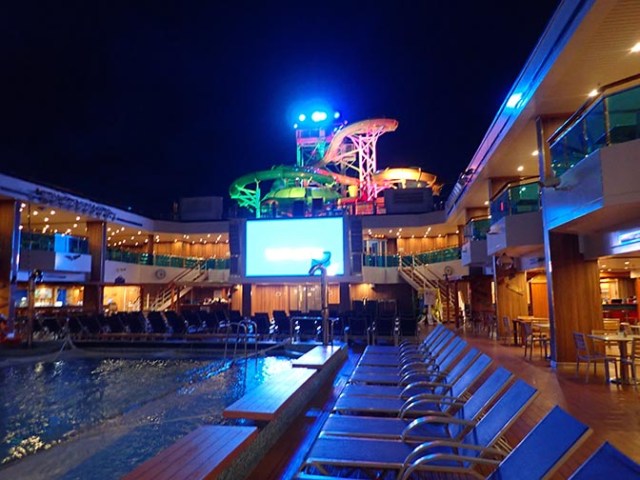
main Lido pool

Deck 9 is the Lido deck, which has the buffet, and other free eateries, two pools, ping-pong tables, some hot tubs, a couple bars, the fitness center, and the spa and salon. We found out from one of the spa crew on this ship that the one cold ceramic chair that every ship has in the thermal suite isn’t actually broken like everyone thinks. It’s intentionally kept cold in case someone gets too hot in the heated ones and wants to sit there to cool off. Nobody ever does that so it’s really just a waste of a chair that someone who didn’t get one could have used in times when the thermal suite is crowded.

they’re called heated ceramic chairs, but one of them is cold

Besides the extra half deck of rooms at the front, deck 10 also hosts the kid’s club areas and arcade in the center. These two areas do not have indoor connections on that deck. It does have an outdoor walkway that goes between those areas as well as out near the stern where it ends with a view overlooking the outdoor pool area at the back of deck 9 and stairways between those two decks.

shuffleboard

Along the outside walkways on one of the upper decks there is a shuffleboard court and cornhole game.

view at the front of the Crow’s Nest

Deck 11 has the Crow’s Nest lounge at the front. It’s quite a large space with lots of seating including a row of comfortable loungers facing the front window, groupings of couches and chairs, and lots of tables with chairs. It’s a favorite hangout space for a lot of people. Shore excursions, a game room area (for board games and puzzles), the art room and of course a bar – that has a few small snacks which are often pastries in the morning and cookies later in the day are all found in the Crow’s Nest. The bar there is also the only full-time coffee bar on the ship. There are also a few passenger cabins and the outdoor pay extra retreat located on that deck. The center of deck 11 has the Tamarind bar and restaurant, a sushi bar, and the sports court. The center section is not attached to the front section at all. You have to go to a lower deck to get from one to the other. The sport court at the back is accessed from an outside stairway on deck 10. It was originally a basketball court, but now has pickleball there too. There is a very small outdoor sun deck above the front of deck 11, which is the entirety of deck 12.

painting in art class

Holland America always has art classes on their ships, which I had not participated in before. I was with my sister this time and it was something she wanted to do so we gave it a try and it was a fun way to pass some time. The classes included watercolors, doodling, dam dot challenge, adult coloring, and calligraphy with watercolors being by far the most popular. These generally occur in the art room at the Crow’s Nest. At the start of the cruise there was only room for 20 people in art classes, but they were so popular they rearranged the tables and expanded the capacity to over 40.

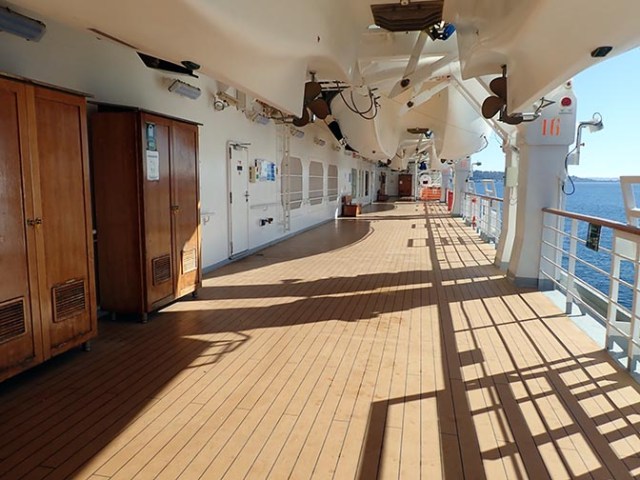
promenade deck

There were lots of deck chairs around the ship, but most of them were out in the sun. Other than any areas by the pool that happened to have some shade the only shady ones were on the promenade deck. There were way less chairs on the promenade deck than usual for these ships so they were in high demand. One day when we were walking around the promenade looking for any empty ones some crew came out and set up a few more so we got one of those. All of them were full nearly immediately with people claiming them before they were even done setting them up.  The top decks have lots of deck chairs, but they are all out in the sun.

afternoon tea

This ship seemed to have more people trying to take your money than usual for Holland America. At times one could hardly walk through the shop area or past the art gallery without someone trying to get you to go to a jewelry store drawing or guess the weight or price of some art or buy a massage (the free massage samples are nice other than the part about trying to get you to book one). Overall though it’s quite a nice ship. For the most part the food was pretty good. We had a pleasant and enjoyable cruise.

Copyright My Cruise Stories 2025
Posted in Holland America, Nieuw Amsterdam | Tagged , , , , , | Leave a comment

Food on Holland America Zaandam

bread lobster decoration at the breakfast buffet

Holland America Zaandam doesn’t have an extensive variety of eateries like some huge ships have, but there’s plenty to eat and nobody ever need go hungry while sailing on any cruise ship, even a smaller one like the Zaandam.

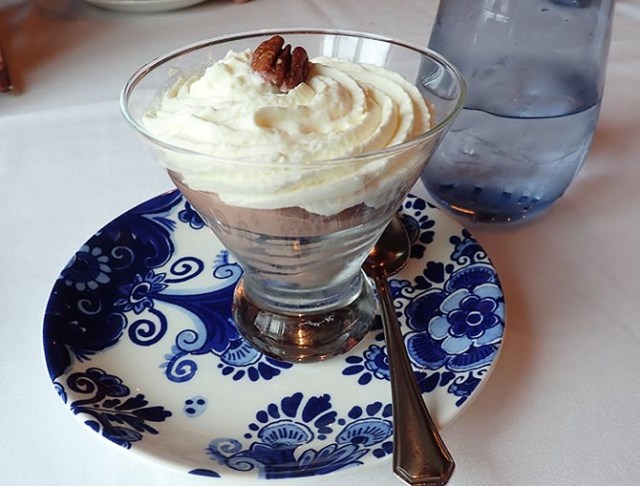
best dessert of the cruise

Food that is included in the cruise fare can be found in the dining room, the buffet, and in the poolside grill and taco bar. Between them all there is a variety of options available.

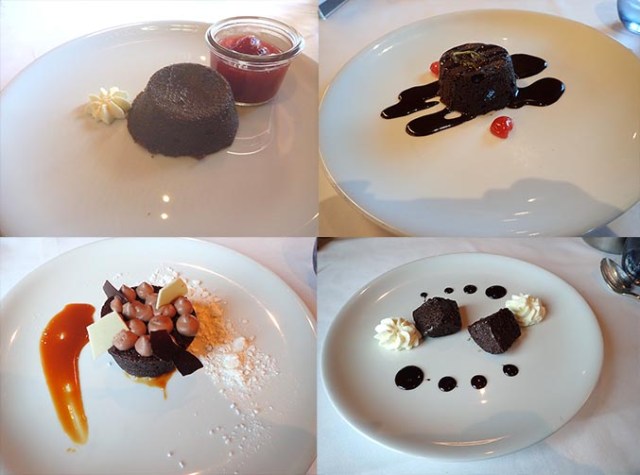
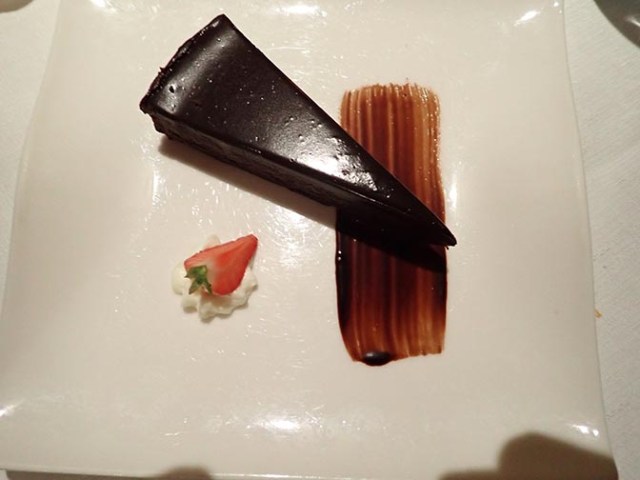
flourless chocolate cake in the dining room

There are just two pay-extra eateries on the Zaandam, the Pinnacle Grill and Canaletto. These are the standard premium restaurants on Holland America’s ships.

Pinnacle Grill

The Pinnacle Grill has its own space, which is open during lunch and dinner. Suite guests can have breakfast there, but it’s not open for everyone then. Lunch there is about half the price of dinner. The Pinnacle Grill is Holland America’s upscale steak house, though it offers other options besides steak. If you want to pay for it in the dining room you can try some of the Pinnacle Grill’s meals without actually going there, but if you’re going to pay extra for food on a cruise ship you might as well actually go to the place and get the whole experience rather than just an expensive plate of food in an otherwise free dining room.

appetizer in the dining room

Canaletto is pretty clever in that it’s located in a corner of the buffet and only used as a separate restaurant at dinner. This works out well because the seating is available for people eating at the buffet for breakfast and lunch when a lot of people eat there, but then sectioned off during dinner for their specialty Italian restaurant when less people eat at the buffet so they don’t really need the extra seating. It saves from having a space on the ship dedicated just to a restaurant that is only open during dinner.

Explorations Cafe coffee bar

We did not eat at any of the specialty restaurants on the Zaandam, unless you count the coffee bars of which they have one in the Explorer’s Cafe on deck 5 and another in the Crow’s Nest on deck 9. We did occasionally get specialty coffee for John and dairy free hot chocolate for me in those places.

dining room eggs benedict

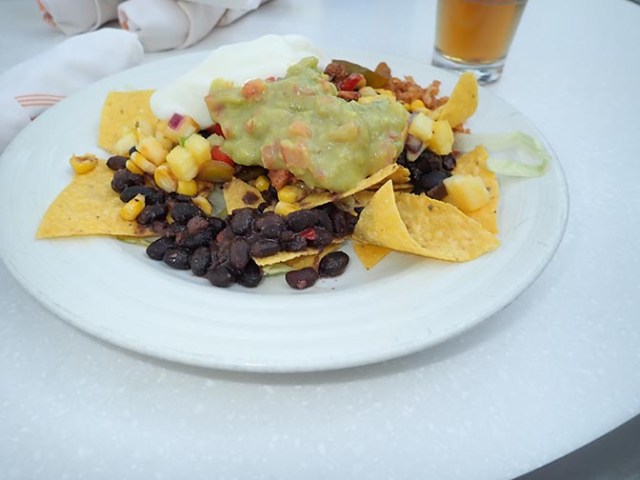
We also didn’t try the pool grill, though they do offer both gluten free and non-beef options. We did have lunch at the taco bar next to the pool grill one day, which has a variety of serve yourself toppings and fillings to choose from, and chips, tortillas, or taco shells to put them in or on.

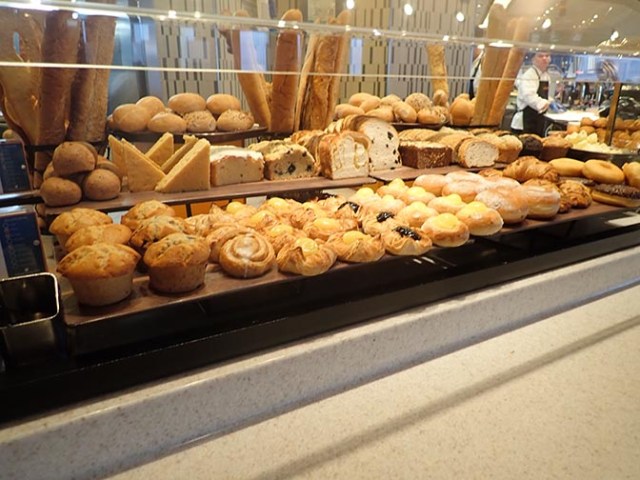
pastries at the buffet

The buffet did not make anything gluten free on site, but they did have some pre-made items available for the asking. Different stations serve different things with breakfast having stations for eggs benedict, omelets, or waffles as well as grab and go pastries, and the main line with things like scrambled eggs and breakfast meats. Fruit, yogurt, parfaits, and hot and cold cereals are also an option at breakfast.

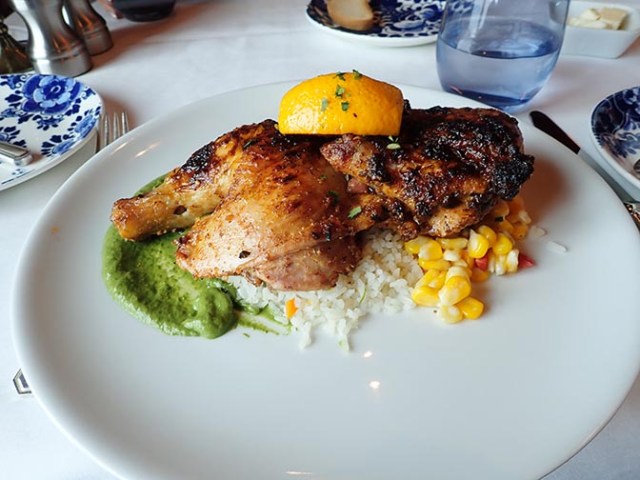
parmesan crusted chicken

Lunchtime in the buffet had a pizza station, sandwiches, various hot dishes that changed from day to day, some sort of distant lands option, a main line with meat and sides, and of course desserts.

appetizer at the Alaska brunch

The dining room had limited options for breakfast or lunch, but they did change the lunch menu daily. One day they had an Alaska brunch, but even there if you wanted anything gluten free it had to be ordered the night before. They did not make anything as simple as gluten free pancakes on the spot without a pre-order.

Dutch Tea

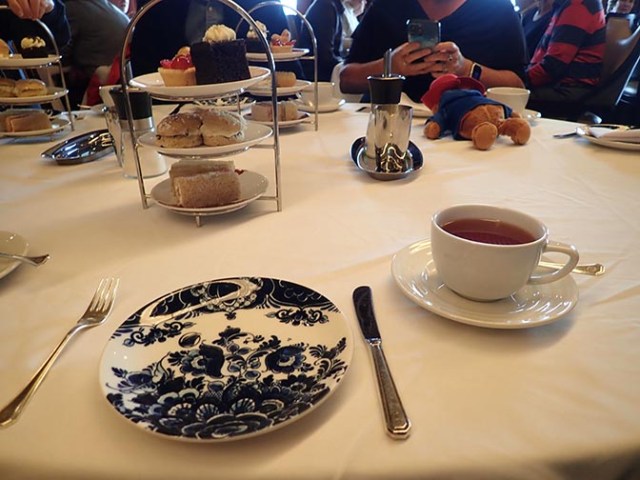
The dining room served tea each afternoon. They called it Dutch Tea, but it seemed like a basic afternoon tea with little towers of little tea sandwiches, scones, and pastries. Each table had a little tower on it that people there could take things from. Each item was different. They would bring something gluten-free on request at the tea without pre-ordering, but it didn’t have all the things like the normal one in the photo above has.

shrimp taco

Mostly we had breakfast and lunch in the buffet and dinner in the dining room, which is pretty typical for a lot of cruise ship passengers. We did have lunch in the dining room one day. I ordered a salad which came with some sort of balsamic vinegar dressing. I don’t know what was in it, but one bite of that dressing set me into a coughing fit with my throat feeling like it was closing up and I couldn’t hardly breathe. Guzzling a bunch of water eventually cleared things up, but needless to say I did not eat any more of that. During the rest of the cruise with any other salads that came with a little square pot of brown dressing I avoided the dressing even if it didn’t look exactly like that first one. I haven’t eaten any brown salad dressing on a Holland America ship since.

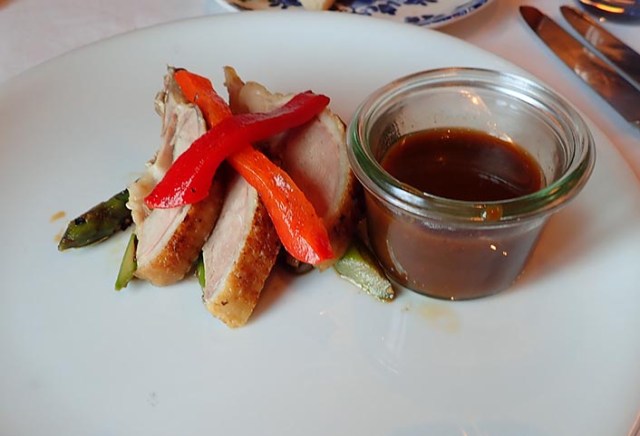
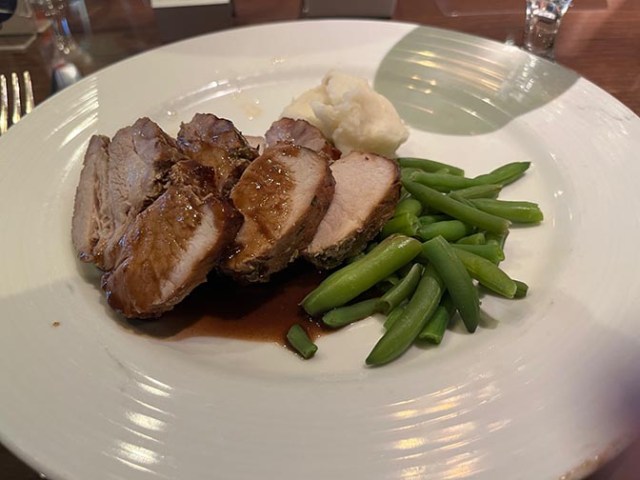
pork dinner

Other than the scary salad dressing the food was good. There were a variety of choices every night. A lot of the options involved seafood which is not my favorite thing, but most of the other people at the table generally ordered it. There was always some sort of poultry or pork and you can pick the main from one dish and have it with the sides from a different one if you ask, which was nice because what comes with their everyday roasted chicken is not as good as things that come with meals that are only offered once.

lamb chops

When we first got on the ship the itinerary in the app was not showing any formal nights, but they ended up having one formal night and one orange night. Orange is not a color I generally wear, but I did have one shirt that had a bit of orange in a dragonfly printed on it and John had one that had orange in some ducks so that was what we wore. Some people went all-out orange, but most were more subtle. They did not serve lobster at the formal night, though it was on the pay-extra for stuff from the Pinnacle Grill menu every night.

porpoise (internet photo)

Our most memorable dinner was the last night of the cruise. Our table was by the window, but we were on the inside end of it with two people between each of us and the window. It was somewhat of dinner and a show with orcas appearing outside the window early on in the meal, followed a bit later by humpback whales, and finally by a pod of porpoises. The couple on the seats next to the window had their phones out filming the various creatures. The lady in the middle on my side of the table was quite large and popped out of her seat looming directly over the poor lady by the window and just about completely blocking my view any time there was anything worth seeing so I didn’t see the orcas at all and just one spout from the humpbacks. The porpoises were right outside our window playing in the ship’s wake repeatedly popping up completely out of the water in sets of 3 so they were fun to watch even through just a small spec of window space not blocked by other people. They were pretty small so it was easy to see the entire animals, even the whole group at once. Unfortunately we couldn’t take any photos since other people had all the window space. Figures a night we weren’t seated next to a window would be the only night there was any marine animal action to see.

Copyright My Cruise Stories 2025
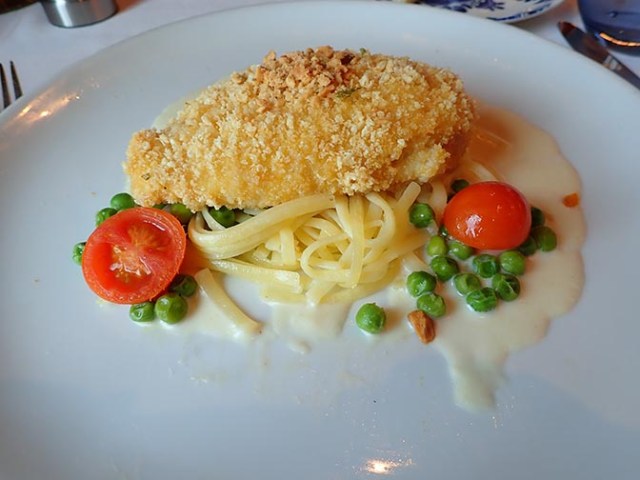
Posted in Holland America, Shipboard Life, Zaandam | Tagged , , , , , , | 1 Comment

Cisternerne

columns in the water

When looking up things to do before our visit to Copenhagen on the way to our Viking river cruise out of Budapest, I came across a place called Cisternerne. It’s an art exhibition inside of an old cistern. It wasn’t the art I was interested in though, it was the fact that it was supposed to have stalactites like a cave – and I like caves.

pathway through the arches

The Cisterns were once used as a reservoir for Copenhagen’s drinking water. They could hold over 4 million gallons of water. The cisterns were built in just 3 years starting in 1856. By 1933 they were no longer in use and eventually drained in 1981. In 1996, the former underground water reservoir was turned into an exhibition space. It is now a part of Frederiksberg Museums, used as a venue for art exhibitions and other events where the uniqueness of the location is a major attraction.

phone light through archways

Located under Søndermarken Park, the Cisterns is the only dripstone cave in Denmark. The natural formation of stalactites and stalagmites commonly happens in abandoned concrete structures, as they have formed within the cisterns. These types of geological formations are quite fragile, so visitors are not supposed to touch them. Online information said the formations here are particularly diverse and breathtaking for this type of feature and are expected to enhance the viewer’s experience when viewing the art exhibited there. All of the exhibits pictured on various websites at that time included visual artworks – and light inside the cisterns. Now there are more dark ones so they must have decided they like doing dark exhibits there.

columns in the water

This all sounded quite good when investigating the place online. Much of the info about Cisternerne online showed walkways through the cistern with the art displayed on the walls as the major attraction. That is the main focus of the place, but it did say that you could see the stalactites too, which was what we went there to see.

geese in the park

We took a taxi from our hotel, as it was not in the same area of the city where we were staying. The taxi dropped us off in front of the zoo and the driver pointed to a park across the street saying that was our destination. We walked down a snowy trail in the park not really knowing what we were looking for. There was a flock of geese that looked much like Canadian geese in a field. After a bit we came across a couple glass sort of pyramids in the middle of a field, the first structures we had seen. One of them had a sign out front saying Cisternerne and a sign on the door saying it didn’t open until 11am.

entrance to Cisternerne

The entrance is through that glass pyramid in middle of the park. Exhibits there change periodically. The guy selling the tickets said something about the exhibit at that time being some sort of American artist, but we told him we were there to see the cave formations rather than the art and didn’t pay attention to who he said it was. He replied that the stalactites were not highlighted in this exhibit, which was one of sound rather than sight. He said it would be dark inside and the music loud, but we might still be able to see some stalactites after our eyes got used to the dark. That was quite disappointing to hear, but we had come quite a way from our hotel to see the cave so we went in anyway.

pathway in the dark

We went in when it first opened and though there was a group of school kids waiting to get in when we got there, they must have had some sort of lecture or something before they were actually allowed inside because we wandered around for awhile with nobody else inside before any of them showed up.

entry and exit path

Once we got down the stairs and through the door it was very dark and the ticket guy was not kidding about the loud music. It was very loud. In this particular exhibit the music was the only art. There were no pictures or paintings of any kind and also no light at all except the pathways you walk on, which were lighted so people could follow the path through the cistern. There is water everywhere that the pathways are not so it is important to stay on the path. Since it was so dark that the water only looked like dark space you couldn’t even tell it was water. Of course anyone straying off the path would know instantly that it was indeed water. The main pathway between the two stairways was lighted on both sides while the rest were just lighted down the middle.

pathway

The pathways were made of metal and hovered just above the water. They wound through the cistern with lots of corners and parallel pathways. In between there were columns and sometimes stone arches.

what the phone sees when the naked eye sees nothing but darkness

Most of this was not visible in the dark, but phone cameras are pretty good about picking up things the eye can’t actually see. There were no railings or anything on the sides of the pathways so following the light to stay on the path was the key to staying dry.

near the ceiling of the outer edge of the cistern

The sides of the cavern have arches with walls that looked to slant down into the water beyond the arch, though it was hard to tell in the dark. In this particular exhibit there was not much to see other than the lighted pathways. Features like columns and arches could only barely be seen in the dark, but the phone photos definitely show it much better than what could actually be seen. I guess the purpose of this exhibit was just to wander around and listen to the music which would have been disappointing even if we hadn’t been there intending to see cave formations since as well as being way to loud it barely even sounded like music. Add a few ghostly projections floating around and it would have been suitable for Halloween. Especially considering pretty much all that we could actually see was the lights on the pathways, not much of the other things that the phone pictures show.

stone arch

Cisternerne didn’t show up on any of the tourist maps we found in Copenhagen, but the zoo directly across the street did. It is a bit of a walk through the park to find the two small glass pyramidal shapes above ground, one of which is the main entrance. The other was closed while we were there and inside of that one the stairway leading down to the cisterns was blocked off.  The two are in sight of each other though so it’s a short walk from the closed one to the open one. It’s possible that the one that was closed when we were there may be used as an exit during busier times or for different exhibitions. It would make sense to use that side as an exit so people wouldn’t be going both directions on the entry stairs, though I have no idea if they actually do that. If you come by taxi the people at the zoo can supply numbers to call for a return taxi when you are ready to leave. They even let us wait inside out of the cold for it to arrive. Busses go by there too. The closest train station is called Valby located 1.3 kilometers away.

Copyright My Cruise Stories 2025
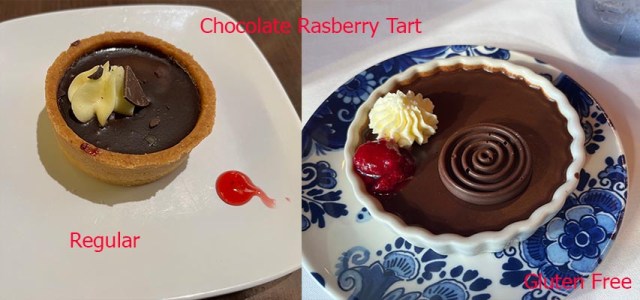
Posted in Day Trips, Europe | Tagged , , , , , , , | 2 Comments

Viking Longship Cabins on Viking Skirnir

wraparound balcony on the Explorer Suite

Viking Skirnir is one of many of Viking’s longships sailing Europe’s rivers. Sister ships to the Skirnir have identical deck plans. There are no inside cabins on a longship, but the below water level cabins just have long narrow windows near the ceiling since the rest of the cabin is underwater. Tall people can see out of the window from the floor, but shorter people will need to stand on the bed or a chair in order to see out. There is a wide ledge by the window that is useful for storing things, but also eliminates floorspace from the cabin.

balcony from balcony cabin

All cabins have a closet with hanging space and shelves. There’s a few drawers too and room to store suitcases under the bed. The shower has a small clothesline. Sending laundry out for the crew to wash is expensive. You can wash a small amount of clothing in the little sink. The line doesn’t hold much, but there is a bit of structure in the shower that can be used to either hang things on or tie a clothesline to. Most of it is on one side, but there’s a bit on the other side to tie the other end of a line.

standard bathroom

Some walls in the cabin are magnetic enough to hold up magnetic hooks.  The wall under the window in the below water level cabins comes in useful for that. Cabins on higher decks have glass on the outer wall which is great for a view, but leaves them only the outer wall of the bathroom for any magnetic needs.

outlets on one side of the bed in a standard cabin

There are 4 sets of outlets with one American and one European style outlet above each nightstand and at either end of the long desktop that runs from the closet to the end wall. One of the European ones has the charger for the audio receivers for the shore excursions plugged into it. The ones by the bed have switches above them for controlling the room lights from the bed. A bottle of water and an ice bucket are provided. There is an ice machine in the hallway for anyone who wants to get some. Cabins are cleaned twice daily. Beds can be split into two as on ocean ships.

standard cabin – below water level except for the window

Standard Cabins

We stayed in a standard cabin, which are found on deck 1. Only the little slit window is above the waterline and the rest of the room is below it. These are considerably less expensive than cabins on higher decks. On a wintertime cruise the room was very cold when we first got there, and it seemed to take days to get the heat to go up a degree or two. It gradually got slightly warmer, but was pretty cold in there for the whole trip as the actual temperature never reached where the thermostat was set. Public areas in the rest of the ship weren’t exactly warm either, but not as cold as our room. Whether it was because they keep the ship cold or because of the cold water on one wall of the room I can’t say. The warmest place was the bathroom because it had a heated floor. The cabin had very small nightstands on either side of the bed and a stool under the desk. For anyone who can afford it, I’d recommend booking one of the above water cabins. Besides the chill in the standard cabins, you hear the ship’s engines. The movement of the ship through the water is also loud sometimes. Even when it is docked you can often hear sounds from other ships passing by. You also definitely know when the ship goes through locks, even if it is pitch dark in the room in the dead of night because of the noises passing through the water. These cabins are listed as 150 square feet, but that is more likely square footage of the ceiling area rather than the floor since the ceiling extends out to the window, but the wide ledge under it shrinks the floorspace by about a foot and a half across that side of the room.

French balcony cabin

French Balcony Cabins

Deck 2 has French balcony cabins down one side of the ship. There are also a few on deck 3. These cabins have sliding glass doors that open for fresh air or window free viewing, but they do not have an actual balcony outside of those doors. Other than being above the water and having a view, the interior is similar to that of the below water level cabins. Views from deck 2 are just above water level. Though the square footage of 135 square feet makes these sound smaller than the standard cabin, they really aren’t since the shelf under the window takes up quite a lot of what would otherwise be floorspace there.

balcony cabin

Balcony Cabins

Balcony cabins are found on decks 2 and 3. These rooms have an actual small balcony outside of the sliding doors with chairs and a small table. These rooms are a bit bigger than the below water and French Balcony cabins at 205 square feet. They have space enough for a bigger nightstand and a chair besides the stool underneath the desk.

Veranda suite living room

Veranda Suites

Veranda suites are more spacious than regular cabins at 275 square feet. One side is set up as a bedroom and the other as a sitting area or living room.

bedroom of veranda suite

The bedroom has a French balcony and the living room has a couch, chairs, and table as well as a full veranda with sitting area. The suites have a larger bathroom than the other staterooms.

explorer’s suite living room

Explorer Suites

There are just 2 explorer suites at the back of deck 3. These are significantly larger than the Veranda suites at 445 square feet and have wraparound balconies from the back to one side of the ship. They also have a French balcony in the bedroom and a dressing area between the bedroom and bathroom.

Copyright My Cruise Stories 2025
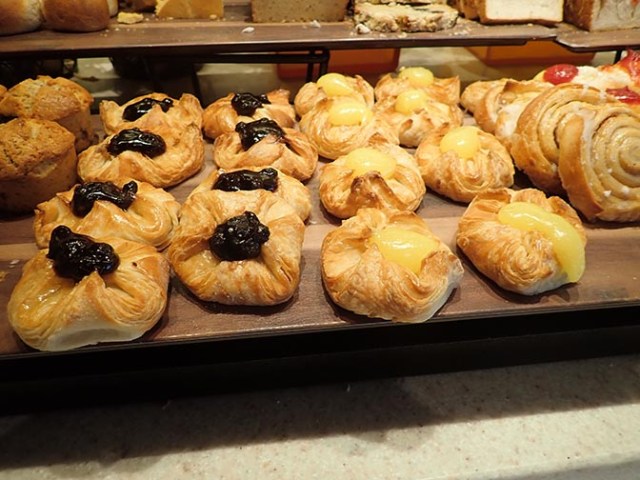
Posted in Europe, Shipboard Life, Skirnir, Viking | Tagged , , , , , , | Leave a comment