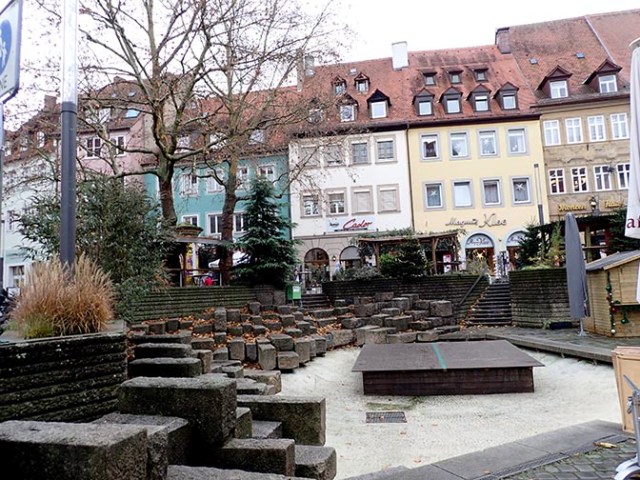
colorful buildings in Bamberg
Bamberg, Germany
Bamberg, Germany spreads over 7 hills where the Regnitz and Main rivers meet. Each hill has a church on top, mirroring ancient Rome. It is known for the historical buildings in the old town with buildings from the 11th to 19th centuries and for its arched bridges and Rauchbier – a smoky beer made in the region. People from our river cruise on Viking Skirnir who tried it said it tasted like ham. The city was founded in 902 and was the capitol of the Roman empire during the reign of Emperor Heinrich II starting in 1007. Both the emperor and his wife were buried in a cathedral there. The 11th century Bamberg Cathedral has 4 towers and many stone carvings. Later the city was ruled by bishop princes which were bishops of the church who were also the rulers of the town.
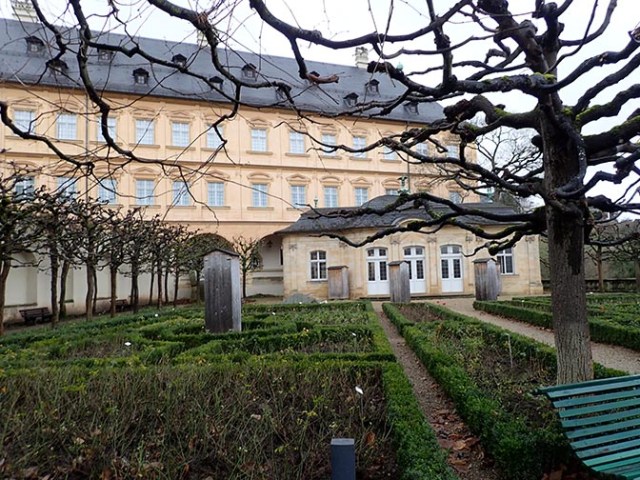
linden tree in a rose garden in winter
There was previously a US army base in Bamberg, but it closed in 2014. Bamberg’s climate is temperate and rainy. Average temperatures range from winter lows in the high 20’s F to summer highs in the upper 70’s F. It can snow in the winter from December to February. The average rainfall is about 34 inches per year. Historical buildings are the main tourist attraction, but there are also museums and a rose garden. The old town was named a UNESCO World Heritage site in 1993 and contains Gothic, baroque and Romanesque architecture. Bamberg is in the upper Franconian region of Bavaria.
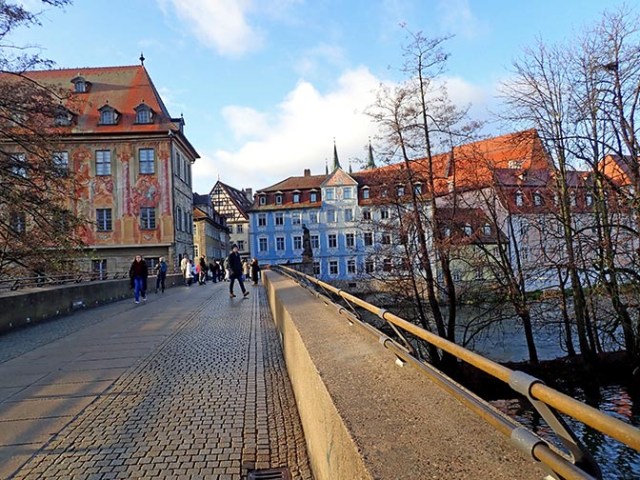
Bridge over the Regnitz River by the old town hall
The Main River has always been important to Bamberg. In the Middle Ages it was the starting point for shipping on the Main. Now it is the northern starting point of the Main-Danube Canal, built between 1960 and 1992 to connect the Main and Danube rivers. This canal is the reason our ship was able to sail all the way from Budapest to Amsterdam as we started on the Danube before passing through the canal to the Main, which later joins the Rhine.
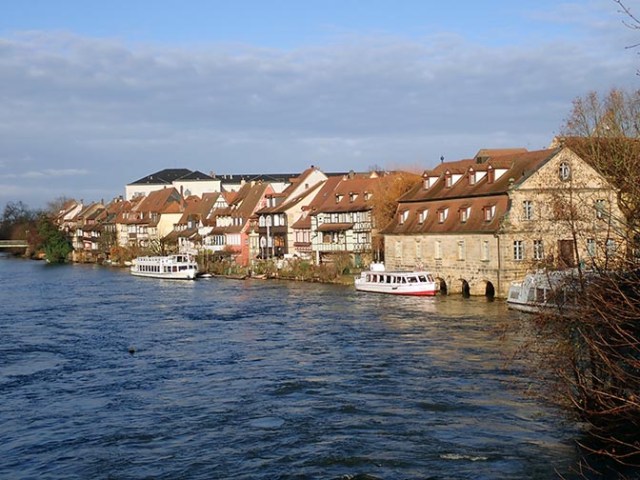
waterfront buildings
The much smaller Regnitz is the other river flowing through Bamberg. Houses alongside the rivers are pricey real estate.
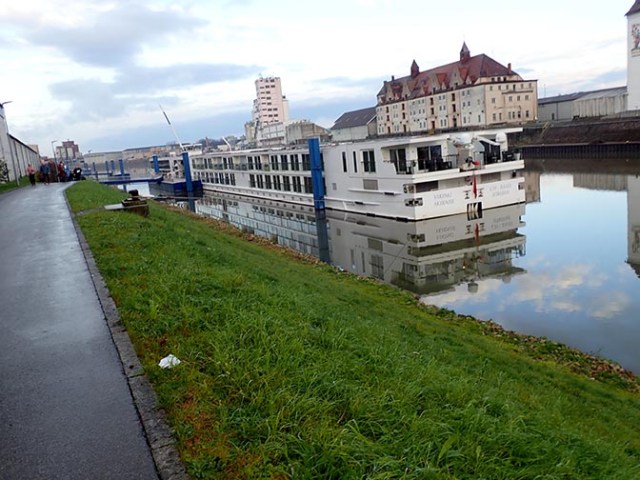
disembarking for a visit to Bamberg
Bamberg River Cruise Port
In Bamberg Viking Skirnir stopped briefly in an industrial area outside of town to let people off the ship for a tour. From there busses took everyone into town where we were let off next to the concert hall. Return busses came to the same spot several hours later, but did not return people to the same port.
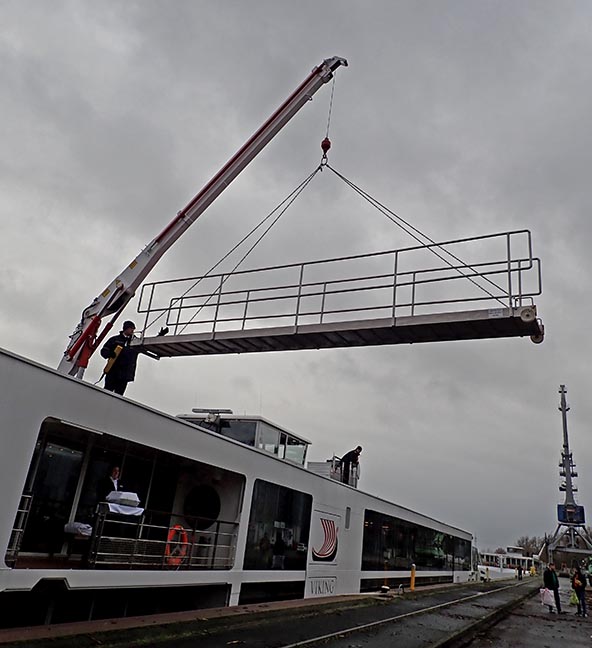
lowering the gangway
The return busses briefly took the autobahn to a logging yard in another town where the ship arrived shortly after the busses and stayed long enough to put the gangway down and let everyone onboard. Another ship awaited those same busses to take their people to town, who would then meet their ship which was doing the reverse tour of ours from where we were originally let off.
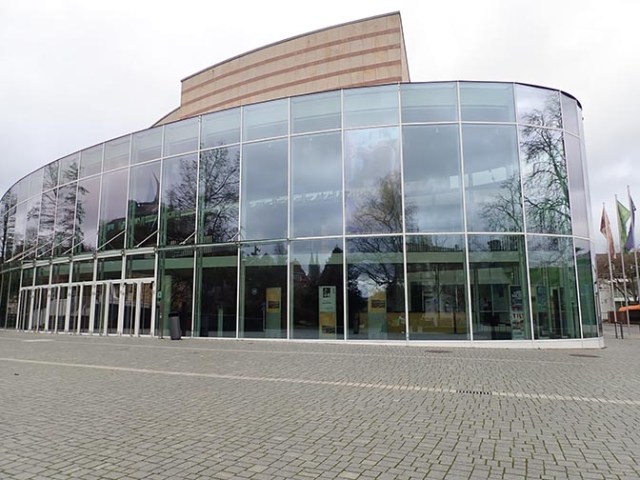
concert hall
Bamberg Walking Tour
From the very modern concert hall where the busses let people off, local guides waited with passengers divided into 8 different groups.
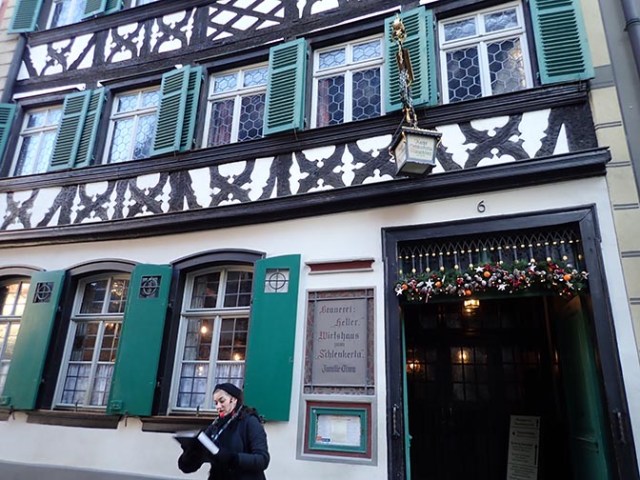
tour guide
Our guide took us along a river first to a building that had once been a slaughterhouse, built along the river’s edge – in the edge of the river rather than on the land next to it.
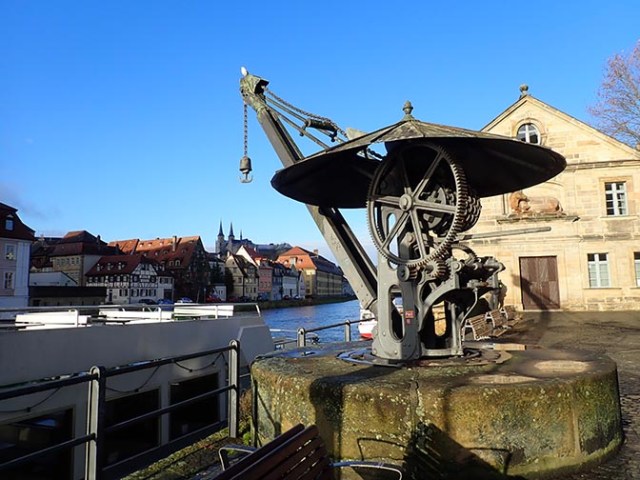
old slaughterhouse
Bamberg’s old town has the original historic buildings rather than replicas like many other towns as they were not destroyed by World War 2 bombings as happened in so many other German towns. Bamberg had no major industries or Nazi installations so it wasn’t worth bombing.
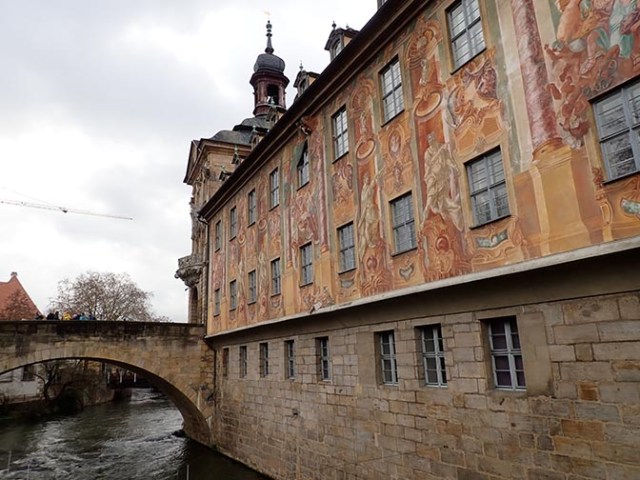
the old town hall sits in the middle of the Regnitz River
The old town hall from Medieval times sits in the middle of the Regnitz River on a tiny island. Rumor has it the citizens of the town built it there because the bishop prince who was the ruler at that time would not let them build it on his land – and all the land was his so they built it in the river instead. The bishop ruled over everything the people did and having a town hall represented some small bit of control of their own lives for the common folks. It was in use as the town hall for 350 years before being replaced by a new town hall in 1736. It’s a museum now.
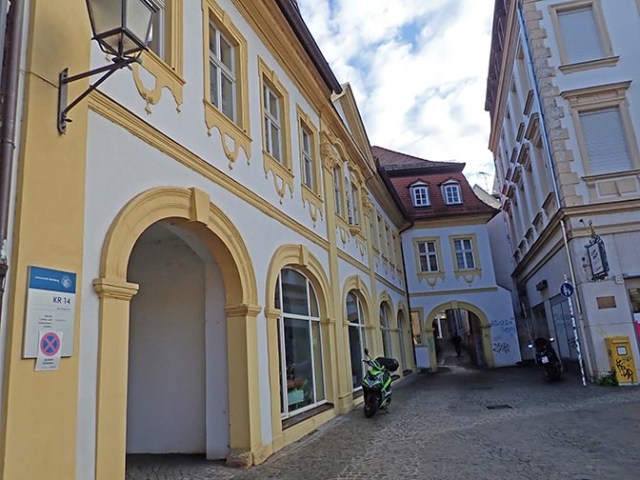
cobblestione street
As with many ancient German towns, Bamberg has some narrow cobblestone streets in the old town area.
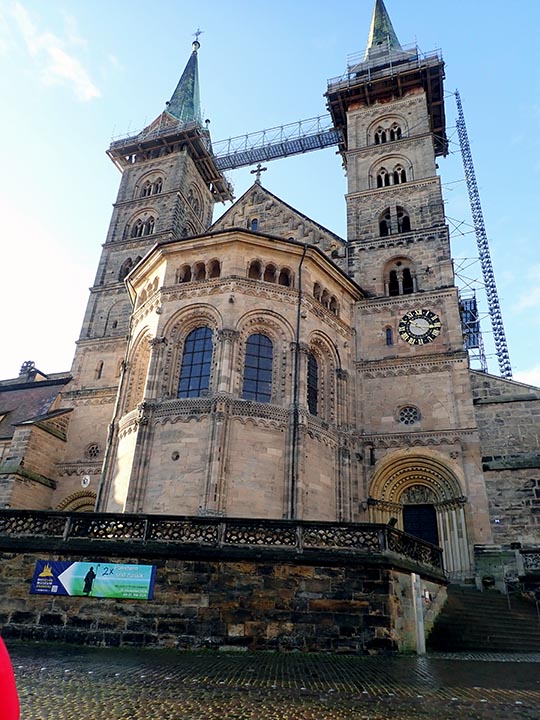
cathedral with mismatched architecture
Up a hill from the bridge crossing the river by the old town hall there’s a large cathedral that has Roman style architecture at the bottom, and gothic at the top because the people changed styles when they had it partly built. This is the church where the roman emperor and his wife are buried.
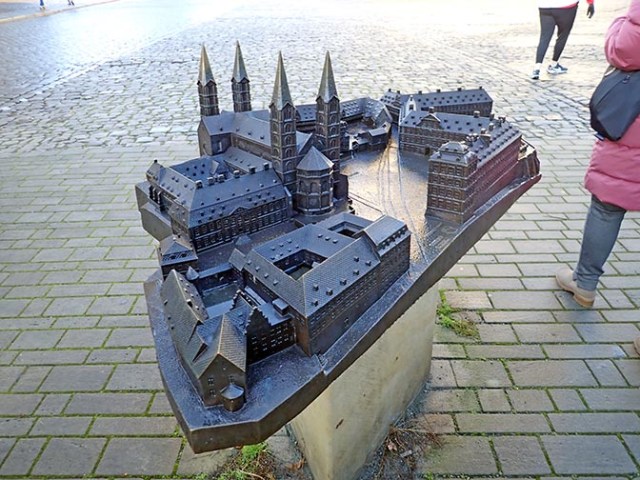
model of the palaces and cathedral
The cathedral sits on one corner of a square that has 2 palaces surrounding it. There is a little model of the entire complex, which is much bigger than the buildings you can see from any one place.
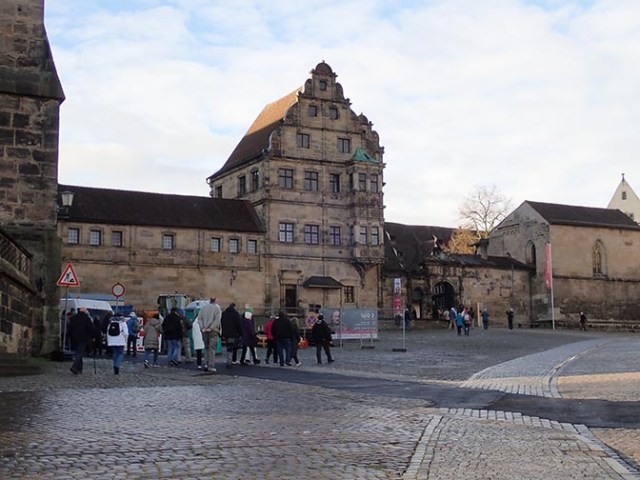
renaissance palace
Next to that sits a Rennaissance style bishop prince’s palace, which was not the style a later bishop prince wanted so a baroque palace of twice the size sits next to it. That one is in an L shape rather than a horseshoe because they ran out of money before they could tear down the renaissance palace to finish it – so the guide said going baroque made them go broke. Of course that saved the earlier architecture.
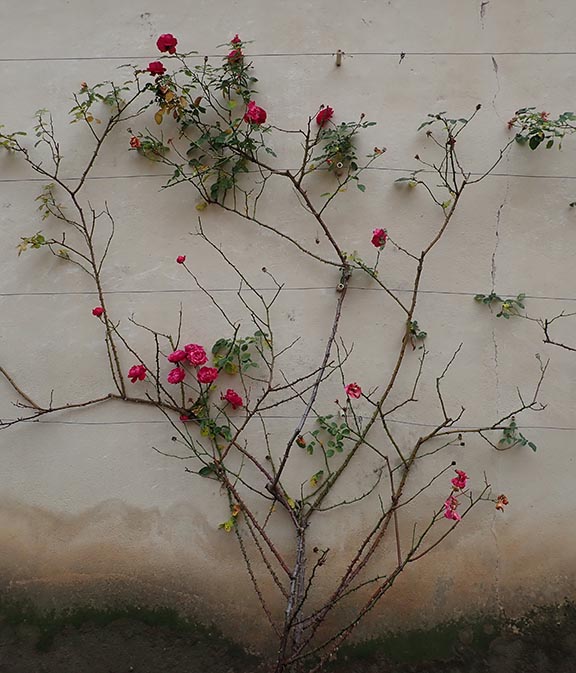
roses blooming in winter
There were roses still in bloom on the outside of the rose garden by the palace.
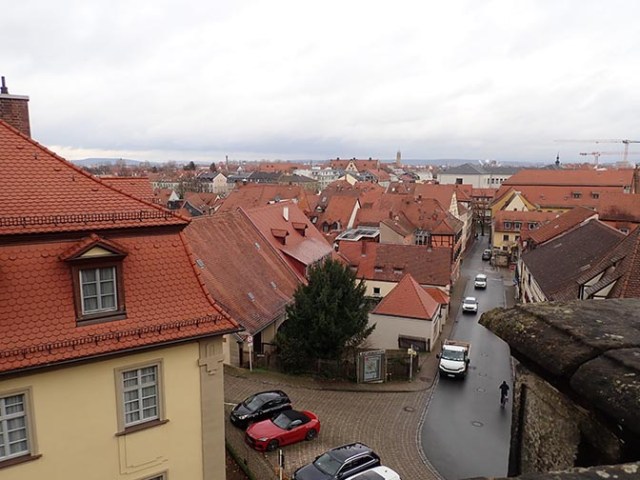
view from the rose garden
The rose garden had a view overlooking the town from the wall at the edge of the garden.
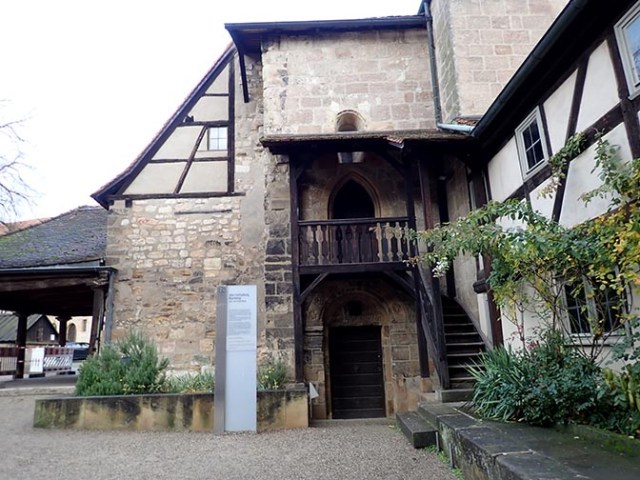
small building in the inner court
Behind the other palaces there were a older half-timbered style buildings which is the inner court from 1475 that once housed the residential and farm buildings of the court.
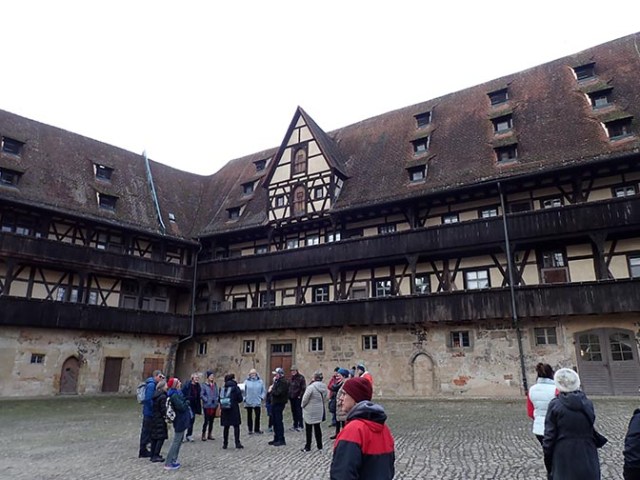
big building in the inner court
Many of the buildings in that area of town are original to medieval times, though some had their facades replaced with baroque style during the era of a prince bishop who wanted everything modernized to baroque which was the latest style of the time. The baroque period lasted from about 1600-1750. The people were incentivized to change the facade of their homes due to a tax break for doing so, though the buildings remained as their original half-timbered structures beneath the baroque facade.
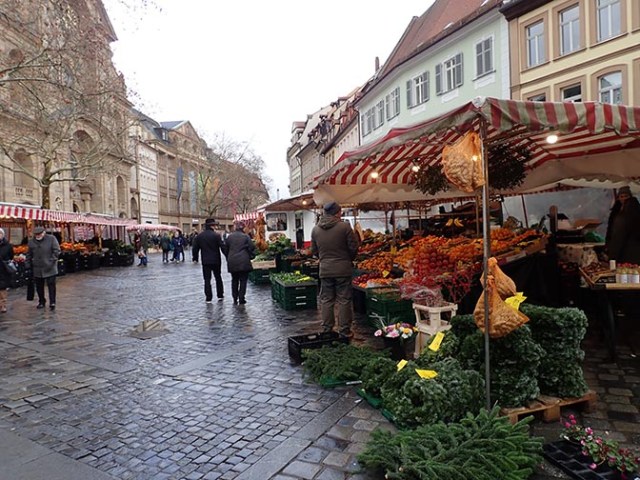
market stall
Down on the other side of the river is the main shopping area of the town, near to where there are market stalls going down a street parallel to the river, but up a block or two rather than on the river itself. These stalls sell mainly produce and other things for locals as these are just a market and not a Christmas market.
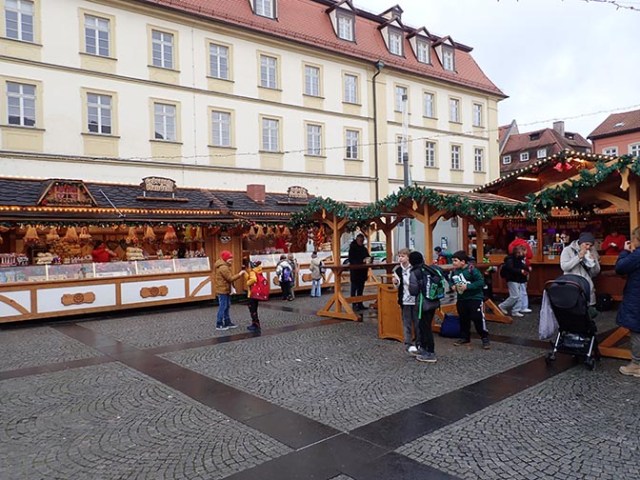
Christmas market
There was a Christmas market just beyond there that had a big tree and a few little kid rides among the stalls selling ready to eat food and other Christmas market items.
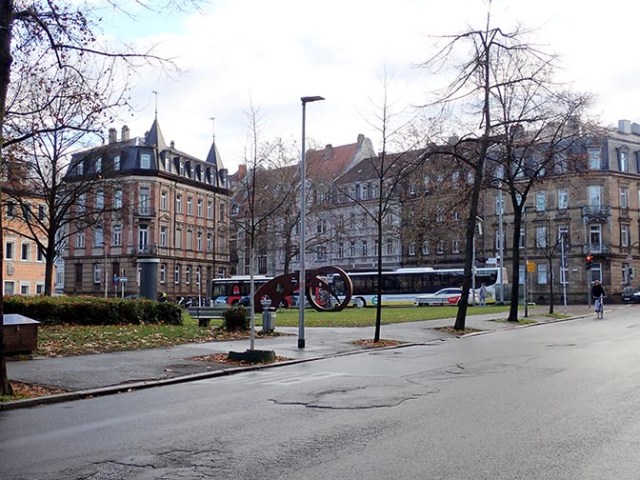
paved street
The city is much bigger than just the old town. Other areas have paved streets and traffic. Enough people ride bikes that there were some street lights at crosswalks that showed a bike rather than a person or just a colored light.
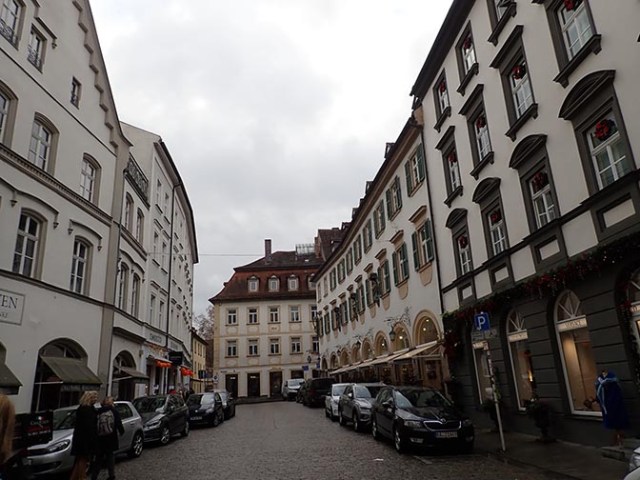
buildings in Bamberg
Many of the buildings look old even if they are not in the old town area.
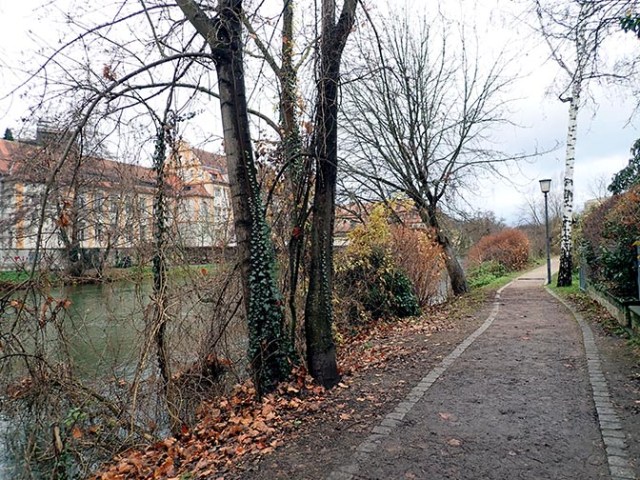
pathway by the river
There’s a bridge next to the concert hall with views of the river, and just down from it a pathway that runs along the river from there to the next bridge. It’s a fairly short walk, but scenic with the river along one side. On the other side it looks like a little public park on the end near the concert hall, then is divided into what looks like separate little private yards. With the river on one side and a road on the other there are no houses attached to those yards, but perhaps they go to some of the buildings across the street.
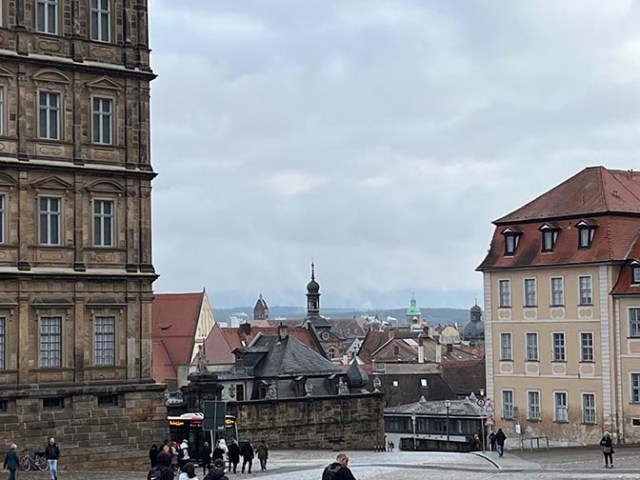
view from the square between the cathedral and palaces


 Cruise Stories