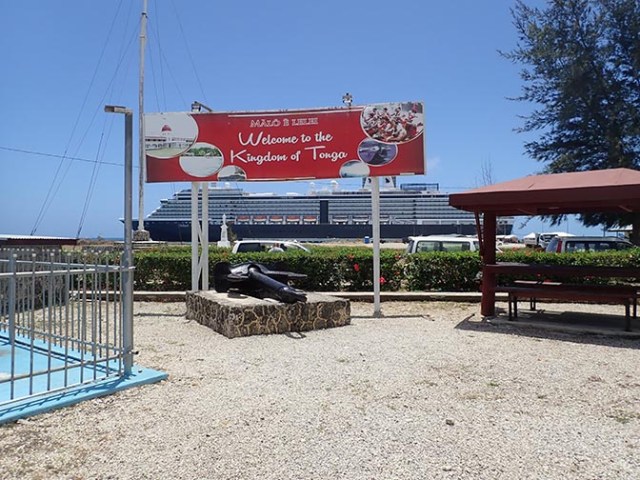
Noordam in Nuku’alofa, Tonga
The Kingdom of Tonga is a Polynesian country in the south Pacific. It is made up of over 170 islands, of which about 45 have human populations. It is the only monarchy in the south Pacific and the only country there never to be colonized. The islands generally consist of rainforest with beaches and coral reefs around them. Some are of volcanic origin and others coral. There are no poisonous snakes or spiders. Currency is the pa’anga, which is worth about 42 cents in American dollars.
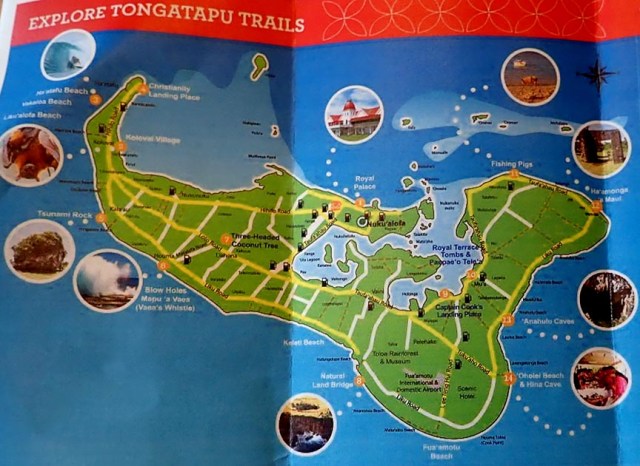
map of tourist attractions on Tongatapu from the visitor information booth
Nuku’alofa is the capitol and largest city in the Kingdom of Tonga. In Tongan the name means abode of love. It is on the island of Tongatapu. It has a deep harbor protected by reefs. The cruise dock called Vanu Wharf is within walking distance of town. The walk is mainly down the long pier because once you get to the end of the pier you’re in the town. At our visit there were vans offering tours near the dock. The main languages are English and Tongan. The climate is tropical with weather generally warm and humid. There are not a lot of places that will take credit cards, but most will take USD, AUD, or local currency. Independent tour operators may start out with high prices that can be negotiated down. Sharing transport with other passengers will lessen the per person price. It is a very conservative Christian country.
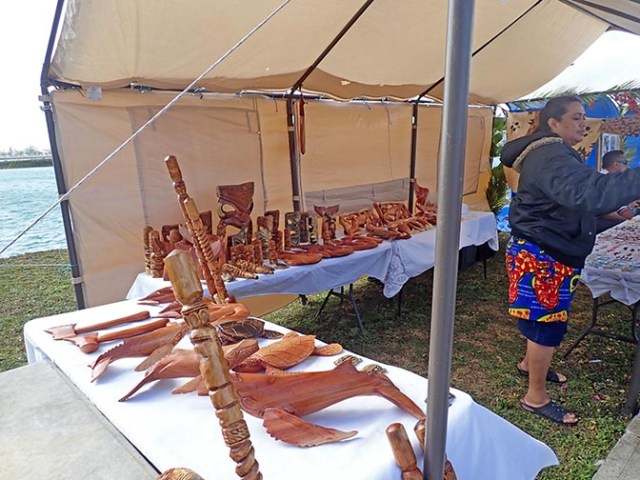
booth selling wooden carvings
Nuku’alofa gets about one cruise ship per month. Besides the many booths of local crafts for sale lining both sides of the pier, additional souvenir stands may be also found at tourist attractions on the island. There are also little stands selling fruit, coconuts, or peanuts in front of homes in residential areas. Many of the craft items sold by locals are made from natural materials that may be restricted if disembarking in Australia or New Zealand. Make sure you know what the country you disembark in allows before buying souvenirs that may be confiscated at customs.
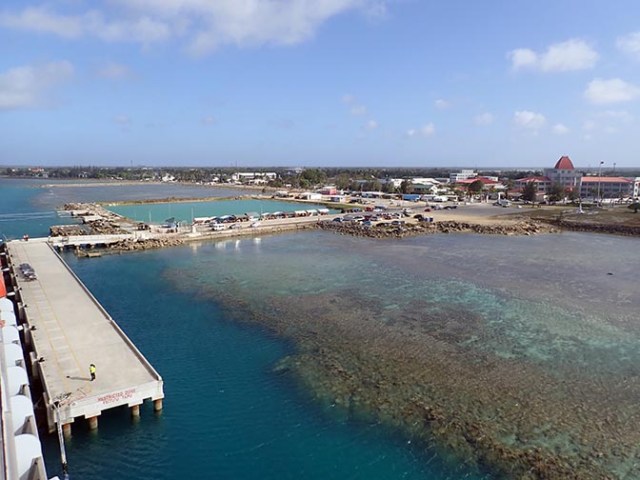
view of the pier from the ship
Since the dock is right in the city once you leave the pier there are stores and restaurants. There are some interesting buildings in the immediate area, some of which can be seen from the ship. The king’s palace is right on the waterfront and can be seen from the ship, but it is not open to the public so people can only look at it from outside of the palace grounds.
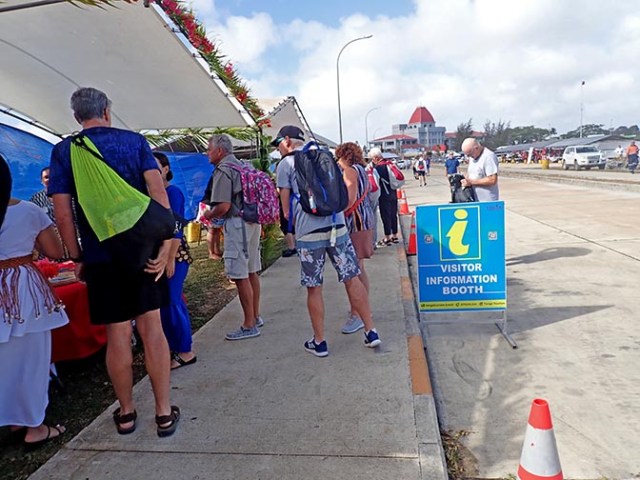
crowd at the visitor information booth on the pier
On the day we were there the visitor information booth at the dock had signs for a bus tour around the island and for a diving excursion. They also had maps of the city and of the highlights of the island. The visitor information booth was the second closest booth to the ship. During whale season they may offer whale watching or swimming with whales tours, but the whales had already left the area when our ship came.
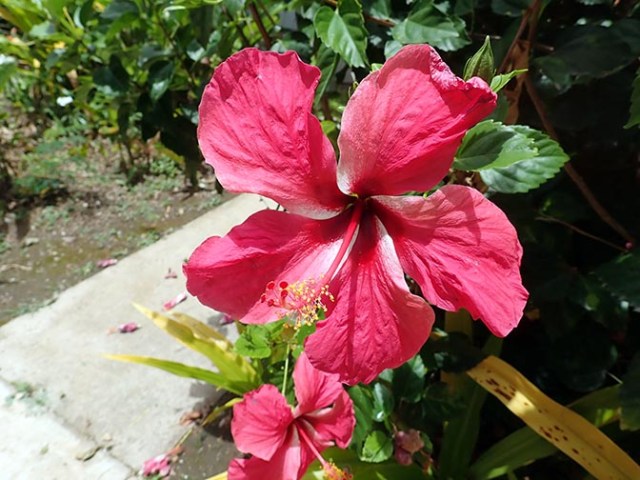
hibiscus flower on the island
On the walk down the pier we passed a sign that said lava tour with an arrow pointing toward a gravel lot, but we did not investigate where the actual tour was or what it was about.
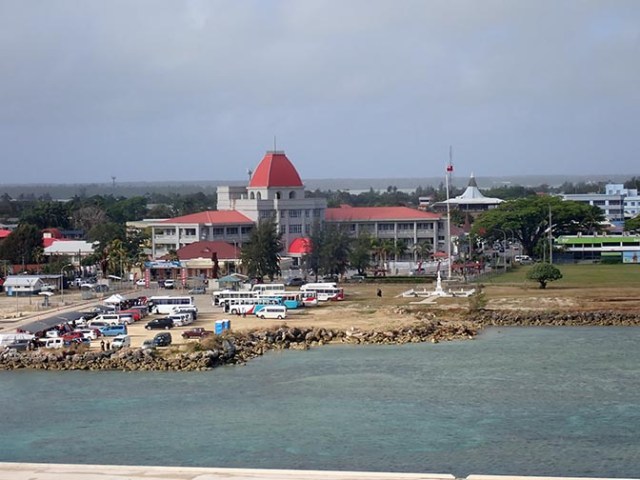
busses and taxis at the end of the pier
At the far end of the pier there were a number of locals offering island tours. These tours went to more places than the ship’s tours. Unlike some previous ports that took any currency worth more than theirs dollar for dollar with no consideration for the difference in value, at this port they did charge less if you had US dollars than if you had Australian dollars or local currency. In USD for a bus of 39 people the island tour was $35 per person. For a van or mini-bus ranging from 6-17 passengers depending on which van you chose they were asking $50 per person. For a private taxi tour with just two people we paid $75 each, and it went to 5 places. A great deal compared to a cruise ship tour that for $70 and a whole busload of people only had 3 stops. Private taxi tours can go places where larger groups can’t and also have the advantage of being able to make stops upon request that aren’t usually part of tours.
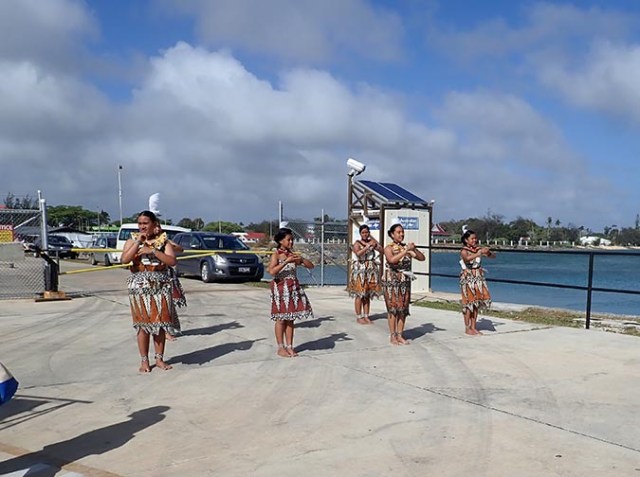
dancers on the dock
When first disembarking the ship there was a group of local dancers to entertain the cruise passengers. Excursions offered through the ship at this port included a beach resort with a cave and several different island tours to various sites.


 Cruise Stories