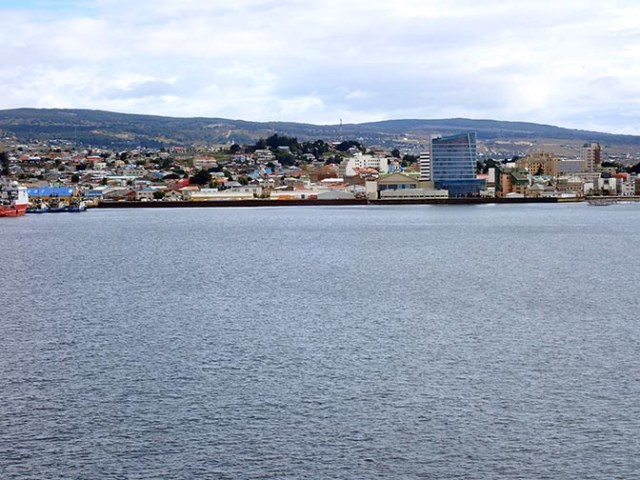
view of Punta Arenas from the ship
Punta Arenas, Chile
Punta Arenas lies on the Strait of Magellan near the tip of southern Patagonian Chile. It’s often a starting point for those heading to Antarctica. It has a population of over 145,000 and is the coldest coastal city with a population over 100,000 in South America. The area was once called Sandy Point by early explorers and the literal translation of Punta Arenas means point Sands. The climate is subpolar oceanic. Temperatures range from average lows in July near −1 °C (30 °F) to highs in January of 14 °C (57 °F). Rainfall is highest in April and May. The snowy season runs all through the Chilean winter (June until September). Average annual precipitation is about 15 inches with about 150 days receiving some rain or snow.
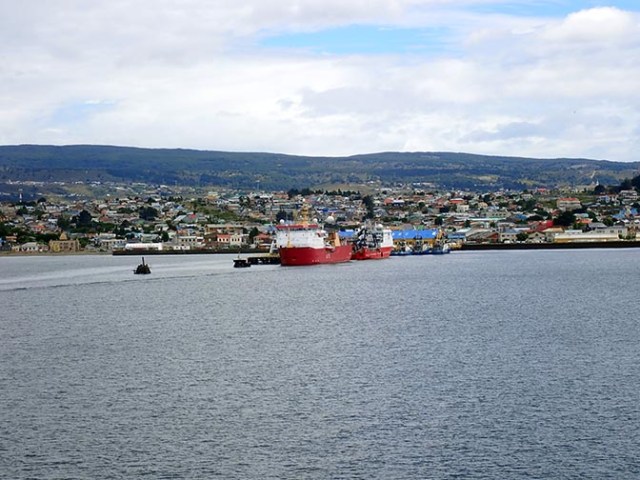
another ship at Punta Arenas
The Chilean government established the town in 1848 as a small penal colony for the purpose of asserting their sovereignty over the Strait of Magellan. During the remainder of the 1800s, Punta Arenas grew in size and importance due to increasing maritime traffic and trade and waves of European immigrants attracted by a gold rush and sheep farming boom in the 1880s and early 1900s. Chile used its presence there to defend its claims of ownership of the Strait of Magellan, which was officially recognized as Chilean territory in a boundary treaty with Argentina in 1881. Punta Arenas remains important due to Antarctic access from there.
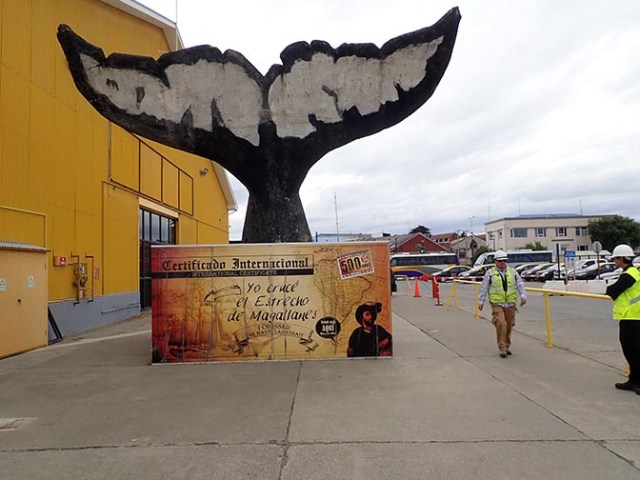
outside the port building
The language is Spanish, money is the Chilean peso. One US dollar was equal to 943.40 Chilean pesos when we were there. As the US dollar continues to decline in value compared to foreign currencies one USD is only worth 896.29 Chilean pesos now. It’s helpful to know at least some Spanish when visiting Chile as there are not as many locals who speak English as found in some other countries. Tour guides on cruise ship tours will generally speak at least some English.

Oosterdam and tenders
Punta Arenas Cruise Port
Punta Arenas is a tender port for a ship the size of the Oosterdam, which is nowhere near as big as the megaships, but significantly larger than the small expedition type vessels that dock there. In tender ports cruise ships anchor offshore and bring passengers to the dock in small boats called tenders. Cruise ships carry these boats onboard. Tenders are larger than the boats specifically designated as lifeboats, but would do that job as well if the need were ever to arise. The tender drivers from Holland America Oosterdam smoothly and skillfully docked both with the ship and shore in most instances. There were a lot of tender ports on our Antarctica cruise so they got a lot of practice. Most people probably took for granted that it’s always that way, but having experienced clueless tender drivers from the Noordam on a previous cruise that took numerous tries before they could get the boat near enough to dock and then had no idea how to tie it properly we were happy to see that the ones on the Oosterdam had some skills.

tender pier
The tenders dock right in town at the Muelle Prat tender pier. It’s a pretty short ride between the ship and the shore. You can see the dock from the ship and vice versa. The ramp between the floating pier where the tender docks and the taller fixed dock was quite steep, but the angle of that sort of ramp changes with the tides. It’s a bit of a walk from the tender pier to the port building.
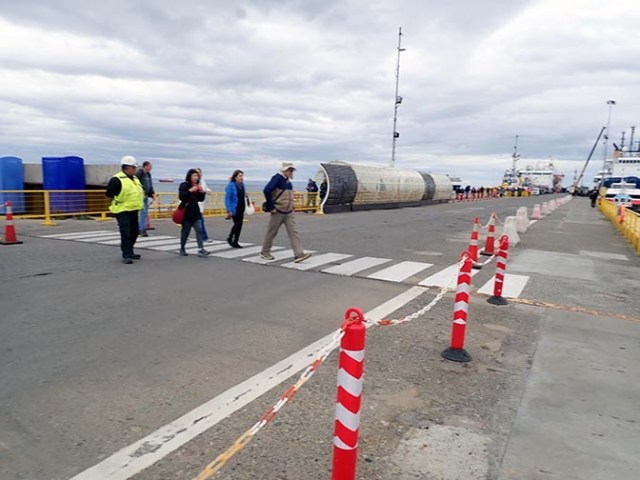
walking from the dock to the port terminal building
The terminal building was big enough to have a couple large rooms, one filled with local merchants. The other had check-in booths for small expedition ships that start their cruises from there on the really expensive sort of adventure cruises where they have zodiacs that take people to shore in Antarctica. There were also restrooms available in the port building. Apparently the signage was not clear to everyone because one of the men from our cruise ship went into the ladies room without even realizing that’s where he was.
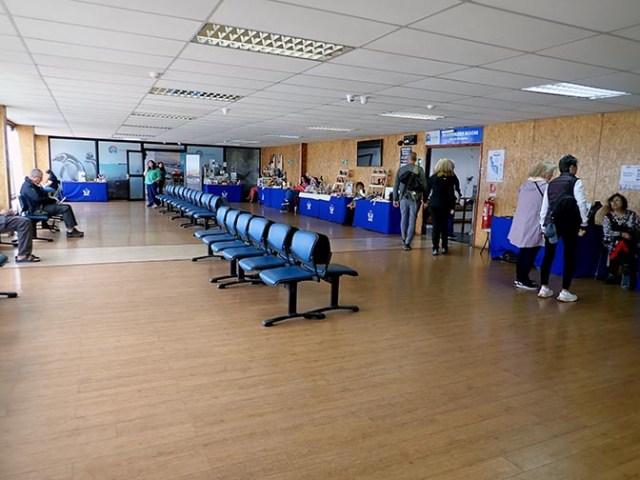
little booths selling stuff inside the terminal building
There’s not a lot right at the port to do for people who didn’t book anything in advance, but there are some things within walking distance. For those who want to venture farther there were taxis at the port and people with signs for last-minute van tours.
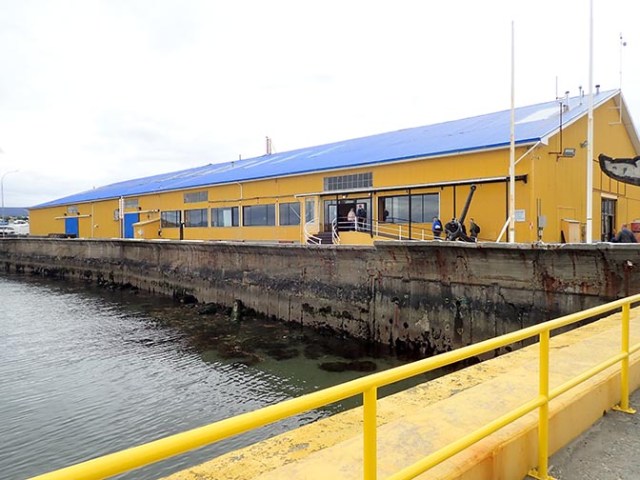
outside of the cruise port terminal building
There is shopping within walking distance for most people. Other things to do on your own include at 3/4 of a mile from the dock a maritime museum, a central square with a statue of Magellan, street vendors, and the historic Sara Braun House. At 1 mile from the dock there’s a hilltop viewpoint called Cerro La Cruz, and Captain Milward’s House which is the historic home where Sir Ernest Shackelton stayed while organizing the rescue of his Antarctic expedition crew – outside views only as the house is not open to the public. At 1 1/3 miles from the pier there’s the Maggiorino Borgatello Museum with highlights of the cultural and ecological heritage of southern Chile featuring native artifacts, flora, fauna, wildlife, and a replica of the Cave of the Hands. Less than 2 miles away there’s a cemetery called Cemeterio Municipal with ornate mausoleums of pioneer families and the gravestone of the last known Ona people indigenous to Tierra del Fuego. At 3.7 miles from the pier the Museum of Remembrance showcases regional history with antique farming tools, industrial machinery, pioneer housing, shearing sheds and a wooden-wheeled shepherd’s trailer.
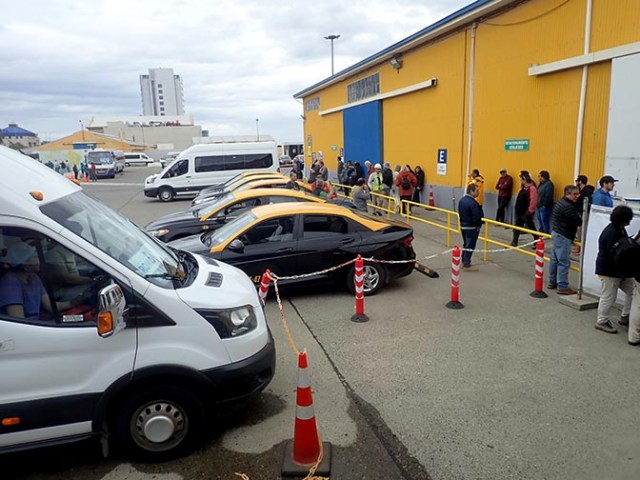
vans and taxis for last minute tours
People can book activities pre-cruise for a variety of things to do through cruise ship excursions and outside sources. One advantage of booking through the ship rather than an outside source is that if weather or other circumstances dictate a schedule change the ship will change your excursion accordingly. The Oosterdam went to this port one day earlier than scheduled due to a storm that would have prevented tendering to shore on the scheduled day which would have meant missing the port – and winds so extreme nobody would have wanted to do anything onshore anyway. Instead we had a pleasant day onshore with weather that though there was some wind and rain it was not too extreme to allow tendering. The ship spent the next day doing scenic cruising in sheltered fjords while avoiding the worst of the storm.


 Cruise Stories