
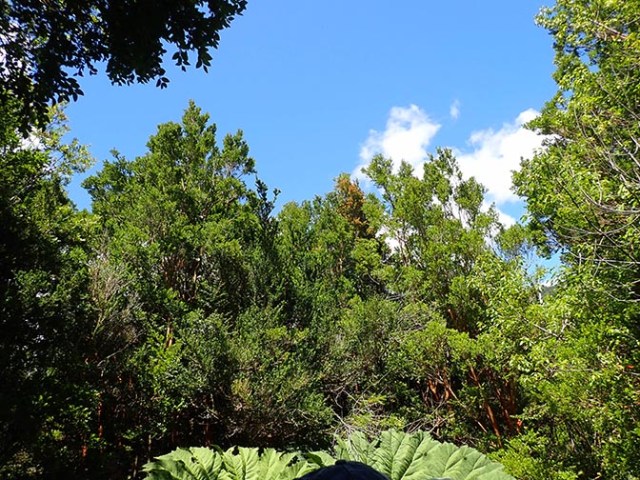
trees along the trail
At Holland America Oosterdam’s port stop in Puerto Chacabuco, Chile we booked an excursion called Patagonia Nature in Depth. This excursion promised a walk through the Aiken del Sur private 5 square mile park with superb views of lakes, rivers, hills, and mountains along with a typical Patagonian barbecue lunch.
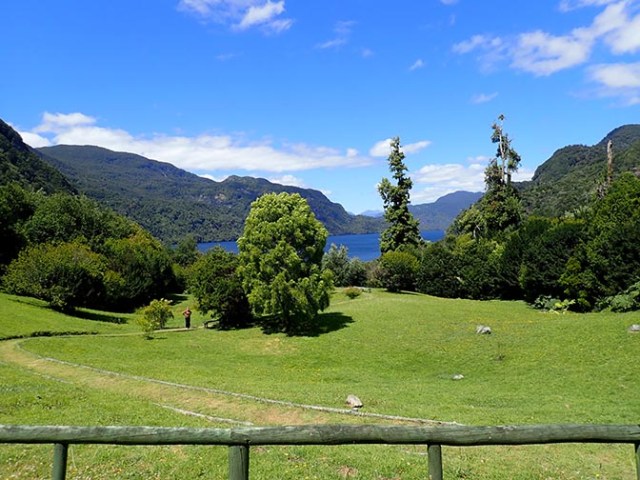
lake view at the end of the hike
It said a 15-minute bus ride would bring us to the park on the shores of Lake Riesco with clear transparent water. First a visit to the information center with interpretive stations on the geography, history, and biology of the region. That is followed by a walk down the River Trail passing over bridges and through forest, prairie, and swamp zones. Plants include wild fuchsia. The return trip is on the Waterfall trail passing the 65-foot tall Old Man’s Beard waterfall. This is followed by lunch.
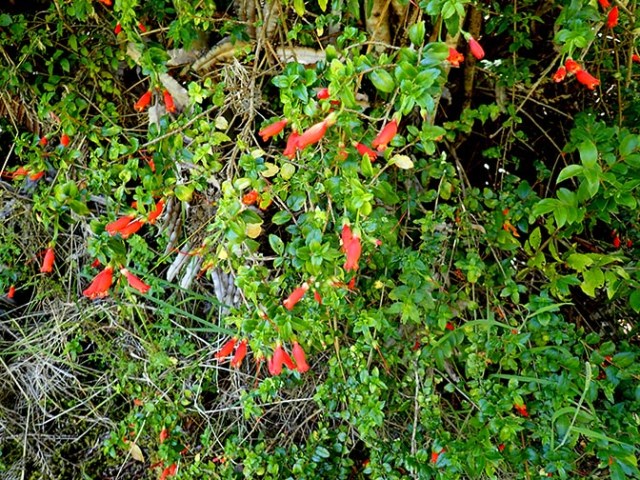
parasitic flowering plant that hummingbirds like
There was a warning to dress warmly in layers and wear sunscreen and insect repellent and that the guide may not speak English very well. Our guide spoke English pretty well. We saw very few bugs. It was a nice warm sunny day. Since the guide said this region of Chile only gets around 50 sunny days a year and over 200 rainy ones we got lucky on the weather. It is about a 15-minute bus ride from the port to the park. There were 3 busses from our ship. Overall it was a good excursion, but one thing they could have done better would have been to send the first bus on its way once it was full and same with the second instead of waiting until all of them loaded and then traveling together. The last one to load pulled out first and then the second so the first people on the bus ended up last for everything.
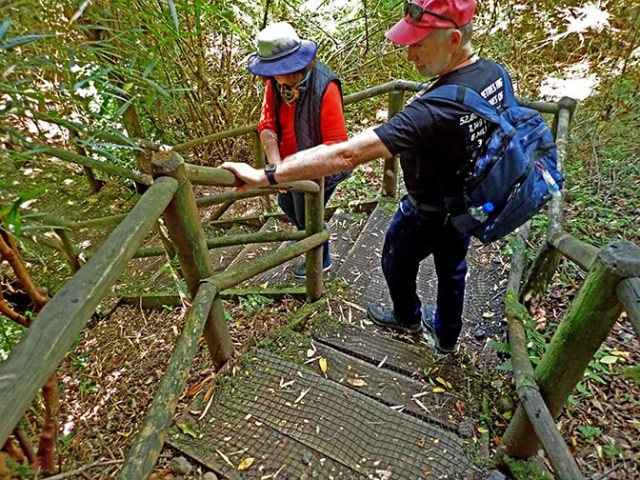
stairs on the trail
On the way to the park the guide on the bus gave out information about both the area and the park as well as some of the plants we would find there. He was quite knowledgeable. The bus first stops briefly at a visitor’s center which has a very small number of restrooms for such a large group. Another reason why having the busses come one at a time would have been preferable. They also had water available so people could have a drink before going for the hike. Although there were 3 busses, the hike went in 4 groups so there was one additional guide besides the ones on the busses.
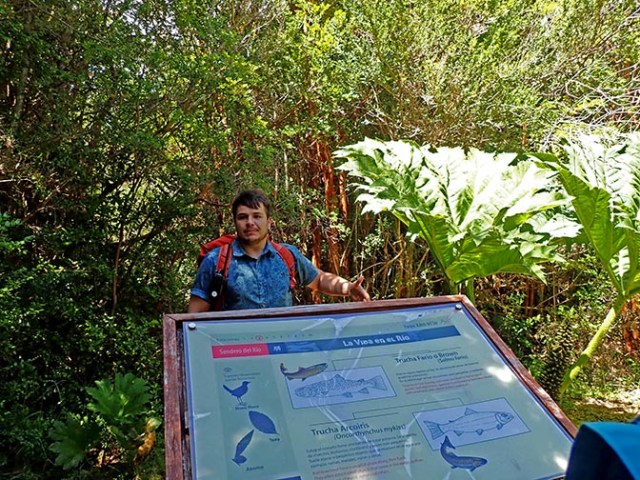
trail guide
Most people went with the guide from their bus, but the random guide’s group left first and we happened to be outside and ready so we went with the first group rather than the last, which was the rest of our bus. They waited long enough between each group starting out that the groups did not run into each other along the trail. From start to finish the hike was about 3.5 kilometers or just over 2 miles, though they said it was 2 kilometers before we started out walking. That must be the standard number they tell people on hike excursions because we did another hike in a different port where they also said it was about 2 kilometers and that one was more than 4. I was happy with the longer hikes since I regularly run farther than that, but some people who aren’t accustomed to walking much thought it was pretty far.
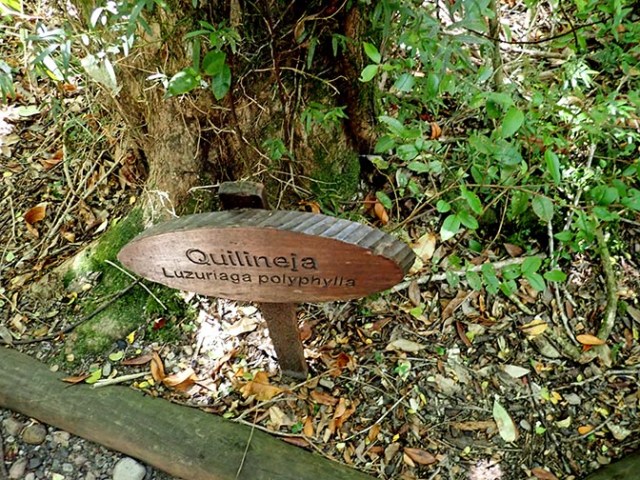
plant sign
There were a lot of interesting plants along the way. Many had signs next to them saying what they were. There were also some larger signs about the flora and fauna of the area.
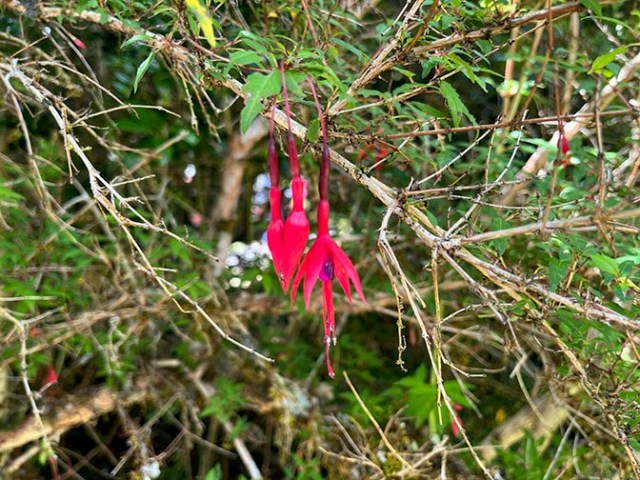
wild fuchsia
Wild fuchsias grew in the forest. Also a pretty little orange bell-shaped flower that the guide said was a parasitic plant, but hummingbirds like it. There were foxgloves too, but those are not native to the area.
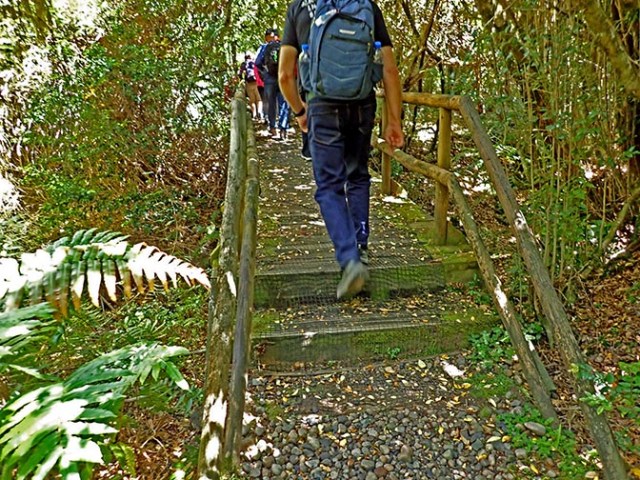
bridge on the trail
The trail was mostly river rock between logs, and relatively flat. There were some stairways and quite a few bridges along the way. In several spots a fairly large tree had partly fallen and leaned far enough over the trail so people had to either duck under the tree or step off the trail to go around it.
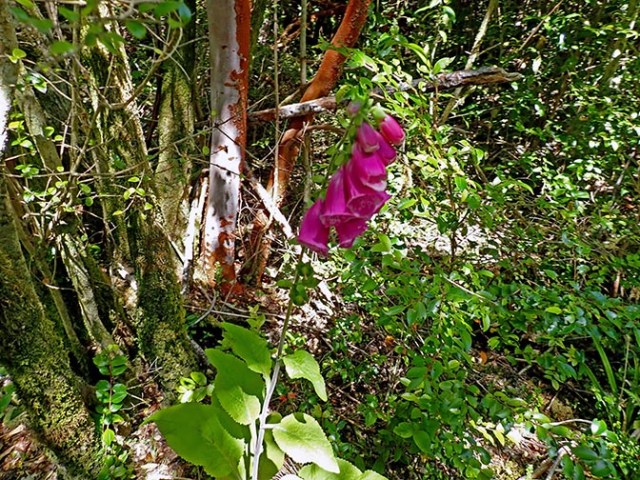
foxglove (digitalis)
Every now and then the guide would stop and talk about something particularly interesting along the trail. Mostly plants, but he did like to talk about pumas, the top predator of the area. There are also foxes and the world’s second smallest deer living in that park along with other species. There were some plants that are used locally for medicinal purposes, like a tree with a powdery substance on its trunk and branches that locals use to heal burns. There were also some edible plants and berries, one of which had giant leaves and thick stems.
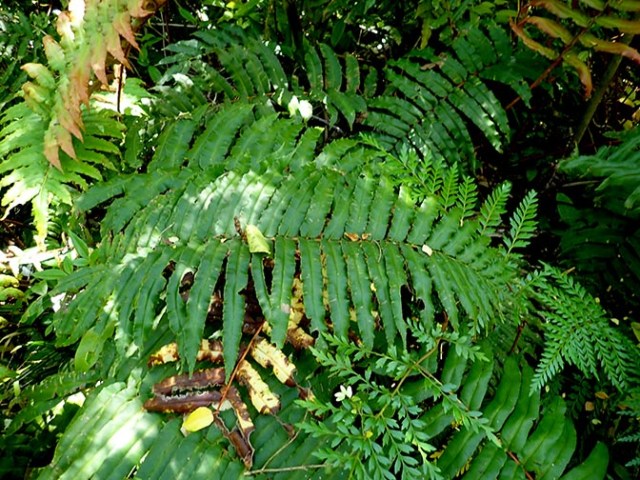
cow rib fern that doesn’t look that much like a fern and baby trees that look just like ferns
One plant that looked sort of like Oregon grape with the leaves stretched out and flattened was called a cow rib fern. It looked nothing like ferns that I am familiar with. There was another plant that looked similar to bracken fern, but was not a fern at all, but rather baby trees.
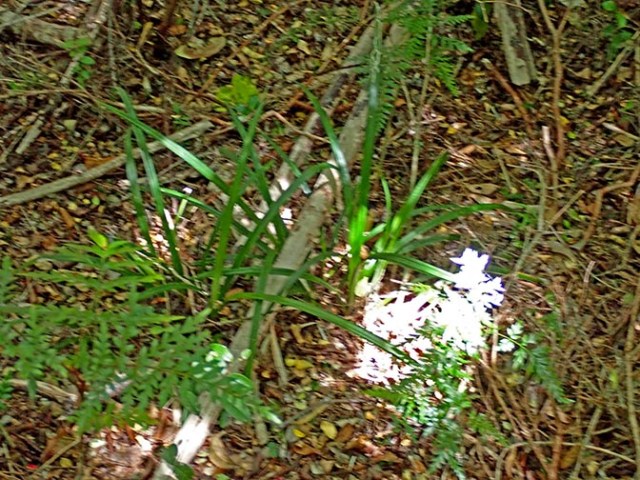
blades of grass – blade being the key word on this plant
A plant that looked a lot like grass was the only thing native to the area that he said we shouldn’t touch. It wasn’t poison or anything, but the edges of the leaves are so sharp they use it as a knife so people could easily get cut from that plant.
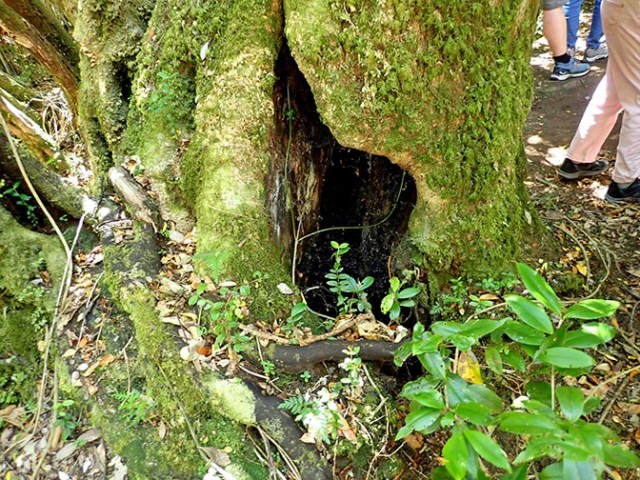
tree with a hole burned through it
Other than a few trees that the guide called mother trees that survived the fires, the whole area was burned about 80 years ago by early settlers who were given whatever amount of land they could clear for farmland. Burning it was the quickest way to clear it so that’s what they did with no thought to the environment or ecosystem. The mother trees were larger than the other trees. One that the guide said had survived because of being covered in snow at the time of the fires had a hole burned through it.
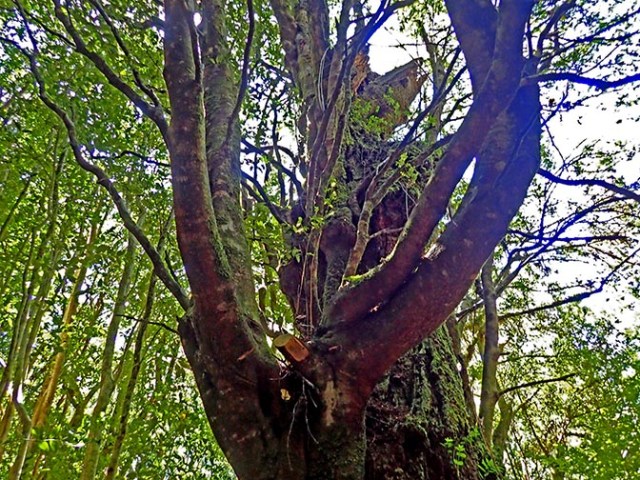
standing nurse log
There are also some trees growing from nurse logs, which is not unusual for a forest. Generally the nurse log is a fallen log laying horizontally on the ground that trees grow out of. In this forest there were some standing dead logs that living trees grew around. There was also one tree sprouting from the top of a stump with roots growing down around the stump. That is not so unusual as an upright nurse log. The guide said they called that one the octopus tree.
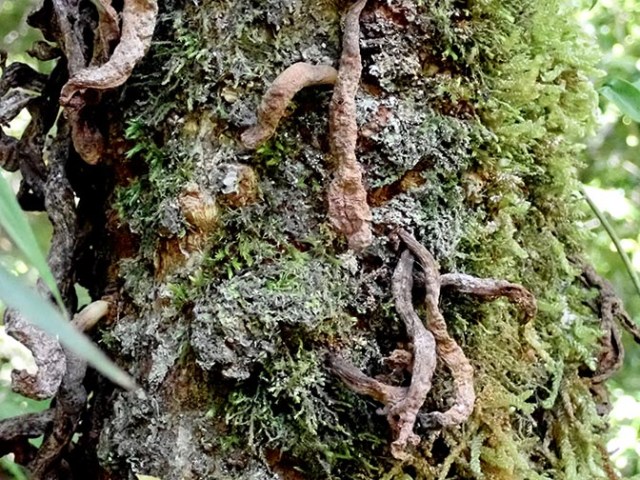
tree killing fungus
One tree had a fungus that resembles fingers on the trunk. Or at least that’s how the guide described it. They look more like worms to me. The part you see isn’t the actual fungus, but rather innards of the tree that the fungus living inside of the tree forces it to expel. It eventually kills the host tree. Not all fungus is bad though. The underground fungus network that connects the forest allows the plants to share nutrients and communicate with one another. That is with all forests, not just this one.
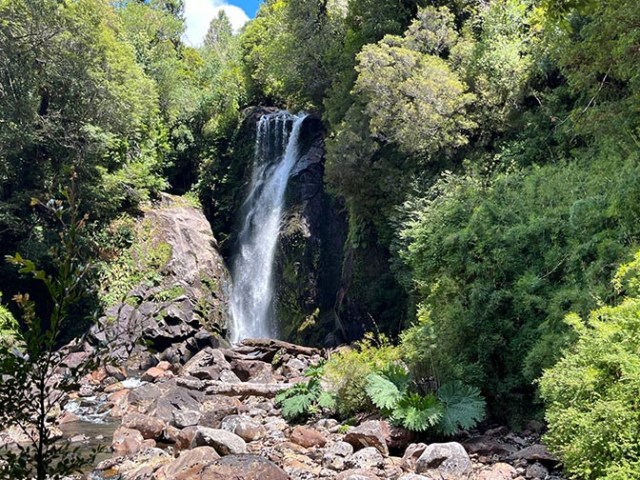
Old Man’s Beard Falls
Much of the trail was paralleled by a shallow stream. In one place the trail came out by a waterfall named Old Man’s Beard Falls. We had previously passed a tree with some lichens that were also named old man’s beard. The guide said that particular type of lichen could only grow where the air is clean and pure.
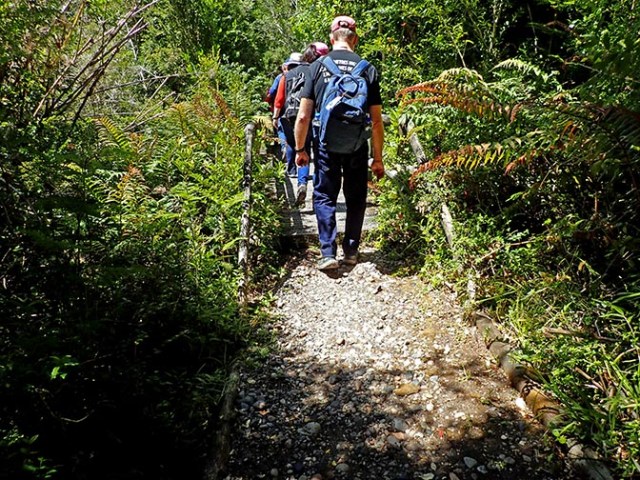
hiking on the trail
At one point the hike crossed a dirt road. There was a bus waiting there for anyone who wanted to ride it the rest of the way rather than hiking to the end. It waited for all of the rest of the groups though so they did not get there any quicker than the people who walked. Most people walked, but there were some who took the bus. Along the way we saw some berry bushes called Calafate. The guide said they had two types, of which one was good to eat and the other more bitter and seedy. One had thorns on the leaves and the other type had thorns on the stems. On the bush they look somewhat like blueberries. The guide mentioned that most people think of Patagonia as more open land rather than forested, but he said that is Patagonia in Argentina. In Chile it is different.
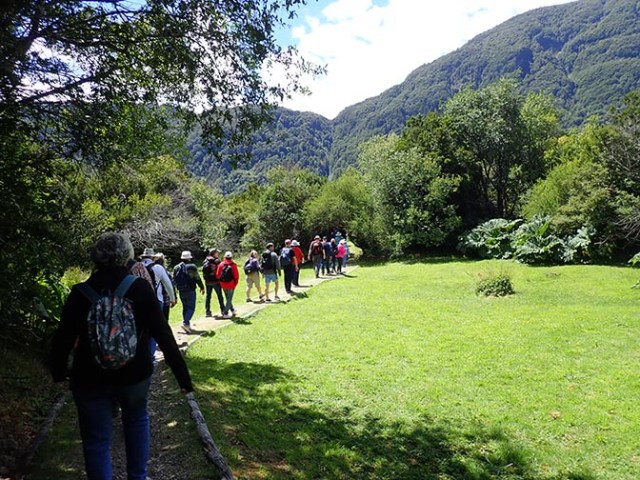
passing through a meadow
Most of the hike was on a forested trail, but we did pass through a meadow when we were getting close to the end.
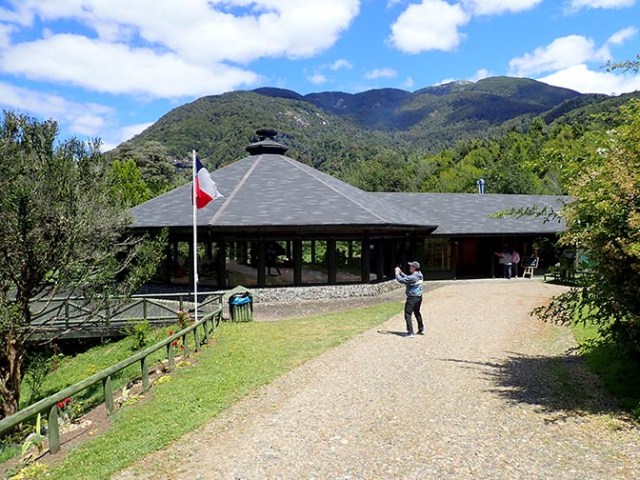
building at the end of the trail
The trail ended at a lodge sort of building with a view of Lake Riesco. There was a tiny gift shop and some restrooms as well as a large room full of tables set for a meal. There was a fireplace with meat smoking over the fire in the center of the room. A bar at the entrance to that room held many glasses of a local cocktail in a couple of different flavors. One was a pisco sour and the other a Calafate sour made with berries indigenous to the region that we had seen on the trail. These drinks did not have the egg white foam on top that is traditionally found on a pisco sour. Probably to prevent any chance of giving cruise ship passengers food poisoning from raw eggs. People could have more than one drink if they wanted. Food was not served until all of the groups had arrived.
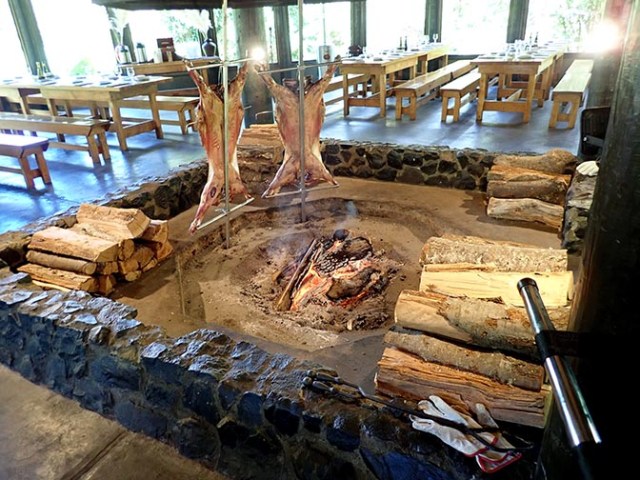
lamb smoking over a fire
The meal started with a small plate with a couple empanadas and a roll, followed by a bowl of corn, asparagus, and lima beans served cold like a salad. The main course was a giant plate of lamb and potatoes that was way more than enough for one person. Nobody at our table finished it. The lamb was the same as what was smoking over the fire, just from an earlier batch.
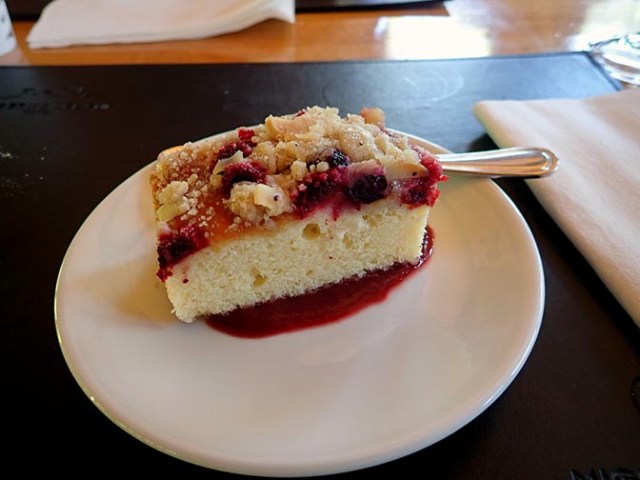
dessert
After all that there was more to come with a cake with some sort of berry topping. All of the pieces had a bit of whipped cream on them except mine – like somehow they knew fresh dairy products aren’t friendly to my stomach, though in reality they probably just forgot to put it on that one piece and it was just chance that it ended up with someone who would actually appreciate that rather than be disappointed by it. The blurb about the excursion when you book it did say you could let them know in advance about any dietary considerations, but we hadn’t actually bothered to do that.
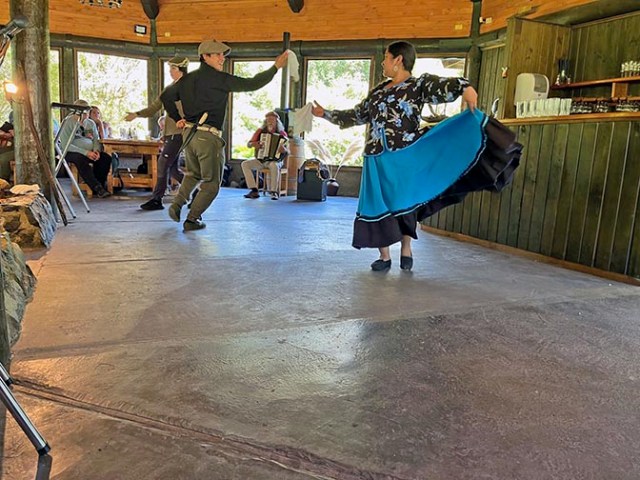
dancers
During dinner entertainment was provided by an old man with an accordion and two dancers dressed in traditional local clothes. At one point the dancers brought out some of the guests to dance with them.
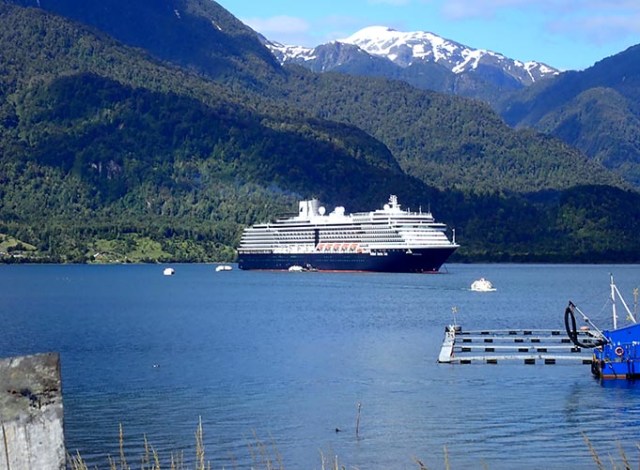
Oosterdam anchored near Puerto Chacabuco
All of the busses went back together. For a tender port seemed as if that would overwhelm the tenders and people would have to wait, but it turned out that they had two at the dock and as soon as one left another pulled in so the line kept in constant motion getting everyone loaded up and onboard. We quite enjoyed this excursion as did most everyone else that we talked to.


 Cruise Stories
What an amazing adventure! The hike, the waterfalls, and that Patagonian barbecue sound incredible. Loved how you described the details along the trail, felt like I was right there with you!