Budapest
Budapest, Hungary
The region where Budapest is located was first occupied by Celtic tribes and over the centuries conquered by Romans, Mongols, the Ottoman Empire, the Austrian Empire, and the Soviet Union. Buda and Pest were originally separate cities along with an earlier lesser know one called Obuda. Eventually all three combined in 1873 to make one city called Budapest. The original town of Buda was on one side of the Danube River while Pest was on the other. Hungary gained independence in 1989 with the collapse of the Soviet Union and became a member of the European Union in 2004. Budapest is the capitol of Hungary as well as its most populated city.
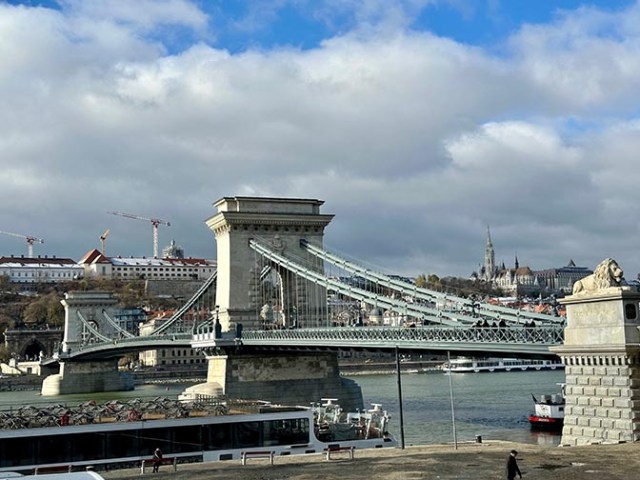
Chain Bridge
The parts of the city that were once Buda and Pest were first connected by the Chain Bridge across the Danube River built in 1849. There are now 7 bridges connecting the two. Currency is the Hungarian Forint. One US dollar equaled 368.41 forints when we were there a few months ago. Now one US dollar equals 339.11 forints as the dollar continues to decline compared to other currencies worldwide. Shops in Hungary often accept euros and US dollars, but at a steep exchange rate so it is better to have the local currency or use a card. The climate is temperate and humid with warm summers and cold winters. Average yearly rainfall is about 19-31 inches.
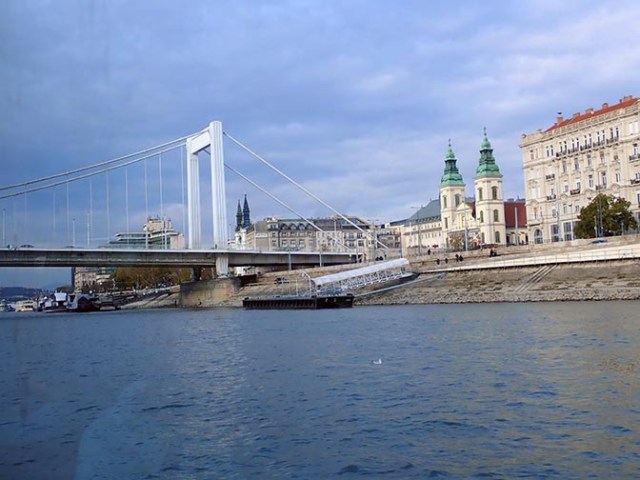
Elizabeth Bridge
World War 2 was hard on Budapest. All 7 of its bridges were destroyed or damaged in the war and had to be restored or rebuilt. It lost 80% of its buildings as well. Many have been restored or rebuilt, but there is still much scaffolding around the city where things are under repair. Buda Castle above the city has a wall on one end where guard’s barracks used to be that is currently mostly just the one wall – with scaffolding. It also had construction going on below the castle walls.
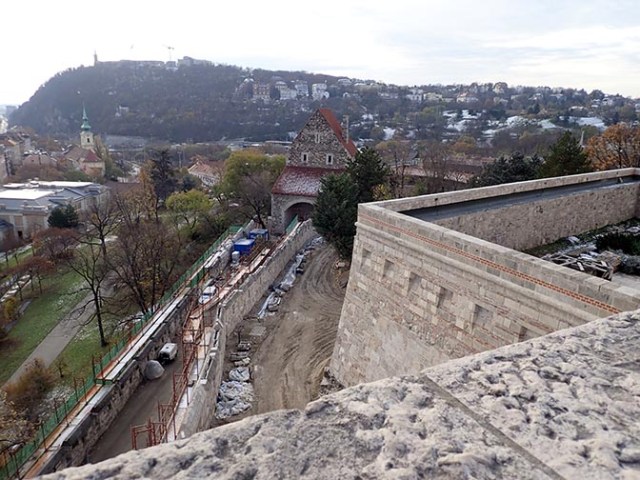
construction zone at the bottom of the castle wall
I’m not sure what the deal is with European hotels, but they don’t seem to like privacy in the bathrooms. The one where we stayed in Copenhagen just had frosted glass around the entire bathroom. Prior to boarding Viking Skirnir in Budapest we stayed at the H-2 Hotel for a few days. It had a nice spacious room, but only the toilet was enclosed with walls and a door. The shower and sink were just open to the room. The shower had frosted glass on one end, and just plain glass on the side by the sink. There was a mirror on the wall opposite it so not only is the glass see-through, but you are also reflected well beyond it.
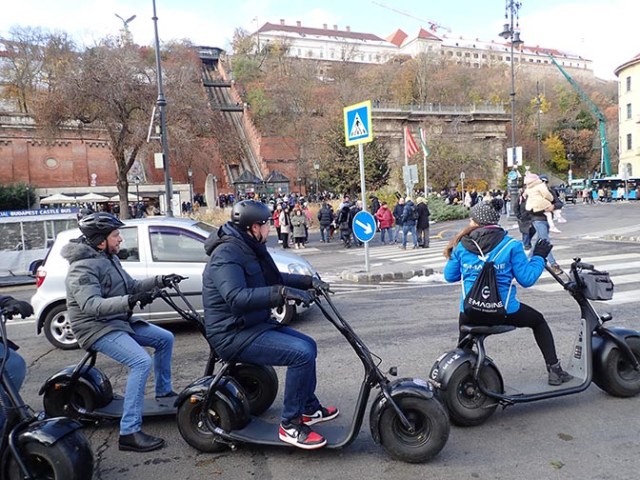
scooter tour in Budapest
Tourist attractions in Budapest include thermal baths, castles, caves, museums, historical buildings, river cruises, churches, and walking tours. The thermal baths are famous for being heated by natural hot springs. Some of them are, but for anyone to which having the natural hot spring is important research carefully before going because some of them are just ordinary water while others actually are heated with natural hot springs. Some are large with many pools and the older ones have architecture relevant to the time they were built. Another tourist attraction is a large Ferris wheel called the Budapest Eye.
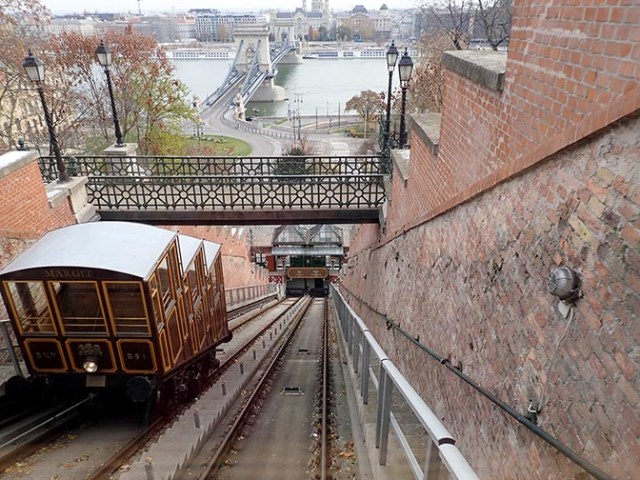
funicular
Other activities include segway or scooter tours, a hop on hop off bus, and a funicular up to Buda Castle. The funicular goes up castle hill from near the bottom of the chain bridge up to the castle grounds. A funicular is cable railway system on a steep slope with a set of two cars running on parallel tracks that balance each other out as one runs up while the other goes down. These are used in many places around the world to transport people up and down steep hills. The one in Budapest has 3 compartments in each car offset from each other with the ones above rising higher than the ones below. Fantastic views can be had from outside of the funicular at the top of the hill and from bridges crossing over the funicular track. There are many excellent viewpoints on the castle grounds as well.
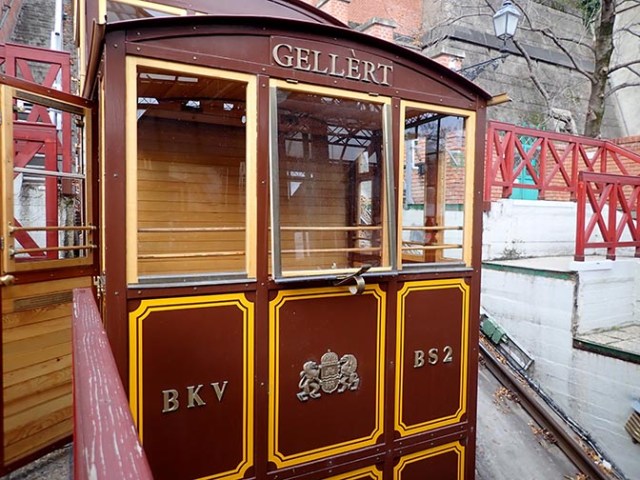
one car of the funicular
The first day we went there the funicular had a long line with a wait of about an hour to go up so we waited until the next day and went back first thing in the morning when we could go right up with no line. We were the second group of the day to go up so there were no crowds when we first got to the castle.
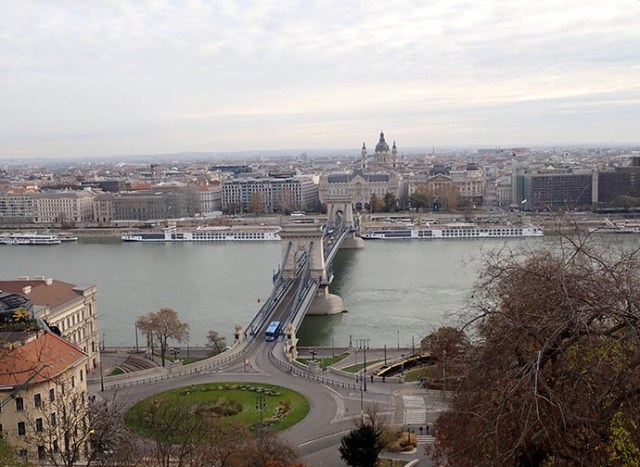
view from the funicular
The funicular offers a wonderful view of the city from the lowest of the three compartments on the way up or down. The windows in the middle and top compartments are much smaller and the compartment in front blocks most of their view. You can see the track from the larger window at the back of the upper compartment, but as there are walls on both sides of the track that window doesn’t show much else.
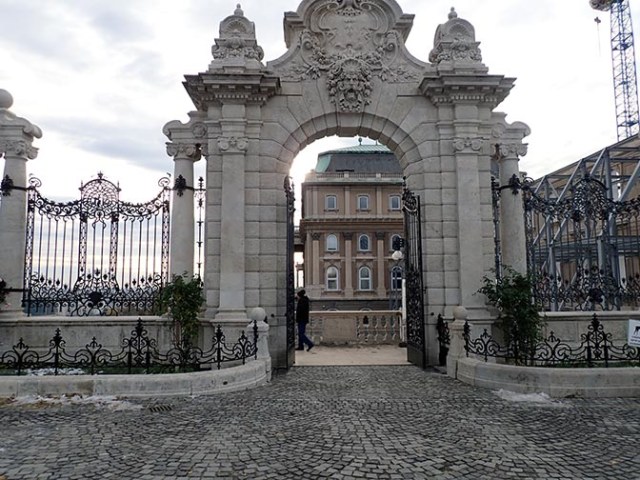
castle gate
The funicular is the fast way to the top of castle hill, assuming you are there when you can actually get on it without waiting in a long line. The little castle express busses available at the bottom by the hop on hop off bus stop would be faster at times when the line is long. Those busses make 4 stops on top the hill whereas the funicular has just one station at the top and one at the bottom. There’s also stairs so people can just walk up the hill if they want to.
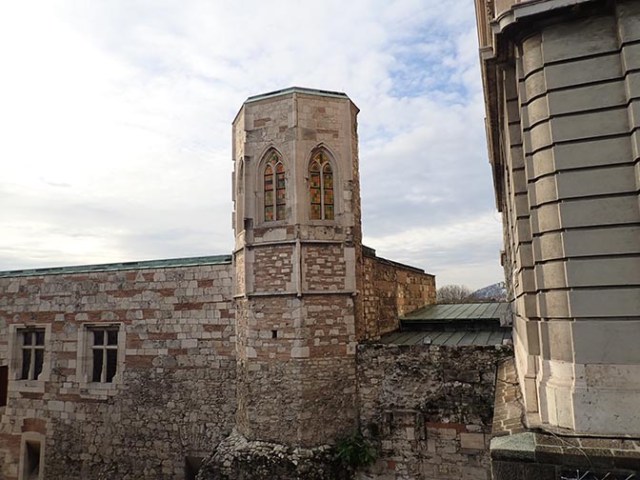
tower at Buda Castle
The top station of the funicular lets out at Buda Castle, which could be a destination on its own. It has sprawling grounds with views of the city all along the wall on the side above the Danube River. Besides the main palace buildings it had an older looking one with a tower that had stained glass windows.
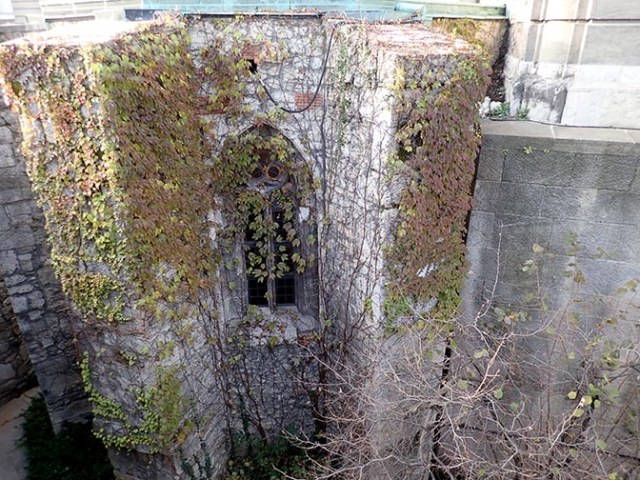
tower in a hollow surrounded by high walls
There were signs on the castle about a museum and gallery inside, but nothing was open while we were there. There’s a lot to see just walking around the grounds on the outside of the castle. It has many statues and viewpoints as well as the architecture of the castle itself. Some of it has been restored after being damaged in World War 2, but there was still much under construction. There was an ancient stone tower down in a hollow where the only thing anyone would see out the window is a wall. It looked even older than the other old tower.
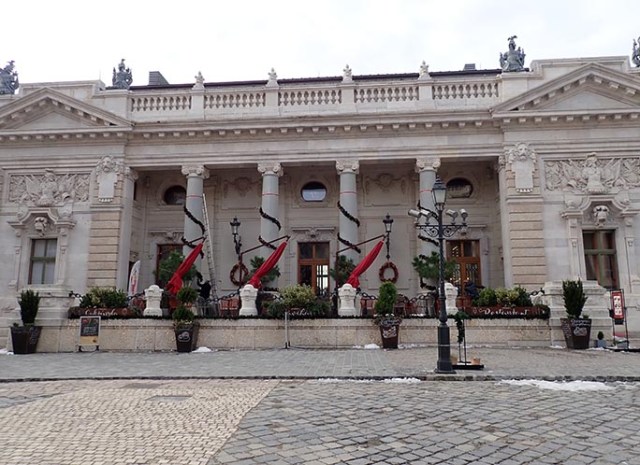
restaurant at Buda Castle
A coffee shop/information booth sat in the courtyard in front of the castle and there was a restaurant in another courtyard accessed through a walkway to the backside. There was also a little mirrored building on the backside with a sign saying it was both tourist information and a gift shop. None of those were open during our early morning visit.
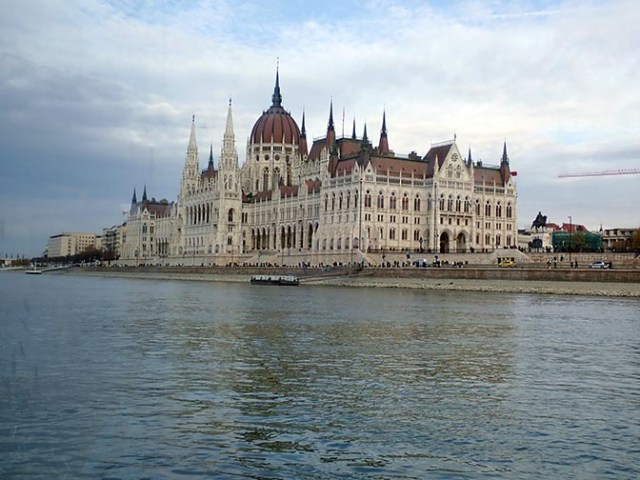
parliament building
The parliament buildings near the Danube River are a major tourist attraction. Along the side of the river not far from there a bunch of old shoes make a memorial for people executed in that spot by Nazis near the end of World War 2 in one of the many atrocities committed by the Nazis during that war. At that time they were low on bullets so the Nazis tied the entire group of victims together and shot one of them. That person fell into the river, dragging the rest in with them to drown. The shoes in the riverside memorial are the actual ones the victims wore when they died. Some are tiny children’s shoes. It’s terrible what can happen when one evil leader conditions their minions to think of certain other people as less than human.
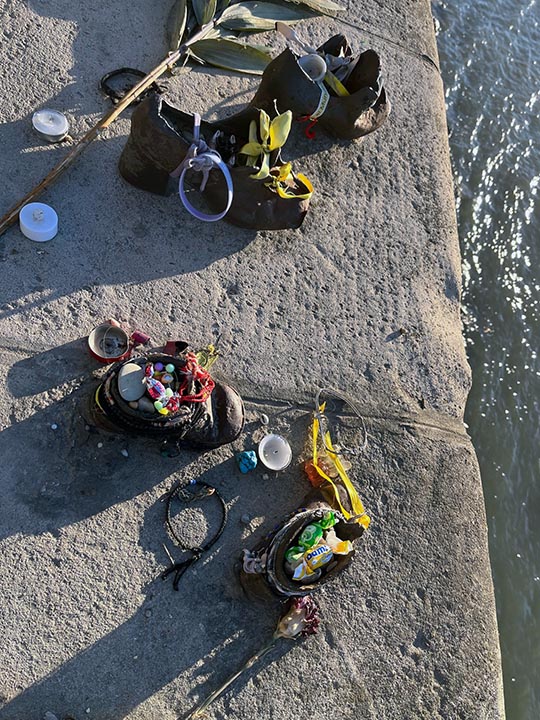
shoe memorial from World War 2
Some visitors to the shoe memorial leave things in the shoes, sort of like putting flowers on a grave. Some of the tiny shoes were full of toys and candy.

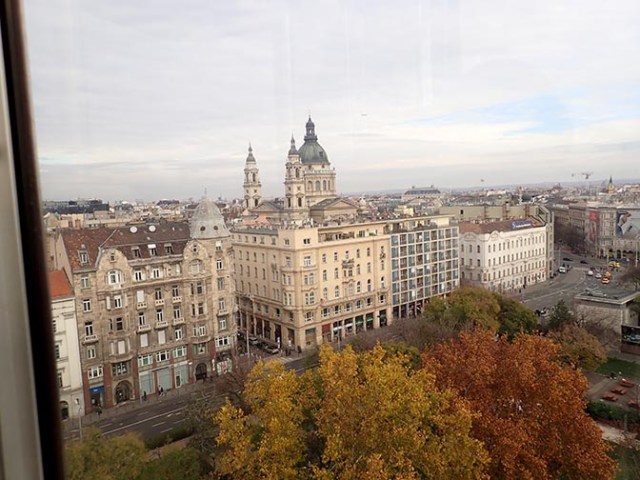
St Stephens cathedral towers over all the buildings around it
The parliament buildings are the tallest in Budapest with one exception. Saint Stephens Cathedral is exactly the same height. That is intentional rather than coincidental, done to indicate that man is not above god. The castle and other buildings on the other side of the river sit higher since they are up on a hill, but apparently it was the height of the building itself rather than how high the top reaches that mattered.


 Cruise Stories
I love how you shared both the grand landmarks and the small, powerful moments like the shoe memorial. Makes me want to plan a visit and experience it all firsthand, thank you for bringing it to life!