
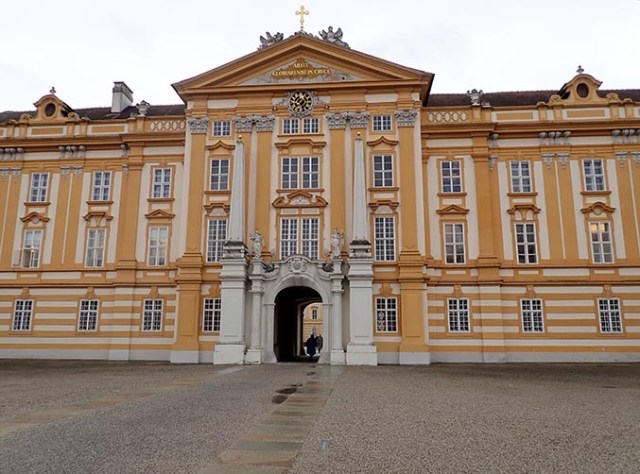
arched entry to the inner courtyard at Melk Abbey
Melk, Austria
Melk is a city in Austria at the confluence of the Danube and Melk Rivers with a population of over 5000 people. It is best known for Melk Abbey, home to Benedictine monks since 1089. Melk has a temperate humid climate with temperatures ranging from winter lows in the low 30’s F to summer highs in the upper 70’s F. It generally snows about 60 days each winter. Currency is the euro. Tourist attractions besides the monastery include castles, churches, a museum, and the Danube Valley. Melk is in a wine-growing region where vineyards dot the hillsides between villages.
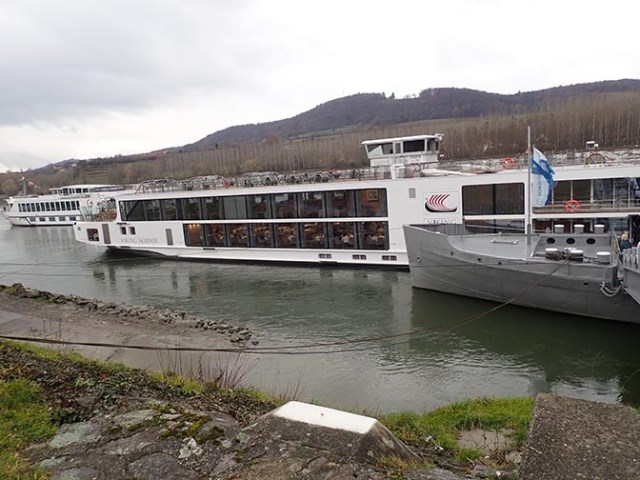
Viking Skirnir in Melk, Austria
Melk River Cruise Port
Melk has several docks for river boats of which the dock itself is shaped like a boat. We parked at one of them. Another ship parked behind us just after we got there. The gangway from the ship goes to the boat-shaped dock, then it has a gangway up to the shore. From there it was a short walk to a parking lot where busses waited to take people up to the abbey on top of a hill.
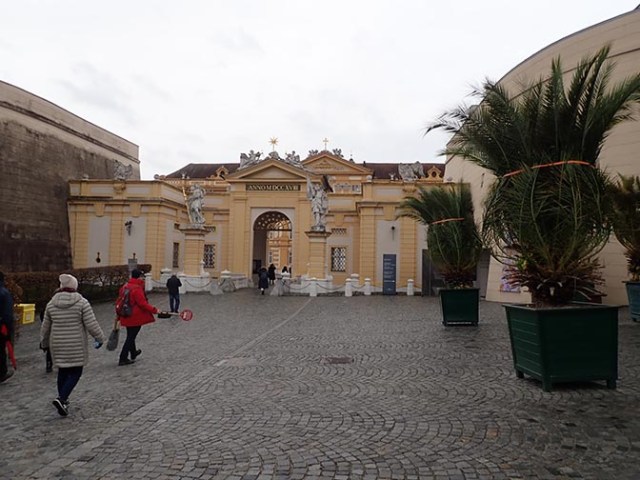
entry gate
Melk Abbey
Melk Abbey first opened in 1089, and has had a monastic school since 1160. It was rebuilt between 1702 and 1736 in the current baroque style. The site was once a Roman garrison. It was handed over to the Babenbergs as a castle residence in 976. They were Austria’s first ruling family before the Hapsburgs who took over in 1101 then ruled for 600 years before the Ottoman Empire. When the Babenbergs left Melk to move elsewhere they put Benedictine monks in charge of the buildings to safeguard their ancestors who were buried there. There have been as few as 8 to as many as 100 monks in residence over the centuries with the count at 22 when we were there. One of those monks teaches at the school that now inhabits a good portion of the building. Because it is still a functioning Abbey as well as a school no photos were allowed inside the building.
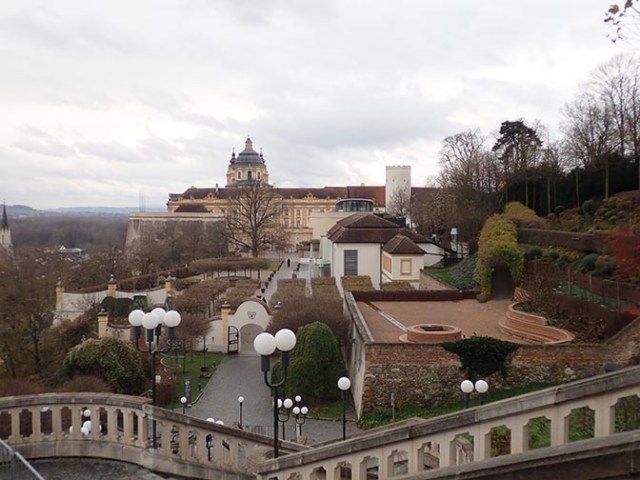
view of the abbey from the top of the parking lot stairs
Busses park in a lot above the abbey with a stairway down and some excellent views along the way. The abbey itself perches high above the river with excellent views of its own.
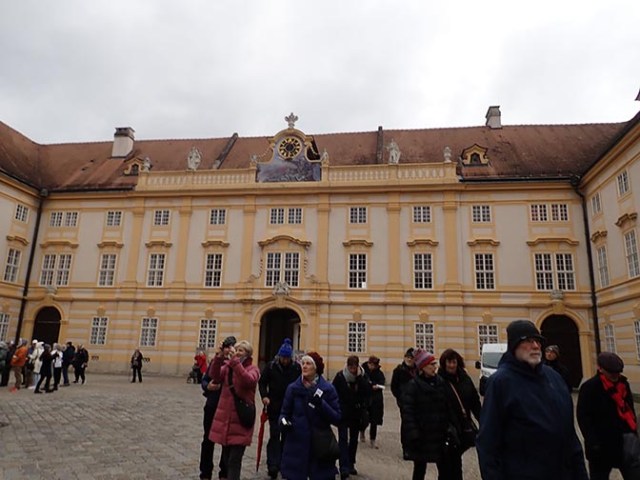
waiting to go in
At the abbey we waited out in the cold while the guide got tickets for everyone when we first arrived in the courtyard. Then 3 guides who worked there came out with one assigned to each of groups A, B, and C. Passengers from Viking Skirnir assigned to groups D and E would come half an hour later. The guided tour took 1 hour. We were allowed to take photos at the start of the tour while we were still outside, but once we passed through the door where they took the tickets no more photos were allowed except from a terrace while outside on a bit when we went out one door and across the terrace to another door leading into the library.
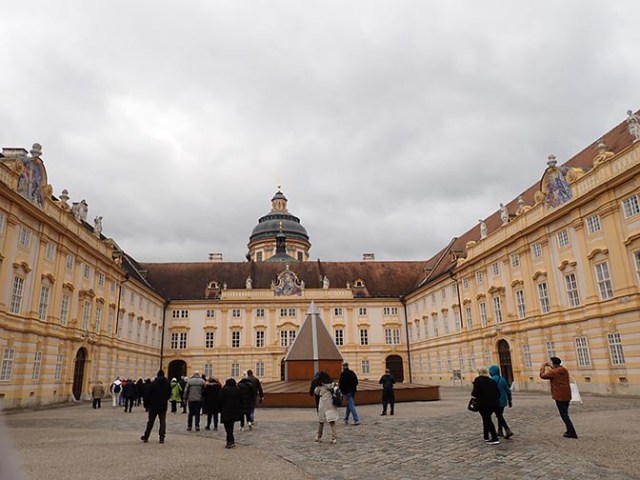
inner courtyard
The first thing past the entry door were giant portraits of Marie Antoinette’s mother and her husband who were the first royals to visit the abbey. Back in the day there were no hotels so monks put up travelers in the monasteries. Travelers of that era generally were royals as most common people didn’t have the time or the money to venture very far. The very long hallway was called the royal hallway. It had many rooms where visiting royals stayed.
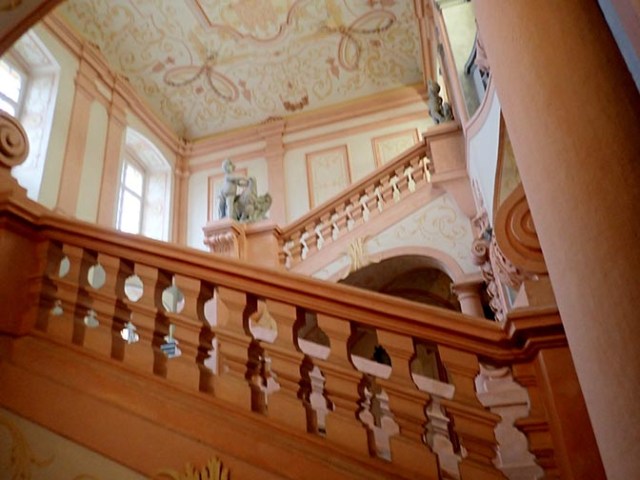
stairway to the ticket door
Going into some of the rooms it was a bit disappointing that none of them remain furnished as they would have been way back when those royals visited there. The only things remaining were the original giant ceramic heaters in a corner of each room and what little bits of the beautifully patterned wooden floors were visible rather than covered by carpet – which is there to protect the floor as the only visible areas are not where people are allowed to walk. Other things in the room were set up like a museum with articles in glass cases, none of which and anything to do with the royals.
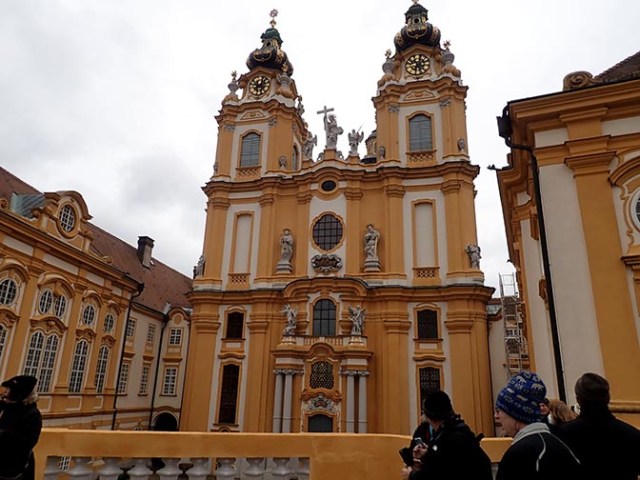
building view from the terrace
In another area there were some ornate gold-plated chalices that were gifts to the monks from visitors, but artifacts in the rooms were mainly from the monks. The item the guide talked about most was a monstrance, a word that resembled monstrous which is what it sounded like she said. Monstrous fit that artifact since it is a fancy golden thing holding the jawbone and one tooth of the person that they consider their patron saint, though he neither died there nor was he from there. Our monastery guide said that the body was brought in because they wanted a holy person. He’d been an Irish explorer hanged in Vienna for being different while he was on a pilgrimage to the holy land. The tree he was hanged from bloomed in winter so they decided he was a holy person. Now he’s Saint Coloman, patron saint of the Abbey and of Melk. I personally find collecting and or displaying human bones quite creepy. The tree blooming in winter isn’t creepy, but Google’s story about him is. There it said that he was a missionary hanged after falsely being accused of being a spy and he was made a saint because his body showed no sign of decay and his blood healed the sick. Who uses the blood of a dead body for healing? In most cases that would make people sicker. The guide did not mention that bit, just the tree thing.
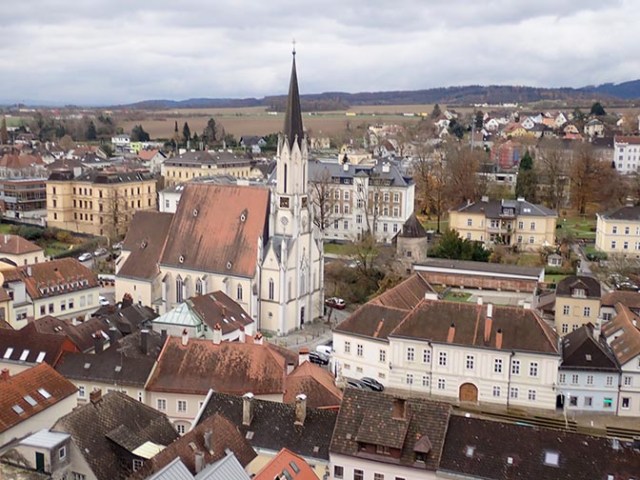
view of Melk from the terrace
At the end of the long hallway there was a room called the marble room which was where visiting royals dined. Most of the marble walls were fake marble rather than real, which the guide said in the modern world would actually cost more because of the time it takes to make it, but back then it was a cheap imitation that looks pretty much like the real thing. That room also had a ceiling which was painted to appear curved, but was actually flat. Painted columns running from the top of the wall over the edges of the ceiling look like they are standing straight up from the center of the room, but if you look up from the end of the room you can see the curve. Another room we saw later had an actual curved ceiling and it really was hard to tell the difference between that and the illusory one.
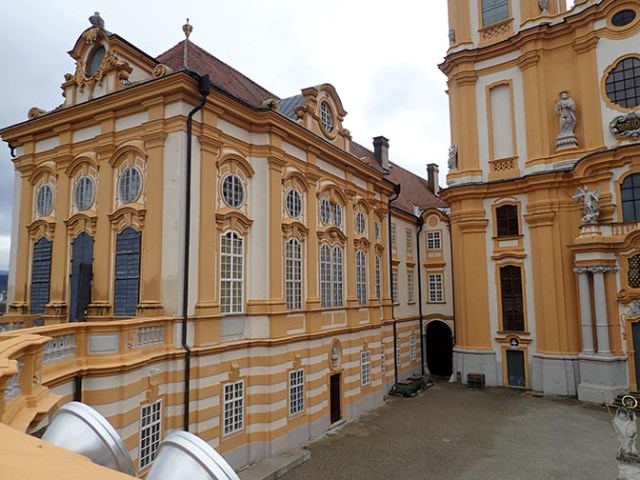
library from the outside
After walking across the outside terrace we went into the library. It is currently in what the guide called the baroque style which is original to that room. She said this is the last year to see it in its original form as it is scheduled for renovation and will soon be redone in a different style. The first room of the library has leatherbound books, some of which are over 1000 years old. They are all science type books in a variety of ancient languages arranged by subject whether that is medical, philosophy, or something else.
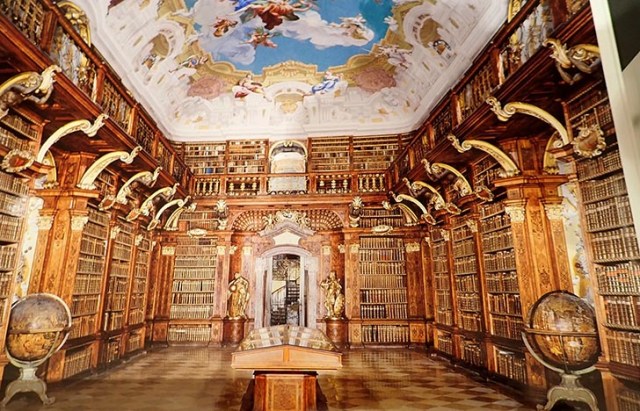
picture of a picture of inside the library
The second much smaller room in the library has books that are only several hundred years old and written in modern languages still spoken in various countries. The spiral stairway in that room leads to other rooms of the library where only librarians working there are allowed access. The library has 12 rooms, but just two are included on the tour.
We took a different spiral stairway down to the church portion of the abbey. Cleverly placed mirrors gave that stairway the appearance of going infinitely up or down unless you notice the reflection of your face in the mirror in what appears to be many stories down an endless spiral.
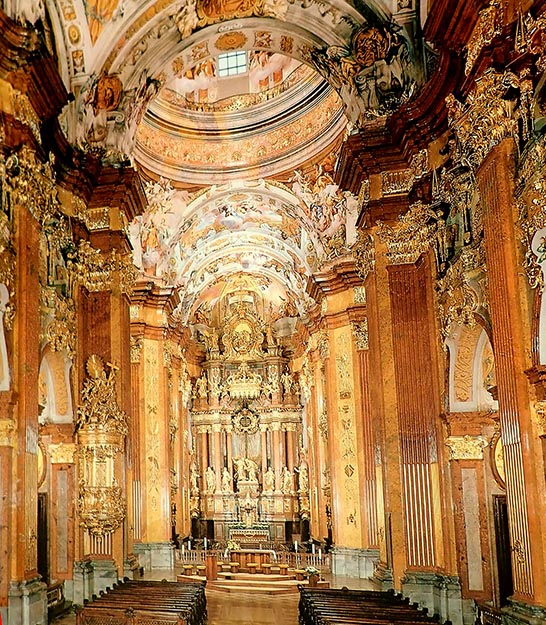
picture of a picture of inside the church
Inside the church was even more ornate than the ones we saw previously this trip, and they were all quite ornate. It had a large and very fancy pipe organ at the top balcony area at the back, which is typical of old European cathedrals. The front alter area pictured gilded figurines of Saint Peter and Saint Paul going to heaven rather than a crucifix like adorns most catholic churches. There is a very modern alter forward of that where current services are performed as they want to face the parishioners now rather than having their backs to them as was done in the original alter area.
On each side of the church there is an ornate coffin up on the wall, one an actual occupied coffin and the other an empty one honoring someone buried elsewhere. Heading from there toward the back of the church there is on each side a clear case on the wall with an actual skeleton of unknown people from the catacombs of Rome. A gift from someone in the past. I thought 3 dead bodies in the sanctuary of a church of which 2 are visible skeletons was even creepier than the monstrous thing. The guide did mention that the monstrance is considered the monastery’s most precious artifact. I guess they don’t find bits of dead people disturbing and nightmarish.
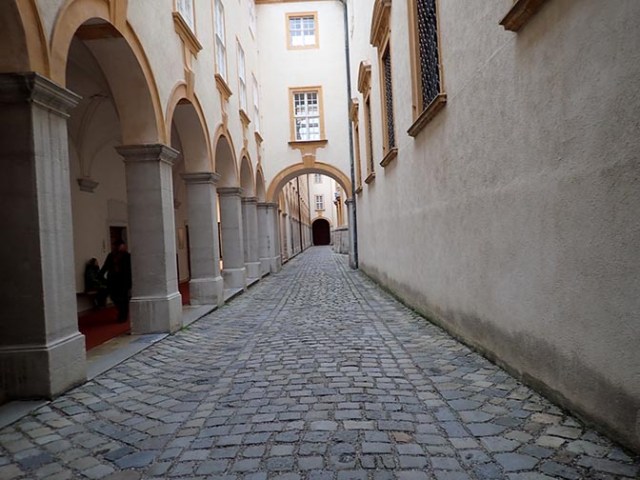
outside corridor
The church is the last thing on the tour. Even though it is still an actual operating church that still holds services like any other functional church, the tour exits through a gift shop like pretty much all tourist attractions everywhere. There’s also a couple more gift shops where entry is optional before you get to the exit. One of those was open and the other closed. It has a little café too. Since we had about an hour between when the tour ended and when the busses would arrive the gift shops and café were popular places for people to hang out since they were warm and the outside cold.
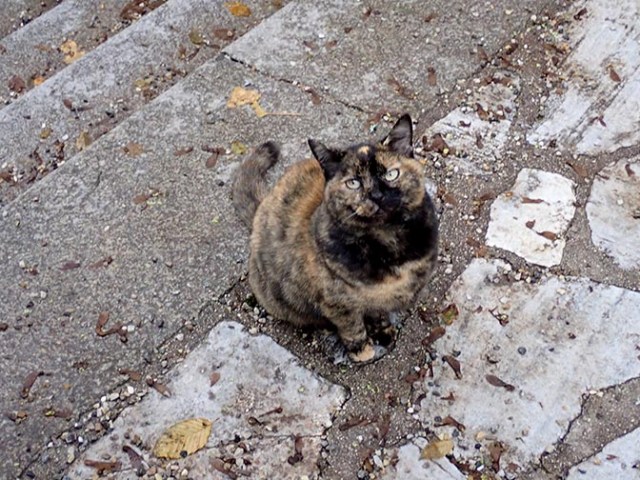
cat on the stairway to town
There was a long steep stairway leading into town. We found the first and only cat we saw outside in Europe on that stairway. It could have been a pet from somewhere in the town, a stray, or belonged to the abbey since a place that old probably needs some rodent patrol. The only other cats we saw the entire time were through the window of a cafe in Amsterdam that was not open at the time.
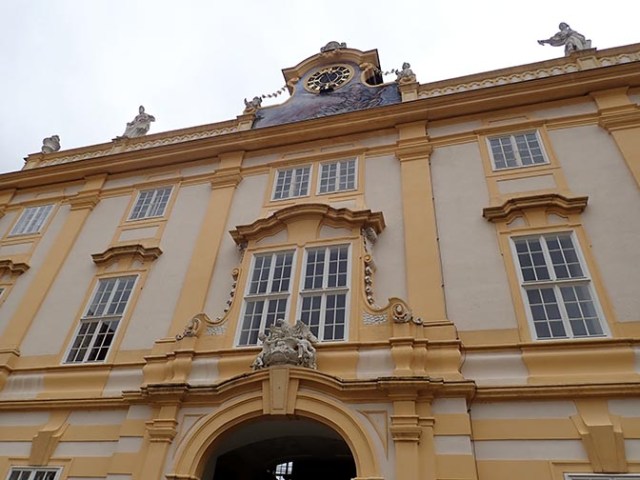
clock
We wandered through the gift shop a bit and still had some time to kill before meeting the bus. Since it was very cold outside we went to the little cafe and shared a dessert for a warm place to wait. A lot of other people from our ship were in there too.
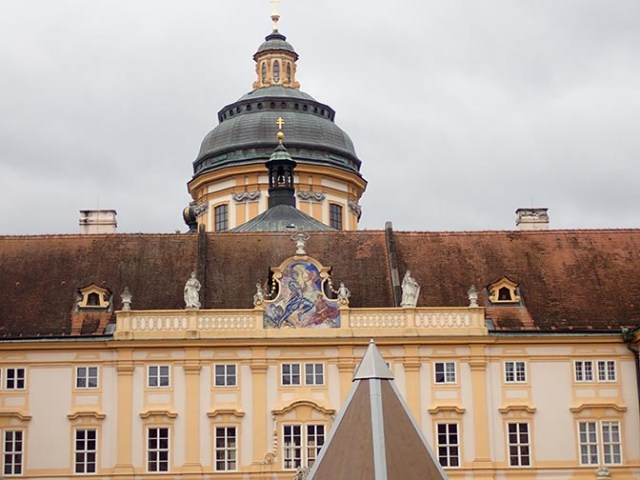
dome on top of the Abbey
The tour of the abbey was the included (and only) excursion for the port stop in Melk. Unlike our previous stops, the boat did not stay at the dock the whole time. Instead it went through the next lock while anyone who went on the tour was away. Then it waited at a port on the other side of the lock for the passengers to return by bus. The bus ride was half an hour, but they said it took the boat more than 2 hours to get there. There was no port stop in Ybbs where we got back on the boat. Just walking from the bus to the boat which then left as soon as everyone was onboard. Shortly after it entered another lock. There were 63 locks on the journey so we passed through a lot of them.


 Cruise Stories
It is phenomonal.
It was quite an impressive place.
I love how you captured all the fascinating history and quirky details of Melk Abbey! The baroque library and the hidden stories behind the relics sound intriguing (and a bit spooky!). Thanks for taking us along on this tour!
I could have done without the creepy bones, but the rest of the abbey was fascinating.
Haha, fair enough! Those relics definitely add a spooky twist, but they do make the rest of the abbey feel even more grand and timeless by comparison. Glad you still enjoyed exploring it!
Oh, that library!
I don’t know why they have plans to renovate such a beautiful and original library. Seems a shame to change it.
Yes!