white water rafting
One of the excursions offered on Holland America Oosterdam in Puerto Montt, Chile was called Petrohué River Rafting Adventure. It promised a class 3-4 rafting trip with spectacular scenery of old-growth forests and breathtaking views of the surrounding mountains and volcanos. The tour also included a picnic lunch and wetsuits provided for the rafting.
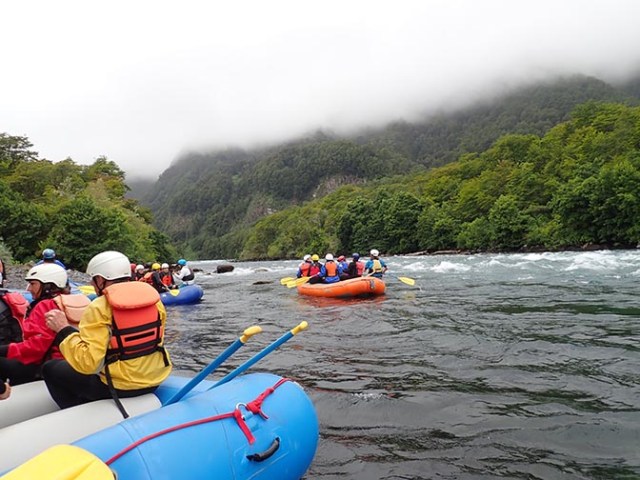
ready to go at the starting point
Other notes in the booking information said that guests must be fit and have stamina enough to paddle in rough open waters perhaps for long periods of time. The ability to swim and walk over uneven terrain was also required. Allowed age range was from 12 to 80. It also mentioned wearing comfortable walking shoes and to wear light-colored clothing to avoid attracting horse flies, of which it said only a few lived near that river. Additional instructions included to wear a swimsuit under your clothes and to bring a towel and a set of dry clothes.
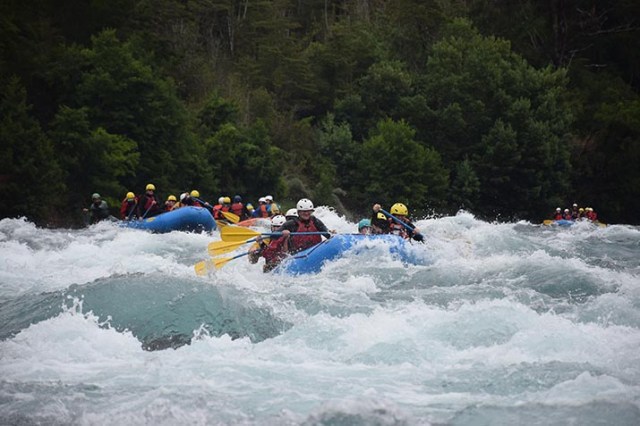
lots of rafts
The bus ride from the port to the river was a bit over an hour long. Every now and then a guide would give a little bit of history about a town we passed through along the way. Mostly about when the towns were founded a bunch of Germans settled there as well as local people from Chile so they had some German architecture and German influence in the food.
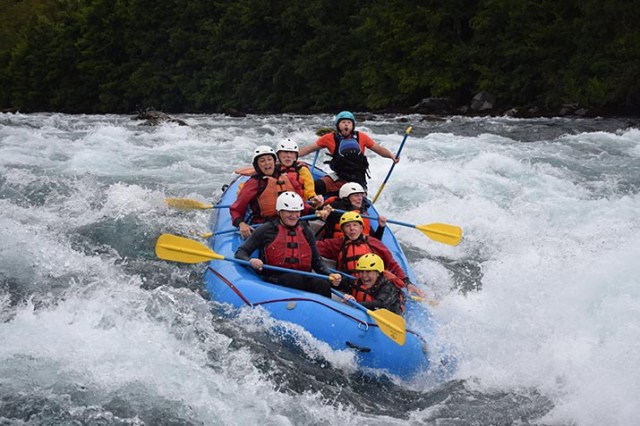
big drop
The guide said that the Petrohué River is in Patagonia, and that it is so clean you could drink out of it. On a clear day you can see 5 volcanoes from the river, but we did not see any through the clouds. They also said you could see to the bottom of the river on sunny days. Through most of our journey we could not see below the surface, though there was a bit near the end where we could see some of the rocks on the bottom.
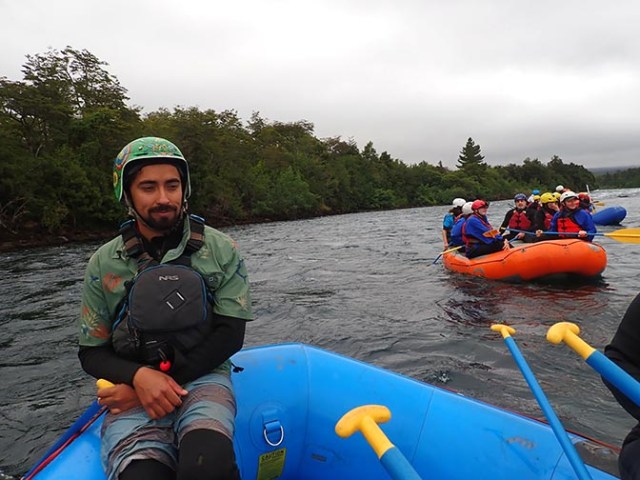
a moment of relaxation
After saying a sunny day would provide excellent views of the 5 different volcanoes, she added that the advantage of that day being a cloudy, humid day with some rain was that we would not be surrounded in horseflies as they didn’t come out in that weather. Apparently there are a lot more of them on the river than the cruise ship blurb said there would be. Even with the clouds and bit of light rain we saw one here and there.
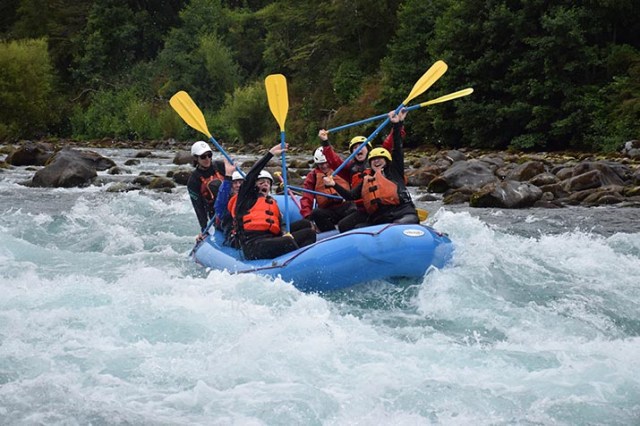
paddles up to celebrate successfully navigating a rapid
The first stop was at a supply shed where they handed out wet suits, along with jackets, booties, helmets, and life jackets. It rained while we were there, but then stopped and didn’t rain again. This stop had restrooms and a changing area. It turned out not to matter what color clothing people had on or what shoes they wore as the rafting was done in the provided gear. It’s best to wear a streamlined sort of swimming suit that will fit under a body-hugging wetsuit. Anything you have on under the wetsuit will be soaking wet by the time the rafting trip is over so the towel and dry clothes were definitely right on the mark. However anything you don’t wear under the wetsuit will still be dry so a second one of whatever you take off isn’t actually required.
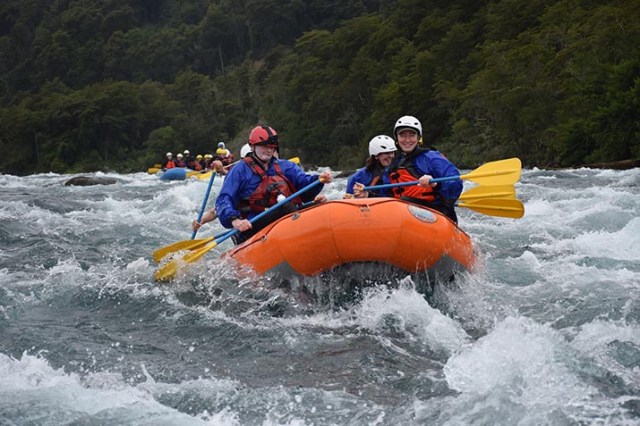
paddling down the river
If you want to keep your socks on so as not to put your bare feet into probably wet booties that who knows how many other people have worn then a pair of dry socks is needed, as is of course underwear since you’re wearing a swimsuit instead. Leggings will fit under the wetsuit so bring dry pants if that’s what you plan to wear under it. Some people were given jackets made from wetsuit material, but others just a light pullover raincoat sort of jacket. The wetsuit is overall style so if it’s not a warm day the people with the thinner jackets may want to keep their shirts on, in which case having a spare dry shirt would be necessary as well.
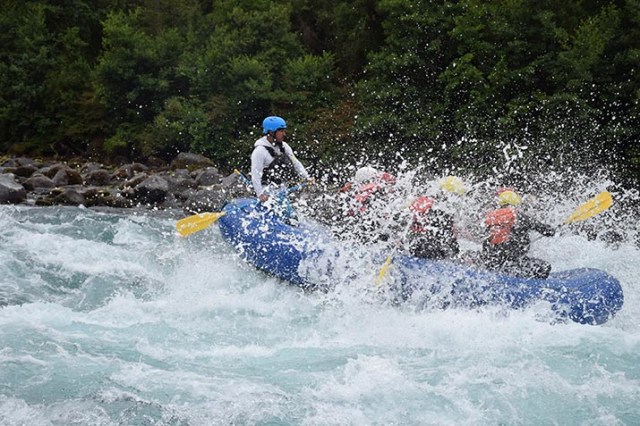
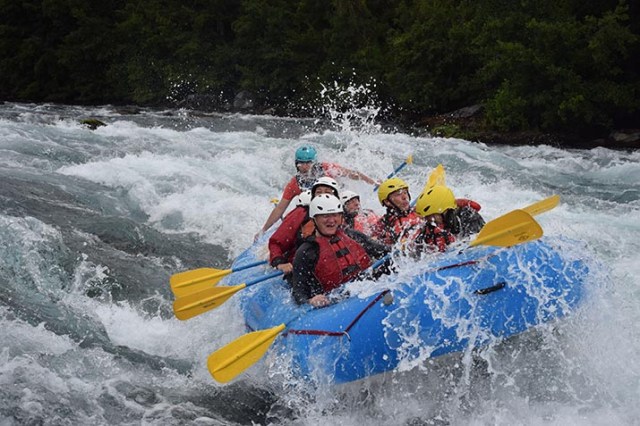
you get wet
The guide mentioned that anyone with glasses needed a strap for them or they could fly off your face and get lost in the river. They did not have any straps to provide with the gear so if you need one you have to bring it yourself. Considering that water will rush over you multiple times during the journey if it is possible to go without glasses that’s the best option since glasses don’t come with windshield wipers.
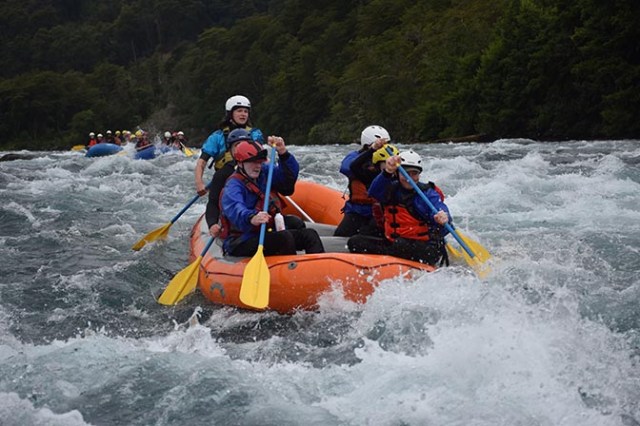
rafts going down the river
Once everyone changed into their gear we all got back on the busses and headed to the river. Everyone’s bag of dry stuff stays on the bus while the people go out to the rafts. The buses will be at the pull-out when the rafts get there so people have dry clothes to change into when they arrive.
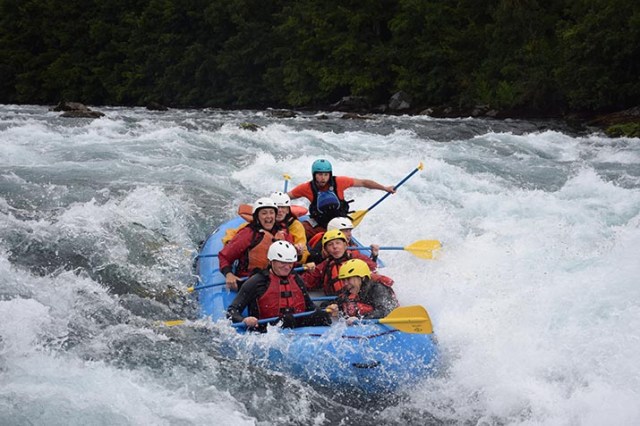
splashdown
At the launching site the first thing as people got off the busses was dividing people into groups of no more than 6 guests plus one guide. The raft I was on had just 5. One couple plus the 3 stray lone people which was one other lady and a man besides me. My husband and his wife did not want to river raft. The other lone lady was not traveling with anyone else. My husband went fishing and the guy said his wife was just doing whatever she wanted to.
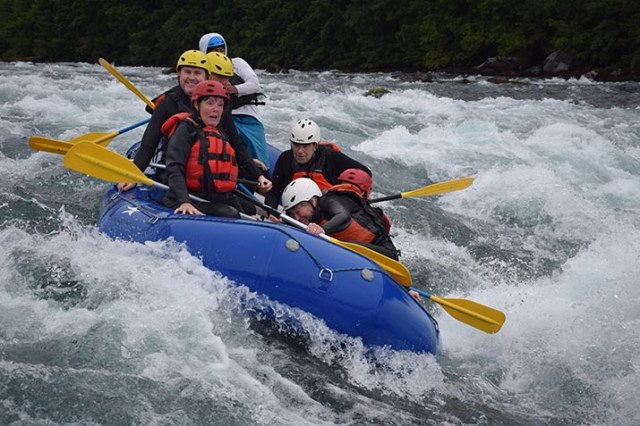
that face
Meanwhile while people were piling off the busses and getting divided into groups the guides unloaded rafts from the two trailers that brought them there. Each group was assigned a guide and a raft. My group’s guide was named Franko. These guides all spoke English, which not a lot of the people we had come across in Chile so far did. It’s a good idea to learn some Spanish before going there.
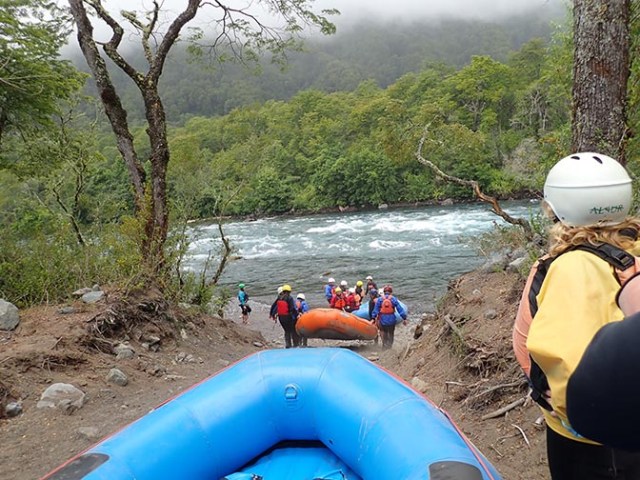
carrying rafts down to the river
The part of the notes of what to expect about walking on uneven ground applied to carrying the raft down to the river at launching and then back up to the trailers afterword. It’s loose dirt filled with rocks of all sizes and some sticks so it’s definitely a good idea to look at where you are putting your feet while carrying the raft to and from the river. That’s right, the participants on this excursion carry the rafts they ride in to and from the river. They are way too big and heavy for the guide to carry alone and it would take a long time for the guides to make all the trips necessary to get each raft in and out of the water if other people didn’t help.
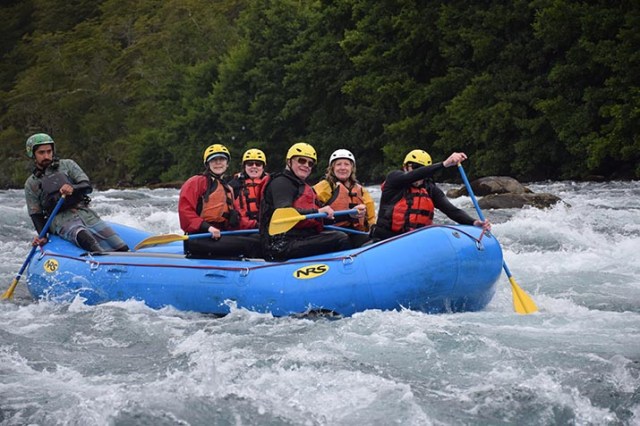
in the raft
The strongest paddlers were supposed to sit in front, so the two men in our raft took that position. One of the other ladies and I had the middle while the other lady had the next spot back and then the guide went to the very back. There are big cushions across the middle of the raft that divide the spots and look like where people would sit, but actually people sit on the outer edge of the raft. The front people had a little bootie pocket to tuck a foot into. Everyone else put a foot under the dividing cushion.
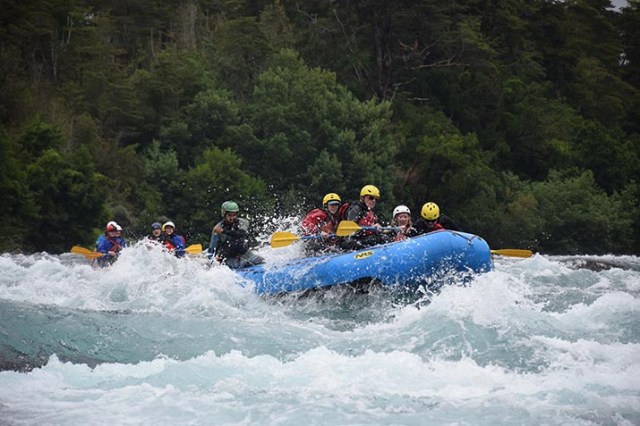
through the waves
It’s a fast-moving river and the rafts can only go one way so if you bring anything with you make sure it is both waterproof and secure. I brought a small waterproof camera, which was in a case that had a strap hanging around my neck. I also buckled one side of the strap into my life jacket. Had I not buckled it into the life jacket I probably would have lost the camera to one particularly rough wave that flipped it up as high as the buckle and turned it around, but couldn’t take it from me since it was fastened down. I normally would have also had a neck strap on the camera itself for excursions like this, but forgot to bring it. Anything that falls in the river is lost forever. The rafts keep moving with the flow of the water and there’s no way to turn around to go back and look for anything.
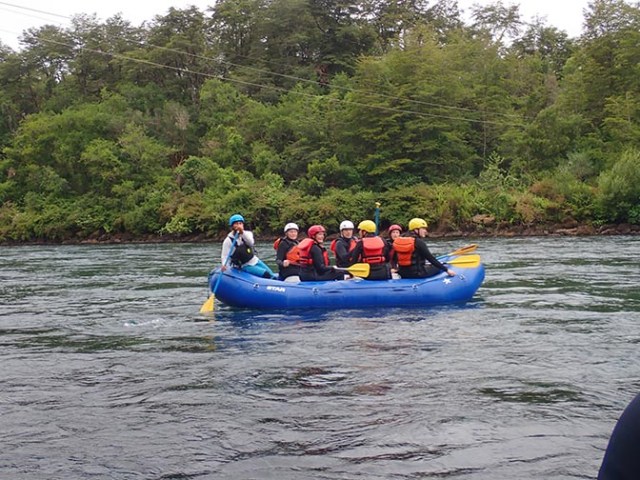
calm spot
There are not a lot of opportunities to take photos because of the need to paddle, but there were some calm spots where we weren’t paddling where I could pull the camera out for a quick photo or two. They did have a photographer who paddled ahead in a kayak and then parked himself on a rock in a couple of the rapids to get photos which people could buy if they had cash. He sent all of the photos he took whether it was your raft or not, which was a lot of pictures. He tended to park his kayak on a rock in the middle of a rapid so he got some good action shots in places where I was busy paddling and couldn’t take any photos.
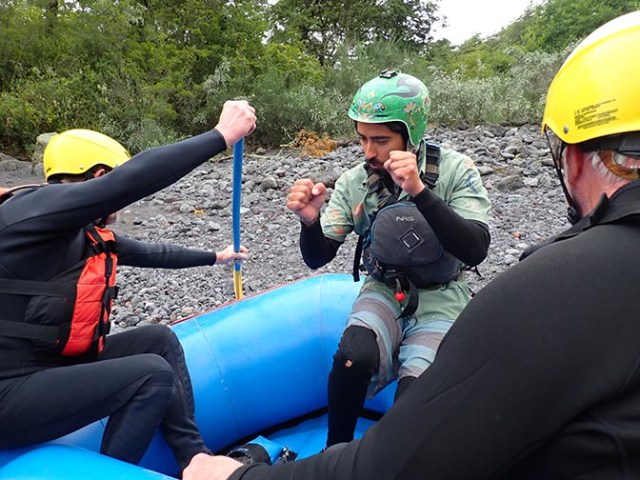
paddling instructions
At the start of the journey once everyone got their boats in the water and got settled into their spots the guides worked on things like how to hold the paddle, how to paddle it, and working in unison with the other people on the raft. It’s up to the front two people to paddle at the same time, and the people behind them to move their paddle in time with the person in front of them. If the guide says forward everyone paddles to move the boat forward. If he says back then everyone is to paddle to move the boat back. He mentioned right and left, but never asked only one side to paddle. Stop meant get your paddle out of the water right now, and rope meant grab the rope that runs around the outside of the boat and lean toward the middle because the next wave is going to be a doozy.
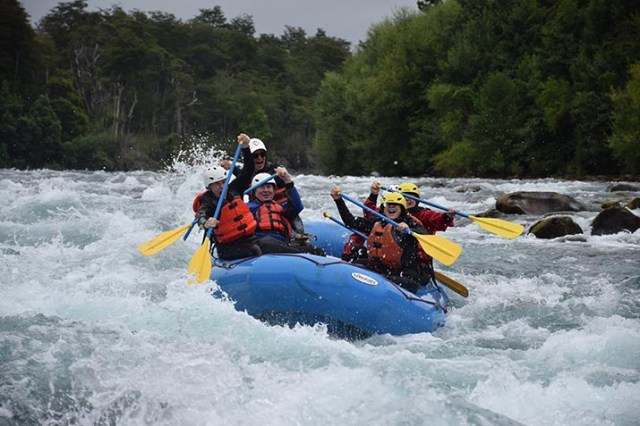
happy paddlers
On the way there we were also given instructions on what to do if you fall out which was grab the rope if you are close to the boat so you don’t get separated from it, and swim to the boat if you are too far to reach the rope. Last resort was the guide throwing a rope to a swimmer and having to pull them in. If the raft flipped then we were to swim to one of the other boats and hold on until the guide got ours flipped back.
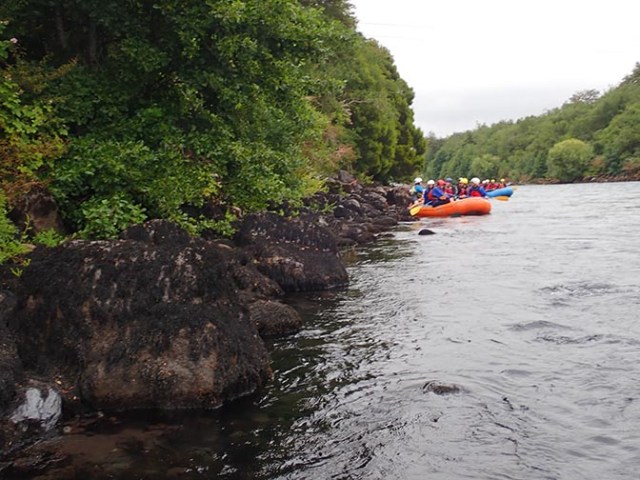
rafts parked at the edge of the river at the end of the journey
We had a couple people come close to falling out of our boat, but nobody actually did. One of the guys said he nearly fell in, but nobody noticed when that happened. The lone lady tipped back so far the back of her head touched the water so everyone though she was on the way out. She managed to pull herself back into a sitting position and since she was closest to the guide he also grabbed hold to help pull her back in. None of the rafts flipped over. Never stand up in the river if you fall out was also an important instruction because you could get your foot caught under a rock and then the river would suck you down under the surface.
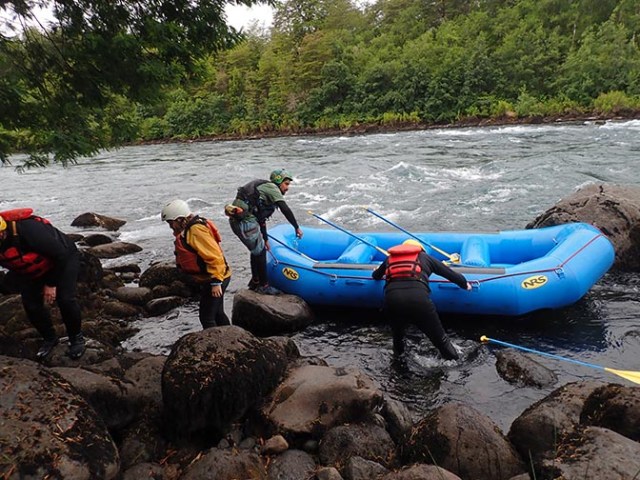
ready to take the raft out of the water
Most of the paddling was in short spurts of just a few strokes followed by stop, but after stop was called the next forward might come nearly immediately or it might be awhile so it was very hard to know when there might be time to pull out the camera for a quick photo or two. Only when there was a long enough calm patch of water. There were some sort of calm spots, some pretty calm spots, and some up to class 3 rapids. Even the calm spots could have giant rocks jutting out or just below the surface so sometimes paddling was necessary there too.
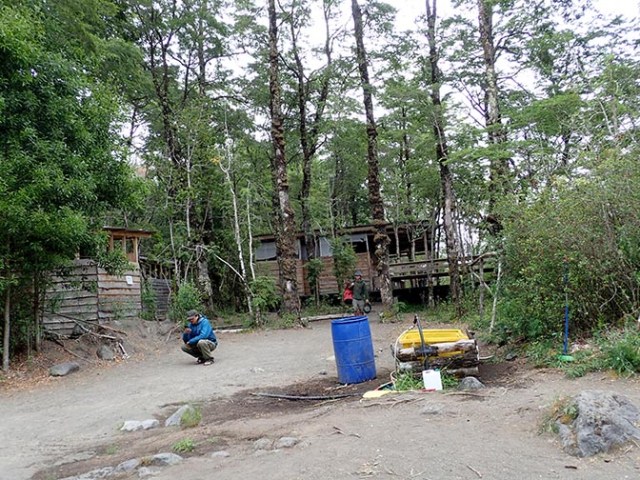
picnic site
When we reached the take-out spot the boats paddled to shore and then got carried back up to the waiting trailers. It was very uneven ground with rocks so definitely need to watch where you put your feet. After dropping the boats on the trailers we walked up the road to the picnic area. The road was much flatter ground than the hill that we carried the boats up.
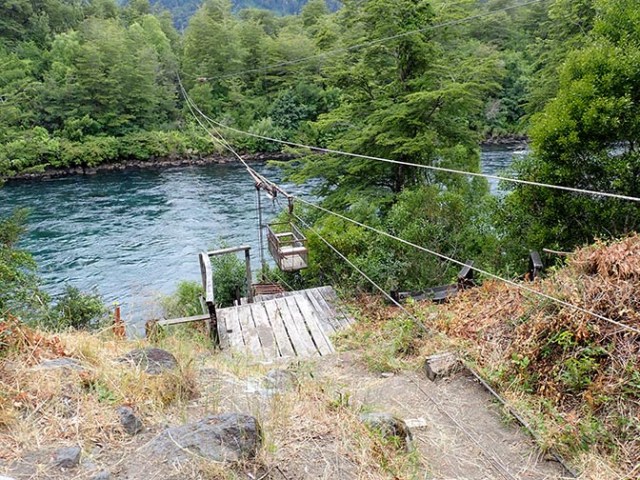
cable crossing
Just before getting to the rustic wooden buildings there was some sort of cable crossing that people must use sometimes to cross the river.
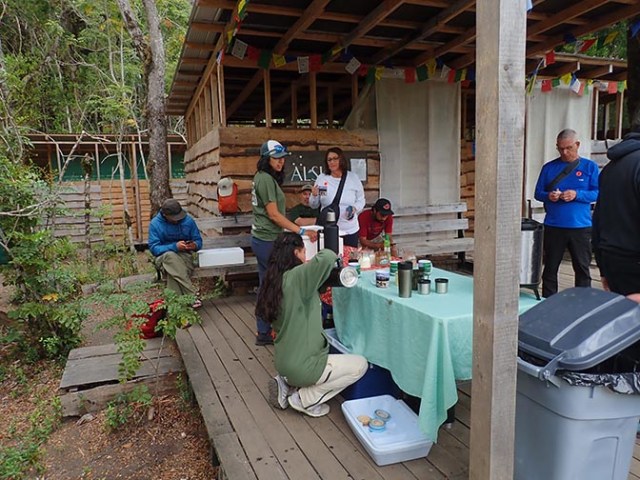
serving lunch
The busses were parked near the buildings so we all got the floor of the bus dirty walking in there to get our bags in the wet muddy booties. There were changing rooms and restrooms there and a deck area where empanadas and coffee, tea, cocoa, or cold water were available for lunch.
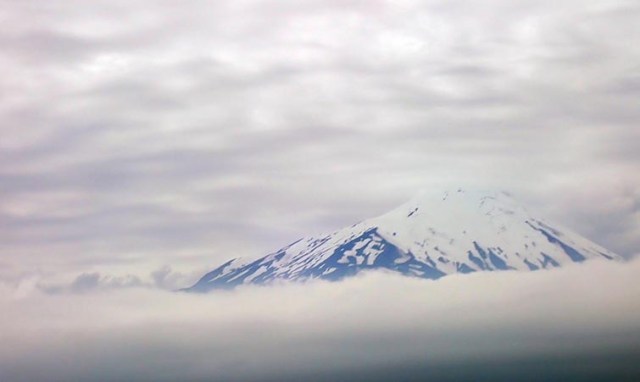
volcano in Chile
On the way back the sun had started to come out and the tip tops of a couple of the volcanoes peeked out of the clouds. The bus stopped at a viewpoint so people could get out and take photos. With just that little bit of sun there were multitudes of giant horseflies buzzing around everywhere at the viewpoint so we got a bit of a taste of what a sunny day was like and were definitely better off without the view of volcanoes from the river no matter how fantastic it would have been.
This was a very fun excursion and a lot more exciting than typical cruise ship excursions usually are.


 Cruise Stories