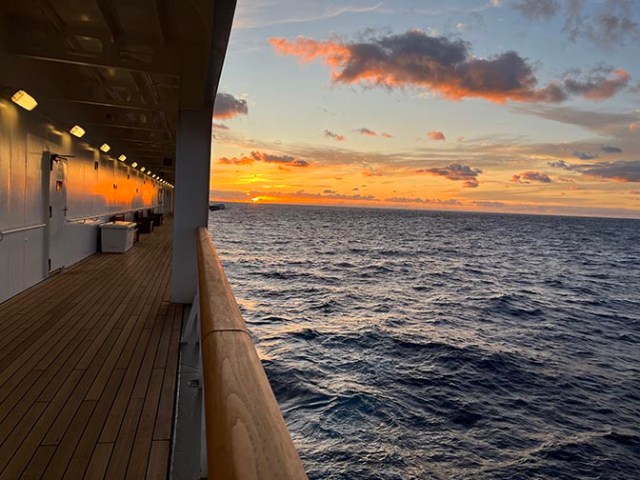
sunrise on the promenade
Christmas island is most known for the annual breeding migration of its red crabs, which occurs each summer as the crabs take 4-5 weeks to migrate to their spawning grounds. This happens during what residents of the northern hemisphere would consider winter months because like Australia, to whom Christmas Island is a territory, it also lies in the southern hemisphere. This island of volcanic origin has no indigenous people, but was originally colonized by the British, then was under the jurisdiction of Singapore before becoming an Australian territory. It first appeared on maps in the early 1600’s. Captain William Mynors of the British East India Company named the island after sighting it on Christmas Day. This is the place everyone thinks of when they hear Christmas Island.
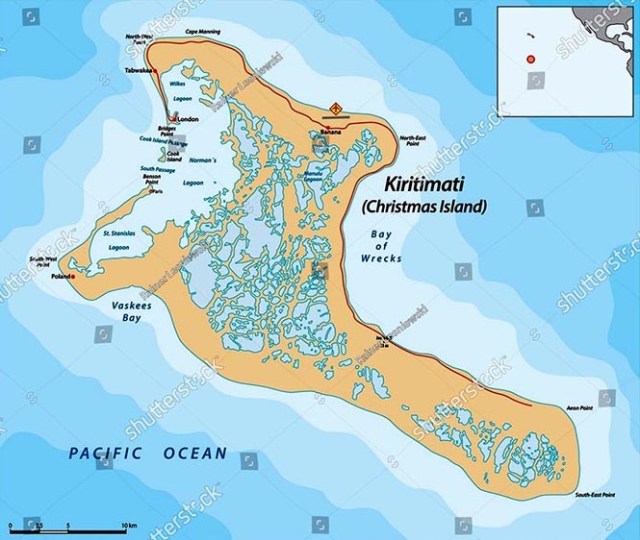
map of Kiritimati
There is also another island called Christmas Island. This far less commonly known island’s actual name is Kiritimati. In the Gilbertese language of the island Kiritimati is pronounced something like Krees maas, sounding rather like Christmas. It used to be part of a British colony called the Gilbert Islands, but is now an island in its own country called the Republic of Kiribati. This Christmas Island is a coral atoll in the Line Islands of Kiribati and is the one where Holland America Noordam was supposed to make a port stop on our cruise from San Diego to Sydney. It does have some giant coconut crabs and other land crabs, but not the red crabs that the other Christmas Island is famous for.
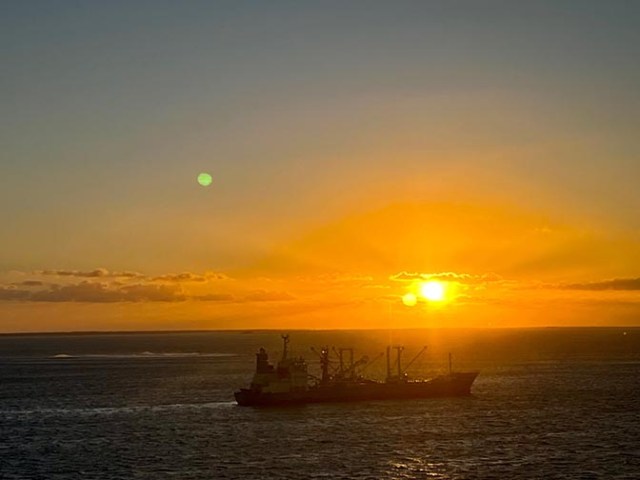
sunrise at Kiritimati
Unlike the Christmas Island that is an Australian territory and uses the Australian dollar, the Republic of Kiribati has its own dollar, used only in that country. It is however tied to the Australian dollar in value so the exchange rate will always be the same as with Australia.
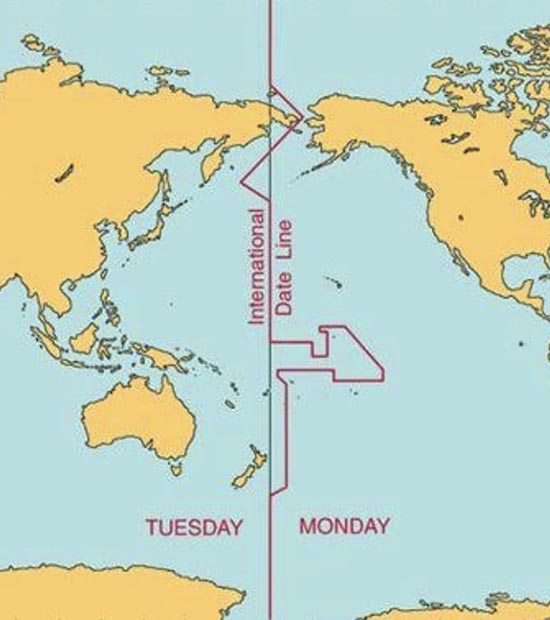
international dateline takes a detour around Kiritimati
Kiritimati is the largest coral atoll in the world at about 150 square miles of land mass, with a lagoon of about the same size. The entire island is a wildlife sanctuary, with restricted access in 5 particularly sensitive areas. About 70% of the land mass of the Republic of Kiribati is on that island, though the republic has 32 other small islands. It is the first inhabited place in the world to experience the change of the new year due to an adjustment of the international date line to include the area of this island with the rest of the country where it would otherwise be on the other side. Due to that we crossed the international date line three times on that cruise. We skipped a day on the way to Kiritimati, had the same day twice after what was supposed to be a port stop, and several days later skipped another day crossing the dateline again.
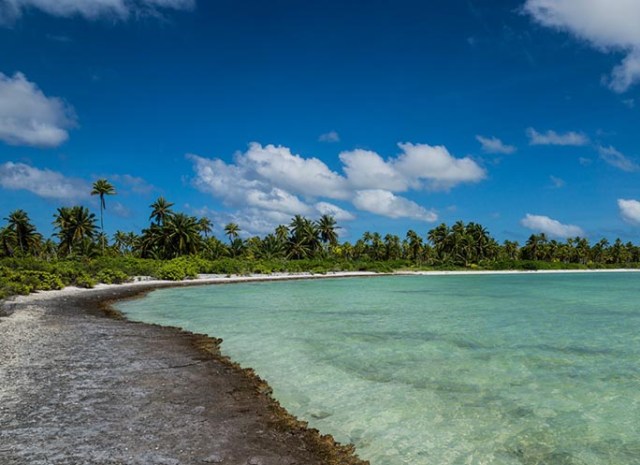
beach on Kiritimati (internet photo)
Trying to find information pre-cruise, some sites said it had crystal clear water and was great for diving and snorkeling. Other sites said stay out of the lagoon, it’s full of sewage. Not much other information was anywhere to be found. There were no shore excursions from the ship to see what sort of things might be there. Even if a person managed to find anything from an outside source since there was no information to be found on where the tenders dock it would be pretty hard to plan anything even if you could find something because of having no idea if you would get off the tender anywhere near the activity or not.
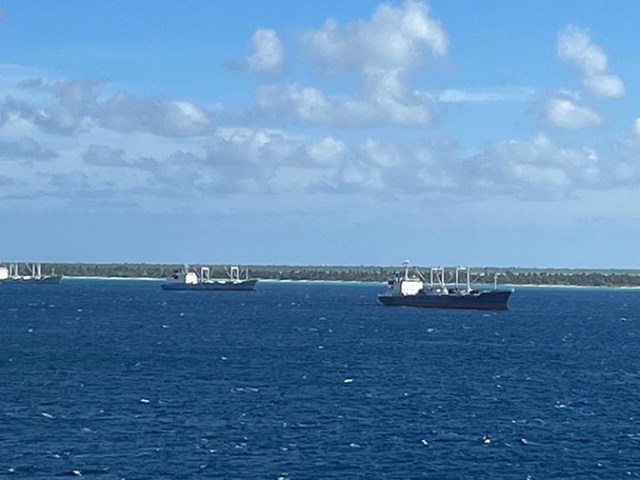
there were a bunch of boats near Kiritimati
On the night before our port stop the captain announced that neither the depth of the water near the island nor the swells in the sea surrounding it would be in our favor for visiting this port. It’s shallow around the atoll so the ship anchors out in deeper water, but even the tenders couldn’t be fully loaded to keep them from going aground.
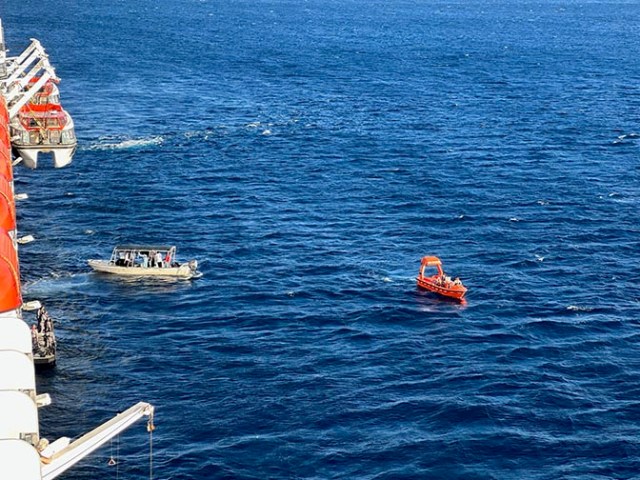
rescue boat and island boat next to the Noordam
When we arrived at the anchorage near Kiritimati the ship dropped a tender and the small rescue boat. The small boat tested the waters for a route to the island and the tender followed along somewhat. They set out from the ship several times, always returning before actually landing on the island. Eventually they decided they would be unable to get the tenders into the port and the ship left. The sea was too rough and likelihood of a tender running aground was too high. Probably especially with our seemingly neophyte tender crew judging by the difficulties they had launching, docking, and even tying them to the dock in Hawaii, though it’s possible a more talented tender crew may not have been up to the task there either. A boat of representatives from the island made it from shore to our ship, but their boat probably weighed considerably less than a tender. Or they were just far more experienced in safely getting in and out of their island. Likely both.
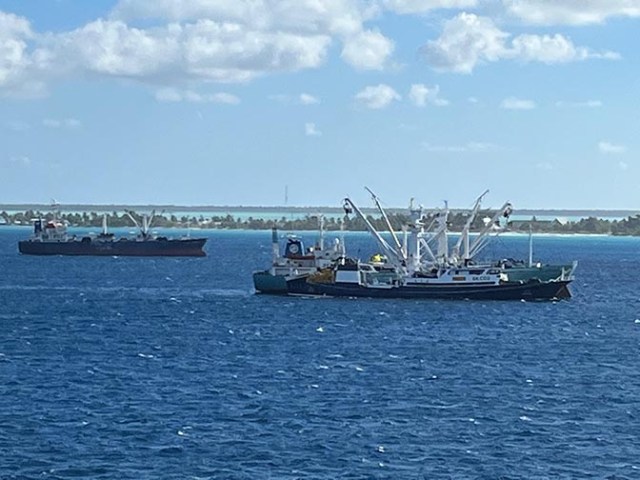
ships at Kiritimati
Unfortunately since we were unable to get to shore at Kiritimati due to the weather we still don’t know what we would have found there. For a small island it had a lot of ships around it. Possibly a fishing fleet. Fishing is supposed to be popular there.
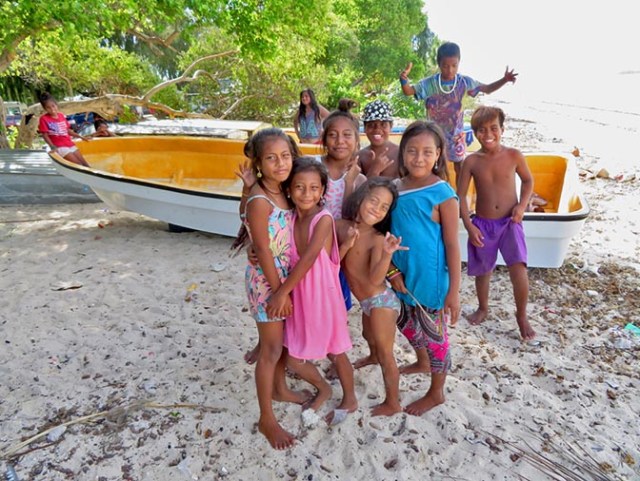
kids on Kiritimati (internet photo)
The Noordam had a collection of books that were supposed to be donated to Kiritimati for the schoolchildren there. We heard a bunch of them were gathered where the tenders were supposed to dock in anticipation of those books arriving. Since we never made it to shore they were left disappointed. Apparently the boat that came out from the island was unable to take the books when it went back. The books were eventually left for children at an island in another country on a port stop later in the cruise. We did hear that a Seaborne ship that was originally scheduled to stop somewhere else couldn’t get where they intended to go and went into Kiritimati instead and they left the children some books so at least the kids did get some.


 Cruise Stories